
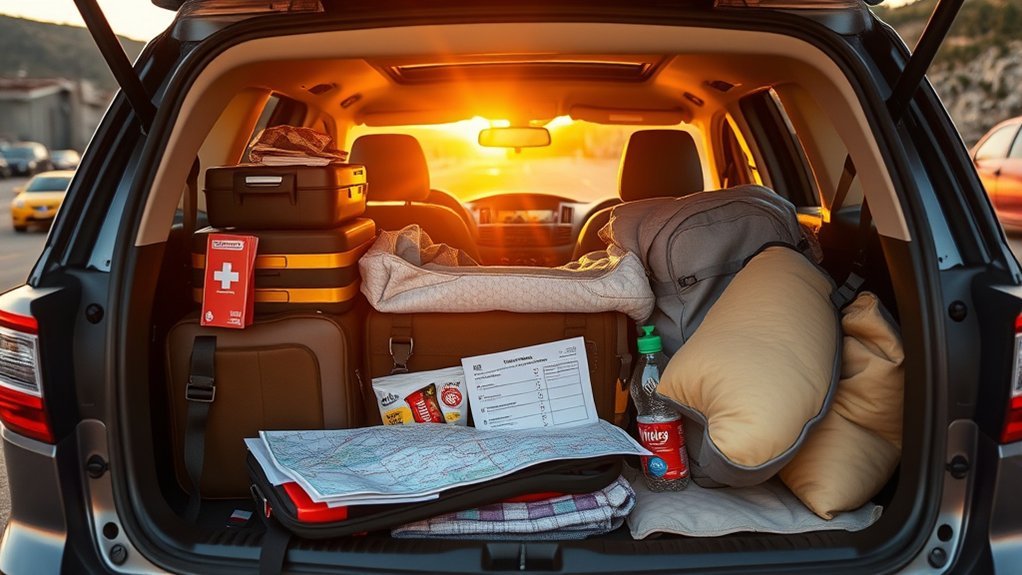
Packing for a road trip is not about filling every open space in the vehicle. It is about bringing the right items, keeping important gear within reach, and loading everything so it stays secure. A simple plan can help you avoid forgotten documents, spoiled food, blocked visibility, loose cargo, and unnecessary stops.
Quick Answer
To pack for a road trip, make one checklist for documents, clothing, food, comfort, entertainment, and emergency gear. Check the vehicle before loading it, place heavy items low and forward, secure loose cargo, keep roadside supplies reachable, and store perishable food in a cooler at 40°F (4°C) or below.
Key Takeaways
- Build your list around the trip length, weather, activities, passengers, and available cargo space.
- Inspect the vehicle and check for open recalls before you begin loading.
- Keep documents, medicines, water, chargers, and emergency gear easy to reach.
- Place heavy luggage low in the cargo area and secure anything that could move during a sudden stop.
- Use a properly chilled cooler for yogurt, cheese, cut fruit, and other perishable foods.
At a Glance
| Time Required | About 30 minutes for a simple overnight trip or 1–3 hours for a longer family trip, plus advance planning |
| Difficulty | Easy, with extra planning for children, pets, medical needs, camping gear, or severe weather |
| Tools Needed | Checklist, bags or packing cubes, small organizers, cooler, labels, charging cables, tire-pressure gauge, and cargo straps when needed |
| Cost | Often no added cost if you already own the basics; otherwise, cost depends on missing emergency, cooling, charging, and storage supplies |
Why Packing for a Road Trip Requires a Strategy
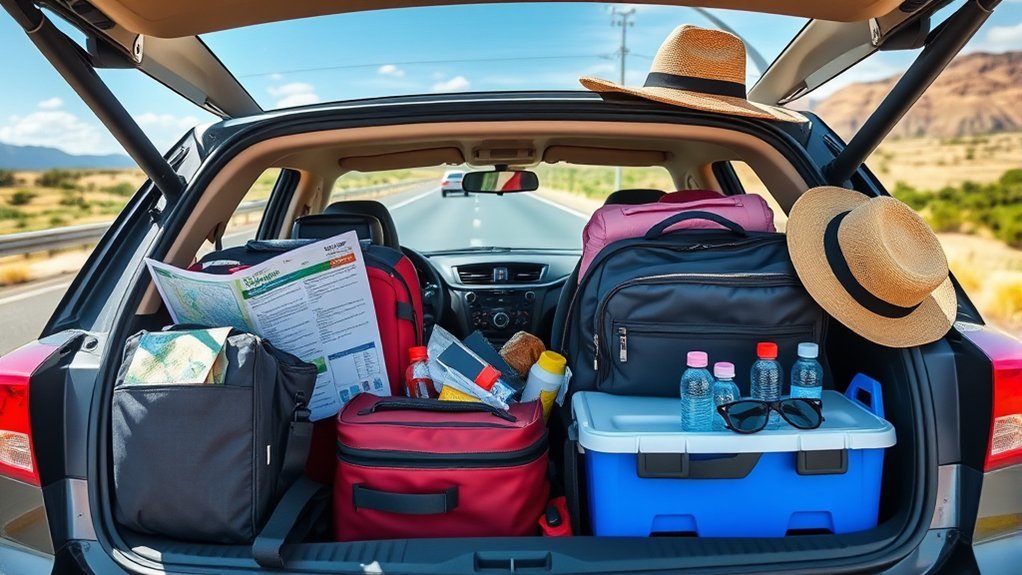
A packing strategy makes the vehicle safer and easier to use. Without one, important documents may end up beneath luggage, snacks may be scattered around the cabin, and roadside tools may become impossible to reach when you need them.
Start by considering five factors:
- Trip length: An overnight stay requires far less clothing and food than a weeklong drive.
- Weather: Check conditions along the route as well as at the destination.
- Activities: Add only the shoes, clothing, and equipment needed for planned activities.
- Passengers: Account for children, pets, medicines, mobility needs, allergies, and comfort.
- Vehicle space: Leave clear sightlines and avoid exceeding the vehicle’s passenger, cargo, roof-rack, or towing limits.
A good list also separates items by when they will be needed. Documents and medicines belong in the cabin. Overnight bags should remain accessible. Emergency equipment should not be buried beneath suitcases.
Pro Tip: Create a “first night” bag with sleepwear, toiletries, medicines, chargers, and one change of clothes. You can carry it into the hotel without unloading the entire vehicle.
Tools You Need for Efficient Packing
You do not need expensive travel equipment to pack well. A few basic tools can reduce clutter and help passengers find what they need without distracting the driver.
- Master checklist: Use a paper list, notes app, or shared family document.
- Packing cubes or soft bags: Group clothing by person, day, or activity.
- Small cabin organizer: Store tissues, wipes, charging cables, and passenger activities.
- Resealable bags: Contain small items, wet clothing, rubbish, and possible leaks.
- Insulated cooler: Use it for foods that must remain cold.
- Cooler thermometer: Confirm that perishable food stays at 40°F (4°C) or below.
- Portable power bank: Keep a charged backup for phones and other essential electronics.
- Cargo straps or a cargo net: Secure equipment that could shift or leave the vehicle.
- Tire-pressure gauge: Check pressure against the vehicle manufacturer’s specification.
A portable luggage scale is optional. It can help when the trip also involves a flight, but it does not replace checking the vehicle’s payload and roof-load limits. Look for those limits in the owner’s manual and on the vehicle information labels.
How Much Time to Allocate for Packing
There is no single packing time that works for every road trip. A solo traveler may prepare for an overnight stay in 30 minutes, while a family carrying camping equipment may need several hours.
Use this timeline as a practical starting point:
- Three to seven days before departure: Check the forecast, route, reservations, vehicle needs, prescriptions, and activity requirements.
- One or two days before departure: Wash clothing, charge electronics, buy food, prepare the emergency kit, and pack items that are not used daily.
- The night before: Load most luggage, download maps and entertainment, and review the checklist.
- Departure day: Add refrigerated food, medicines, water, phones, wallets, documents, and last-use toiletries.
Add extra preparation time for car seats, mobility equipment, pets, refrigerated medicines, roof cargo, trailers, or multiple overnight stops.
Check Your Vehicle Before You Pack It
Packing the right gear will not help if the vehicle is not ready for the drive. The National Highway Traffic Safety Administration’s road trip guidance recommends checking important vehicle systems before a long journey.
- Search for open recalls using your license plate or VIN through the NHTSA recall lookup.
- Check tire pressure when the tires are cold and use the pressure listed by the vehicle manufacturer, not the maximum pressure molded into the tire sidewall.
- Inspect the tread and sidewalls for cuts, bulges, cracks, punctures, or unusual wear.
- Confirm that the spare tire, jack, wheel-lock key, and tire tools are present and usable.
- Check the oil and other applicable fluids according to the owner’s manual.
- Test the headlights, brake lights, turn signals, hazard lights, and interior lights.
- Inspect the wiper blades and fill the windshield-washer reservoir.
- Check the battery if it has shown signs of slow starting or weakness.
- Begin with enough fuel or battery charge for the route, including a margin for traffic, detours, and limited rural services.
Warning: Never open a radiator cap or pressurized coolant reservoir while the engine is hot. Hot coolant can cause serious burns. Do not touch, open, or attempt to repair orange high-voltage wiring or battery components in an electric or hybrid vehicle; use a qualified technician.
How to Create a Comprehensive Packing List for a Road Trip
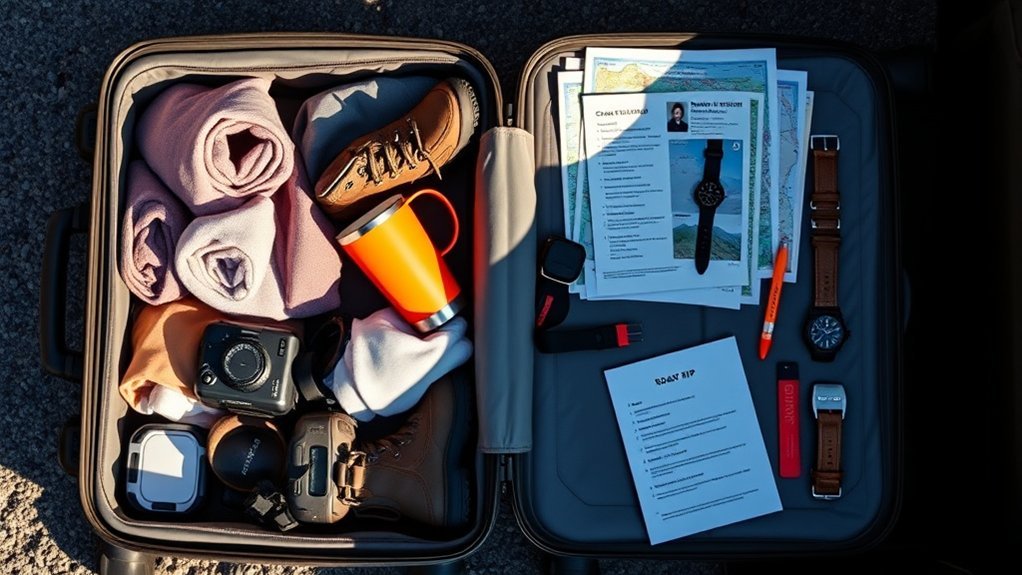
Build the list by category instead of trying to remember items at random. Adjust each category for the destination, weather, planned stops, and needs of every traveler.
| Category | Items to Consider |
|---|---|
| Documents | Driver’s license, vehicle registration, insurance information, reservations, roadside-assistance details, emergency contacts, and required travel documents |
| Clothing | Weather-appropriate layers, underwear, socks, sleepwear, shoes, rain protection, activity clothing, and a bag for dirty or wet items |
| Comfort Items | Travel pillows, blankets, sunglasses, earplugs, and extra layers for changing cabin temperatures |
| Food and Drinks | Water, shelf-stable snacks, chilled food, cooler, cold packs, cooler thermometer, napkins, wipes, and small rubbish bags |
| Health and Hygiene | Prescription medicines, first-aid kit, sunscreen, hand sanitizer, tissues, toilet paper, toothbrushes, toiletries, and personal medical supplies |
| Safety and Roadside Gear | Flashlight, phone charger, jumper cables or approved jump pack, reflective warning devices, work gloves, water, nonperishable food, blanket, maps, and vehicle-specific tire tools |
| Technology and Entertainment | Phones, charging cables, power bank, downloaded maps, playlists, audiobooks, headphones for passengers, books, puzzles, and car games |
| Children and Pets | Correct child restraint, diapers or spare clothes, familiar comfort item, age-appropriate activities, pet restraint or carrier, food, water, bowls, waste bags, and identification |
Review lists from earlier trips if you have them. Remove anything that was never used unless it is emergency equipment. Add items that were difficult or expensive to replace while traveling.
Organizing Your Packing by Category
After creating the list, assign each category a place in the vehicle. This reduces clutter and prevents passengers from digging through luggage while the vehicle is moving.
- Driver area: Keep the footwell, pedals, dashboard, and controls completely clear.
- Document zone: Store identification, insurance, registration, and reservations in one reachable pouch.
- Passenger-access zone: Place water, shelf-stable snacks, tissues, wipes, and activities where passengers can reach them safely.
- Health zone: Keep needed medicines and basic first-aid supplies in a known location that is not exposed to extreme heat.
- Overnight zone: Put the first-night bag near the cargo door.
- Emergency zone: Keep the flashlight, warning devices, gloves, and roadside equipment accessible without unloading everything.
- Main cargo zone: Pack suitcases, coolers, and equipment so they cannot shift, fall forward, or block the driver’s view.
Label similar bags when several people are traveling. A simple name or category label can prevent repeated unpacking at each stop.
How to Load and Secure Road Trip Cargo
Safe packing includes the way luggage is placed and restrained. Follow the vehicle manufacturer’s payload, roof-load, towing, and accessory limits. Do not assume that an item is safe to carry simply because it fits.
- Place the heaviest items low and as far forward in the cargo area as practical.
- Avoid stacking heavy objects above the top of the rear seatbacks.
- Use factory cargo anchors, suitable straps, netting, or barriers to limit movement.
- Keep the rear window and side sightlines clear.
- Do not place loose tools, bottles, electronics, or other hard objects on the rear shelf or seats.
- Follow the roof-rack and cargo-box manufacturer’s instructions, including dynamic weight limits.
- Secure bicycles, coolers, camping equipment, and rooftop loads from the front, rear, and sides as required.
- Stop after the first part of the drive to check external straps and roof-mounted equipment.
NHTSA’s cargo-securement guidance advises drivers to avoid excessive loads and double-check that cargo cannot drop, shift, leak, or escape.
Warning: An unrestrained suitcase, tool, cooler, or electronic device can move with great force during hard braking or a crash. Do not use passenger seat belts as improvised cargo straps unless the vehicle or equipment manufacturer specifically permits that use.
Pack Essentials for Safety and Comfort on the Road
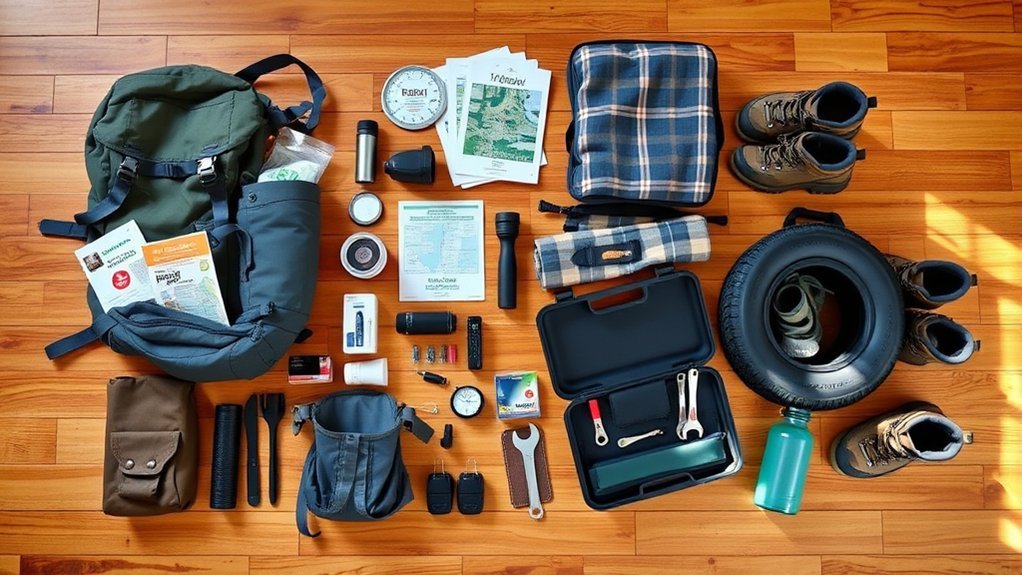
Your roadside kit should match the season, route, vehicle, and distance from services. A basic kit may include:
- Charged mobile phone, vehicle charger, and backup power bank
- First-aid kit
- Flashlight with working batteries
- Reflective triangles or other approved warning devices
- Jumper cables or a jump pack approved for the vehicle
- Tire-pressure gauge
- Vehicle jack, wheel tools, and wheel-lock key, when applicable
- Work gloves and a change of clothing
- Drinking water and shelf-stable food
- Emergency blanket, warm clothing, or sun protection as conditions require
- Paper map or saved offline route information
- Basic cleanup supplies, including paper towels and rubbish bags
Follow the owner’s manual before using any roadside tool. Some vehicles do not have a conventional spare tire, and electric vehicles may have model-specific towing, lifting, and jump-start procedures.
Pack prescription medicines in their original labeled containers when possible, bring enough for the trip and possible delays, and keep essential health information with you. The CDC Pack Smart checklist also recommends copies of prescriptions, insurance information, first-aid supplies, and needed personal medical items.
Note: Do not leave heat-sensitive medicines, children, pets, aerosol cans, electronics, or pressurized items in a hot parked vehicle. Follow each product’s storage instructions.
For comfort, add travel pillows, blankets, sunglasses, and removable clothing layers. These items should remain small enough that they do not interfere with seat belts, car seats, airbags, controls, or driver visibility.
Smart Snack Packing Strategies for Road Trips
Choose snacks that are easy for passengers to handle and unlikely to create major spills. Shelf-stable choices include:
- Whole fruit that does not require cutting
- Crackers or pretzels
- Granola or protein bars
- Nut or seed mixes, when allergy and choking risks have been considered
- Single-serve nut or seed butter
- Dry cereal
- Unopened shelf-stable fruit pouches
Yogurt, cheese sticks, cut fruit, deli meat, eggs, leftovers, and similar foods belong in a chilled cooler. FoodSafety.gov advises keeping perishables at 40°F (4°C) or below during a road trip. Use ice or frozen packs and check the cooler with an appliance thermometer.
Warning: Do not keep perishable food without refrigeration for more than two hours. When the food is exposed to temperatures above 90°F (32°C), the limit is one hour. When in doubt, throw it away rather than tasting it.
Keep raw meat separate from ready-to-eat foods if you are transporting ingredients for cooking. For a long trip, consider one cooler for drinks and immediate snacks and another that stays closed for food needed later.
Pack napkins, sanitizing wipes, reusable utensils when needed, and several small rubbish bags. The driver should not unwrap food, reach into bags, or handle open drinks while the vehicle is moving.
How to Keep Everyone Entertained on a Road Trip
Download entertainment before departure in case mobile service becomes weak. Mix screen and non-screen choices so passengers have options throughout the drive.
- Family-friendly audiobooks and podcasts
- A shared road trip playlist
- “I Spy,” 20 Questions, or license-plate bingo
- Coloring books, reusable drawing boards, puzzles, or portable games
- Books and magazines for passengers who can read without motion sickness
- Downloaded films or games with headphones
- Road trip trivia related to the route or destination
Pack activities in a small passenger bag instead of the main luggage. Rotate choices during longer stretches so everything is not used during the first hour.
Warning: Entertainment must never distract the driver. Set navigation, music, climate controls, and passenger devices before moving or let a passenger manage them.
Long-Drive Comfort, Motion Sickness, and Breaks
Plan regular stops for restroom use, food, movement, and driver rest. Passengers should change position, stretch, and walk when it is safe to do so. The CDC advises including walking and stretching breaks during long car travel, especially for people with additional blood-clot risk factors.
Drivers should stop if they become drowsy or lose concentration. Opening a window, increasing music volume, or relying on caffeine does not make fatigued driving safe.
For motion sickness, the CDC suggests trying non-drug measures first:
- Look toward the horizon or a stable point outside the vehicle.
- Sit where forward visibility is available when age and restraint requirements allow.
- Keep the head supported and avoid unnecessary movement.
- Drink water and eat small amounts of food.
- Listen to music or audio instead of reading or looking down at a screen.
- Use fresh air and take breaks when practical.
Some motion-sickness medicines can cause drowsiness or have the opposite effect in children. Review the CDC motion-sickness guidance, follow the product label, and ask a healthcare professional about suitability and correct dosing for children, pregnancy, medical conditions, or other medicines.
Common Packing Mistakes for Road Trips
Avoid these common problems before departure:
- Overpacking: Bring clothing and equipment that match confirmed plans rather than every possible situation.
- Ignoring vehicle limits: Check payload, roof-rack, trailer, and accessory limits instead of judging by available space alone.
- Burying emergency gear: Keep roadside supplies reachable from a door or hatch.
- Leaving cargo loose: Secure hard, heavy, sharp, and roof-mounted items.
- Skipping food-temperature planning: Use a chilled cooler for perishables.
- Scattering documents: Keep identification, registration, insurance information, and reservations together.
- Forgetting offline access: Download maps, booking details, contact information, and entertainment.
- Blocking visibility: Do not stack luggage across windows or mirrors.
- Overloading the cabin: Keep footwells, pedals, airbags, controls, and seat-belt paths clear.
- Ignoring passenger needs: Plan for medicines, allergies, child restraints, mobility needs, pets, and regular breaks.
Your Final Packing Checklist for the Road
Complete one final check before leaving:
- Documents: License, registration, insurance information, reservations, payment methods, and emergency contacts
- Vehicle: Recalls checked, tires inspected, fluids checked, lights working, wipers ready, spare or mobility kit present, and fuel or charge planned
- Route: Weather and traffic reviewed, offline map downloaded, stops planned, and route or arrival estimate shared with a trusted contact when appropriate
- Emergency kit: Phone charger, first aid, flashlight, warning devices, water, food, medicines, gloves, and seasonal gear
- Food: Water filled, shelf-stable snacks organized, perishables chilled, and rubbish bags packed
- Comfort: Pillows, blankets, sunglasses, layers, toiletries, and first-night bag accessible
- Entertainment: Audio, games, books, headphones, and devices downloaded and charged
- Children and pets: Correct restraints, food, water, comfort items, spare supplies, and identification ready
- Cargo: Heavy items low, loose objects secured, roof cargo checked, and rear visibility clear
- Cabin: Pedals, floor mats, airbags, controls, seat belts, and driver sightlines unobstructed
- Final sweep: Phones, wallets, keys, medicines, cold food, chargers, doors, windows, and home security checked
The best road trip packing list does more than prevent forgotten items—it keeps passengers protected, emergency gear reachable, food safe, and cargo secure.
Frequently Asked Questions
What is the 5-4-3-2-1 rule of packing?
A common version suggests packing five tops, four bottoms, three pairs of shoes, two bags, and one jacket or accessory. The formula is not an official standard, and versions vary. Treat it as an optional capsule-wardrobe idea, then adjust it for weather, activities, laundry access, and trip length.
What is the 3-5-7 rule in packing?
There is no single accepted 3-5-7 packing rule. One informal version means three outfits, five pairs of underwear, and seven pairs of socks. Other versions use different categories. Use it only when it matches your trip rather than treating it as a required formula.
What are the biggest road trip packing mistakes?
The biggest mistakes are overpacking, exceeding vehicle limits, burying emergency gear, leaving cargo unsecured, blocking visibility, failing to chill perishable food, scattering important documents, and forgetting passenger-specific needs.
What is the 3-3-3 rule for packing?
A common interpretation is three tops, three bottoms, and three pairs of shoes that can be mixed into several outfits. Meanings vary, so it is better viewed as a minimalist clothing idea than a fixed rule. Most road trips require fewer shoes and more attention to weather layers.
How early should you start packing for a road trip?
Start the checklist three to seven days before departure. Pack most clothing and equipment the day before, then add medicines, documents, phones, toiletries, water, and refrigerated food shortly before leaving.
What should always stay within reach during a road trip?
Keep identification, registration, insurance information, needed medicines, water, a phone and charger, basic first-aid supplies, passenger cleanup items, and the first-night bag reachable. Roadside emergency equipment should be accessible without removing the full cargo load.
Conclusion
A well-packed road trip starts with a realistic list and a vehicle that is ready for the route. Check the car before loading it, organize supplies by when they will be used, keep emergency items accessible, chill perishable food, and secure every object that could move. Once those priorities are covered, add the clothing, comfort items, snacks, and entertainment that make the drive easier for everyone.
Sources
- National Highway Traffic Safety Administration: Summer Driving and Road Trip Tips — vehicle checks, emergency kits, route planning, seat belts, and child-passenger safety
- National Highway Traffic Safety Administration: Recall Lookup — checking vehicles and equipment for open safety recalls
- National Highway Traffic Safety Administration: Secure Your Load — cargo restraint and overloading guidance
- FoodSafety.gov: Four Steps to Food Safety — safe cold-storage temperatures and time limits
- Centers for Disease Control and Prevention: Pack Smart — medicines, documents, first aid, and health supplies
- CDC Yellow Book: Motion Sickness — prevention strategies, medication cautions, and considerations for children







Leave a Reply