

Long-distance driving is easier and safer when you prepare the vehicle, the route, and yourself before departure. A useful plan covers maintenance, fuel or charging stops, sleep, food, weather, distractions, and breakdown supplies. The goal is not to rush through the miles; it is to arrive alert, comfortable, and ready for the rest of your trip.
Quick Answer
Before a long-distance drive, inspect the tires, fluids, lights, brakes, wipers, and spare; check for recalls; plan fuel or charging stops and backup routes; sleep 7–9 hours; pack an emergency kit; and drive phone-free. Stop as soon as drowsiness, bad weather, warning lights, or vehicle trouble makes continuing unsafe.
Key Takeaways
- Check the vehicle early enough to repair problems before departure, not the morning of the trip.
- Use the tire-pressure value on the driver-door placard or in the owner’s manual, and inspect the spare or inflator kit.
- Get adequate sleep, recognize drowsiness early, and stop rather than trying to push through fatigue.
- Set navigation and entertainment before moving, then keep the phone out of your hands.
- Carry water, essential medicines, emergency supplies, and a backup plan for fuel, charging, weather, and road closures.
At a Glance
| Time Required | 30–60 minutes for planning and basic checks; longer if maintenance or repairs are due |
| Difficulty | Easy for routine checks; use a qualified mechanic for warning lights, leaks, brake problems, or overdue service |
| Tools Needed | Owner’s manual, tire-pressure gauge, phone or GPS, charging cable, emergency kit, and basic vehicle documents |
| Cost | Often $0 if supplies and maintenance are current; emergency-kit items, service, tires, or repairs cost extra |
Prepare Your Car for Long-Distance Driving
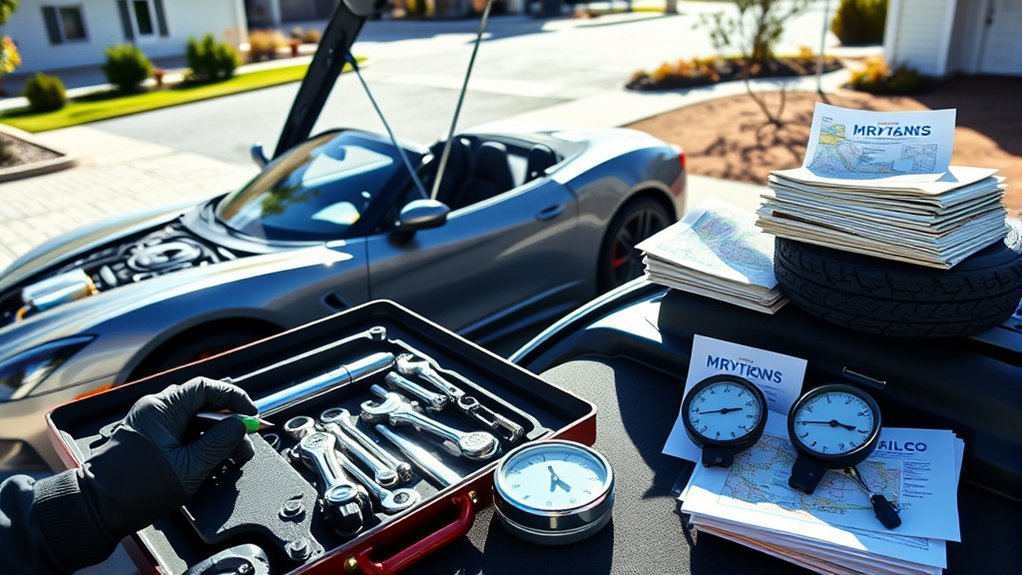
Prepare the car several days before departure so you have time to fix anything you find. Start with the maintenance schedule in the owner’s manual, then use the NHTSA road-trip checklist as a second review.
Check Recalls and Required Service
Look for open safety recalls using your license plate or 17-character VIN. Recall repairs are normally completed by an authorized dealer at no charge. Also check whether an oil change, tire rotation, brake inspection, battery service, or other scheduled maintenance will become due during the trip.
Inspect Fluids, Leaks, and Under-Hood Items
Check engine oil, coolant, brake fluid, windshield-washer fluid, and any other serviceable fluids listed in the owner’s manual. Use the specified fluid type and correct level range. A low level may indicate a leak, so do not simply keep topping it off without finding the cause.
Inspect visible belts and hoses for cracking, swelling, fraying, or leaks. Confirm that the battery terminals are secure and free of heavy corrosion. If the car cranks slowly, displays a battery warning, overheats, or leaves fluid under the vehicle, have it inspected before the trip.
Warning: Never open a radiator cap or pressurized coolant reservoir while the engine is hot. On hybrid and electric vehicles, do not touch orange high-voltage cables or damaged battery components. Follow the owner’s manual and use a qualified technician.
Check Tires and the Spare
Measure tire pressure when the tires are cold and inflate them to the value on the driver-door placard or in the owner’s manual—not the maximum pressure molded into the tire sidewall. Check all tires for cuts, bulges, punctures, uneven wear, and embedded objects.
NHTSA says tires should be replaced when tread reaches 2/32 inch. More tread can improve wet- or snow-road traction, so do not treat the legal minimum as the ideal target for every condition. Inspect the spare tire, jack, wheel-lock key, and lug wrench, or confirm that the sealant and inflator kit has not expired.
Test Lights, Wipers, Brakes, and Controls
- Confirm that headlights, brake lights, taillights, hazard lights, and turn signals work.
- Replace worn wiper blades and clean the inside and outside of the windshield.
- Check the horn, mirrors, climate control, and defrosters.
- Pay attention to brake warning lights, grinding or squealing, pulling, vibration, or a soft pedal.
- Make sure floor mats are secured and cannot slide under the pedals.
A new noise, warning light, leak, steering problem, or brake concern deserves a professional inspection. Do not start a long trip hoping the problem will disappear.
Secure Cargo and Carry Documents
Keep heavy items low and secured so they cannot become projectiles in a sudden stop. Do not block the driver’s rearward view. Carry your driver’s license, registration, insurance information, roadside-assistance details, and any toll or border documents the route requires.
Pro Tip: Complete the vehicle check about a week before departure, then recheck tire pressure, fuel or battery level, lights, and the cargo load on travel day.
Plan Your Route and Alternative Paths
Study the main route and identify at least one practical backup. Check construction, weather, wildfire or flood alerts, mountain-pass conditions, tolls, ferry schedules, and seasonal road closures shortly before leaving.
Mark fuel stations, electric-vehicle chargers, rest areas, food stops, and overnight lodging. For an EV, confirm connector compatibility, charger availability, operating hours, and a backup station. For remote travel, refuel or recharge earlier than you would in a city.
Download offline maps in case mobile service drops. Save the destination, lodging, roadside-assistance number, and important contacts before the trip. Tell someone your planned route and expected arrival time when traveling through isolated areas.
Navigation apps can provide real-time updates, but set the destination before moving. Let a passenger handle rerouting, messages, and searches whenever possible. Maintain a flexible schedule so a closure, storm, traffic jam, or needed rest break does not pressure you to drive unsafely.
Adapt to Weather, Mountains, and Remote Areas
Long-distance driving conditions can change within a few hours. Slow down and increase following distance in rain, snow, fog, darkness, heavy traffic, or on loose surfaces. Turn on the lights when visibility is poor and use low beams in fog.
On long downgrades, select a lower gear when the vehicle manufacturer recommends it instead of riding the brakes continuously. In extreme heat, watch the temperature gauge and stop safely if the engine overheats. In winter or remote areas, carry extra warm clothing, water, food, and a charged phone.
Never drive through water when you cannot judge its depth or the road surface beneath it. If authorities close a road or issue an evacuation direction, follow the official route rather than relying only on a navigation app.
Prioritize Rest Before Your Road Trip
A safe long-distance drive begins with adequate sleep. The CDC notes that most adults need 7–9 hours of sleep and that fatigue slows reactions and harms judgment. Maintain a regular sleep schedule in the days before the trip when possible.
Risk rises when you drive during your usual sleeping hours, after a long work shift, while ill, or after taking medicine that causes drowsiness. Read medication warnings and ask a pharmacist or clinician when you are unsure whether a product can affect driving. Never mix driving with alcohol, cannabis, or other impairing substances.
Recognize Drowsy-Driving Warning Signs
- Frequent yawning, heavy eyelids, or difficulty keeping your head up
- Missing an exit, forgetting the last few miles, or drifting in the lane
- Hitting a rumble strip, varying speed, or struggling to focus
- Repeatedly turning up music, opening a window, or changing position to stay awake
If any sign appears, stop at a safe, lighted location. Switch drivers when a rested driver is available. NHTSA advises that one to two cups of coffee followed by a short 20-minute nap may improve alertness briefly, but it is not a substitute for adequate sleep.
Warning: Loud music, cold air, snacks, and an open window do not make drowsy driving safe. If you are fighting sleep, pull over. Do not wait for a near miss.
Plan regular stops to walk, use the restroom, eat, and reassess your alertness. About every two hours can be a useful planning point, but stop sooner whenever your body, passengers, weather, or road conditions call for it.
Dress Comfortably for Long Drives

Choose loose, breathable clothing that does not restrict movement or become painful after hours of sitting. Layers work well because cabin and outdoor temperatures can change during the day.
Wear secure shoes that let you feel and control the pedals. Avoid footwear that is loose, unstable, or likely to catch under a pedal. Adjust the seat so you can press every pedal without stretching, keep a slight bend in your knees and elbows, and position the head restraint near the back of your head.
Empty bulky objects from back pockets, use lumbar support if needed, and change position during stops. Do not place cushions or accessories where they interfere with the seat belt, air bag, or driving controls.
Stay Hydrated and Choose Healthy Snacks
Bring water and simple foods that are easy to store, such as fruit, unsalted nuts, whole-grain crackers, or a protein bar. Keep temperature-sensitive foods in a cooler and pack essential medicines where they remain accessible and within their storage limits.
Large, heavy meals may make some drivers feel sluggish. Eat modest portions and use planned stops for meals. Ask a passenger to open packages and hand over drinks so the driver does not look away from the road.
Caffeine can provide a short-term alertness boost for some people, but it cannot replace sleep. Avoid using energy drinks or repeated caffeine doses as permission to keep driving when you are tired.
Note: Eating, opening packages, and searching for items can distract the driver. Pull over for a proper snack break when no passenger can help.
Stay Entertained on Long Drives
Music, audiobooks, and podcasts can make a long trip more pleasant, but they are entertainment—not fatigue treatment. Download content, build the playlist, connect the phone, and set the volume before departure.
Use steering-wheel controls or voice controls only when they do not take your attention from driving. A passenger can act as navigator and manage calls, messages, charging cables, and media. The NHTSA distracted-driving guidance recommends keeping the phone away and pulling over safely before reading or sending a message.
Passengers can play simple games such as “20 Questions” or “I Spy,” provided they do not block the driver’s view or demand visual attention. Keep a portable charger secured so it cannot roll under the pedals.
Plan breaks at interesting landmarks, parks, or rest areas when they fit the route. A short walk can add enjoyment and help everyone return to the car more comfortable.
Follow Road Rules and Pack an Emergency Kit
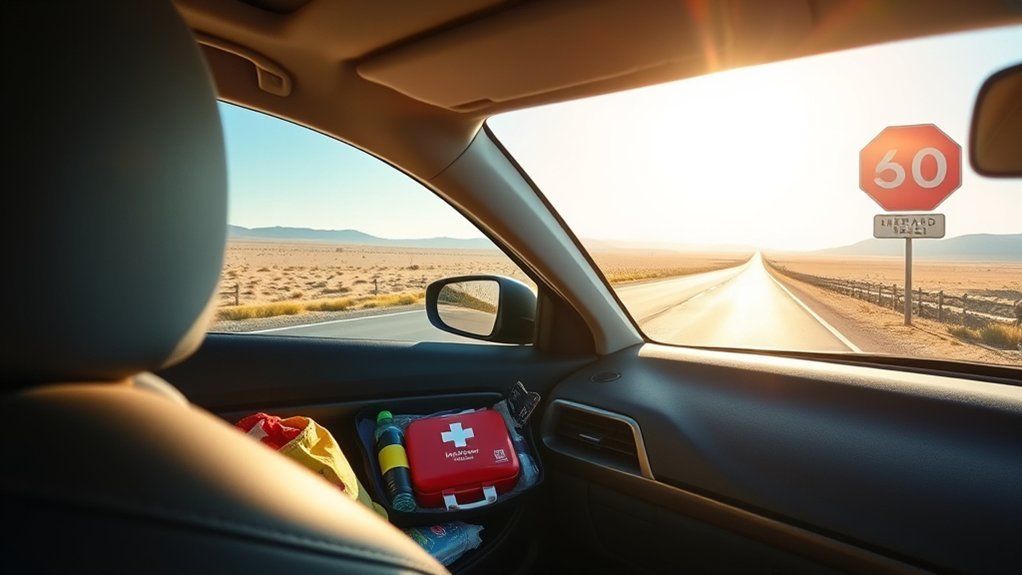
Traffic laws vary by state and country, so review local rules along the route. Safe habits still remain consistent: buckle every occupant, manage speed, leave space, signal early, avoid impairment, and keep your attention on driving.
Adhere to Traffic Laws
- Use seat belts correctly: Everyone should buckle up on every trip. According to NHTSA seat-belt guidance, a lap-and-shoulder belt reduces fatal-injury risk by 45% for front-seat passenger-car occupants.
- Leave a safe following distance: In good conditions, the three-second rule is a useful minimum for many passenger vehicles. Increase the gap in rain, snow, darkness, heavy traffic, while towing, or behind a large vehicle.
- Obey the speed limit: Choose a lower speed when visibility, traffic, weather, road surface, curves, or cargo make the posted limit unsafe.
- Signal and check blind spots: Make lane changes gradually and avoid last-second exits.
- Drive phone-free: Set the route before moving and pull over to a safe parking place before handling calls, texts, or navigation changes.
- Secure children and pets: Use an age- and size-appropriate child restraint, and keep pets in a secured carrier or restraint so they cannot interfere with the driver.
A seat belt can reduce the risk of fatal injury by 45% for a front-seat passenger-car occupant. Buckle every person for every mile.
Essential Emergency Kit Items
Even a well-maintained vehicle can experience a flat tire, dead battery, closure, or weather delay. Pack the kit for the route, season, passengers, and vehicle.
| Essential Item | Purpose | Check Before Leaving |
|---|---|---|
| Phone, charging cable, and power bank | Navigation and emergency calls | Charge all devices and save key numbers |
| First-aid kit and essential medicines | Minor injuries and personal needs | Replace expired or heat-damaged items |
| Flashlight and spare batteries | Visibility after dark | Test the light |
| Reflective vest and warning triangles | Help others see a stopped vehicle | Use only when placement is safe |
| Jumper cables or a rated jump pack | Dead-battery assistance | Know the correct procedure for your vehicle |
| Spare tire or inflator kit, jack, and lug wrench | Temporary tire repair | Check pressure, sealant date, and wheel-lock key |
| Water, nonperishable food, blanket, and weather gear | Unexpected delays | Match quantities to passengers and conditions |
| Basic tools, tire-pressure gauge, and paper map | Simple checks and backup navigation | Do not attempt repairs beyond your skill level |
Stay Prepared for Breakdowns
- Move out of traffic if the vehicle can be driven safely. Choose a level, visible area as far from moving lanes as practical.
- Turn on the hazard lights, set the parking brake, and note your location. Look for a mile marker, exit number, road name, or GPS coordinates.
- Call roadside assistance. Call 911 when there is a crash, fire, fuel leak, medical emergency, immediate traffic danger, or another urgent threat.
- Protect the occupants. On a high-speed road, remaining buckled inside may be safer than standing near traffic. Exit away from traffic only when staying in the vehicle creates a greater danger.
- Use warning devices only when it is safe to place them. Never use a flare near leaking fuel, dry vegetation, or another fire risk.
- Attempt only safe, familiar repairs. Do not crawl under a vehicle supported only by a roadside jack, and do not change a tire where passing traffic puts you at risk.
Regularly inspect the kit, replace expired items, recharge the power bank or jump pack, and adjust supplies for hot, cold, mountain, desert, or remote travel.
Frequently Asked Questions
What are the most important tips for long-distance driving?
Inspect the vehicle, check recalls, plan the route and backups, sleep 7–9 hours, pack an emergency kit, buckle every occupant, keep the phone away, leave a safe following distance, and stop whenever fatigue, weather, or a vehicle problem makes continuing unsafe.
What is the 1-2-3 rule in driving?
“1-2-3 rule” is not a universal official term. People often mean the three-second following-distance method: choose a fixed point, wait for the vehicle ahead to pass it, then count three seconds. If you reach the point sooner, increase the gap. Allow more time in poor conditions.
What are the 3 C’s of driving?
“Control, Caution, and Courtesy” is an informal memory aid, not a universal legal standard. It reminds drivers to maintain control of the vehicle, watch for hazards, and share the road respectfully. Your local driver handbook and traffic laws remain the authority.
What are the 4 R’s of driving?
“Responsible, Ready, Relaxed, and Respectful” is another informal safety reminder rather than an official nationwide rule. It can help you remember to prepare the vehicle, stay calm, avoid aggressive driving, and consider other road users.
How often should you stop on a long drive?
A break about every two hours is a practical planning point for many drivers, but it is not a promise that you will remain alert. Stop sooner for drowsiness, stiffness, hunger, restroom needs, bad weather, passenger needs, or any decline in concentration.
What should you do if you become sleepy while driving?
Pull over at a safe, lighted location and stop driving. Switch to a rested driver or sleep before continuing. NHTSA says coffee followed by a short 20-minute nap may help temporarily, but opening a window, turning up music, or eating does not make drowsy driving safe.
Conclusion
A successful long-distance drive is built on preparation, not speed. Check the car, know the route, sleep well, carry the right supplies, and make room in the schedule for breaks or delays. When fatigue, weather, traffic, or a mechanical problem changes the risk, slow down, stop, or change the plan. The safest trip is the one that gets everyone to the destination alert and secure.
Sources
- National Highway Traffic Safety Administration: Summer Driving and Road Trip Tips — vehicle checks, tire tread, recalls, cargo, and emergency-kit guidance
- National Highway Traffic Safety Administration: Drowsy Driving — drowsiness prevention and the limited coffee-plus-nap countermeasure
- CDC/NIOSH: Driver Fatigue on the Job — sleep needs, fatigue risk factors, and impaired reaction and judgment
- National Highway Traffic Safety Administration: Distracted Driving — phone-free driving and distraction risks
- National Highway Traffic Safety Administration: Seat Belt Safety — occupant-protection effectiveness
- California Department of Motor Vehicles: Safe Driving — the three-second following-distance method







Leave a Reply