
A DEF delete may be advertised as a way to avoid diesel exhaust fluid problems, derates, and repair bills. For a U.S.-certified diesel truck, however, disabling the DEF or Selective Catalytic Reduction system is generally prohibited under federal law. Claimed horsepower and fuel-economy gains also cannot be applied to every truck, engine, or tune.
Quick Answer
A DEF delete is not a legal repair for a U.S.-certified road truck. It can violate federal anti-tampering law, increase emissions, cause inspection and resale problems, and lead to denied warranty claims for related damage. Diagnose the fault, check for an OEM software update, or restore the truck to its certified configuration.
Key Takeaways
- Federal law generally prohibits disabling the DEF, SCR, DPF, EGR, sensors, or software installed to meet emissions requirements.
- DEF is used in the exhaust after combustion; removing the fluid itself does not create a predictable horsepower or MPG gain.
- A modification does not automatically erase an entire warranty, but coverage may be denied for damage caused by the modification.
- EPA’s 2026 guidance encourages manufacturer software updates that reduce harsh derates while keeping emissions systems functional.
- Owners should diagnose the exact fault by VIN and restore an already-deleted truck with the correct certified hardware and calibration.
Warning: Do not install delete pipes, block-off plates, sensor simulators, dummy loads, or software designed to suppress emissions faults. An “off-road use only” label does not automatically make a defeat device legal, and federal requirements also cover many regulated nonroad engines.
DEF Delete Benefits, Risks, and the Legal Bottom Line
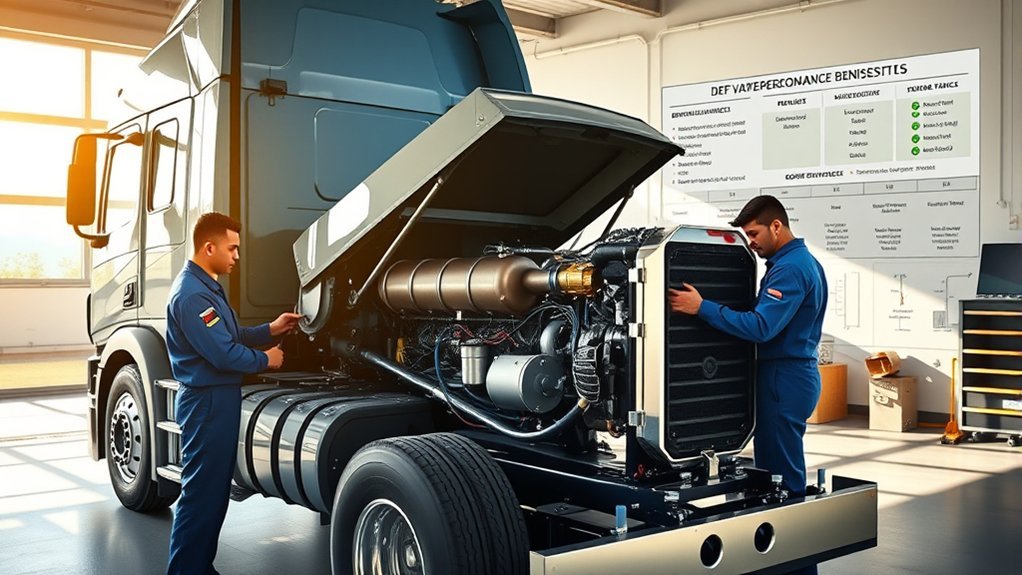
The term DEF delete is often used loosely. It may refer only to disabling the Selective Catalytic Reduction system, or it may describe a larger “full delete” that alters the diesel particulate filter, exhaust gas recirculation system, sensors, exhaust hardware, and engine-control software.
Advertisements may promise more power, better fuel economy, fewer warning lights, or lower maintenance costs. Those claims need context:
- Power gains are not caused by DEF alone. DEF is metered into the exhaust after combustion. Any power change may come from an altered engine tune or the removal of other hardware.
- Fuel-economy gains are not guaranteed. Results depend on the truck, calibration, gearing, tires, payload, route, weather, driving style, and measurement method.
- Maintenance does not disappear. A delete may remove DEF purchases, but it can create calibration faults, inspection failures, restoration costs, warranty disputes, and legal exposure.
- Higher emissions are expected. Disabling SCR reduces the system’s ability to control nitrogen oxides, or NOx.
A delete tune may change how an engine runs, but that does not make DEF itself a performance restriction or establish a universal horsepower or MPG gain.
Understanding DEF, SCR, DPF, and EGR
Cummins describes Diesel Exhaust Fluid as purified water mixed with 32.5% automotive-grade urea. Heat in the exhaust and the SCR catalyst allow the system to convert NOx into nitrogen and water vapor.
The major diesel emissions components do different jobs:
- DEF: The fluid used by the SCR system. It is stored in a separate tank and is not mixed with diesel fuel.
- SCR: Selective Catalytic Reduction uses DEF to reduce NOx in the exhaust.
- DPF: The diesel particulate filter captures soot and periodically burns much of it during regeneration.
- EGR: Exhaust gas recirculation sends a controlled amount of exhaust back through the engine to reduce the formation of NOx.
- DOC: The diesel oxidation catalyst helps treat carbon monoxide, hydrocarbons, and part of the particulate matter in the exhaust.
- Sensors and software: Temperature, pressure, NOx, level, and quality sensors help the engine controller monitor the system and detect faults.
Note: A DPF warning, frequent regeneration, an SCR-efficiency code, and a DEF-quality warning are not the same problem. Replacing parts without identifying the exact fault code and following the correct model-year service information can waste money.
Can You Legally Delete DEF in 2026?
For a U.S.-certified truck, the federal Clean Air Act generally prohibits knowingly removing or rendering required emissions controls inoperative. It also prohibits manufacturing, selling, offering, or installing parts whose main purpose is to bypass or defeat those controls. The EPA’s defeat-device enforcement information applies to hardware and software used on road vehicles and regulated nonroad engines.
States may add inspection requirements, registration consequences, anti-tampering rules, and separate penalties. A truck does not become federally compliant merely because it is registered in an area without periodic emissions testing.
The EPA’s May 2026 penalty information lists maximum civil penalties that include up to $4,527 per tampering event or defeat-device sale and higher maximums for certain vehicle, engine, reporting, and recordkeeping violations. Actual liability depends on the facts, the responsible party, applicable law, and enforcement discretion.
EPA has also taken action to address severe derates caused by DEF and SCR faults. Its 2025–2026 DEF guidance encourages manufacturers to develop compliant software updates that give operators more time to resolve certain faults. It does not authorize owners or shops to disable the emissions system.
Legal note: This article provides general information about U.S. requirements and is not legal advice. Rules outside the United States differ, and a lawyer or the responsible environmental agency should evaluate a specific enforcement or ownership situation.
Why This Guide Does Not Provide DEF Delete Instructions
Instructions for installing replacement pipes, blocking EGR passages, suppressing diagnostic codes, disconnecting sensors, or changing ECU emissions logic would help readers defeat required emissions controls. For that reason, this guide replaces the original delete procedure with a lawful repair path.
When your truck displays a DEF or SCR warning, take these steps instead:
- Record the full dashboard message. Take a photo and note whether a speed-limit, idle-only, or no-start countdown is active.
- Read all diagnostic trouble codes. Do not rely on a generic code description alone. Several faults may appear together.
- Verify the truck by VIN. Confirm the model year, engine, emissions family, calibration, and emissions label before ordering parts.
- Check warranty, recalls, and service campaigns. Ask the manufacturer or dealer whether an updated calibration or covered repair applies to the VIN.
- Test before replacing parts. A qualified technician may need to test the DEF level and quality, pump pressure, injector operation, heaters, wiring, sensors, exhaust leaks, and SCR efficiency.
- Repair the root cause. Use the correct OEM or properly documented emissions-compliant parts and software for that application.
Pro Tip: Ask the shop to list the stored codes, test results, applicable service bulletins, required parts, software updates, and warranty status on the written estimate. A parts list without diagnostic results is not a complete diagnosis.
Common DEF and SCR Problems and Legal Fixes
A warning does not always mean the entire aftertreatment system has failed. Common causes include low fluid, contaminated or incorrect fluid, damaged wiring, a failed heater, a faulty level or quality sensor, a restricted dosing injector, an exhaust leak, a NOx-sensor fault, outdated software, or reduced catalyst efficiency.
- Low DEF warning: Refill with fresh fluid that meets the specification in the owner’s manual. Confirm that the gauge updates after the required drive or key cycle.
- Poor DEF quality warning: Do not assume the fluid is the only cause. The truck may be responding to a concentration problem, contamination, sensor fault, dosing fault, exhaust leak, or poor NOx conversion.
- Service exhaust-fluid-system message: Scan the truck with equipment that can access manufacturer-specific aftertreatment data.
- Speed-limited or idle-only countdown: Arrange diagnosis promptly. Ask whether an OEM software update is available under current EPA guidance.
- White deposits or crystallization: Have the dosing area checked for leaks, improper spray, contamination, or damaged seals.
- Frequent DPF regeneration: Diagnose the DPF, pressure sensors, temperature sensors, engine condition, operating pattern, and soot-loading model. Adding DEF will not correct an unrelated DPF fault.
At a Glance
| Time Required | An initial scan and inspection may take one to four hours; intermittent faults or catalyst testing can take longer. |
| Difficulty | Intermediate to advanced. Manufacturer-specific diagnostics are often required. |
| Tools Needed | VIN-specific service information, an OEM-capable scan tool, electrical test equipment, and approved DEF test equipment when required. |
| Cost | Varies widely by truck and fault. Check warranty coverage, recalls, and software updates before authorizing parts. |
What to Do If Your Truck Is Already Deleted
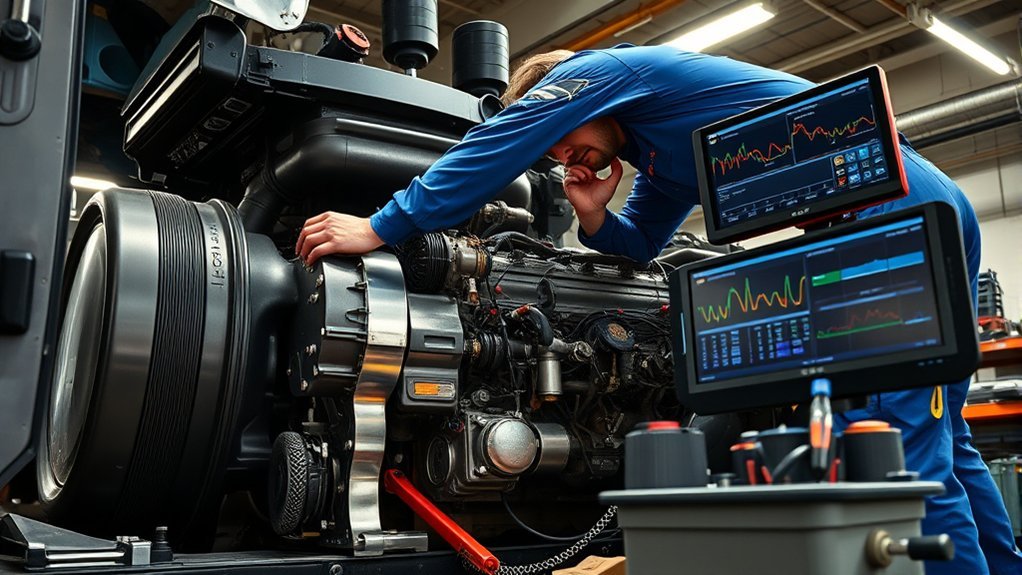
A truck may have been deleted by a previous owner without clear disclosure. Warning signs include missing exhaust housings, welded or non-original pipes, unplugged sensors, blocked EGR connections, nonfactory wiring, absent emissions labels, incomplete readiness monitors, or software that prevents normal diagnostic tests.
Use this restoration process:
- Document the current condition. Photograph the exhaust, wiring, engine bay, emissions label, dashboard warnings, and installed tuner or monitor.
- Save all records. Keep the sales listing, bill of sale, invoices, tune files, and communication with the seller or installer.
- Verify the original configuration. A dealer or emissions-qualified shop should use the VIN and emissions label to identify the correct hardware and calibration.
- Replace missing or altered components. Install the correct DPF, SCR catalyst, sensors, DEF hardware, EGR parts, and related equipment required for that certified configuration.
- Restore approved software. The engine and transmission controllers may need the correct manufacturer calibration.
- Diagnose remaining codes. Codes should not simply be erased. The truck must complete the required self-tests after repairs.
- Confirm inspection and registration requirements. Rules vary by state, vehicle weight, model year, and use.
Warning: Do not install random stock software before confirming which hardware remains on the truck. A mismatch between the calibration and missing equipment can cause faults, drivability problems, or an inoperable vehicle. Restoration should be planned as a complete VIN-specific job.
Performance, Fuel-Economy, and Maintenance Claims
No responsible source can promise that every DEF delete will add a fixed amount of horsepower or fuel economy. Trucks that share an engine badge may have different calibrations, transmissions, axle ratios, emissions families, and duty cycles.
- Horsepower: A more aggressive tune may change boost, fueling, injection timing, torque management, and transmission behavior. Those changes are separate from DEF’s function.
- Fuel economy: Dashboard estimates may not remain accurate after tire, gearing, injector, or calibration changes. Hand-calculated results also need several comparable tanks and similar routes, loads, and weather.
- Exhaust temperature: Temperature depends on engine load, fueling, turbo operation, regeneration, and calibration. Removing equipment does not guarantee lower or safer temperatures.
- Reliability: Eliminating warning messages is not the same as fixing a fault. A tune that hides diagnostics can prevent the owner from seeing problems that still exist.
- Maintenance: DEF refills are only one part of ownership. Fuel filters, oil, cooling-system service, sensors, injectors, turbochargers, DPF cleaning, and engine repairs still require attention.
Warranty, Resale, and Inspection Risks
A modification does not automatically cancel every part of a written vehicle warranty. According to the Federal Trade Commission’s auto-warranty guidance, a manufacturer or dealer may deny coverage when an aftermarket part or improper installation caused the damage.
An emissions delete can therefore create serious coverage problems for the exhaust system, engine controls, wiring, turbocharger, fuel system, or other components affected by the hardware or calibration. Separate emissions-warranty terms may also apply. Read the vehicle’s written warranty rather than relying on a shop’s verbal promise.
A deleted truck may also be harder to register, inspect, trade, finance, or resell. Buyers should check:
- The VIN and emissions-certification label.
- The condition and part numbers of the exhaust components.
- Whether sensors and wiring are present.
- Whether the engine controller has a nonfactory calibration.
- Whether all emissions readiness monitors can run normally.
- Whether the seller has the original equipment and restoration records.
- Whether the truck can pass the inspections required where it will be registered.
Legal Alternatives for Performance and Reliability
You can improve a diesel truck without disabling its emissions controls. The safest plan starts with maintenance, accurate diagnosis, and parts documented for the exact application.
- Install current OEM software and complete outstanding recalls or service campaigns.
- Repair boost, exhaust, fuel-pressure, cooling, or sensor faults that are reducing power.
- Use the correct air and fuel filters and follow the severe-duty maintenance schedule when towing or idling frequently.
- Choose tires and axle gearing that match the load and intended use.
- Use performance parts supported by emissions testing and approved for the exact year, engine, and configuration.
- In California, verify the part number and application against its specific CARB Executive Order. CARB warns that an approval for one application does not approve a part for every vehicle or use. See CARB’s aftermarket-parts guidance.
- Keep the Gross Vehicle Weight Rating, Gross Combined Weight Rating, axle ratings, tire ratings, and manufacturer towing limits unchanged unless the manufacturer expressly states otherwise.
Is a DEF Delete Right for Your Diesel Truck?
For a U.S.-certified road truck, a DEF delete is not a responsible or lawful repair choice. It can trade one warning or repair bill for emissions tampering, inspection failure, restoration costs, resale problems, and denied coverage for related damage.
If your main concern is a severe derate, ask the manufacturer whether a VIN-specific software update is available under EPA’s current guidance. If the system has a hardware fault, obtain a written diagnosis and repair the failed component. If the truck is already deleted, restore the full certified configuration rather than adding more bypasses.
Frequently Asked Questions
Can you legally delete DEF now?
Not as an ordinary modification to a U.S.-certified road truck. Federal law generally prohibits disabling emissions controls, including SCR hardware, sensors, and software. States may impose additional inspection or anti-tampering requirements.
Does EPA’s 2026 DEF guidance make deletes legal?
No. The guidance encourages manufacturers to develop compliant software updates that reduce the effect of certain DEF and SCR faults and give operators more time to obtain repairs. It does not authorize owner-installed delete software or removal of emissions hardware.
Do you need to reprogram the ECU after a DPF delete?
A DPF delete commonly relies on software that suppresses normal diagnostics, but providing instructions for that process would facilitate illegal tampering. During a lawful restoration, a qualified shop may need to reinstall the correct hardware and restore the manufacturer’s certified calibration.
Is deleting a diesel truck automatically a felony?
No. Emissions tampering can lead to civil penalties, and serious conduct involving conspiracy, fraud, obstruction, manufacturing, or large-scale sales can create criminal exposure. Whether conduct is a felony depends on the facts and charges; consult a lawyer about a specific case.
Is there a legal way to perform a DPF delete?
Not as a normal owner modification to a certified truck. Narrow exemptions and formally approved configurations may exist for specific regulated applications, but an “off-road” label or private-property use does not by itself create an exemption. Replace a failed DPF with the correct compliant component.
Does a DEF delete void the entire truck warranty?
Not automatically. However, the manufacturer may deny a claim when the modification caused or contributed to the failure. An emissions delete can affect coverage for the aftertreatment system and other components influenced by the altered hardware or calibration.
What should you do after buying an already-deleted truck?
Document the modifications, keep the sale records, and have a dealer or emissions-qualified shop identify the original configuration by VIN. Request an estimate to reinstall the correct hardware, restore approved software, repair remaining faults, and confirm inspection readiness.
Will a DEF delete always improve fuel economy?
No. There is no universal MPG gain. Fuel use depends on the calibration, truck configuration, payload, route, weather, tires, gearing, regeneration behavior, driving style, and measurement method. Removing DEF alone does not establish a predictable improvement.
Conclusion
A DEF delete is not a simple maintenance shortcut. For a U.S.-certified truck, it generally means disabling equipment and software required under federal emissions law. The promised power and fuel-economy figures often repeated online are not universal, and the modification can create inspection, warranty, resale, restoration, and legal problems.
A better response is to identify the exact DEF or SCR fault, check the VIN for warranty coverage and manufacturer updates, repair the failed component, and keep the certified emissions system working. If the truck has already been deleted, a complete VIN-specific restoration is the most responsible path.
Sources
- U.S. EPA — Diesel Exhaust Fluid — DEF and SCR background plus 2025–2026 manufacturer guidance addressing severe derates.
- U.S. EPA — Stopping Aftermarket Defeat Devices — federal anti-tampering rules, emissions effects, and enforcement results.
- U.S. EPA — Vehicle and Engine Enforcement Case Resolutions — current civil-penalty information and enforcement authority.
- Cummins — DEF Facts — DEF composition and its role in Selective Catalytic Reduction.
- Federal Trade Commission — Auto Warranties and Service Contracts — warranty treatment of aftermarket parts and modification-related damage.
- California Air Resources Board — Buyer Beware — application-specific approval and Executive Order guidance for aftermarket emissions parts.







Leave a Reply