
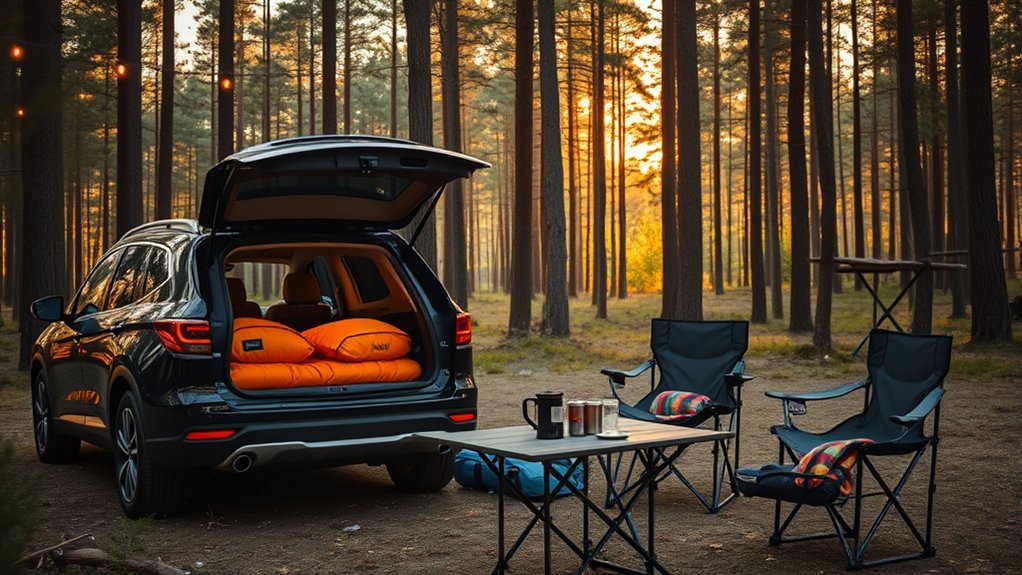
A good car camping setup should help you sleep comfortably, find gear quickly, cook safely, and leave without a mess. The process starts before you load the vehicle: confirm that overnight camping is allowed, check the weather and local restrictions, test your sleeping area, and pack each part of camp in a logical zone.
Quick Answer
To set up for car camping, use a legal campsite, build a flat and insulated sleep system, organize gear in labeled bins, place the kitchen outside and away from the sleeping area, keep food cold and wildlife-secure, and store safety equipment where you can reach it quickly.
Key Takeaways
- Confirm that camping and sleeping in your vehicle are allowed at the exact site.
- Test the sleeping platform, bedding, window covers, and ventilation before the trip.
- Never run the engine or use a fuel-burning stove, heater, lantern, or charcoal appliance inside a vehicle or tent.
- Keep perishable food at or below 40°F and follow local wildlife-storage rules.
- Pack by zone so shelter, kitchen, hygiene, and emergency supplies remain easy to reach.
At a Glance
| Time Required | About 45–90 minutes for the first complete campsite setup |
| Difficulty | Easy to moderate |
| Tools Needed | Tape measure, tire gauge, flashlight or headlamp, cooler thermometer, basic vehicle tools, and a packing checklist |
| Cost | Varies; use gear you already own, then budget for the campsite and any missing safety or sleep essentials |
Before You Leave: Confirm the Site, Weather, and Vehicle
Start by confirming who manages the land and whether camping is allowed. Overnight parking does not always include permission to sleep in a vehicle. Some national parks allow vehicle sleeping only in a registered campsite, while other locations prohibit it in parking lots, overlooks, trailheads, and day-use areas.
Review the campground or land manager’s current rules for reservations, permits, site limits, vehicle size, pets, fires, generators, quiet hours, drinking water, human waste, and food storage. The National Park Service frontcountry camping guide explains common developed-campground features, while the Bureau of Land Management camping page explains why dispersed-camping limits and restrictions must be checked locally.
- Check the forecast: Review daytime temperatures, overnight lows, rain, wind, heat alerts, and fire restrictions.
- Share your plan: Give a trusted person the campsite, route, vehicle description, group members, and expected return time.
- Download information: Save maps, confirmations, and emergency numbers for offline use.
- Inspect the vehicle: Check tires, spare-tire access, lights, fluids, fuel or charge level, and roadside equipment.
- Assess the road: Confirm that your vehicle has the clearance and traction needed for the approach road.
- Test the setup at home: Lie down on the complete sleep system, close the doors, install the window covers, and practice getting out without moving several bins.
Note: A phone and power bank are useful, but reception may be unavailable. Carry an offline map and make an emergency plan that does not depend entirely on cellular service.
Essential Gear for a Car Camping Setup
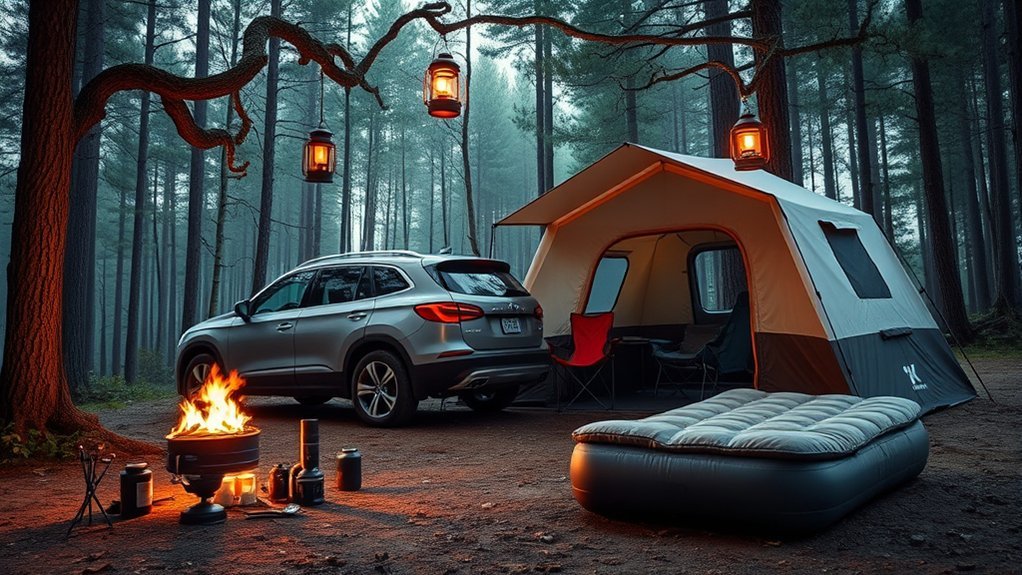
The right gear should cover sleep, shelter, water, food, lighting, hygiene, weather, and emergencies. Comfort items are helpful, but they should not block exits or bury essential equipment.
Sleep and Shelter Gear
- A sleeping pad, vehicle mattress, cot, or fitted platform that creates a stable surface
- A sleeping bag or quilt suited to the expected overnight low
- A pillow and extra blanket
- Window covers for privacy and light control
- Mesh window screens where insects are a concern
- A tent, tarp, or canopy when sleeping outside the vehicle
- Rain protection and dry clothing stored in a waterproof bag
Camp Kitchen and Water Gear
- An outdoor camp stove and the correct fuel
- A lighter or ignition backup stored away from children
- One pot, one pan, a cutting board, a knife, utensils, plates, and cups
- A stable table or approved campground table
- A cooler with a refrigerator-style thermometer
- Food containers and a separate trash system
- Enough potable water for drinking, cooking, brushing teeth, and cleanup
Lighting, Comfort, and Repair Gear
- A headlamp for each adult, plus spare batteries
- A lantern used only in a safe, manufacturer-approved location
- Camp chairs
- A first-aid kit
- A whistle, paper map, multi-tool, tape, cord, and basic repair supplies
- A portable charger and vehicle-compatible charging cable
- Sun protection, insect repellent, warm layers, and rainwear
Pro Tip: Perform one complete backyard or driveway test before your first trip. A ten-minute test often reveals blocked doors, missing adapters, an uneven mattress, poor window-cover fit, or gear that cannot be reached after the bed is made.
How to Optimize Space in Your Vehicle
Measure the usable cargo length, width, height, wheel-well spacing, and folded-seat angles before choosing a mattress or platform. Do not rely only on the vehicle’s published cargo volume because trim panels, seat hinges, and sloped seatbacks affect the actual sleeping area.
Use rigid or soft-sided storage containers to separate clothing, sleep gear, kitchen supplies, food, hygiene items, and tools. Place heavy items low and close to the center of the vehicle. Secure anything that could move during sudden braking, and never stack cargo where it blocks the driver’s view, mirrors, airbags, or access to the spare tire.
A tri-fold mattress, inflatable sleeping pad, or fitted foam pad can create a compact sleep system. Correct minor low spots with closed-cell foam or folded blankets. Avoid loose stacks that can shift during the night.
A comfortable vehicle bed should be level, insulated, stable, and easy to exit without unloading the entire car.
Install window covers only after parking. Remove or reposition them before driving so all required windows and mirrors remain visible.
Tips for Staying Organized on the Road
Assign every item to a zone and return it to the same place after use. A simple system prevents cooking tools from mixing with toiletries and keeps wet gear away from bedding.
- Sleep zone: Mattress, bedding, sleepwear, earplugs, and nighttime essentials
- Kitchen zone: Stove, cookware, utensils, cleanup supplies, and dry food
- Cold-food zone: Cooler, thermometer, ice, and sealed perishables
- Safety zone: First aid, headlamps, map, whistle, fire extinguisher, and emergency information
- Daily-access zone: Water, jacket, sunscreen, insect repellent, and snacks
- Dirty-gear zone: Shoes, wet clothing, trash, and used towels
Use packing cubes or compression bags for clothing, but avoid compressing insulation for long periods when the manufacturer advises storing it loose. Label containers on the top and side so you can identify them when they are stacked.
Load the vehicle in reverse order. Items needed first at the campsite—such as the site confirmation, leveling aids, shelter, headlamps, and food-storage equipment—should be easiest to reach.
Car Camping Setup Order
A consistent arrival routine reduces mistakes, especially when daylight is fading.
- Inspect the site: Look for dead overhead limbs, standing water, unstable ground, fire hazards, sharp debris, insects, and wildlife activity.
- Park legally and securely: Keep the vehicle within the assigned pad, set the parking brake, and avoid blocking roads, neighboring sites, or emergency access.
- Level the sleep area: Use the flattest legal parking position. On a slight slope, place your head at the higher end.
- Secure food immediately: Use the provided locker or the storage method required by the campground.
- Set up shelter and bedding: Complete weather protection before unpacking comfort items.
- Create the kitchen: Place it outside, on stable ground, and away from the sleeping area and dry vegetation.
- Install lighting: Position lights so paths and trip hazards are visible without disturbing nearby campers.
- Set the hygiene and trash plan: Identify the restroom, water source, wastewater procedure, and trash location.
- Test the exit: Make sure each sleeper can reach a door, keys, shoes, light, and essential medication without moving heavy cargo.
Creating a Comfortable Cooking Area
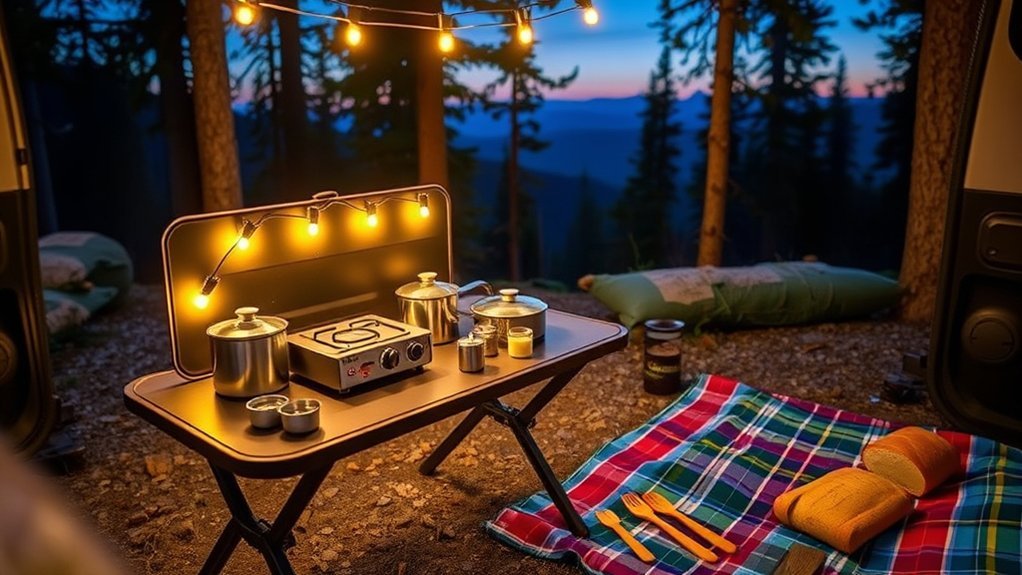
Create the cooking area on stable, level ground in the location approved by the campground. Keep the stove away from sleeping spaces, vehicle interiors, dry grass, low branches, fabric walls, and other flammable materials. Follow the stove manufacturer’s clearance and fuel instructions.
Essential Cooking Gear Checklist
- Outdoor camp stove with shutoff control
- Correct fuel, stored upright and away from heat
- Long lighter or manufacturer-approved ignition method
- Pot, pan, lid, and heat-safe utensil
- Knife and cutting board
- Plates, bowls, cups, and eating utensils
- Potable water and hand-cleaning supplies
- Cooler thermometer
- Separate containers for raw and ready-to-eat food
- Trash bags and a sealable food-scrap container
- Fire extinguisher or other fire-control equipment appropriate for the cooking system and site rules
Choosing a Campsite Location
Use an established campsite and designated parking pad whenever they are available. Do not move rocks, cut vegetation, dig drainage trenches, or expand the site.
In undeveloped areas where dispersed camping is permitted, select a durable surface and follow the land manager’s distance requirements. Leave No Trace generally recommends camping about 200 feet from lakes and streams so wildlife can reach the water and shoreline vegetation remains protected.
Keep the cooking area separate from the sleeping area. In wildlife country, follow the campground’s required layout and storage method rather than relying on one universal distance.
Warning: Never operate a fuel-burning stove, heater, lantern, grill, charcoal appliance, or running engine inside a vehicle, tent, or other enclosed sleeping space. Carbon monoxide is colorless and odorless, and partially opened windows do not make enclosed use safe. Follow the CPSC camping-equipment safety guidance.
Must-Have Safety Items for Your Car Camping Adventure
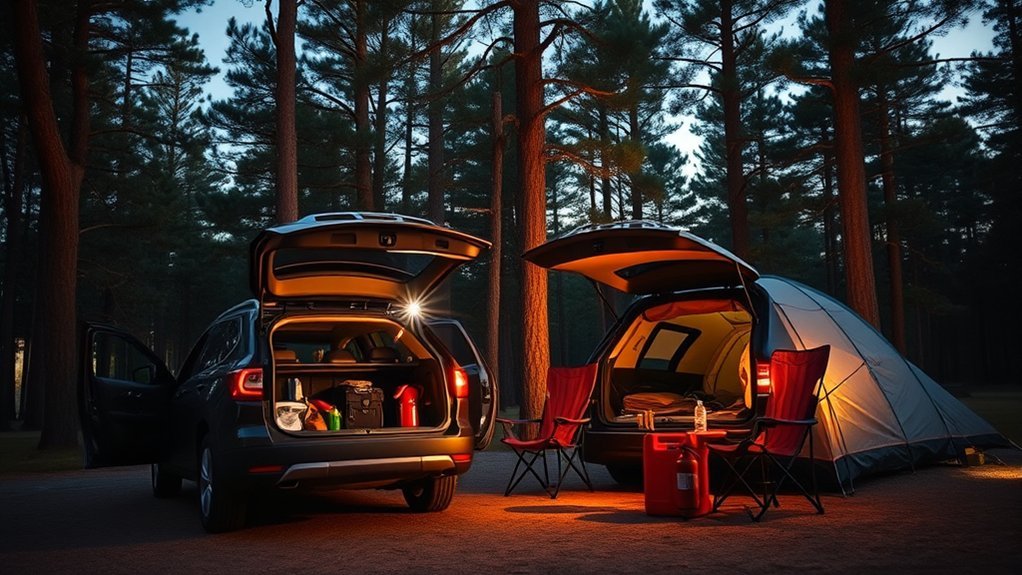
Your safety kit should address minor injuries, darkness, sudden weather, navigation problems, vehicle trouble, and unexpected delays. The National Park Service Ten Essentials provide a useful starting point.
- First aid: A stocked kit, personal medication, allergy supplies, and basic first-aid knowledge
- Illumination: Headlamp or flashlight with spare batteries
- Navigation: Offline map, paper map, compass where appropriate, and saved route information
- Weather protection: Rain shell, warm layers, sun protection, and extra clothing
- Emergency communication: Charged phone, power bank, whistle, and a satellite communicator for remote trips when appropriate
- Repair supplies: Multi-tool, tape, cord, cable ties, and spare equipment parts
- Vehicle supplies: Tire gauge, inflated spare tire or approved repair system, jack, wheel tool, jumper pack or cables, and roadside information
- Fire safety: Appropriate extinguisher, water where required, and knowledge of current restrictions
- Backup food and water: Extra supplies that do not depend on cooking
Keep the safety bin where it remains accessible after the bed and window covers are installed. Do not bury it below luggage or place it outside where wildlife, rain, or theft could affect it.
How to Plan Your Campsite Layout for Comfort and Safety
Divide the campsite into sleeping, cooking, food-storage, seating, hygiene, and waste areas. Use the designated campground layout first, then adjust only where local rules allow.
Optimal Sleeping Arrangement
Fold or move seats according to the vehicle manufacturer’s instructions. Cover hard gaps with fitted foam or a stable platform, then add an insulated sleeping pad and bedding suited to the forecast.
Park with the engine off and the parking brake applied. Keep keys in a secure, reachable location, but do not leave them in the ignition. Never sleep with the engine idling.
For moisture control, open two opposite windows slightly when weather, insects, and personal security allow. Use mesh screens or rain guards if appropriate. Window openings help moisture escape, but they are not protection against carbon monoxide.
Efficient Cooking Space
| Area or Item | Purpose | Safety Check |
|---|---|---|
| Portable stove | Outdoor meal preparation | Stable, outside, clear of flammable material, and never left unattended |
| Food-prep surface | Cutting and serving | Separate raw food from ready-to-eat food |
| Cooler and dry food | Ingredient storage | Maintain safe temperatures and follow wildlife rules |
| Trash and scraps | Responsible disposal | Seal immediately and store as required |
Organized Gear Storage
- Sort by activity: Keep sleep, kitchen, clothing, hygiene, and emergency items in separate containers.
- Prioritize access: Place frequently used items near a door or hatch.
- Protect bedding: Keep food, fuel, wet shoes, and trash away from the sleeping area.
- Secure the load: Strap down heavy containers before driving.
- Preserve an exit: Do not block all doors with bins, coolers, or bedding.
Packing Tips for Food and Cooking Gear
Plan the menu before choosing cookware. A short menu reduces fuel use, dirty dishes, cooler openings, and unnecessary equipment.
Pre-chill the cooler and all perishable food. Use plenty of ice or frozen packs and place a thermometer where it can be read without unpacking the cooler. Keep raw meat in leakproof containers below ready-to-eat items.
USDA guidance is to keep cold food at or below 40°F. Perishable food left above 40°F for more than two hours—or more than one hour when the temperature exceeds 90°F—should be discarded.
Return food to the cooler promptly and limit how often the lid is opened. When possible, use one cooler for drinks and another for perishable food so the food cooler stays closed longer. Review the USDA camping food-safety guidance before departure.
| Packing Item | Best Practice |
|---|---|
| Cooler | Pre-chill it, add a thermometer, secure it during travel, and keep it out of direct sun at camp |
| Utensils | Pack one labeled kitchen container and separate raw-food utensils from serving utensils |
| Pots and pans | Choose only the sizes required by the planned meals |
| Food containers | Use leakproof, washable containers; do not assume they meet wildlife-storage requirements |
| Meal preparation | Prepare ingredients at home and carry at least one meal that requires no cooking |
Easy Meal Planning for Car Camping
Choose simple meals that share ingredients and use one pot or pan. Good options include oatmeal, breakfast burritos, sandwiches, soup, rice bowls, pasta, and pre-cooked ingredients that only need reheating.
- Write a meal schedule: Include each breakfast, lunch, dinner, snack, and drink.
- Prepare at home: Wash, cut, portion, and label ingredients before departure.
- Carry a no-cook backup: Pack food you can eat safely if the stove fails or fires are restricted.
- Match meals to conditions: Use quick meals during bad weather and save longer cooking for calm conditions and daylight.
- Plan leftovers carefully: Chill them promptly or discard them when safe cooling is not possible.
Pro Tip: Put the first night’s dinner and the next morning’s breakfast near the top of the cooler. You will spend less time searching and leave the remaining food cold.
Food, Trash, and Wildlife Storage
Secure food, trash, cookware, coolers, pet food, scented toiletries, and cleaning products as soon as you arrive. Never store them in a tent.
Use the campground’s locker or an approved animal-resistant container when required. A standard cooler, tote, soft vehicle, or rooftop carrier may not meet local bear-storage rules. Follow the exact instructions for the site rather than assuming that keeping food inside the vehicle is always acceptable.
Wash dishes promptly, strain food scraps from wastewater where required, and pack out the scraps. Do not burn food, grease, coffee grounds, or trash in a campfire. The National Park Service food-storage guidance explains why food and scented items must be secured from wildlife.
How to Manage Hygiene and Toiletries While Camping
A simple hygiene system should provide safe drinking water, clean hands, protected toiletries, and a legal plan for human waste. Keep all scented products with the food-storage system when local wildlife rules require it.
Toiletry Packing Essentials
- Toothbrush and toothpaste
- Biodegradable soap used according to local wastewater rules
- Handwashing water or hand sanitizer
- Washcloth and quick-drying towel
- Toilet paper in a waterproof bag
- Opaque bags for packing out used paper, wipes, and hygiene products
- Menstrual supplies and a sealed disposal bag
- Personal medication and skin-care items
Wet wipes can help with quick cleanup, but every used wipe should be packed out—even when its packaging says biodegradable. Do not leave wipes in a cathole, toilet, fire ring, or natural environment.
Portable Hygiene Solutions
Use a campground restroom, vault toilet, or approved portable toilet whenever one is available. For dispersed camping, check the land manager’s rules before digging or using a portable waste system. Some deserts, river corridors, alpine areas, and heavily used sites require all solid waste to be packed out.
Where catholes are permitted, general Leave No Trace waste guidance recommends a hole 6–8 inches deep and at least 200 feet from water, camp, and trails. Cover and disguise the hole afterward. Pack out toilet paper and hygiene products where required or whenever doing so provides the lowest impact.
Safe Drinking Water
Bring potable water from a trusted source when possible. Never assume that clear water from a stream, lake, spring, or campground tap is safe.
If the water source is uncertain, follow the CDC guidance for treating water while camping. Boiling is the most reliable method for killing germs; when boiling is not practical, use an appropriate filtration and disinfection method for the likely contaminants.
Use safe water for drinking, preparing food, making ice, washing produce, and brushing teeth.
Bad Weather and Common Car Camping Problems
Rain and Wind
Set up before dark when possible. Use an established site that does not collect water, and avoid dry washes, drainage channels, exposed ridges, unstable slopes, and dead overhead branches. Secure shelters according to their instructions and lower or remove awnings when wind exceeds their safe operating conditions.
Do not move a stove into the vehicle or tent because it is raining. Cook only in a safe outdoor location permitted by the appliance manufacturer and land manager. Keep a no-cook meal available when outdoor cooking is unsafe.
Condensation Inside the Vehicle
Reduce moisture by drying wet clothing outside the sleeping area, avoiding open containers of water, and slightly opening opposite windows when conditions allow. Wipe damp glass in the morning and air out bedding before packing it away.
Do not use an unvented fuel-burning heater to control moisture or temperature.
Heat and Cold
Do not remain in a parked vehicle that is becoming dangerously hot. Use shade, airflow, water, and a safer location. In cold conditions, use suitable bedding and dry layers rather than idling the engine or bringing a stove or charcoal heater inside.
Dead Battery Prevention
Limit the use of interior vehicle lights, accessory mode, powered doors, audio systems, and climate controls when the engine is off. Use independent camp lights and a separate power bank for small devices. Keep a properly charged jump pack or other approved starting method accessible.
Best Practices for Leaving No Trace in the Outdoors
Responsible car camping protects wildlife, water, vegetation, and the experience of other visitors. Follow all seven Leave No Trace principles and give special attention to these campsite practices:
- Plan ahead: Know the rules, weather, fire restrictions, waste requirements, and food-storage system before arrival.
- Use durable surfaces: Park and camp only where permitted, and use established sites whenever possible.
- Pack everything out: Remove trash, food scraps, wipes, hygiene products, pet waste, foil, bottle caps, and microtrash.
- Protect water: Keep soap, food, wastewater, and human or pet waste out of lakes and streams.
- Respect wildlife: Observe from a distance, never feed animals, and secure food and scented items.
- Minimize fire impacts: Follow current restrictions, use existing fire rings where permitted, and extinguish fires completely.
- Respect other campers: Keep voices, lights, music, pets, and vehicle activity under control, especially during quiet hours.
Car Camping Departure Checklist
Complete a final walk-through before driving away:
- Extinguish all flames and confirm ashes are cold where fires are permitted.
- Turn off the stove, disconnect fuel as directed, and allow equipment to cool.
- Pack all food, trash, scraps, wipes, and small litter.
- Check beneath the vehicle, table, chairs, and bedding for forgotten items.
- Dispose of wastewater and human waste according to site rules.
- Return moved items to their original positions without disturbing vegetation.
- Remove window covers and restore full driving visibility.
- Secure every bin, cooler, fuel container, and loose object.
- Confirm that doors, hatch, roof equipment, and fuel caps are closed.
- Check the ground for leaks, tire damage, or obstacles before moving.
Frequently Asked Questions
What are the most common mistakes beginners make when car camping?
Common mistakes include arriving after dark, failing to confirm campsite rules, bringing an untested sleep system, burying emergency gear, overpacking cooking equipment, forgetting a no-cook meal, ignoring overnight temperatures, and leaving food or scented products unsecured.
How can I ensure my vehicle is secure while camping?
Use a legal campsite, lock doors, keep valuables out of sight, retain access to your keys, and avoid advertising expensive equipment. Do not block your exit with cargo. Follow campground instructions and report suspicious activity to the host, ranger, or local authority.
What is the best way to deal with bad weather while camping?
Check the forecast before departure, set up in daylight, use suitable rain and cold-weather gear, secure shelters, and keep a no-cook meal ready. Leave the site when flooding, falling branches, wildfire, extreme heat, severe wind, or another hazard makes staying unsafe.
Are there specific car camping etiquette rules to follow?
Respect quiet hours, keep lights and music low, control pets, stay within your assigned site, avoid idling the engine, do not walk through occupied campsites, secure food, and leave the site cleaner than you found it.
How do I choose the right campsite for my needs?
Match the site to your vehicle size, road clearance, group size, accessibility needs, desired facilities, weather exposure, water availability, pet rules, cooking plan, and cell-service expectations. Confirm that vehicle sleeping is permitted when that is part of your setup.
Can I sleep in my car anywhere overnight parking is allowed?
No. Permission to park overnight does not always include permission to camp or sleep in the vehicle. Check the land manager’s rules, posted signs, reservation terms, and local laws for the exact location.
How do I prevent carbon monoxide exposure while sleeping in a vehicle?
Turn the engine off and keep all fuel-burning stoves, heaters, lanterns, grills, generators, and charcoal appliances outside the vehicle and tent. Cracking a window does not make indoor combustion safe. Leave immediately and seek fresh air and emergency help if anyone develops headache, dizziness, weakness, nausea, confusion, chest pain, or unusual sleepiness.
How do I know whether food in my cooler is still safe?
Use a cooler thermometer and keep perishable food at or below 40°F. Discard perishables that have remained above 40°F for more than two hours, or more than one hour when the air temperature is above 90°F. When you cannot confirm safe time and temperature, discard the food.
Conclusion
A dependable car camping setup is less about owning a large amount of gear and more about using a safe, tested system. Confirm the site rules, prepare the vehicle, build a stable sleep area, cook only outside, protect food and water, and keep emergency equipment accessible. A consistent setup and departure routine will make each trip more comfortable while reducing risks to you, wildlife, and the campsite.
Sources
- U.S. Consumer Product Safety Commission — Portable Heaters and Camping Equipment — carbon-monoxide and enclosed-space safety
- USDA Food Safety and Inspection Service — Food Safety While Hiking, Camping and Boating — cooler use and safe food handling
- Centers for Disease Control and Prevention — Water Treatment While Camping — safe drinking-water treatment
- National Park Service — Ten Essentials — emergency and outdoor-safety equipment
- National Park Service — Bear Safety: Storing Food — wildlife-safe food and scented-item storage
- Leave No Trace — Seven Principles — campsite selection, waste, wildlife, and minimum-impact practices




Leave a Reply