
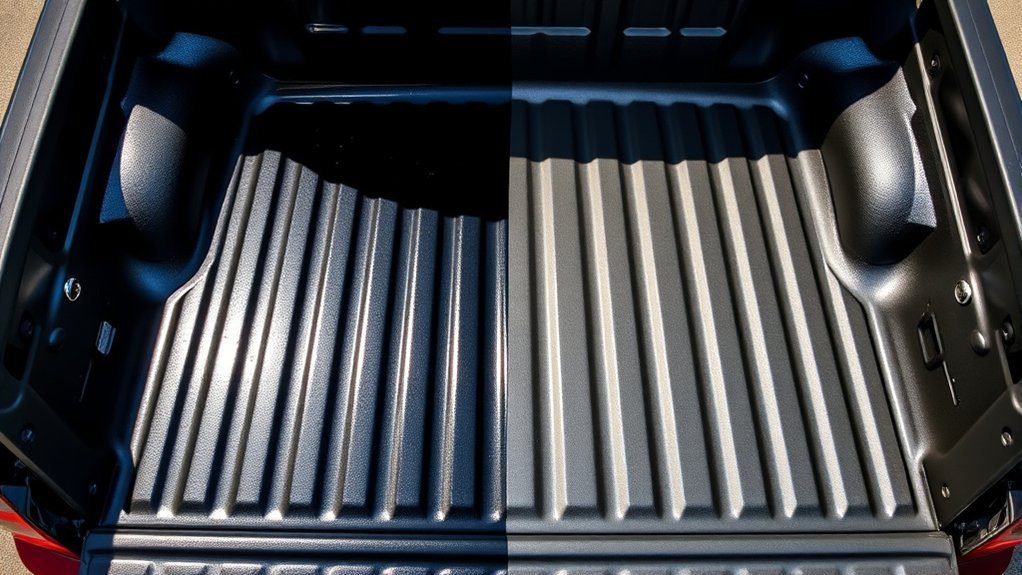
Choosing between a spray-in and drop-in bedliner comes down to how you use your truck, how much permanence you want, and how willing you are to inspect and maintain the bed. Spray-in coatings provide a seamless, fitted finish for demanding use, while drop-in liners are removable, quick to install, and often less expensive up front. Neither option is automatically best for every truck.
Quick Answer
Choose a professional spray-in bedliner for long-term ownership, heavy cargo, a seamless fit, and strong abrasion protection. Choose a drop-in liner when lower up-front cost, quick installation, and removability matter more. A properly fitted drop-in can work well, but the bed underneath should be cleaned and inspected periodically.
Key Takeaways
- Professional spray-in liners form a permanent, seamless coating, but correct cleaning and surface preparation are critical.
- Drop-in liners are removable and usually cost less up front, but poor fit, trapped debris, and blocked drainage can damage the paint underneath.
- Modern drop-ins are not all slippery or moisture-prone; some use skid-minimizing surfaces, drainage ribs, and airflow channels.
- Not every spray-in formula has the same UV resistance, texture, thickness, repair support, or warranty.
- Verify the exact model year, bed length, tailgate design, utility package, and cargo-system compatibility before buying either type.
Choosing the Right Bedliner: Key Considerations
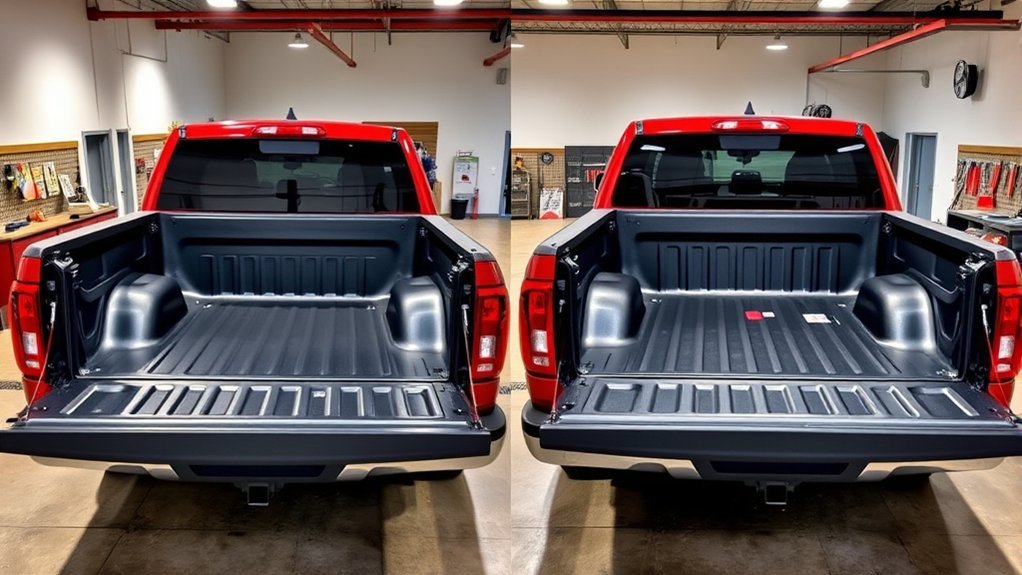
Start with the work your truck performs. A contractor who regularly loads tools, lumber, masonry supplies, or landscaping equipment has different needs from an owner who carries camping gear a few weekends each year.
A textured spray-in coating can provide strong cargo grip and protection without adding a separate shell inside the bed. A fitted drop-in liner can absorb impacts and be removed later, but its performance depends heavily on its shape, surface texture, fastening system, and drainage design.
| Factor | Spray-In Bedliner | Drop-In Bedliner |
|---|---|---|
| Best for | Long-term ownership, frequent hauling, irregular bed shapes, and owners who want a permanent finish | Budget-conscious owners, leased trucks, quick installation, and anyone who values removability |
| Installation | Professional cleaning, masking, surface profiling, and spraying for major commercial systems | Usually a fast model-specific installation using fasteners, hook-and-loop material, or the liner’s molded shape |
| Removal | Difficult because the coating bonds to the prepared bed surface | Normally removable for cleaning, inspection, or replacement |
| Moisture management | No space beneath the coating when it is properly bonded and intact | Depends on fit, drainage ribs, airflow, clean drain paths, and periodic removal |
| Cargo grip | Usually textured, although aggressiveness varies by product and applicator | Varies from slick rigid plastic to soft-touch or skid-minimizing designs |
| Repair | Localized damage may be repairable by an authorized applicator | A damaged one-piece liner may require replacement; modular parts may be replaceable separately |
| UV exposure | Base formulas may fade; UV-stable formulas or topcoats can improve color retention | Quality varies; verify that the selected material is UV resistant |
| Up-front cost | Usually higher because labor, preparation, materials, and curing are included | Usually lower, especially when installed by the owner |
The best bedliner is not simply the toughest one. It is the liner that fits your truck correctly, matches your cargo, preserves access to bed features, and receives the maintenance its design requires.
Pro Tip: Confirm the exact year, make, model, bed length, tailgate configuration, and factory bed package before ordering. Use the VIN when a dealer or manufacturer requests it, because trucks from the same model year may have different beds and accessory provisions.
Understanding Spray-In Bedliners
Professional spray-in bedliners are liquid coating systems applied directly to a prepared truck bed. Depending on the product, the coating may use polyurethane, polyurea, or a hybrid formulation. Rhino Linings describes both polyurethane and polyurea formulas for automotive protection.
The installer first removes dirt, wax, grease, and other contamination. Areas that should not receive coating are masked, and the painted surface is uniformly scuffed or profiled to promote adhesion. The coating is then sprayed to create the required coverage and texture. Correct preparation matters as much as the coating itself.
Advantages of a Spray-In Bedliner
- Seamless coverage: The coating follows the bed’s ribs, corners, wheel housings, and contours without leaving a separate shell underneath.
- Impact and abrasion protection: Quality formulas are designed to resist scratches, scuffs, and routine cargo impacts.
- Reduced under-liner moisture space: When the coating is correctly bonded and remains intact, water and grit cannot move underneath it as they can beneath a removable shell.
- Custom texture: Applicators may offer different textures or thickness packages for cargo grip, appearance, or heavy-duty use.
- Minimal loss of bed space: The coating adds a protective layer without installing a bulky molded liner.
- Repair support: An authorized shop may be able to clean, prepare, and respray localized damaged areas.
Disadvantages of a Spray-In Bedliner
- Permanent installation: The factory finish is intentionally scuffed during correct preparation, so returning the bed to its original painted condition is difficult.
- Higher initial cost: Preparation, masking, equipment, trained labor, and product upgrades increase the installed price.
- Installer-dependent results: Poor cleaning, thin application, missed areas, or inadequate preparation can cause adhesion and durability problems.
- Possible fading: Not every base formula is equally UV stable. For example, LINE-X markets Premium as a UV-protected, fade-resistant upgrade.
- Cure restrictions: The coating may feel dry quickly but still require additional time before heavy hauling.
- Texture concerns: A very aggressive surface can be uncomfortable when kneeling or sliding delicate cargo across the bed.
Warning: Do not spray over active rust, loose paint, oil, wax, or contaminated metal. A coating cannot repair structural corrosion, and poor surface preparation can trap an existing problem beneath the liner. Professional plural-component systems also require specialized equipment and trained applicators.
Understanding Drop-In Bedliners
A drop-in bedliner is a separate molded or flexible liner fitted inside the truck bed. Traditional versions use rigid plastic, while newer products may use flexible, soft-touch, modular, or tray-style materials. Installation may require fasteners, clips, hook-and-loop strips, or no-drill attachment points.
Advantages of a Drop-In Bedliner
- Quick installation: Many vehicle-specific liners can be installed without spraying, chemical curing, or permanent surface preparation.
- Removability: The liner can usually be removed for cleaning, inspection, replacement, or lease return.
- Impact absorption: A molded shell can provide a physical barrier between cargo and painted sheet metal.
- Lower up-front cost: Product-only pricing and owner installation can cost less than a professional coating.
- Model-specific integration: Good liners are shaped around wheel wells, bed contours, tie-downs, lights, and tailgate features.
- Modern drainage features: Some OEM liners include ribbed floors that promote airflow and drainage. Ford’s current Super Duty drop-in liner describes a ribbed floor designed to reduce mold, mildew, and corrosion.
Disadvantages and Moisture Concerns
A drop-in liner is not bonded to the truck bed, so sand, gravel, soil, leaves, or other debris may enter through openings or around the edges. Movement between the liner and trapped grit can abrade the paint. Once bare metal is exposed, retained moisture can contribute to corrosion.
This risk is not identical for every liner. Correctly fitted products may include drainage channels, airflow ribs, sealing plugs, and secure attachment points. Ford even offers plug kits intended to keep loose material from entering around certain drop-in bedliner openings.
- Inspect beneath the liner: Remove it at the interval recommended by its manufacturer and after major spills, flooding, or heavy debris exposure.
- Keep drainage paths open: Do not block factory drain locations with sealant, cargo, or incorrectly placed fasteners.
- Check contact points: Look for polished paint, scratches, rust staining, loose fasteners, and warped edges.
- Secure the liner correctly: A poorly fastened liner can move, vibrate, or lift at highway speed.
- Compare surface grip: Some rigid liners are slick, but other products use skid-minimizing or soft-touch materials. Do not judge every drop-in by the same standard.
Note: A drop-in liner does not automatically cause rust. The main risks are poor fit, paint abrasion, trapped contamination, blocked drainage, and a lack of inspection. A well-designed liner that stays clean and secure can provide useful long-term protection.
Price Comparison: What Do Bedliners Cost in 2026?
There is no reliable national price that applies to every truck. Bed length, local labor rates, condition of the existing paint, over-the-rail coverage, tailgate coating, color, UV upgrades, removal of an old liner, and commercial-duty thickness can all change the final bill.
Professional Spray-In Pricing
Current official examples place many standard installations in the mid-hundreds. Toyota lists a spray-on bedliner for the 2026 Tacoma at $575 MSRP. LINE-X’s published cost article gives a $600–$700 average, although that article was published in 2018 and should be treated as an older planning reference rather than a guaranteed 2026 quote.
Rhino Linings states that its independently operated applicators set local prices and that bed size and application type affect the quote. Premium UV packages, colors, extra thickness, extensive preparation, and long-bed coverage may raise the cost.
Drop-In Pricing
Drop-in liners are generally less expensive up front, especially when the owner installs the product. A rough planning range of about $200–$500 has appeared in manufacturer comparisons, but it should not be treated as a universal 2026 price. Current pricing is highly dependent on truck fitment, material, bed length, tailgate coverage, shipping, and whether a dealer performs the installation.
Before comparing totals, confirm what each quote includes:
- Bed floor and sidewall coverage
- Tailgate liner or tailgate coating
- Under-rail or over-the-rail coverage
- Removal of an existing liner or bed mat
- Rust treatment or paint repair
- UV-stable topcoat or premium formula
- Hardware, fasteners, plugs, and installation labor
- Warranty registration and repair support
Installation Time, Cure Time, and DIY Difficulty
Professional Spray-In Installation
Rhino Linings describes a process that includes deep cleaning, masking, uniform scuffing, dust removal, another cleaning step, coating application, and texture application. It states that a typical professional truck-bed application takes about three hours, although actual shop time can vary.
The same manufacturer says its coatings dry to the touch quickly but recommends waiting approximately 24 hours before heavy-duty bed use. Follow the instructions from the specific installer because temperature, humidity, product formula, and coating thickness may affect return-to-service timing.
Drop-In Installation
Many drop-ins can be installed in less than an hour once the bed is clean and the correct liner is on hand. Some flexible products use hook-and-loop material, while rigid versions may rely on molded fit, factory attachment points, or fasteners.
Do not drill holes unless the manufacturer’s instructions specifically require it. Confirm that all fasteners are tight and that the liner does not cover drain paths, bed lights, power outlets, cargo-management rails, tie-downs, or tailgate components.
DIY Roll-On Coatings Are a Separate Category
Products such as Herculiner Original are marketed as DIY roll-on bedliner kits. They may cost less than a professional spray-in system, but the owner assumes responsibility for cleaning, sanding, masking, application thickness, ventilation, cure time, and finish quality.
A DIY roll-on product should not be treated as identical to a professionally applied polyurea or polyurethane system. Compare the instructions, coating chemistry, coverage, UV performance, warranty, and repair procedure before choosing based on price alone.
Bedliner Durability and Longevity
No responsible comparison can promise one fixed lifespan for every liner. Service life depends on the quality of the product, installation, cargo type, UV exposure, chemical exposure, impacts, cleaning, and whether damage is repaired promptly.
How Long Does a Spray-In Bedliner Last?
A properly prepared professional spray-in coating can remain useful throughout long-term truck ownership. Major manufacturers support that expectation with limited lifetime warranties, but the details matter.
For example, the LINE-X limited lifetime warranty covers cracking, bubbling, or flaking under stated conditions for the original purchaser. It is nontransferable and has restrictions involving vehicle type, commercial use, proof of purchase, and the original factory finish. It does not mean that every gouge, stain, fade issue, or cargo-related cut is automatically covered.
How Long Does a Drop-In Bedliner Last?
A quality drop-in may also last for many years. Warping, cracking, loose hardware, UV damage, cargo abrasion, and poor fit can shorten its life, but replacement “every few years” is not an accurate rule for all products.
Some current removable liners carry lifetime limited warranties for defects in materials and workmanship. Warranty length should not be confused with guaranteed resistance to abuse, improper installation, cargo damage, or wear.
Maintenance and Repair
Maintaining a Spray-In Liner
- Sweep out abrasive gravel, metal shavings, and construction debris.
- Wash the coating with water, normal automotive soap, and a soft or medium brush.
- Inspect high-impact areas for deep cuts, exposed metal, lifting edges, or worn texture.
- Contact the original applicator before attempting a repair that could affect warranty coverage.
- Use a manufacturer-approved renewal coating if fading becomes a concern.
Maintaining a Drop-In Liner
- Remove loose debris from the liner after hauling soil, gravel, mulch, salt, or wet organic material.
- Keep factory drains and liner channels open.
- Periodically remove the liner when practical and wash the truck bed underneath.
- Allow the painted bed and liner to dry fully before reinstalling.
- Repair chipped paint or early corrosion before it spreads.
- Replace missing plugs, clips, or fasteners with approved parts.
Repairability
Spray-in damage can often be repaired locally, although a patch may not perfectly match the surrounding color or texture. A one-piece rigid drop-in with major cracking or warping may need full replacement. Modular and flexible systems may allow individual sections or attachment materials to be replaced.
Cargo Grip, Fitment, and Truck Compatibility
Bedliner choice affects more than paint protection. Check how the product works with the rest of the truck before ordering.
- Cargo grip: Compare actual texture rather than assuming that all spray-ins grip and all drop-ins slide.
- Tie-down access: Confirm that factory cleats, rails, hooks, and stake pockets remain usable.
- Bed lighting and outlets: Make sure the liner includes correct cutouts and does not block switches or electrical covers.
- Tailgate systems: Check compatibility with split, multifunction, powered, or step-equipped tailgates.
- Tonneau covers and caps: Over-the-rail coatings and thick liner edges can affect rail clamps and seals.
- Gooseneck and fifth-wheel hardware: Verify compatibility with both the liner manufacturer and hitch manufacturer before installation.
- Composite or aluminum beds: Confirm that the coating or liner is approved for the truck’s actual bed material and factory finish.
- Lease terms: A permanent coating may be treated differently from a removable accessory. Review the lease before modifying the bed.
Which Bedliner Should You Choose?
Choose a Spray-In Bedliner If:
- You expect to keep the truck for several years.
- You haul heavy, abrasive, or irregular cargo often.
- You want seamless coverage with no separate shell underneath.
- You prefer a finished, integrated appearance.
- You have access to a reputable local applicator with clear warranty support.
- You are comfortable with permanent surface preparation.
Choose a Drop-In Bedliner If:
- You need a lower up-front cost.
- You want to install or remove the liner yourself.
- You lease the truck or may return it to factory configuration.
- You want a replaceable physical shell for routine impacts.
- You are willing to clean and inspect beneath the liner.
- A model-specific liner preserves your truck’s drainage and bed features.
Consider an Alternative If Neither Is Ideal
A rubber bed mat may be enough when the main goal is floor protection and cargo grip. A flexible fitted liner can offer removability without the hard surface of a traditional plastic shell. A modular system may simplify replacement, while a DIY roll-on coating may suit an older work truck when the owner can complete the preparation carefully.
These alternatives do not provide identical sidewall, wheel-well, tailgate, drainage, or warranty coverage. Compare the exact product rather than relying only on its category name.
Frequently Asked Questions
Which is better, a drop-in bedliner or a spray-on bedliner?
A professional spray-on liner is usually better for long-term, heavy-duty use because it provides seamless coverage and cannot shift against the bed. A drop-in is often better when affordability, fast installation, impact absorption, and removability are the priorities. Product quality and installation matter in both categories.
What are the disadvantages of a spray-on bedliner?
The main disadvantages are higher installed cost, permanent surface preparation, dependence on applicator quality, possible UV fading, cure-time restrictions, and more complicated removal. Deep cuts may also require a professional repair to reseal exposed metal and match the surrounding texture.
Which spray-on bedliner brand is best?
There is no single best brand for every truck. LINE-X and Rhino Linings both offer professional systems with multiple formulas and warranty programs. Compare the local applicator’s preparation process, coating formula, UV protection, texture, repair support, written warranty, and customer service. DIY products such as Herculiner belong to a different installation category.
Does a spray-in bedliner increase a truck’s resale value?
It may improve buyer confidence by keeping the bed cleaner and reducing visible damage, but there is no dependable rule that it adds a specific dollar amount. Overall condition, mileage, maintenance, trim, market demand, and installation quality have a greater influence on the final offer.
Do drop-in bedliners always cause rust?
No. Rust becomes more likely when grit abrades the paint and moisture remains against exposed metal. Correct fit, secure attachment, drainage ribs, airflow, clean drain paths, sealing plugs, and periodic inspection can reduce that risk.
How long should you wait before using a new spray-in bedliner?
Follow the installer’s written instructions. Rhino Linings states that its coating dries to the touch quickly but recommends waiting about 24 hours before heavy-duty bed use. Temperature, humidity, coating type, and thickness may change the required time.
Can a removable liner be installed over a spray-in coating?
Some flexible fitted liners can be installed over compatible spray-in coatings, but approval depends on the product and attachment method. WeatherTech, for example, says its TechLiner can work with most spray-in liners when the required adhesion promoter is used. Confirm compatibility before ordering.
Conclusion
A spray-in bedliner is the stronger choice for many owners who expect demanding use, plan to keep the truck, and want a seamless permanent finish. A drop-in liner remains a practical option for owners who prioritize lower initial cost, fast installation, impact absorption, and removability.
Do not make the decision from price or category name alone. Compare the exact formula or liner, verify fitment, review drainage and cargo grip, check compatibility with every bed feature, and read the written warranty. A well-installed and properly maintained product from either category can protect the truck more effectively than a poorly selected liner with a more impressive marketing claim.
Sources
- Rhino Linings FAQ — professional preparation, application time, cure guidance, maintenance, formulation, and warranty information.
- Rhino Linings Truck Protection — polyurethane and polyurea formulas, seamless coverage, UV resistance, and corrosion protection.
- LINE-X Warranty Policies — covered failures, original-purchaser requirements, nontransferability, and other warranty limitations.
- Toyota 2026 Tacoma Accessories — current OEM spray-on bedliner MSRP example.
- Ford Super Duty Drop-In Bedliner — model-specific fit, drainage ribs, airflow, tailgate coverage, and corrosion-control design.
- WeatherTech TechLiner — removable installation, soft-touch cargo surface, UV resistance, thickness, and compatibility details.







Leave a Reply