

Buying a classic car at auction can be exciting, but the winning bid is only one part of the decision. A smart buyer researches the exact vehicle, inspects it before bidding, reads the auction contract, calculates the full delivered cost, and sets a firm ceiling. That preparation matters because many auction sales move quickly and may offer limited remedies after the hammer falls.
Quick Answer
To buy a classic car at auction safely, verify the car’s identity and paperwork, arrange a pre-bid inspection, compare recent sold prices, read every auction term, and set an all-in maximum that includes the buyer’s premium, taxes, transport, insurance, and immediate repairs. Treat every bid as a commitment.
Key Takeaways
- Inspect and verify the car before bidding; a post-sale inspection cannot undo a binding purchase.
- Do not assume a buyer’s premium is 10%. Rates, online surcharges, payment fees, and taxes vary by auction and location.
- Older cars may have short, nonstandard identification numbers, so combine title research with physical-number checks and marque-specific expertise.
- Use recent sold results for the same model, specification, condition, and documentation—not optimistic asking prices.
- Set one all-in ceiling and stop when the next bid would exceed it, even when the room becomes competitive.
At a Glance
| Time Required | Several days of research, plus enough preview time for a careful inspection |
| Difficulty | Moderate; higher for rare, modified, imported, or heavily restored cars |
| Tools Needed | Flashlight, inspection mirror, phone or camera, notepad, gloves, and ideally a marque specialist or mechanic |
| Cost | Hammer price plus auction fees, taxes, title and registration, transport, insurance, storage, inspection, and near-term repairs |
Research the Classic Car Before the Auction

Start with the auction catalog, but do not treat the listing as a complete inspection report. Record the lot number, model year, chassis or vehicle identification number, engine type, transmission, body style, claimed mileage, restoration history, ownership history, and every statement about originality. Save copies of the listing, photographs, condition report, and terms because online descriptions can change before the sale.
Verify Identity, Title, and History
Match the identification number shown in the catalog with the number on the title and the number physically stamped or attached to the car. Modern U.S.-market vehicles use a standardized 17-character VIN, but earlier cars can use shorter manufacturer-specific serial or chassis numbers. The National Highway Traffic Safety Administration VIN Decoder is useful for standardized VINs, but it is not a complete authenticity tool for every pre-1981 classic.
Order an approved National Motor Vehicle Title Information System report when the vehicle is eligible, and compare it with the title, prior registrations, restoration invoices, service records, and seller disclosures. A clean report does not prove a classic car has never been damaged, re-bodied, re-stamped, or inaccurately restored. Older records can be incomplete, so physical inspection and model-specific research remain essential.
- Confirm that the seller or auction can provide negotiable title documents acceptable in your state.
- Check for title brands, liens, inconsistent serial numbers, missing ownership documents, and unexplained gaps in history.
- For imports, verify customs, import, emissions, and registration documents before bidding.
- Compare trim tags, data plates, engine numbers, casting dates, and body numbers with marque references when originality affects value.
Note: “Numbers matching” can mean different things across makes, eras, and sellers. Ask exactly which components are original to the car and what documents support that claim.
Check Provenance and Restoration Quality
Provenance can add value only when it is supported by credible records. Look for period registrations, dated photographs, ownership records, competition history, factory documents, restoration invoices, and correspondence that connects the car to the claimed story. Do not pay a premium for a famous-owner or race-history claim that cannot be documented.
A glossy restoration can hide weak metalwork, incorrect parts, poor panel alignment, filler, or cosmetic work over old damage. Review photographs taken before and during restoration, identify who performed the work, and ask what was repaired or replaced. For a high-value or rare car, hire a specialist who knows the model’s factory seams, stampings, finishes, and common reproduction parts.
Compare Recent Sold Results
Build a price range from recent completed sales, not advertisements. Match the model year, engine, transmission, body style, specification, condition, originality, documentation, color desirability, and market location as closely as possible. Separate restored cars from survivors and concours examples from drivers. Then adjust for the specific car’s faults and the costs needed to make it safe, reliable, and legally registrable.
The right comparison is not “the same model.” It is the same model in similar specification, condition, originality, and documentation.
Inspect the Car Before You Bid
Attend the preview and inspect the car while there is still time to walk away. Ask whether a lift inspection, cold start, compression test, road test, paint-depth check, or independent pre-purchase inspection is allowed. Auction access varies, so make arrangements early rather than arriving with assumptions.
Warning: Never crawl under a vehicle supported only by a jack, reach near moving belts or fans, open a hot cooling system, or touch leaking fluids with bare skin. Ask auction staff for permission before operating controls, starting the engine, or using inspection tools on the paint.
Body, Chassis, and Rust Checks
- Inspect structural areas, frame rails, floors, rocker panels, suspension mounts, windshield surrounds, trunk floors, and spare-tire wells.
- Look for bubbling paint, fresh undercoating, uneven seams, overspray, mismatched textures, cracked filler, and waves in reflections.
- Check door, hood, and trunk gaps; difficult closing can point to poor adjustment, collision repair, corrosion, or body movement.
- Inspect glass, lights, weather seals, chrome, trim, convertible-top mechanisms, and model-specific hard-to-replace parts.
Mechanical, Electrical, and Roadworthiness Checks
When permitted, see the engine start from cold. Watch for smoke, warning lights, low oil pressure, fuel or coolant leaks, abnormal noises, unstable idle, and overheating. Check the engine, transmission, differential, brakes, steering, suspension, tires, charging system, gauges, lights, wipers, horn, heater, and other installed equipment. A short road test can reveal problems that a static display cannot, but many auctions do not allow one.
The Federal Trade Commission’s used-car guidance recommends an independent inspection before purchase. Although collector-auction transactions and state laws differ, the core lesson applies: a vehicle history report is not a substitute for a mechanical inspection.
Inspection Red Flags
- The identification number on the car does not match the paperwork.
- The seller will not explain major restoration work or missing documents.
- The engine is already warm when a cold start was requested.
- Fresh paint, undercoating, or detailing appears concentrated around known rust areas.
- Claims such as “original,” “rebuilt,” “museum quality,” or “numbers matching” lack records or clear definitions.
- The car cannot be titled, registered, imported, or insured as you intend to use it.
Pro Tip: Write a short condition summary immediately after the inspection. List verified strengths, known faults, unanswered questions, and estimated first-year needs. Use that sheet—not the auctioneer’s momentum—when setting your maximum bid.
Set an All-In Classic Car Auction Budget
Your maximum bid should be calculated backward from the most you can spend in total. Do not set a hammer-price limit first and add fees later. The car must still fit your budget after the buyer’s premium, tax, registration, transport, insurance, storage, inspection expenses, and immediate safety repairs.
| Budget Item | What to Confirm |
|---|---|
| Hammer price | Your winning bid before added charges |
| Buyer’s premium | Percentage, minimum, cap, and whether the rate changes by bidding method |
| Taxes and government fees | Sales or use tax, title, registration, temporary permit, and local requirements |
| Auction charges | Registration, online, documentation, payment, storage, and late-pickup fees |
| Delivery | Enclosed or open transport, loading limits, distance, and delivery insurance |
| First-year reserve | Tires, brakes, fluids, belts, hoses, battery, deferred service, and unexpected repairs |
After estimating every line, solve for the highest hammer price that keeps the total below your limit. If the exact tax or fee is unknown, use a conservative estimate or get a written answer from the auction before bidding. Do not create a planned “10% overage.” Your ceiling should already include a reasonable repair reserve.
Understand Auction Fees and Taxes
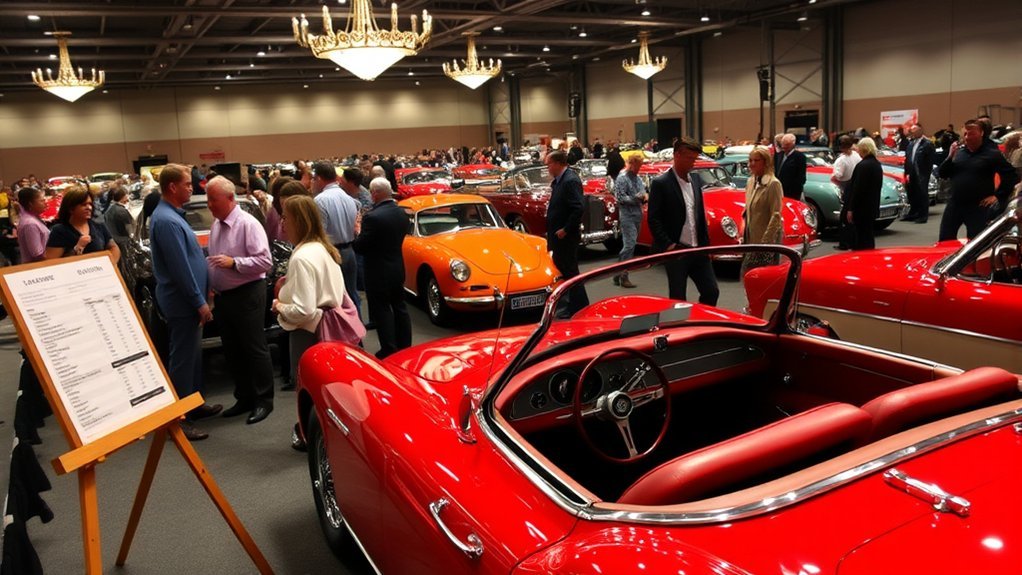
Auction charges are contract terms, not universal industry rates. Read the current bidder agreement for the specific event, location, lot type, and bidding channel. Printed catalogs, website summaries, and old articles may not reflect the terms that govern your transaction.
Buyer’s Premium
The buyer’s premium is an amount added to the hammer price. It may be a percentage, a tiered percentage, a fixed fee, or a percentage with a minimum or cap. It can also differ for in-person, phone, absentee, and internet bidding. For example, Barrett-Jackson states in its own bidding guide that an on-site 10% buyer’s premium applies to the event described there. That example does not establish a universal 10% rate for other auctions.
Additional Auction Fees
Depending on the auction, you may encounter bidder-registration fees, credit-card or payment-processing fees, online-platform fees, documentation charges, title-handling fees, temporary-tag fees, currency-conversion costs, storage charges, and late-removal penalties. Confirm which fees are refundable, which are charged even if you do not buy a car, and when storage begins.
Sales or Use Tax, Title, and Registration
Vehicle tax and registration obligations depend on where the sale occurs, where the car is delivered, your residence, the seller’s status, and state law. An out-of-state purchase is not automatically tax-free; a buyer may owe tax at the auction, at registration, or through another state process. Use the USAGov directory of state motor vehicle services to reach the correct DMV or motor vehicle agency before the auction.
Note: Tax, title, warranty, and auction-contract questions can turn on state law and transaction details. For an expensive or unusual purchase, get advice from the relevant state agency or a qualified professional before bidding.
Read the Auction Rules Before Registering
The bidder agreement controls the sale. Read it before paying a registration fee or placing a bid. Confirm the following:
- Whether the lot has a reserve, is no reserve, or is subject to seller confirmation.
- Whether bids are binding and whether they can ever be withdrawn.
- What warranties, if any, are offered and whether the vehicle is sold “as is.”
- Who is responsible for listing accuracy and how disputes must be handled.
- Deposit, proof-of-funds, credit authorization, and bidder-qualification requirements.
- Accepted payment methods, payment deadline, and whether financing must be arranged in advance.
- Pickup deadline, storage charges, transport rules, title-delivery timing, and risk of loss.
- Whether remote bids have different fees, increments, or closing rules.
The FTC explains that “as is” treatment and implied warranties depend partly on state law. Auction houses may also act as agents rather than owners of the vehicles. Never assume the auction guarantees a seller’s description unless the written terms clearly say so.
Choose a Bidding Strategy That Fits the Auction
A good bidding strategy is simple: know the lot, know the rules, know your all-in ceiling, and make sure the auctioneer or platform recognizes your bid. Tactics cannot turn an overpriced or poorly documented car into a sound purchase.
Live Auction Bidding
Arrive early, confirm your bidder number, locate the bid spotters, and watch several lots before your target car appears. Learn the auctioneer’s cadence and bid increments. Bid clearly and stop immediately when the next accepted bid would exceed your limit. Do not make a large jump merely to intimidate another bidder; it can raise your purchase price without improving the car.
Online and Remote Bidding
Test your account, identity verification, payment method, device, connection, and notification settings in advance. Some platforms use proxy or maximum bidding, while others require manual bids. Closing extensions also vary. Bring a Trailer, for example, explains that late bids trigger a two-minute extension. That is why there is no universal “3-minute rule.” Read the rules for the exact platform you are using.
Reserve and No-Reserve Auctions
A reserve is a minimum price required for the car to sell. At a no-reserve auction, the highest accepted bid generally wins under the event’s terms. If a reserve is not met, the auction may end without a sale or may allow post-auction negotiation. Do not let uncertainty about the reserve push you above your ceiling.
| Bidding Method | Main Risk | Best Practice |
|---|---|---|
| In person | Fast pace and crowd pressure | Write your maximum on the lot sheet and bid clearly |
| Online | Connection issues and unfamiliar extension rules | Test the platform and understand its closing process |
| Phone or absentee | Communication delay or misunderstood limits | Confirm instructions, contact details, and fees in writing |
| Proxy maximum | Entering a limit that ignores added costs | Convert your all-in ceiling into the correct maximum bid first |
Keep Emotions in Check While Bidding
Auction excitement can make a small increase feel harmless, but every increase also raises the buyer’s premium and may increase taxes. Use a written process:
- Set one ceiling: Calculate the maximum accepted bid before the lot reaches the block.
- Use a stop signal: Mark the last permissible bid on your sheet or ask a trusted companion to remind you.
- Pause before re-entering: If you stop bidding, do not jump back in because the auctioneer calls the car a bargain.
- Accept losing: Another example will usually appear. Overpaying does not become wise because the car is rare or emotionally appealing.
Observing other bidders can help you follow the pace, but it cannot tell you their budget, expertise, or reason for buying. Dealers, collectors, and first-time bidders have different goals. Base your decision on the car and your numbers, not assumptions about a competitor.
Work With Auction Staff—Without Outsourcing Due Diligence

Auction staff can explain procedures, locate documents, arrange permitted access, and clarify the bidder agreement. They should not replace your own inspection, title research, valuation, or professional advice.
| Ask Auction Staff | Verify Independently |
|---|---|
| Where the title, condition report, and vehicle file can be reviewed | Whether the documents match the car and satisfy your state |
| Whether a lift, cold start, test drive, or specialist inspection is allowed | The car’s actual mechanical and structural condition |
| Current premium, payment deadline, pickup deadline, and storage charges | Your complete cost calculation and available funds |
| How to signal a bid and whom to contact during a technical problem | That every submitted bid is within your limit |
Be specific and respectful. Ask for written clarification when an answer affects your eligibility, fees, title, payment, or right to inspect. Verbal assurances should not be treated as changes to a signed bidder agreement.
What to Do After Winning a Classic Car Auction
Once the auction accepts your winning bid, follow the contract immediately. The next steps should focus on payment, documents, insurance, and safe removal—not on deciding whether you still want the car.
- Confirm the invoice: Check the hammer price, buyer’s premium, taxes, credits, and every added fee.
- Pay by the approved method: Use only the payment instructions in the official invoice or bidder agreement. Independently verify wire instructions through a known auction contact before sending funds.
- Collect documents: Obtain the paid invoice, bill of sale, title or title-processing receipt, any required odometer disclosure, lien release, import documents, keys, manuals, and promised records.
- Arrange insurance: Confirm coverage before the car is driven, loaded, stored, or transported.
- Document pickup condition: Photograph the exterior, interior, underside where visible, mileage display, loose parts, and any existing damage before loading.
- Use suitable transport: Tell the carrier about low ground clearance, inoperative brakes, fluid leaks, non-running condition, unusual dimensions, or fragile bodywork.
- Complete title and registration: Follow your state motor vehicle agency’s deadlines and requirements.
- Inspect before regular driving: Check brakes, tires, steering, fuel lines, fluids, belts, hoses, lights, battery security, and other safety-critical systems.
Warning: Do not send payment using changed wire instructions received only by email. Payment fraud can involve look-alike addresses and last-minute account changes. Verify instructions through a trusted phone number or in-person contact.
Common Classic Car Auction Mistakes to Avoid
- Bidding without reading the bidder agreement or lot-specific announcements.
- Assuming the catalog description is a warranty or complete history.
- Relying on a vehicle history report instead of inspecting the car.
- Using asking prices rather than comparable completed sales.
- Ignoring pre-1981 serial-number differences or failing to match physical numbers to documents.
- Forgetting the buyer’s premium, tax, transport, storage, and immediate repair costs.
- Waiting until after the sale to investigate title, import, emissions, or registration eligibility.
- Bidding first and planning financing later.
- Believing a last-second bid always wins; many online auctions extend after late bids.
- Driving an unfamiliar classic home before checking basic safety systems and insurance.
Learn From Every Auction Experience
After the event, compare your pre-auction estimate with the actual hammer price and all-in total. Note which inspection findings affected bidding, which comparable sales proved useful, and which fees or procedures surprised you. Save the catalog, condition report, bidder agreement, invoice, photographs, and correspondence with the vehicle file.
If you did not win, review whether your ceiling was realistic rather than assuming you should have bid more. If you did win, track the first year of repair and ownership costs. That record will make your next auction budget more accurate and help you distinguish a low hammer price from a genuinely good purchase.
Frequently Asked Questions
What is the 20/3/8 rule for buying a car?
The 20/3/8 rule is a personal-finance guideline: put at least 20% down, use a loan term of three years or less, and keep total vehicle payments at or below 8% of gross income. It is not an auction rule. Because a collector car is usually a discretionary purchase, also budget for storage, insurance, maintenance, and repairs without weakening essential savings or debt payments.
What is the 3-minute rule in auctions?
There is no universal 3-minute rule. Some online auctions extend the closing time when a bid arrives near the end, but the extension may be one, two, three, or another number of minutes. Live auctions use the auctioneer’s process instead of a countdown. Read the exact platform rules before bidding.
What is the 30-60-90 rule for cars?
The phrase usually refers to traditional service checkpoints around 30,000, 60,000, and 90,000 miles—not inspections every 30, 60, and 90 days. It is not a universal maintenance schedule. Follow the manufacturer’s instructions where available and use a specialist schedule suited to the age, design, condition, and use of the classic car.
What should you never do at a classic car auction?
Do not bid without inspecting the car, checking the documents, reading the terms, confirming available funds, and calculating the all-in cost. Do not rely on verbal claims, assume the sale can be canceled, or exceed your written ceiling because of crowd pressure.
Can you get a pre-purchase inspection at a classic car auction?
Sometimes. Many auctions offer preview access, but the permitted inspection can range from a visual check to a lift inspection or specialist examination. Road tests, compression tests, paint meters, and disassembly may be restricted. Ask early, obtain permission, and arrange the inspector before the preview window closes.
Are classic car auction bids binding?
Treat every bid as binding. The bidder agreement explains when a contract forms, whether a bid can be withdrawn, what happens after a reserve is met, and what remedies apply after nonpayment. Do not bid while waiting for financing, an inspection, a spouse’s approval, or a title answer unless the written terms expressly allow that condition.
What paperwork should you receive after winning?
The exact package varies, but it commonly includes a paid invoice, bill of sale, title or title-processing documents, any required odometer disclosure, lien release when applicable, keys, and the records promised with the lot. Imported vehicles may need additional customs and compliance documents. Confirm the required paperwork with your state motor vehicle agency before bidding.
Conclusion
A successful classic car auction purchase starts long before the bidding begins. Research the exact car, verify its identity and documents, inspect it while you can still walk away, and translate your total budget into a firm maximum bid. Read the current auction terms, understand the closing process, and plan payment, insurance, transport, and registration in advance. Winning is exciting, but the best result is owning the right car at a cost and risk level you fully understood before raising your bidder number.
Sources
- National Highway Traffic Safety Administration VIN Decoder — standardized VIN information and decoding.
- National Motor Vehicle Title Information System: Information for Consumers — title brands, history reports, and approved providers.
- Federal Trade Commission: Buying a Used Car From a Dealer — independent inspections, history reports, warranties, and “as is” sales.
- USAGov State Motor Vehicle Services — official state title, registration, and motor vehicle agency contacts.
- Barrett-Jackson: How to Bid at an Auction — an official example of bidder registration and buyer’s-premium terms.
- Bring a Trailer: How It Works — official online bidding and closing-extension rules.







Leave a Reply