
Motorcycle crashes are rarely caused by one mistake alone. Risk builds when limited visibility, excess speed, poor spacing, weak braking skills, impairment, road hazards, or a mechanical problem overlap. The safest approach is to prepare the bike and rider before every trip, create time and space in traffic, and practice emergency skills in a controlled area.
Quick Answer
To reduce your risk of a motorcycle crash, wear a properly fitted DOT-compliant helmet and protective gear, complete a pre-ride inspection, ride sober, control your speed, scan well ahead, leave an escape route, and practice progressive braking and swerving. Never assume another driver sees you, even after eye contact.
Key Takeaways
- Wear a helmet certified by its manufacturer to meet FMVSS No. 218, plus abrasion-resistant clothing, gloves, eye protection, and over-the-ankle footwear.
- Use the SEE strategy: Search for hazards, Evaluate how they may develop, and Execute a smooth response early.
- Inspect tires, controls, lights, fluids, chassis, brakes, and stands before riding.
- Slow before curves and intersections, maintain a space cushion, and keep a clear escape path.
- Ride sober and rested, and practice maximum braking and swerving away from traffic.
At a Glance
| Time Required | 5–10 minutes for a pre-ride check; ongoing practice for riding skills |
| Difficulty | Beginner-friendly basics; emergency maneuvers require coached practice |
| Tools Needed | Accurate tire-pressure gauge, owner’s manual, clean cloth, and basic toolkit |
| Cost | Most checks are free; gear, maintenance, and rider training vary in price |
Understanding the Importance of Motorcycle Safety Gear
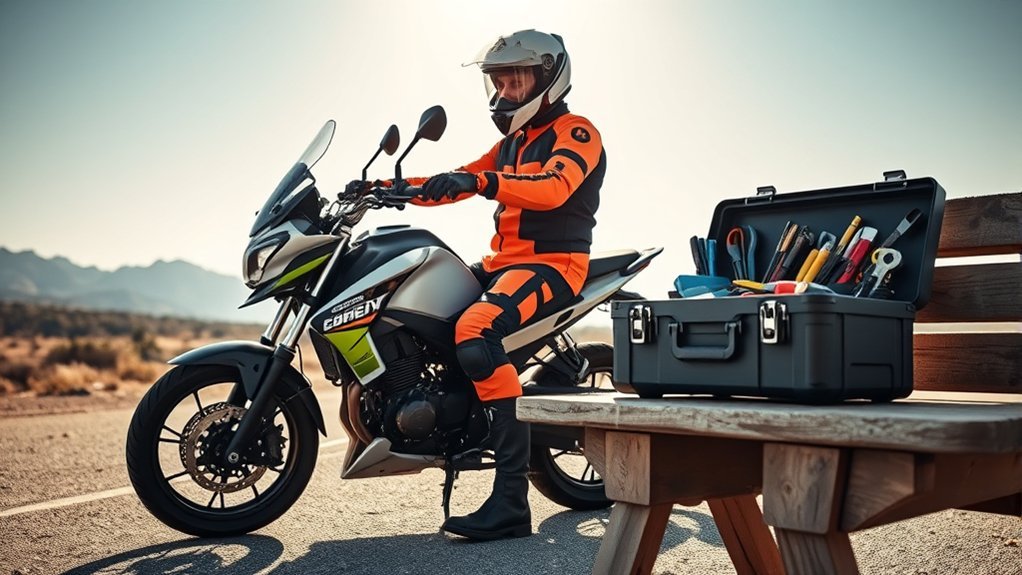
Protective gear cannot prevent every crash, but it can reduce injury severity when a crash occurs. In the United States, choose a helmet with the required DOT certification label showing that the manufacturer certifies compliance with Federal Motor Vehicle Safety Standard No. 218. NHTSA does not “approve” individual helmets, so avoid novelty helmets and suspicious or fake DOT labels.
Choose a Properly Fitted Helmet
The helmet should fit snugly around your entire head without painful pressure points. Fasten the chin strap every time. A full-face helmet generally provides more facial and chin coverage than an open-face or half helmet. Replace a helmet after a significant impact and follow the helmet maker’s inspection and replacement guidance.
Cover and Protect Your Body
Wear an abrasion-resistant jacket and pants, motorcycle gloves, eye protection, and sturdy over-the-ankle boots. Armor at the shoulders, elbows, back, hips, and knees can add impact protection. Bright or reflective material can improve conspicuity, but it never replaces defensive riding.
A 2004 case-control study found that riders wearing reflective or fluorescent clothing had a 37% lower associated risk of crash-related injury than riders who did not. Because the study was observational, treat high-visibility gear as one layer of protection rather than a guarantee. See the published rider-conspicuity study.
Warning: Gear reduces injury risk but does not make speeding, impaired riding, unsafe passing, or poor lane choices safe.
Essential Riding Skills for Every Level
Good crash-avoidance skills are smooth, practiced, and used early. Learn on a motorcycle that fits you, then practice in a clean, legal, traffic-free area or a supervised rider course.
Brake Progressively With Both Brakes
For a straight-line stop, keep the motorcycle upright and apply both brakes with firm, progressive pressure. Do not grab the front brake or stomp the rear brake. If your motorcycle has ABS, keep steady pressure on the controls during an emergency stop and follow the owner’s manual; pulsing or vibration may be normal.
Practice from low speeds first. Build toward harder stops only after you can keep your eyes up, handlebars straight, and pressure smooth. On a non-ABS motorcycle, ease brake pressure if a wheel locks and regain traction before reapplying as your training and owner’s manual direct.
Set Your Speed Before a Curve
Slow before the turn, look through the curve, press the handgrip in the direction you want to go, and use smooth throttle. Do not enter faster than you can see through the turn. Gravel, wet leaves, painted lines, metal covers, decreasing-radius turns, and limited sight distance all call for extra caution.
Practice Swerving Separately From Braking
A quick swerve can avoid an object when there is not enough room to stop. Press firmly on the handgrip in the direction of the escape path, then press the opposite grip to recover. Avoid hard braking during the swerve unless your training specifically covers combined maneuvers; brake before or after the swerve when possible.
Pro Tip: Practice braking and swerving as separate drills. In a real emergency, decide early whether stopping or escaping is the safer choice instead of trying both at the last second.
Key Pre-Ride Checks for Safe Riding
Use the Motorcycle Safety Foundation’s T-CLOCS inspection system: Tires and wheels, Controls, Lights and electrics, Oil and other fluids, Chassis, and Stands. A quick walk-around can catch a problem before it becomes an emergency.
Tire Pressure and Wheel Check
- Check pressure cold: Inflate to the motorcycle manufacturer’s specification for the load you are carrying, not the maximum pressure molded on the tire sidewall.
- Inspect condition: Look for cuts, cracking, bulges, embedded objects, uneven wear, and inadequate tread.
- Check wheels: Look for damaged rims, loose or broken spokes, bearing play, and leaking valve stems.
Brake Function Inspection
Test the front and rear brakes separately while stationary. The levers and pedals should move smoothly and feel consistent. Inspect pads, discs, hoses, and fluid reservoirs for wear, damage, leaks, or discoloration. Use the wear indicators and service limits in your owner’s or service manual; there is no universal 1/8-inch replacement rule for every motorcycle.
Controls, Lights, Fluids, and Stands
- Confirm the throttle moves freely and snaps closed with the handlebars turned both ways.
- Check clutch operation, cables, hoses, mirrors, horn, turn signals, headlight, tail light, and both brake-light switches.
- Look beneath the motorcycle for fuel, oil, coolant, or brake-fluid leaks.
- Check chain or belt condition and adjustment according to the owner’s manual.
- Make sure the side stand and center stand retract and hold the bike correctly.
Note: If a brake feels spongy, a tire is damaged, a control binds, or fluid is leaking, do not ride until the motorcycle is inspected and repaired.
How to Spot and Steer Clear of Common Motorcycle Crashes
Crash patterns differ by road, speed, rider, and traffic mix. Avoid relying on a single percentage. Instead, recognize the situations that repeatedly create conflicts and build a plan before you reach them.
Left-Turn and Intersection Conflicts
At intersections, expect a vehicle to turn across your path, pull out from a side street, or change direction without warning. Reduce speed, cover the controls when the threat is immediate, and choose a lane position that improves your view and escape space.
Do not treat eye contact as proof that a driver sees you. Watch the vehicle’s front wheels, steering angle, speed, and gap movement. Be ready to brake or move before the vehicle enters your path.
Lane-Change and Blind-Spot Conflicts
Avoid lingering beside another vehicle, especially near its rear quarter. Pass decisively when legal and safe, or drop back where you can see the driver’s mirror. Look for turn signals, wheel movement, a driver’s head movement, shrinking gaps, and vehicles approaching slower traffic.
Curve and Single-Vehicle Crashes
Many curve crashes begin with excessive entry speed, target fixation, running wide, or braking abruptly while leaned over. Enter at a speed that lets you stop within the distance you can see. Keep your eyes on the open path, not the guardrail, shoulder, or object you want to avoid.
Rear-End Risk at Stops
When stopping behind traffic, keep the motorcycle in gear, watch your mirrors, and leave room to move around the vehicle ahead. Position the bike where you are visible and avoid stopping directly in the center of a lane if oil or debris has collected there. Flashing the brake light before the vehicle behind arrives may improve notice, but your escape route matters more.
The Role of Defensive Riding Techniques in Crash Prevention
Use the SEE Strategy
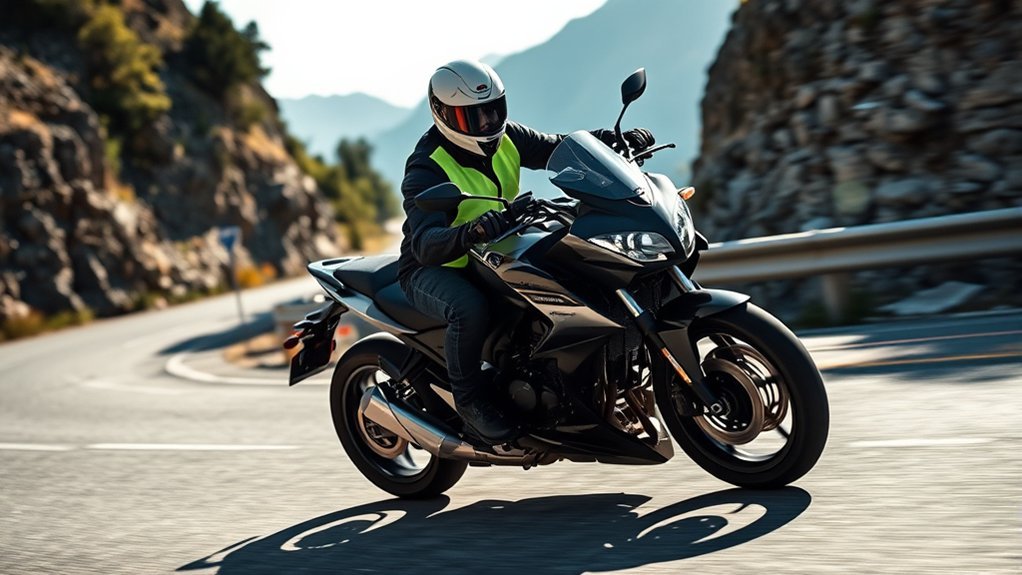
The SEE strategy organizes defensive riding into three actions:
- Search: Scan ahead, to the sides, and behind for vehicles, road surfaces, signs, pedestrians, animals, and escape paths.
- Evaluate: Decide which hazards could cross your path, reduce traction, block your view, or remove your space cushion.
- Execute: Adjust speed, lane position, communication, or direction early and smoothly.
Maintain a Safe Following Distance
Use at least a two-second following gap in ideal conditions, then increase it to four seconds or more when the road is wet, visibility is poor, traffic is unpredictable, or you are carrying a passenger. Count from the moment the vehicle ahead passes a fixed object until your motorcycle reaches it.
A longer gap improves your view of the road, reduces panic braking, and gives you more choices. If someone tailgates you, increase the space ahead so you can slow gradually, then allow the tailgater to pass when safe.
Use Lane Positioning and Escape Routes
There is no single safest lane position for every moment. Move within your lane to improve sight distance, stay out of blind spots, avoid surface hazards, discourage unsafe sharing, and preserve an escape path. Reassess as traffic and road conditions change.
In 2024, 6,228 motorcyclists were killed in U.S. traffic crashes, accounting for 16% of all traffic fatalities. Prevention depends on layers: sober riding, legal licensing, protective gear, machine readiness, speed control, and practiced decisions.
Staying Alert: Strategies for Enhanced Road Awareness
Keep your eyes moving instead of staring at the vehicle directly ahead. Scan roughly 12 seconds into your intended path when conditions allow, check the near road surface, and update your mirrors regularly. This is a planning horizon, not a following-distance rule.
- Intersections: Search left, right, and left again while tracking vehicles that may turn across you.
- Hidden entrances: Expect vehicles from driveways, parking lots, alleys, and gaps in stopped traffic.
- Road surfaces: Spot gravel, potholes, tar snakes, standing water, paint, leaves, and metal covers early.
- Night riding: Slow enough to stop within the area you can see and avoid outriding your headlight.
- Distractions: Set navigation and communications before moving. Do not handle a phone while riding.
Control Speed, Impairment, Fatigue, and Weather Risk
Speed reduces the time available to identify and avoid a threat. Choose a speed that fits sight distance, traction, traffic, and your skill—not just the posted limit. Slow down before blind curves, hill crests, work zones, intersections, and areas with pedestrians or wildlife.
Ride with no alcohol or impairing drugs in your system. NHTSA reports that 40% of motorcycle riders who died in single-vehicle crashes in 2024 were alcohol-impaired. Prescription and over-the-counter medicines can also affect balance, judgment, vision, or reaction time.
Fatigue can narrow attention and delay decisions. Stop when you are yawning, missing signs, making repeated errors, or struggling to focus. In rain, cold, wind, fog, or extreme heat, reduce speed, increase following distance, and stop if conditions exceed your equipment or ability.
Warning: Never try to “sober up” with coffee, food, or fresh air before riding. Only time lowers alcohol concentration, and some medicines remain impairing long after you take them.
Adjust for Passengers, Cargo, and an Unfamiliar Motorcycle
A passenger or load changes acceleration, braking distance, steering, suspension, and ground clearance. Check the owner’s manual for weight limits and required tire-pressure or suspension changes. Secure cargo low and evenly, and verify it cannot contact the wheel, chain, belt, exhaust, or controls.
Brief a passenger before moving. The passenger should wear full protective gear, keep both feet on the footrests, hold on securely, avoid sudden movement, and lean with the motorcycle. Practice low-speed starts, stops, and turns before entering busy traffic.
When riding a new, rented, borrowed, or recently serviced motorcycle, first locate every control and learn the brake, clutch, throttle, steering, and low-speed response in a controlled area.
Why Continuous Learning Matters in Motorcycle Riding
Rider education can improve knowledge, hazard awareness, and opportunities for coached practice, but it does not guarantee that a rider will avoid crashes. NHTSA’s review describes the research on crash reduction from rider training as mixed and inconclusive. The practical value is learning correct techniques, identifying limits, and practicing safely rather than assuming a course makes risk disappear.
Stay properly licensed and consider refresher training when you return after a long break, change motorcycle types, begin carrying passengers, or notice weak emergency skills. NHTSA reported that 35% of motorcycle operators involved in fatal crashes in 2024 did not have a valid motorcycle license.
When choosing a motorcycle, ABS is a valuable safety feature. The Insurance Institute for Highway Safety reports that fatal-crash rates were 22% lower for motorcycles with optional ABS than for the same models without it. ABS supports hard braking, but it cannot overcome excessive speed, poor tires, or a lack of space.
Motorcycle Crash-Prevention Checklist
- Wear a correctly fitted DOT-compliant helmet and full protective gear.
- Confirm your license, registration, insurance, and required equipment are current.
- Complete a T-CLOCS pre-ride inspection.
- Ride sober, rested, hydrated, and free from impairing medication effects.
- Set speed before curves, intersections, and low-visibility areas.
- Use SEE and scan far enough ahead to make smooth decisions.
- Keep a following gap and a clear escape route.
- Stay out of blind spots and never assume eye contact means you were seen.
- Practice maximum braking and swerving in a controlled setting.
- Stop riding when the motorcycle, weather, road, or your condition is unsafe.
Frequently Asked Questions
What is the 1% rule in motorcycles?
There is no recognized motorcycle-safety rule called the “1% rule.” The phrase “one-percenter” usually refers to a motorcycle-club identity, not a riding technique. For safety, rely on established guidance such as proper licensing, protective gear, SEE, safe spacing, and practiced braking.
What does two fingers down mean for bikers?
It is an informal rider greeting often understood as respect, hello, or “keep two wheels down.” Meanings and customs vary by region. Do not remove a hand from the controls when cornering, braking, shifting, or managing a hazard.
How do you avoid crashing a motorcycle?
Use several layers of protection: ride sober and within your limits, wear full gear, inspect the motorcycle, control speed, scan ahead, maintain space, avoid blind spots, prepare for turning vehicles, and practice progressive braking and swerving away from traffic.
What is the 12-second rule for motorcycles?
It is a visual-planning technique: scan about 12 seconds ahead so you can identify hazards and adjust early. It is not a universal law and it is not the same as following distance. Keep a separate time gap behind the vehicle ahead.
How much following distance should a motorcycle keep?
Use at least two seconds in good conditions and add more space when traction, visibility, traffic, speed, fatigue, or load increases risk. Four seconds or more may be appropriate in rain, darkness, heavy traffic, or when carrying a passenger.
Does eye contact mean a driver sees a motorcycle?
No. A driver can look toward you without recognizing your speed, distance, or presence. Treat eye contact only as one clue. Watch wheel movement and vehicle position, reduce speed, and keep a braking or escape option.
Does motorcycle ABS prevent crashes?
ABS helps prevent wheel lock during hard braking and is linked with lower fatal-crash rates, but it does not guarantee a shorter stop on every surface or replace correct technique. Maintain the tires and brakes, preserve following distance, and follow the motorcycle owner’s manual.
Conclusion
A safer ride begins before the engine starts. Wear protective gear, inspect the motorcycle, and be honest about your condition and skill. On the road, control speed, scan ahead, protect your space, and expect other road users to make mistakes. Practice emergency braking and swerving until the correct response is familiar, then keep refining those habits without becoming overconfident.
Sources
- National Highway Traffic Safety Administration — Motorcycle Safety — 2024 fatality, licensing, impairment, gear, and pre-ride guidance.
- Motorcycle Safety Foundation — T-CLOCS Checklist — pre-ride inspection items.
- Motorcycle Safety Foundation — SEE Strategy — hazard-search and decision-making process.
- BMJ/NIH — Motorcycle Rider Conspicuity and Crash-Related Injury — observational evidence on reflective and fluorescent clothing.
- NHTSA — Motorcycle Rider Training — current evidence and limitations of training as a crash countermeasure.
- Insurance Institute for Highway Safety — Motorcycles — motorcycle ABS research and fatal-crash-rate comparisons.






Leave a Reply