
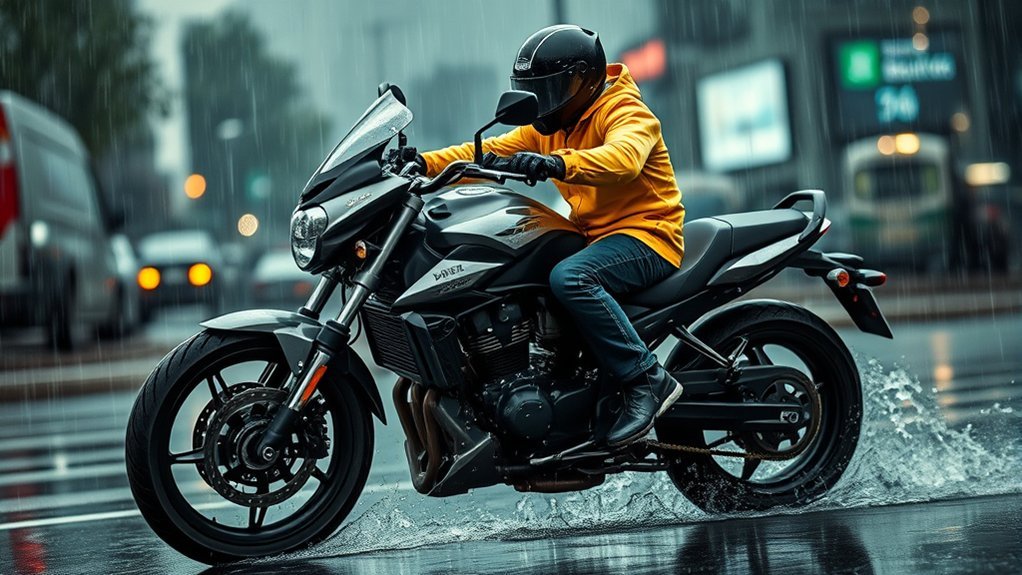
Riding a motorcycle in the rain demands more planning, more space, and smoother control inputs than riding on a dry road. Reduce your speed before grip becomes uncertain, avoid abrupt braking or acceleration, wear waterproof protective gear, and continually scan for paint, metal, leaves, oil, standing water, and other low-traction surfaces.
Quick Answer
To ride a motorcycle safely in the rain, slow down before hazards, use the throttle, clutch, steering, and both brakes smoothly, leave at least three seconds or more behind traffic, stay as upright as practical in turns, wear visible waterproof gear, and postpone the ride when water, wind, lightning, or visibility becomes unsafe.
Key Takeaways
- Check cold tire pressure, tread, lights, brakes, controls, weather, and your route before leaving.
- Reduce speed early and make every throttle, clutch, steering, shifting, and braking input progressive.
- Use both brakes, but apply them more gently when the motorcycle is leaned or the surface is slippery.
- Avoid standing water, painted markings, steel surfaces, leaves, fuel spills, loose gravel, and flooded roads.
- A rain mode, traction control, or ABS can help, but none can create grip where little or none exists.
- Delay the ride when visibility is poor or when lightning, flooding, severe wind, fatigue, or cold makes safe control doubtful.
At a Glance
| Time Required | About 10–15 minutes for a pre-ride inspection, plus continuous adjustments during the ride |
| Difficulty | Intermediate; new riders should build wet-weather skills gradually and seek formal training |
| Tools Needed | Accurate tire-pressure gauge, clean visor cloth, anti-fog product or insert, and model-approved maintenance supplies |
| Cost | No added cost for technique; waterproof gear, visor treatment, and maintenance supplies vary |
Warning: Never enter a flooded road or ride around a flood barricade. Standing or moving water can hide pavement damage, move the motorcycle sideways, stall the engine, or become deeper than it appears. Turn around and choose another route.
Understanding the Risks of Riding in the Rain
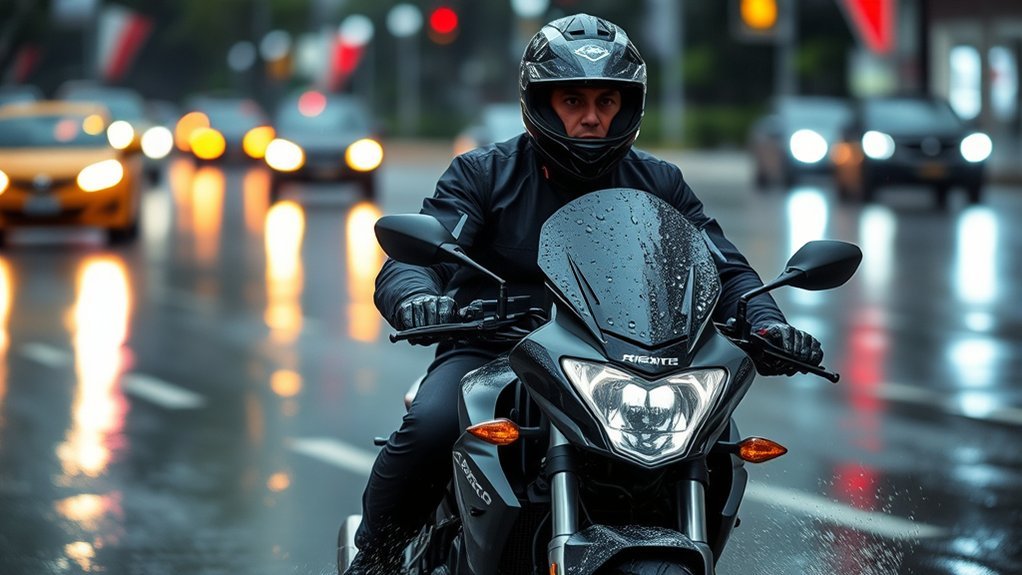
Wet pavement usually offers less traction than dry pavement. The risk can be greatest when rain first begins because water mixes with accumulated dirt, fuel, oil, and rubber residue before traffic and continued rain wash some of it away. The Motorcycle Safety Foundation advises riders to reduce speed, avoid sudden movements, and use both brakes smoothly on slippery surfaces.
Rain also reduces contrast and visibility. Drivers may have trouble judging a motorcycle’s speed or may not see it through spray, fogged windows, or windshield glare. At the same time, a rider’s visor may fog, water droplets may distort the view, and spray from trucks can briefly obscure the road.
Standing water creates another problem. Even a shallow puddle can hide a pothole, loose gravel, a damaged utility cover, or spilled fuel. At higher speeds, a tire may begin to ride on a film of water instead of maintaining full road contact. The safest response is to reduce speed before the water and avoid it when a safe path is available.
Cold rain can also reduce concentration and hand control. Wet clothing draws heat away from the body, while cold or numb fingers make fine throttle, clutch, and brake movements harder. Waterproof layers, insulation when needed, and timely breaks are therefore safety equipment—not just comfort items.
Pre-Ride Check Before Riding in Rain
A wet-weather ride should begin with the motorcycle, gear, weather, and route. Do not wait until traction feels poor to discover low tire pressure, weak lighting, a damaged visor, or worn tread.
- Check cold tire pressure: Use an accurate gauge and the pressure listed on the motorcycle’s frame placard or in its owner’s manual. Do not use the maximum pressure molded into the tire sidewall as the normal street setting. Bridgestone’s motorcycle tire-pressure guidance also recommends inspecting tread and sidewalls while checking pressure.
- Inspect tread and tire condition: Look for inadequate tread, cuts, bulges, cracking, embedded objects, uneven wear, or unexplained pressure loss. Have a tire professional inspect anything questionable.
- Test lights and signals: Confirm that the headlight, taillight, brake light, turn signals, and any permitted auxiliary lighting operate correctly.
- Check controls and brakes: Make sure the throttle returns freely and that the clutch, front brake, and rear brake feel normal. Investigate unusual softness, binding, leakage, warning lights, or noises before riding.
- Prepare the visor: Clean both sides, use a compatible anti-fog treatment or insert, and make sure helmet vents open correctly.
- Check the forecast and route: Look for thunderstorm warnings, flood alerts, road closures, construction, low-water crossings, strong wind, and areas with poor drainage.
- Secure luggage: Confirm that rain covers, straps, and loose clothing cannot contact the wheel, chain, belt, exhaust, or controls.
Note: Never lower or raise street tire pressure simply because it is raining unless the motorcycle or tire manufacturer gives a specific instruction for your exact application.
Adjusting Your Riding Technique for Wet Conditions
Wet-weather control comes from reducing the demands placed on the tires. Slow down before a corner, hazard, or stop; keep your upper body relaxed; look well ahead; and make one smooth input at a time whenever possible.
Smooth Throttle Application
Roll the throttle on and off gradually. An abrupt increase in power can cause the rear tire to lose grip, while suddenly closing the throttle in a low gear can create strong engine braking. Keep a relaxed grip on the handlebars so small movements from wind, grooves, or rough pavement do not turn into unwanted steering inputs.
Select a gear that allows smooth response without lugging the engine or producing a sharp surge of torque. Lower gears do not automatically create more traction. On some motorcycles, a slightly taller gear can make power delivery less abrupt, but the correct choice depends on speed, engine response, load, and the motorcycle’s design.
If the motorcycle has a rain mode, it may soften throttle response or adjust traction-control settings. Activate it according to the owner’s manual, but continue riding as though no electronic system can rescue an excessive speed or lean angle.
Gradual Downshifting Techniques
Begin slowing earlier than you would on a dry road. Downshift one gear at a time, release the clutch smoothly, and match engine speed where appropriate. A sudden downshift or fast clutch release can make the motorcycle lurch or cause the rear wheel to skid.
Complete most shifting before entering a turn. Shifting while leaned changes the force at the rear tire and can disturb the motorcycle, especially on wet paint, metal, leaves, or repaired pavement.
Anticipate Road Conditions
Look well beyond the vehicle directly ahead. The MSF’s 12-second visual lead helps riders identify developing hazards before they become urgent. Also watch the immediate path for potholes, brake lights, surface changes, pooling water, and escape routes.
Use at least a three-second following distance on slippery pavement and add more when rain is heavy, traffic blocks your view, spray is dense, the road slopes downhill, or the motorcycle needs extra stopping room. Avoid riding directly beside another vehicle, where a lane change could leave no escape path.
Cornering and Lane Position
Reduce speed before the turn, look through it, and use a gentle steering input. A slower entry usually lets you use less lean angle and keeps more traction available for braking or correcting your path.
No single lane position is always safest. Choose the cleanest path that gives you visibility, space, and an escape route. Vehicle tire tracks may contain less oil during the first part of a rain, but they can also hold standing water. Avoid blindly following any fixed track.
Be especially cautious near intersections, toll areas, parking entrances, and fuel stations, where oil, diesel, coolant, and other fluids may collect. Check the pavement where you intend to put a foot down.
Must-Have Gear for Safe Rain Riding
Wear a properly fitted helmet that meets applicable safety requirements, along with full protective clothing. In the United States, the National Highway Traffic Safety Administration recommends a DOT-compliant helmet, covered arms and legs, over-the-ankle footwear, gloves, and conspicuous clothing.
- Waterproof riding jacket and pants: Use motorcycle-specific gear or waterproof layers that do not flap, leak, or restrict movement.
- Waterproof gloves: Choose gloves that preserve feel at the throttle, clutch, and brake controls. Heated or insulated gloves may help in cold rain if they do not reduce dexterity.
- Over-the-ankle boots: Soles should provide grip when putting a foot down on wet pavement, fuel residue, or road paint.
- Clear eye protection: A clean face shield with working vents and a compatible anti-fog insert or treatment improves vision.
- Bright and reflective material: High-visibility colors help during daylight, while retroreflective panels are most useful when illuminated at night.
- Dry insulating layer: Add insulation when temperatures could cause shivering, numbness, or distraction.
Avoid loose rain covers, ponchos, drawstrings, or straps that could catch on the controls, wheel, chain, belt, or exhaust.
How to Maintain Visibility on Rainy Days
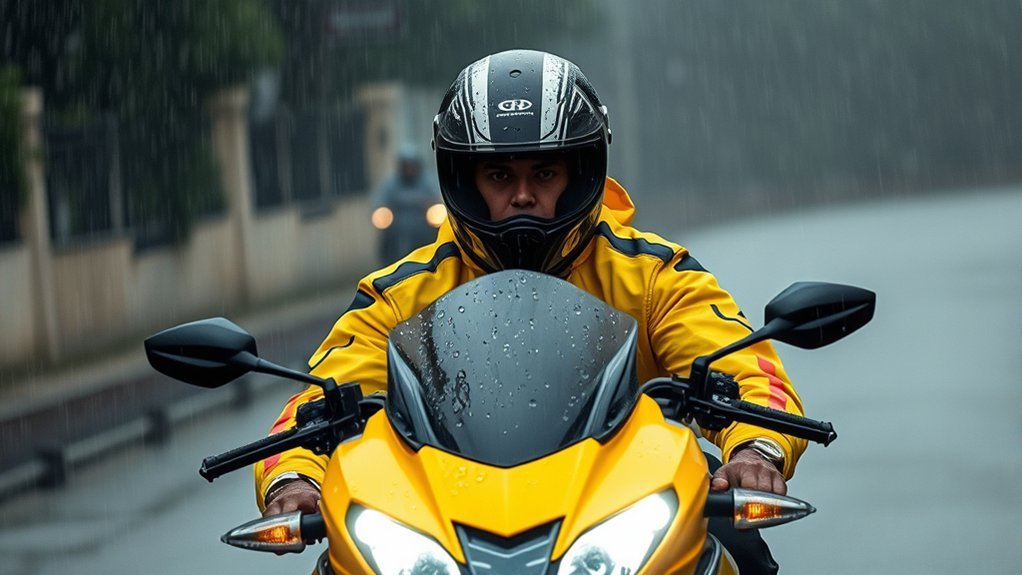
Visibility has two parts: seeing the road and making it easier for other road users to see you.
- Keep the headlight on: Most modern motorcycles illuminate it automatically. Verify that the headlight and taillight are clean and working before departure.
- Wear conspicuous gear: Bright colors, a light-colored helmet, and retroreflective material can make the rider easier to notice. NHTSA identifies conspicuous clothing and continuous headlight use as visibility strategies.
- Stay out of blind spots: Position yourself where the driver ahead can see you in a mirror, and avoid lingering beside cars or trucks.
- Control visor fog: Open the appropriate vents, use a compatible anti-fog treatment, and replace a damaged or badly scratched visor.
- Create space near large vehicles: Truck spray can obscure your view and the driver’s view of you. Increase distance or pass only when legal, visible, and clearly safe.
- Avoid glare: At night, reduce speed enough to stop within the distance you can see. Wet pavement can reflect headlights and hide lane markings.
Pro Tip: Carry a clean microfiber cloth in a sealed pocket. Use it only after stopping safely; never attempt to wipe a visor while moving through traffic or a low-grip section.
How to Identify Slippery Surfaces and Hidden Hazards
Scan for changes in color, shine, texture, drainage, and surrounding traffic. A surface that looks darker, polished, rainbow-colored, or unusually smooth may offer less grip.
Common Slippery Road Conditions
- Painted lines and crosswalks: Reduce lean, braking, and acceleration while crossing wet paint.
- Manhole covers, steel plates, and bridge joints: Cross with the motorcycle as upright as practical and avoid abrupt control inputs.
- Wet leaves, mud, sand, and gravel: Slow before reaching them and avoid sudden steering.
- Oil, diesel, coolant, and rubber buildup: Treat rainbow sheen or dark greasy patches as extremely low-grip areas.
- Tar repairs and polished pavement: These may feel different when wet. Keep the motorcycle settled and avoid hard acceleration.
- Railroad tracks and gratings: Cross tracks at a safe angle when conditions allow, keep a steady line, and do not make a sharp steering change on the metal.
Recognizing Hidden Hazards
Puddles can conceal potholes, missing pavement, debris, and deep water. Reduce speed before reaching standing water and avoid it when you can change path smoothly and safely.
Watch the vehicles ahead. A sudden splash, bouncing wheel, or change in their path may reveal water or damage you cannot yet see. Do not follow so closely that the vehicle blocks your view of the road surface.
Construction zones deserve extra caution. Temporary paint, ground pavement, metal plates, mud, gravel, and shifting lane paths can appear with little warning. Reduce speed before entering and follow flaggers and temporary traffic controls.
Wet-weather safety is less about finding a single “best” lane position and more about continually choosing the cleanest path with the most visibility, traction, space, and escape options.
Tips for Effective Braking and Acceleration in Rain
Use both brakes for normal slowing and stopping. Apply the front brake with a smooth squeeze and the rear brake with progressive pressure. Do not grab the front lever or stamp on the rear pedal.
- Brake while upright when possible: Complete most braking before entering a curve. A leaned motorcycle is already using part of its available traction for cornering.
- Reduce force while leaned: When braking in a curve cannot be avoided, apply the brakes gently and reduce lean as speed falls. More braking force can be added as the motorcycle becomes upright.
- Separate hard braking and swerving: When the situation permits, brake before or after an aggressive swerve rather than combining maximum braking with maximum steering.
- Accelerate gradually: Wait until the motorcycle is becoming more upright before adding substantial throttle while exiting a turn.
- Test brake response gently: After entering wet conditions or passing through water, make a light, controlled brake application when traffic and road conditions allow. Stop and inspect the motorcycle if braking feels abnormal.
ABS can help prevent wheel lock during braking, but it cannot shorten every stop, overcome poor tires, or make oil, ice, deep water, or excessive corner speed safe. Linked and integrated braking systems also vary. Read the owner’s manual before relying on how a particular system behaves.
What to Do If Traction Breaks or the Bike Feels Unstable
Your response depends on which tire loses grip and why. The safest general approach is to remain calm, look where you want to go, keep the motorcycle as upright as conditions allow, and avoid adding another abrupt input.
If the Rear Tire Spins or Slides
Abruptly closing the throttle can worsen some slides, while continuing hard acceleration can also increase wheelspin. Ease the throttle toward a neutral, controlled position and allow the tire to regain grip progressively. Avoid a sudden clutch release or sharp steering correction.
If the Front Tire Loses Grip Under Braking
Release enough front-brake pressure to let the tire roll and regain steering control, then reapply the brake smoothly if needed. A front-tire skid can quickly cause a fall, so progressive braking practice should be learned in a formal course or controlled environment—not for the first time in traffic.
If You Enter Standing Water
Keep the motorcycle upright, maintain a steady path, and avoid sudden braking, acceleration, or steering. Do not try to power through deep or moving water. Once clear, reduce speed, assess brake response gently, and stop safely if the motorcycle feels abnormal.
Post-Ride Maintenance for Wet Conditions
After parking, allow hot exhaust and engine parts to cool as required by the owner’s manual. Remove road grime and salt promptly, dry accessible surfaces, and inspect the motorcycle for damage or water-related problems.
| Task | Why It Matters | When |
|---|---|---|
| Rinse or clean road grime | Removes dirt, salt, fuel residue, and material that can trap moisture | After a dirty, salty, or contaminated wet ride |
| Dry and inspect the motorcycle | Helps identify leaks, loose parts, damaged wiring covers, or trapped debris | After wet rides as practical |
| Inspect tires and wheels | Puddles and potholes can cause cuts, bends, punctures, or pressure loss | After any hard impact and before the next ride |
| Check brake operation | Confirms normal lever or pedal feel and helps reveal contamination or damage | Before the next ride or immediately if braking felt unusual |
| Service a drive chain | Water and road grime can remove lubricant and encourage wear or corrosion | Inspect after wet rides; clean, dry, adjust, and lubricate as the owner’s manual directs |
| Inspect belt or shaft drive | Belt debris, damage, leaks, or loose components require model-specific attention | According to the motorcycle owner’s manual |
If the motorcycle is chain-driven, use products compatible with its chain type. Do not spray lubricant onto the brake disc, pads, tire tread, or other friction surfaces. Never run the engine in an enclosed area while drying or servicing the motorcycle.
Getting Your Mind Right for Rainy Riding
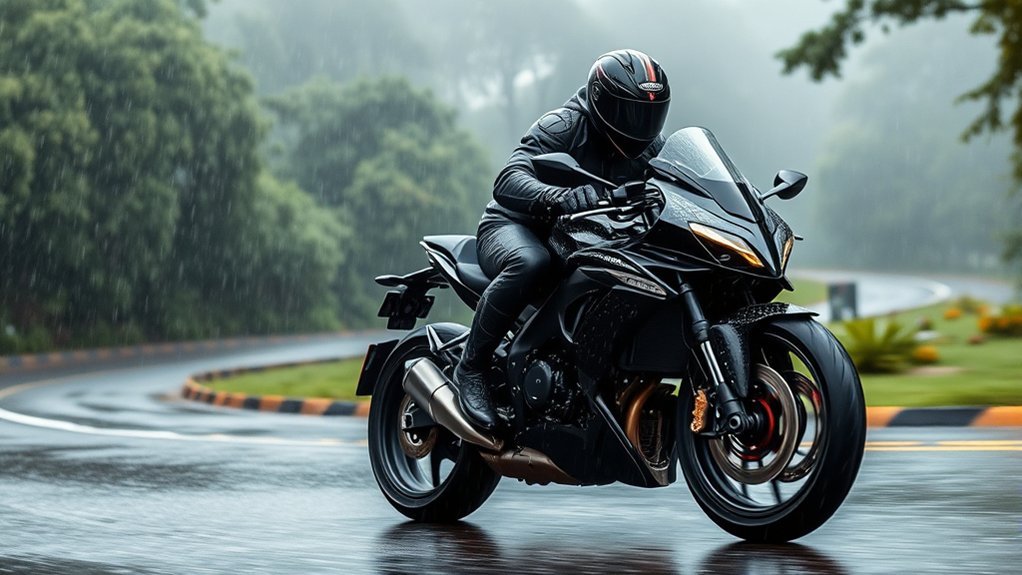
Rain is not a test of toughness. The goal is to keep enough attention, traction, visibility, and physical comfort in reserve to handle the unexpected.
- Stay relaxed but alert: Keep your eyes up, shoulders loose, and hands light enough to make precise movements.
- Reduce workload: Slow down, increase space, avoid unnecessary passing, and choose a route with better drainage and fewer complex intersections.
- Watch for fatigue: Cold, noise, wind, reduced vision, and constant scanning can tire a rider quickly. Stop before concentration or hand control fades.
- Build skill gradually: Begin with formal instruction and controlled practice. Do not use heavy traffic or a severe storm as a training session.
- Give yourself permission to stop: Pull into a safe parking area or sheltered location when conditions exceed your comfort or skill level.
When to Delay Riding for Safety Reasons
Postpone or end the ride when any of the following conditions make it difficult to see, steer, stop, or stay physically alert:
- Heavy rain or road spray prevents you from seeing an adequate distance ahead.
- Water is flowing across the road, covering lane markings, or collecting deeply.
- Lightning or thunder is present.
- Strong or gusty crosswinds repeatedly move the motorcycle within the lane.
- Hail, freezing rain, snow, or ice is possible.
- Your visor will not remain clear.
- Your gloves, boots, or clothing are soaked enough to cause cold, numbness, or restricted movement.
- The motorcycle develops a tire, brake, electrical, lighting, control, or handling problem.
- You feel tense, exhausted, distracted, or pressured to continue.
The National Weather Service advises motorcyclists who see threatening skies to reach a safe building and wait at least 30 minutes after the last thunder before resuming the ride. A motorcycle, open shelter, tree, or small roadside canopy does not provide the protection of a substantial building or fully enclosed metal-topped vehicle.
Warning: Do not shelter under an isolated tree during a thunderstorm, and do not continue riding simply because the rain itself is light. Lightning can occur away from the heaviest rainfall.
Frequently Asked Questions
How do you safely ride a motorcycle in the rain?
Check the motorcycle and weather first, wear waterproof protective gear, reduce speed before hazards, increase following distance, keep the motorcycle more upright in turns, and use the throttle, clutch, steering, shifting, and both brakes smoothly. Avoid standing water, painted lines, steel surfaces, leaves, fuel spills, and flooded roads.
What is the 1% rule in motorcycles?
There is no recognized motorcycle-safety rule stating that riders should improve by 1% each day. In motorcycle culture, “1%” or “one-percenter” usually refers to a club identity rather than a wet-weather riding technique. It should not be confused with formal rider-training guidance.
What is the 12-second rule for motorcycles?
The 12-second visual lead means scanning the area you expect to reach in about 12 seconds. It helps you notice traffic changes, curves, water, construction, and escape routes early. It is a scanning technique, not a following-distance rule.
What does two fingers down mean for bikers?
Two fingers pointed downward is commonly used as a friendly rider-to-rider wave. It is informal etiquette, not a standardized traffic signal. Keep both hands on the controls whenever road, weather, or traffic conditions require full control.
Can a motorcycle hydroplane?
A motorcycle tire can lose part or all of its road contact when speed, water depth, tire condition, pressure, and pavement combine unfavorably. Do not rely on a calculated “safe” hydroplaning speed. Slow before standing water and avoid deep or moving water completely.
Should you use the front brake in the rain?
Yes. The front brake remains important on a wet road, but it must be applied smoothly and progressively. Use both brakes and reduce braking force while leaned. Follow the owner’s manual for ABS, linked, or integrated braking systems.
How long should you wait after rain begins?
There is no fixed waiting period that guarantees good traction. The beginning of rainfall can be especially slick as water mixes with road residue, but hazards may remain after extended rain. Base the decision on visibility, drainage, traffic, temperature, road contamination, and your ability to maintain control.
Conclusion
Riding in the rain safely depends on preparation and restraint rather than confidence alone. Inspect the motorcycle, wear protective waterproof gear, reduce speed early, increase space, and keep every control input smooth. Treat paint, metal, leaves, oil, standing water, and flooded roads as serious hazards. When visibility, lightning, wind, cold, fatigue, or water depth makes control uncertain, delay the ride and continue only when conditions improve.
Sources
- Motorcycle Safety Foundation — You and Your Motorcycle: Riding Tips — braking, shifting, scanning, slippery surfaces, lane position, and rider training.
- National Highway Traffic Safety Administration — Motorcycle Safety — helmets, protective clothing, visibility, and responsible riding.
- National Highway Traffic Safety Administration — Driving in Severe Weather — wet-road spacing, reduced control, route planning, and flood avoidance.
- Bridgestone — Proper Inflation of Motorcycle Tires — cold pressure, owner-manual specifications, tread, and tire inspection.
- National Weather Service — Lightning Safety Outdoors — shelter and the 30-minute waiting period for motorcyclists.
- Harley-Davidson — How to Clean and Lubricate a Motorcycle Chain — chain cleaning, drying, lubrication, and product-use principles.






Leave a Reply