
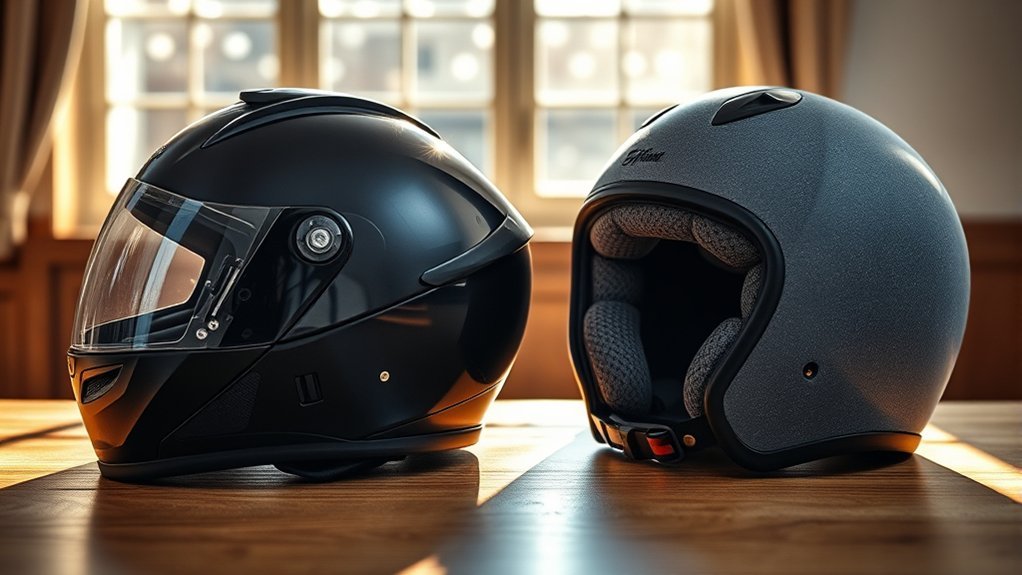
DOT and Snell labels answer different questions. In the United States, the DOT mark shows that a motorcycle helmet’s manufacturer certifies it to the federal road-use standard. Snell is a voluntary, independent certification that adds another set of laboratory tests. The best choice is usually not DOT or Snell, but a properly fitted DOT helmet that also carries the current Snell label when you want that added testing or need it for an event.
Quick Answer
For U.S. street riding, choose a genuine DOT-certified helmet first. Snell M2025D or M2025R is an optional extra certification with independent testing, ongoing sample checks, chin-bar testing for full-face models, and oblique-impact requirements. Prioritize correct fit, full coverage, and verified labels over price or certification alone.
Key Takeaways
- DOT is the U.S. federal baseline: The manufacturer certifies compliance with FMVSS No. 218, while NHTSA performs post-market compliance testing and can require recalls.
- Snell is voluntary and additional: Current motorcycle standards are M2025D and M2025R, both effective since August 1, 2024.
- Snell does not replace DOT for U.S. road use: Look for both labels when buying a Snell-certified street helmet in the United States.
- Fit and coverage matter: A secure full-face helmet that matches your head shape is generally a better choice than a looser helmet with more labels.
- Replace after a serious impact: Follow the helmet maker’s service-life guidance and inspect the shell, liner, strap, and fit regularly.
What Are DOT and Snell Helmet Certifications?
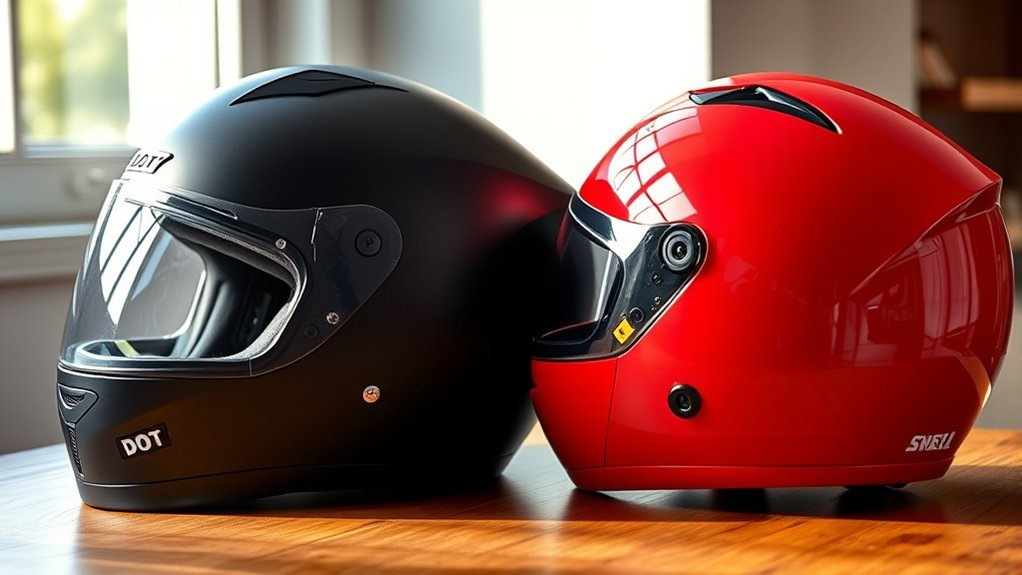
DOT certification refers to compliance with Federal Motor Vehicle Safety Standard No. 218. The standard covers impact attenuation, penetration resistance, retention-system performance, peripheral vision, coverage, and required labeling for new motorcycle helmets sold for on-road use in the United States.
The DOT mark is not a pre-sale approval stamp issued by the government. Under the U.S. self-certification system, the manufacturer states that the helmet complies. The National Highway Traffic Safety Administration then tests selected helmets after they reach the market and may order a recall when a helmet fails.
Snell certification is a voluntary program run by the independent Snell Foundation. A manufacturer submits a helmet model for certification testing, and certified models are also subject to ongoing random-sample testing. The current motorcycle standards are M2025D and M2025R.
Note: In the U.S., “Snell-certified” and “DOT-certified” are not competing legal categories. A street helmet can carry both. Snell is an additional voluntary certification, while DOT is the federal compliance mark to look for on a U.S.-market road helmet.
DOT vs. Snell: Key Differences
| Feature | DOT / FMVSS No. 218 | Snell M2025D / M2025R |
|---|---|---|
| Status | Mandatory federal standard for new U.S. road-use motorcycle helmets | Voluntary private certification added by participating manufacturers |
| Certification process | Manufacturer self-certification, backed by NHTSA compliance testing and recall authority | Independent certification testing plus continuing random-sample testing |
| Linear impact limits | Peak acceleration may not exceed 400 g; the standard also limits time above 200 g and 150 g | Headform-specific limits; M2025D uses peak limits up to 275 g, while M2025R also applies a Head Injury Criterion limit |
| Oblique impacts | Not part of the current FMVSS No. 218 test requirements | Included in both M2025D and M2025R to limit rotational motion measures |
| Chin bar and face shield | FMVSS No. 218 does not set a visor performance requirement or a separate chin-bar impact test | Chin-bar testing applies to full-face helmets; a supplied face shield receives a penetration test |
| Best use | Required baseline for U.S. street helmets | Extra independent testing or compliance with a race organizer’s rulebook |
The DOT mark is the manufacturer’s certification of federal compliance—not government preapproval. Snell adds independent certification and continuing sample checks, but it does not replace the DOT requirement for a U.S.-market street helmet.
What Do Snell M2025D and M2025R Mean?
The Snell Foundation’s M2025 explanation separates the current motorcycle program into two standards:
- M2025D continues the path used mainly for helmets that also need to meet standards such as DOT FMVSS No. 218 or Japan’s JIS requirements.
- M2025R is designed to allow compatibility with UN Regulation No. 22.06 in addition to DOT and JIS requirements.
Both standards became effective on August 1, 2024, and both added oblique-impact testing. M2025D and M2025R use different guided-fall impact procedures and criteria, so one should not be described as a simple “higher” or “lower” version of the other. Buy the standard that appears on the exact helmet model and fits the market or event rules you must follow.
Advantages and Disadvantages of DOT-Certified Helmets
The main advantage of DOT certification is that it provides a clear federal safety baseline for U.S. road helmets. DOT-compliant helmets are sold in many styles, shapes, weights, and price ranges, so riders can usually find a model that fits without treating cost as a shortcut for safety.
The limitation is not that DOT helmets are only for casual riding. The real limitation is the scope of FMVSS No. 218. It does not include the same certification process, oblique-impact criteria, chin-bar test, or face-shield penetration test found in Snell M2025. Also, because the system relies on manufacturer certification, shoppers should buy from reputable sellers and verify the full required label rather than trusting a loose “DOT” sticker.
Warning: Avoid novelty helmets and counterfeit certification decals. A current DOT label should include the manufacturer or brand, model, “DOT,” “FMVSS No. 218,” and “CERTIFIED.” Also check the permanent interior label and confirm that the helmet has a substantial energy-absorbing liner and a secure retention system.
Advantages and Disadvantages of Snell-Certified Helmets
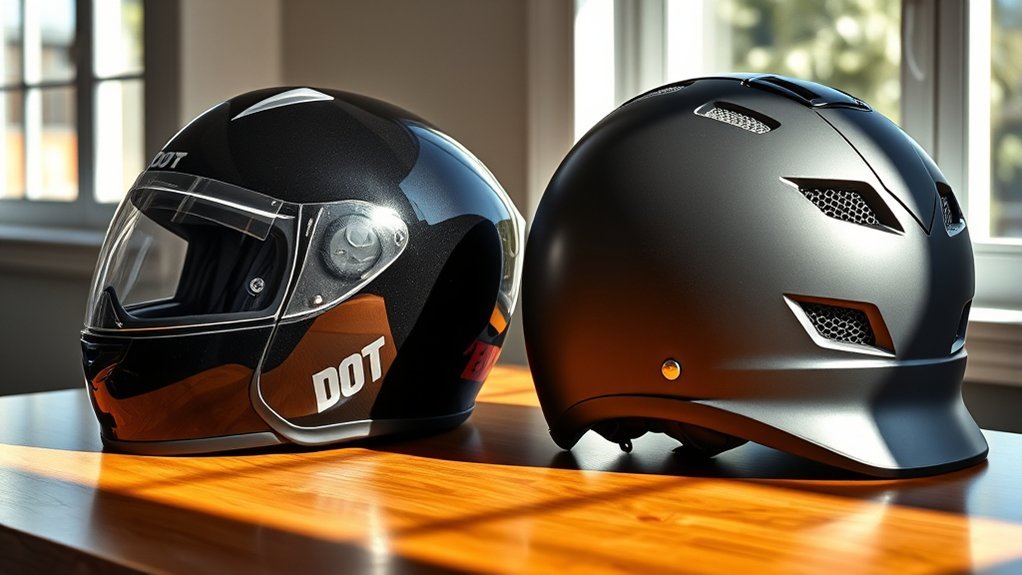
Snell-certified motorcycle helmets add independent model testing and continuing random-sample checks. The M2025 standards also include positional stability, retention strength, shell penetration, removability, guided-fall impacts, and oblique impacts. Full-face models receive a chin-bar test, and supplied face shields receive a penetration test.
Those added requirements can be valuable, but they do not prove that every Snell helmet will produce a better outcome than every DOT-only helmet in every crash. Certification tests use controlled laboratory conditions, while real crashes vary by angle, speed, surface, fit, and whether the helmet stays secured.
Snell certification can also narrow your choices. Some helmet types, head shapes, weights, features, or price points may be easier to find in DOT-only or DOT-plus-ECE models. The correct tradeoff is the helmet that fits securely, provides the coverage you want, meets the rules that apply to you, and is comfortable enough to wear every ride.
Which Helmet Certification Is Right for You?
Use your legal requirements, riding environment, and fit—not a “street versus race” slogan—to decide.
- U.S. street rider: Start with a genuine DOT-certified helmet. Add Snell M2025D or M2025R when you value its extra testing and the model fits you well.
- Track-day or competition rider: Read the organizer’s current rulebook before buying. Some events require a specific Snell standard and may reject an older certification even when the helmet is otherwise usable.
- International rider or traveler: Check the law in the country where you will ride. ECE 22.06, JIS, DOT, and other approvals are not automatically interchangeable.
- Rider choosing between two helmets: Prefer the one that remains stable, fits your head shape, offers greater coverage, and has a verified current certification. Do not choose a painful or loose helmet just because it carries an extra label.
The Importance of Proper Helmet Fit
A certified helmet can only work as intended when it stays correctly positioned. Measure the widest part of your head, compare the result with the manufacturer’s size chart, and try the helmet on in the riding position.
- Check overall pressure: The helmet should feel evenly snug around the crown without sharp pressure at the forehead or temples.
- Check head shape: Persistent forehead pressure can mean the helmet is too round; strong pressure at the sides can mean it is too narrow.
- Fasten the strap: Tighten it so the helmet cannot roll forward off your head.
- Move the shell: Your scalp should move with the liner. The helmet should not rotate freely or slide over your eyes.
- Wear it for 15 to 30 minutes: Hot spots, numbness, or a growing headache usually indicate the wrong size or internal shape.
Pro Tip: Compare helmets in the same size from several manufacturers. Size labels are not standardized across brands, and two helmets marked “medium” may fit very different head shapes.
Helmet Coverage and Construction Matter Too
Certification is only one part of the choice. A full-face helmet covers the chin and face area that an open-face or half helmet leaves exposed. For most street and track riders, full-face coverage offers the broadest physical protection and weather shielding.
Inspect the helmet’s energy-absorbing liner, shell, chin strap, fastener, eye-port visibility, and face shield. Do not drill the shell, apply unapproved adhesives or paint, cut the liner, or mount accessories in a way that conflicts with the manufacturer’s instructions. These changes can damage materials or alter how the helmet performs in an impact.
Additional Features to Consider in Helmets
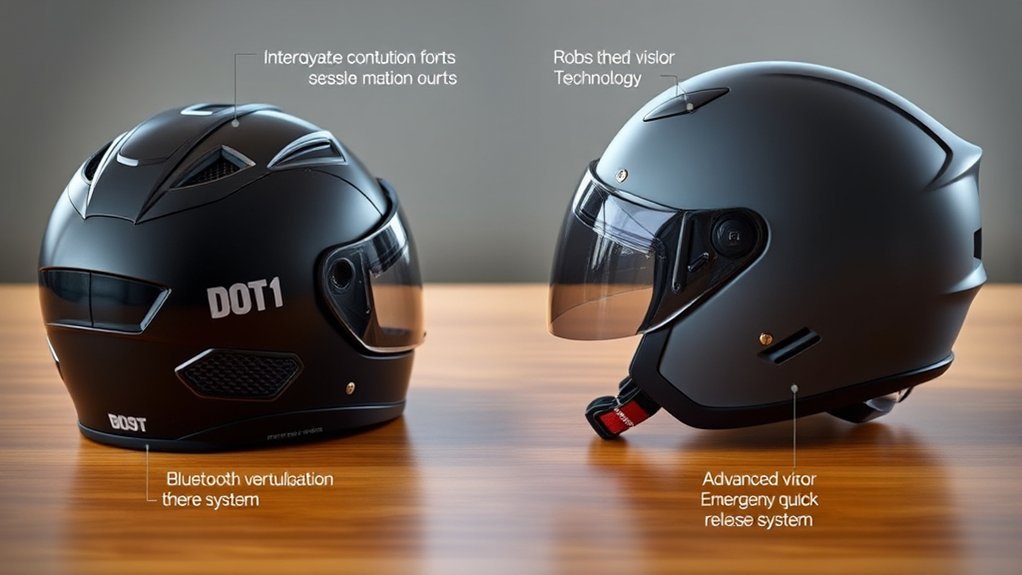
- Ventilation: Look for controls you can operate with gloves and airflow that suits your climate.
- Face shield: Check optical clarity, locking action, replacement cost, scratch resistance, and whether an anti-fog insert is supported.
- Internal sun visor: Convenient in changing light, but check that it moves smoothly, does not distort your view, and is included in the certified helmet configuration.
- Weight and balance: A well-balanced helmet may feel lighter in use than a lower-number scale weight with poor balance.
- Retention system: Double-D rings and quality quick-release systems can both work when correctly fastened; confirm that the system is easy for you to secure every time.
- Removable liner: Washable pads make it easier to keep the fit and interior in good condition.
- Visibility: Bright colors and reflective details can help other road users notice you, especially at night or in poor weather.
- Communication devices: Use only installations allowed by the helmet maker, and do not cut the energy-absorbing liner to make a speaker fit.
Price: Certification Does Not Set the Cost
There is no dependable DOT price range or Snell price range. Certification is only one cost factor. Shell material, number of shell sizes, aerodynamics, visor mechanism, graphics, removable liners, accessories, distribution, and brand positioning can all affect the price.
A lower-priced genuine DOT helmet that fits correctly can be a better purchase than an expensive helmet that moves on your head. A Snell-certified helmet may cost more than a similar DOT-only model, but price alone does not prove certification, authenticity, comfort, or crash performance. Compare the exact model, size, certification label, replacement-parts cost, and fit.
How to Verify a Helmet Before Buying
- Check the exact model: Certification can vary by shell, size, or configuration. Do not assume every helmet sharing a product name has the same approval.
- Read the DOT label: Look for the complete FMVSS No. 218 certification format, not a generic decorative sticker.
- Check the Snell label: A Snell-certified helmet carries a serialized label inside or on the helmet. Confirm the model on the Snell certified-helmet database.
- Confirm the manufacturing date: It helps you evaluate storage age, warranty, event eligibility, and the maker’s replacement guidance.
- Buy from an authorized source: A trustworthy dealer makes counterfeit risk, returns, and fit exchanges easier to manage.
- Inspect before riding: Reject a helmet with shipping damage, a cracked shell, compressed liner, loose strap hardware, missing labels, or signs that it was previously worn or crashed.
Helmet Care and Replacement
Replace a helmet after a serious impact unless the manufacturer inspects it and confirms that it remains serviceable. Damage to the energy-absorbing liner may not be visible. Also replace a helmet when the shell, strap, buckle, liner, or fit is damaged or worn enough to affect secure positioning.
A five-year replacement interval is a common guideline, not an automatic shelf-life expiration for every unused helmet. The Snell Foundation’s current guidance says an unused helmet stored in good condition does not automatically expire after five years. Follow the helmet manufacturer’s instructions, consider years of actual use, and replace sooner after impact, damage, contamination, or major fit deterioration.
Clean the shell and liner only with products approved by the manufacturer. Solvents, fuel, harsh cleaners, paints, and some adhesives can damage helmet materials without leaving obvious marks.
Your Helmet Decision Checklist
- Does the helmet carry a complete, genuine DOT certification label for U.S. road use?
- Does the exact model and size have current Snell certification when you want or need it?
- Does your track, racing body, state, or destination require a specific standard?
- Does the helmet fit your head shape without hot spots or looseness?
- Can you fasten the retention system securely every time?
- Does the helmet provide the coverage level you want, preferably full-face for maximum coverage?
- Can you see clearly through the eye port and shield in your normal riding position?
- Are replacement shields, cheek pads, and other wear items available?
- Is the manufacturing date reasonable for the price, warranty, and planned service life?
- Will you wear it consistently because it is comfortable, practical, and suited to your climate?
Frequently Asked Questions
Is Snell approved better than DOT?
Snell adds independent certification, continuing sample testing, oblique-impact criteria, and tests that FMVSS No. 218 does not include. That is meaningful extra coverage, but it does not prove that every Snell helmet is safer than every DOT-only helmet in every crash. Fit, coverage, model design, and correct use still matter.
Are Snell 2025 motorcycle helmets available?
Yes. Snell M2025D and M2025R became effective on August 1, 2024, and certified models are available. Verify the exact make, model, size, and configuration in Snell’s current certification database rather than relying only on a seller’s description.
What is the difference between Snell M2025D and M2025R?
M2025D mainly continues Snell’s DOT- and JIS-oriented path. M2025R uses a different impact approach intended to allow compatibility with ECE 22.06 as well as DOT and JIS. Both include oblique-impact tests and are current motorcycle standards.
Does a Snell label replace the DOT label in the United States?
No. Snell is a voluntary certification. For a U.S.-market motorcycle helmet intended for road use, look for the DOT certification label showing compliance with FMVSS No. 218. A qualifying helmet may carry both DOT and Snell labels.
How many years is a Snell helmet good for?
There is no universal five-year shelf-life rule for every unused helmet. Five years of first use is a common replacement guideline, but the manufacturer’s instructions control. Replace sooner after a serious impact, visible damage, chemical exposure, worn retention parts, or a fit that has become loose.
Is a DOT sticker alone enough to verify a helmet?
No. Counterfeit and incomplete stickers exist. Check the full required DOT label, permanent interior information, manufacturer and model, substantial impact liner, secure strap hardware, seller reputation, and any available NHTSA compliance or recall information.
Conclusion
For U.S. street riding, begin with a genuine DOT-certified helmet that fits securely and provides the coverage you want. Choose a model that also carries Snell M2025D or M2025R when you value its independent testing or need it for a riding organization. Do not let a certification label outweigh fit, full-face coverage, authenticity, condition, or consistent use.
Sources
- NHTSA: Choose the Right Motorcycle Helmet — DOT labeling, self-certification, compliance testing, fit, and unsafe-helmet guidance.
- 49 CFR § 571.218 — current federal motorcycle helmet performance and labeling requirements.
- Snell Foundation: M2025D and M2025R Explanatory Cover — purpose, compatibility, oblique-impact update, and effective dates.
- Snell M2025D Standard — certification process and M2025D testing requirements.
- Snell M2025R Standard — M2025R impact criteria and testing requirements.
- Snell Foundation FAQ — certification verification and helmet replacement guidance.







Leave a Reply