
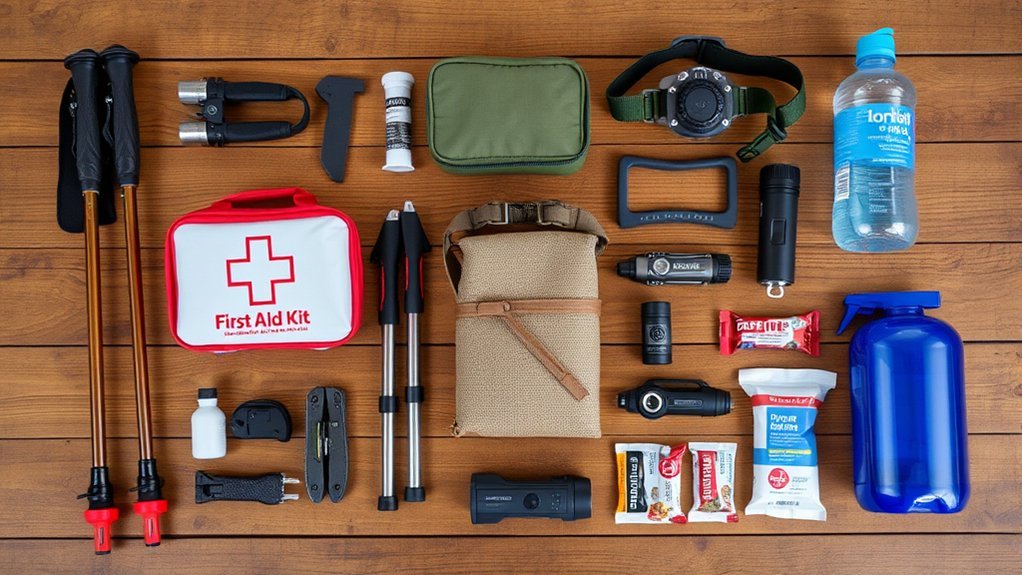
If you’re heading off-road, you need a solid recovery gear list. Make sure to include tow straps, snatch straps, and soft shackles for secure connections. A quality winch rated for your vehicle’s weight is essential. Don’t forget traction boards and a collapsible shovel for stuck situations. Safety gear like gloves, a first aid kit, and a winch line damper are important. Keep these essentials handy, and you’ll be ready for whatever the trail throws at you. Discover more gear tips next!
Essential Off-Road Recovery Gear for Beginners
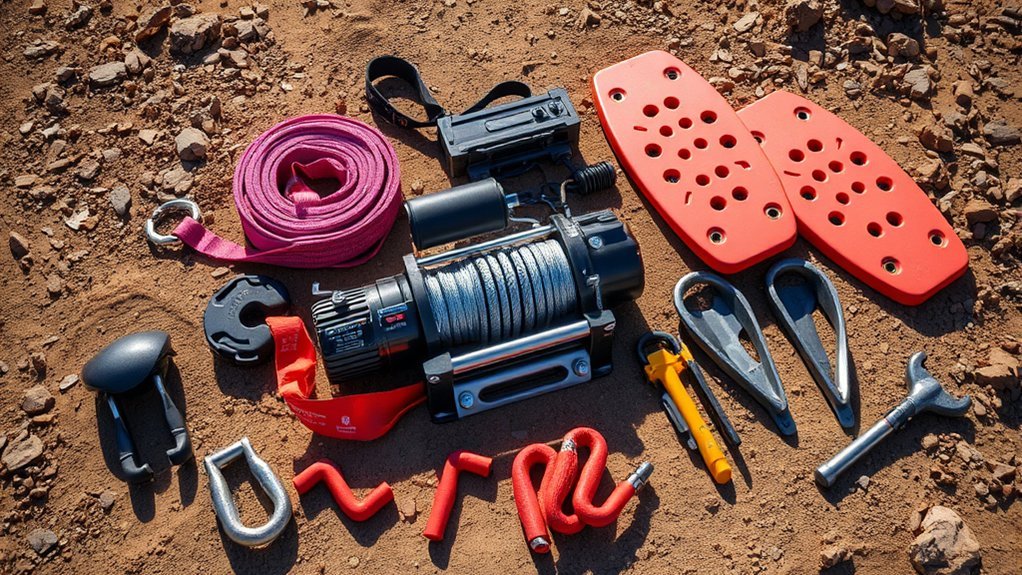
When you venture off the beaten path, having the right recovery gear can make all the difference in getting you back on track. For beginners, knowing your off-road essentials is essential.
Start with a tow or recovery strap rated for 2-3 times your vehicle’s weight—this guarantees a safe and effective tow without metal hooks. Pair it with soft shackles or D-rings to securely attach your strap; soft shackles are lighter and safer.
Start with a tow strap rated 2-3 times your vehicle’s weight, and use soft shackles for a safe, effective recovery.
Make certain your recovery points are frame-mounted, avoiding factory tie-downs that can fail under pressure. Traction boards are invaluable, providing grip on soft terrains by wedging under your drive wheels in mud or sand.
Finally, a collapsible shovel is a must-have for clearing debris around stuck tires, easing your recovery efforts in tough situations. With these beginner tips, you’ll feel empowered and ready for your next off-road adventure!
What Types of Recovery Straps Do You Need?
When it comes to recovery straps, knowing the right type can make all the difference in getting unstuck safely.
You’ll find tow straps, snatch straps, and tree saver straps, each tailored for specific recovery situations.
Choosing the right strap based on your vehicle’s weight and the recovery scenario will guarantee you’re prepared for anything the trail throws at you.
Types of Recovery Straps
Recovery straps are essential tools for off-road enthusiasts and anyone who might face vehicle recovery situations. Understanding the different types can make all the difference in your recovery efforts. Here are some key options to evaluate:
- Snatch straps: Elasticity allows for kinetic energy recovery—ideal for tough pulls.
- Tow straps: Non-elastic, perfect for straightforward towing applications.
- Tree saver straps: Protect trees during winching; wider and longer for load distribution.
- Kinetic ropes: Stretchy and effective, they provide a slingshot effect for pulling vehicles from mud.
- Soft shackles: Lightweight and safer, they connect recovery straps without the risk of metal D-rings.
With the right recovery strap, you can tackle any challenge that comes your way!
Choosing the Right Strap
Selecting the right recovery strap can greatly impact your off-road experience and safety.
Begin by considering your needs: tow straps are perfect for simple towing tasks with load capacities of 20,000 lbs or more, featuring loop ends for secure connections.
If you find yourself stuck in mud or sand, snatch straps are your best bet; their elastic nature provides kinetic energy, effectively freeing your vehicle. Remember, they should be rated at least 2-3 times your vehicle’s weight.
For winching, tree saver straps protect trees by distributing load and preventing bark damage.
Regularly inspect your straps for fraying, as compromised strapping techniques can lead to dangerous failures.
Choose wisely, and enjoy your off-road adventures with confidence!
Must-Have Off-Road Recovery Tools
While off-roading offers thrilling adventures, having the right recovery tools on hand can mean the difference between enjoying the journey and being stuck in a tough spot.
Equip yourself with these must-have off-road recovery tools to guarantee a smooth experience:
- Quality Winch: Rated at least 1.5 times your vehicle’s GVWR for reliable self-recovery.
- Recovery Straps: Loop-ended and rated for 2-3 times your vehicle weight, without metal hooks for safety.
- Soft Shackles: Lightweight and safer alternatives to traditional D-rings for securing connections.
- Traction Boards: Essential for using traction board techniques to escape mud, sand, or snow effortlessly.
- Reliable Shovel: A collapsible, full-metal shovel helps clear debris around tires for effective recovery.
Safety Considerations When Using Recovery Gear
When you’re out on the trails, safety should always be your top priority.
Regularly inspecting your recovery gear for wear and tear can prevent accidents, and using a winch line damper helps minimize the risk of recoil injuries.
Proper Gear Inspection
Proper gear inspection is essential for guaranteeing safety during recovery operations, and it shouldn’t be overlooked. Regular checks not only enhance gear longevity but also reduce the risk of catastrophic failures.
To keep your recovery gear in top shape, consider these key inspection points:
- Look for fraying, wear, or damage on straps and cables.
- Check the working load limit (WLL) of all components to match your vehicle’s needs.
- Ascertain winch lines are free from kinks and corrosion.
- Verify recovery points are securely mounted, avoiding factory tie-downs.
- Make inspection frequency a habit, ideally before every use.
Use of Dampers
After ensuring your recovery gear is in top condition, it’s time to contemplate the safety measures that come into play during operations.
One of the most essential components is the winch line damper. Its benefits are significant; it absorbs energy when the winch line snaps, drastically reducing the risk of recoil injuries.
To maximize safety, place the damper in the middle of the winch line, where tension is highest. This strategic damper placement decreases the distance the line travels, keeping you and your team safe from potential hazards.
Always choose a damper that’s heavy enough to stay grounded and made from durable material to withstand the forces involved.
Prioritizing proper damper usage enhances your overall recovery operation safety.
Gear for Different Off-Road Conditions
As you tackle various off-road conditions, having the right gear is essential for successful recovery. Different terrains pose unique challenges, so equipping yourself with the appropriate tools can make all the difference.
Equipping yourself with the right gear is crucial for overcoming unique off-road challenges and ensuring successful recovery.
Here’s a quick list to take into account:
- High-quality winch: A must-have for snow wheeling and mudding.
- Snatch strap: Ideal for pulling vehicles stuck in deep snow or mud.
- Tire chains: Boost traction on icy surfaces during winter adventures.
- Recovery boards: Provide traction and stability in soft ground.
- High-lift jack: Great for lifting vehicles when they’re bogged down.
Whether you’re maneuvering through snow, mud, or rocky terrains, having the right snow wheeling gear and mudding accessories will empower your off-road experience.
Be prepared, stay liberated, and embrace the thrill of outdoor exploration!
How to Use Recovery Equipment Effectively
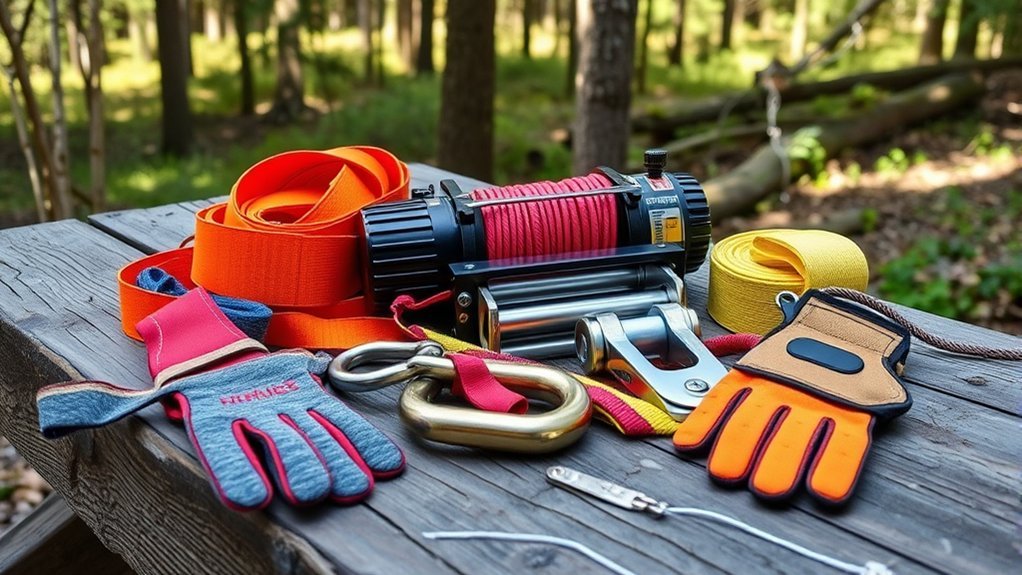
When you find yourself in a recovery situation, knowing how to use your equipment effectively can mean the difference between a smooth operation and a frustrating ordeal. Start by inspecting your gear for wear and tear; verify that recovery straps, shackles, and winches are in top shape.
During winch operations, use a winch line damper to minimize recoil risks—this precaution can save you from potential injuries if the line snaps. When employing strap techniques, choose a recovery strap rated for at least 2-3 times the vehicle’s weight to avoid failure.
For tree saver straps, wrap them around the tree without sharp edges and use straps at least 3 inches wide to protect the bark. Always maintain a safe distance from the winch line and communicate clearly with your team, verifying everyone’s on the same page about the recovery plan.
This awareness leads to successful recoveries.
Frequently Asked Questions
How Do I Choose the Right Winch for My Vehicle?
To choose the right winch for your vehicle, consider winch types like electric or hydraulic, and verify the winch capacity matches or exceeds your vehicle’s weight. This’ll empower you to tackle any off-road challenge confidently.
Can I Use Recovery Gear for Other Vehicles Besides Off-Road?
Your recovery gear’s like a Swiss army knife—multi-purpose and ready for alternative vehicle applications. Whether it’s cars, boats, or trailers, it’s all about liberating yourself from sticky situations, no matter the terrain.
Where Should I Store My Recovery Gear in My Vehicle?
Store your recovery gear in an accessible, organized manner, like a gear bag or storage compartment. Prioritize storage solutions that keep it secure while ensuring you can quickly grab what you need during emergencies.
How Often Should I Inspect My Recovery Gear?
Think of your recovery gear like a lifeline; you wouldn’t let it fray. Inspect your gear every few months for wear and tear. Regular inspection frequency guarantees peak performance and safety during your adventures.
What Is the Best Way to Clean Recovery Equipment?
To clean your recovery equipment, use gentle cleaning techniques like warm soapy water and a soft brush. Regular maintenance tips include rinsing off dirt and allowing everything to dry completely, ensuring your gear stays in top shape.
Conclusion
In the end, you might think you can rely solely on your driving skills to navigate challenging terrains. Ironically, it’s often the gear you pack that gets you out of sticky situations. By equipping yourself with the right recovery tools, you’re not just prepared for the unexpected—you’re embracing the adventure! So, next time you hit the trails, remember that having recovery gear isn’t just smart; it’s downright essential for turning potential mishaps into unforgettable memories.







Leave a Reply