
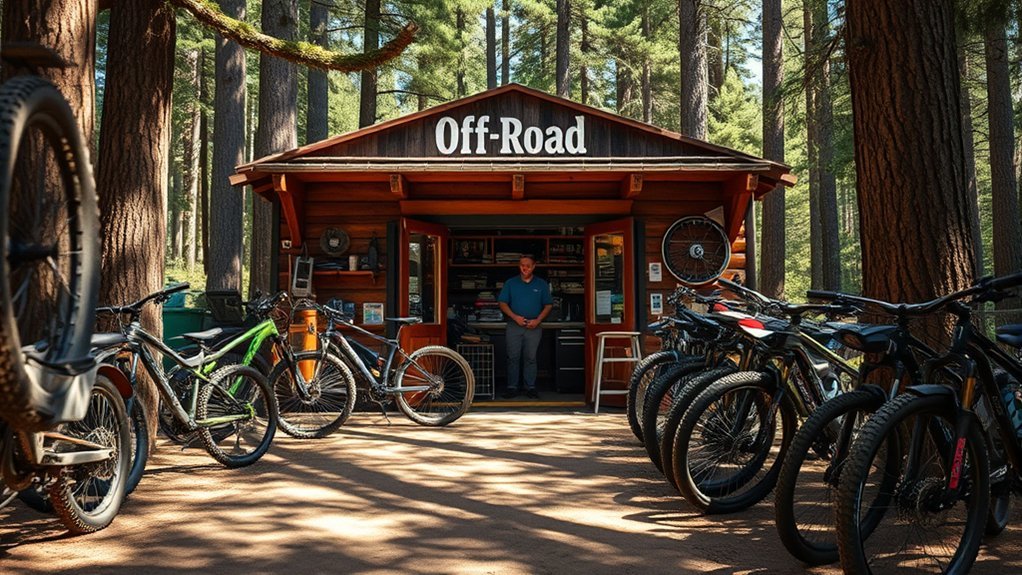
Finding off-road trails near you takes more than opening a map and following the nearest dirt road. The safe approach is to confirm that motorized travel is legal, match the route to your vehicle and experience, check current closures and permits, and download an official map before you lose cell service. This guide walks you through each step, from choosing a trail and vehicle to packing recovery gear and reviewing current conditions.
Quick Answer
To find legal off-road trails near you, start with the land manager’s official map, such as a Forest Service Motor Vehicle Use Map or a BLM recreation map. Confirm vehicle type, width limits, permits, seasonal closures, and difficulty. Then download an offline map, tell someone your route, and carry basic safety and recovery gear.
Key Takeaways
- An official land-manager map—not a social post or crowd-sourced line—is the final authority on whether a route is open to motor vehicles.
- Check the allowed vehicle class, trail width, registration rules, permits, hours, fire restrictions, and seasonal closures before leaving home.
- Choose a trail below your maximum skill level when you are new, alone, carrying passengers, or driving an unfamiliar vehicle.
- Download maps for offline use and carry water, first aid, communication tools, tire equipment, and recovery gear that matches your vehicle.
- Use only designated routes, avoid saturated trails, and turn around before conditions exceed your vehicle, equipment, or experience.
At a Glance
| Time Required | About 30–60 minutes to research a day trip; longer for a remote or overnight route |
| Difficulty | Beginner planning task; driving difficulty depends on the route and conditions |
| Tools Needed | Official trail map, offline navigation, vehicle manual, weather and closure information, first aid, tire tools, and suitable recovery gear |
| Cost | Varies by land manager and vehicle; permits, private-park admission, rentals, insurance, deposits, fuel, and camping may cost extra |
How to Find Legal Off-Road Trails Near You
The best search process starts with the agency or property owner that controls the land. A trail shown in a third-party app may be private, seasonally closed, limited to a certain vehicle class, or no longer open to motorized travel.
- Identify the land manager. Search nearby national forests, BLM field offices, state OHV programs, county recreation areas, and private off-road parks.
- Open the official motorized-use map. On National Forest land, use the current Motor Vehicle Use Map guidance. Routes not designated for your vehicle class are not legal simply because tire tracks are present.
- Filter by vehicle type. Confirm whether the route allows highway-legal 4x4s, motorcycles, ATVs, side-by-sides, vehicles under a stated width, or full-size vehicles.
- Check permits and local rules. Registration stickers, spark arrestors, helmets, insurance, waivers, flags, sound limits, or day-use permits may be required.
- Check current status. Review alerts, fire restrictions, weather, gate status, seasonal dates, and wet-weather closures on the official site or by phone.
- Download the route. Save the official map and a detailed offline basemap. Carry a paper backup on remote trips.
- Build a turnaround plan. Mark fuel, trailheads, bail-out routes, daylight limits, and the point where you will turn back.
Warning: Public land is not automatically open to cross-country driving. Stay on routes designated for your vehicle, obey gates and signs, and never enter private land without permission. A mapping app does not override a closure order or official motorized-use map.
How to Assess Local Off-Roading Trails
Trail ratings are not universal. A “blue,” “moderate,” or “4/10” route at one park may be much harder than a route with the same label somewhere else. Read the park’s own rating definitions and compare the actual obstacles with your vehicle and experience.
- Surface: gravel, sand, mud, loose rock, bedrock, snow, or clay
- Obstacles: ledges, ruts, washouts, water crossings, side slopes, tight trees, and steep grades
- Exposure: drop-offs, narrow shelf roads, blind crests, and limited passing areas
- Vehicle limits: width, wheelbase, tire size, ground clearance, turning radius, and street-legal status
- Recovery difficulty: safe anchor points, room to turn around, alternate lines, and access for outside help
- Conditions: recent rain, freeze-thaw damage, wildfire closures, snowpack, dust, or saturated soil
Recent visitor reports can help you understand conditions, but confirm closures and legal access with the land manager. Photos can also hide slope, depth, loose surfaces, and drop-offs.
Pro Tip: For your first visit, choose a short loop with several exit points and a rating below your usual ability. Trail difficulty can rise quickly after rain, snow, erosion, or heavy traffic.
What to Look for in an Off-Road Shop
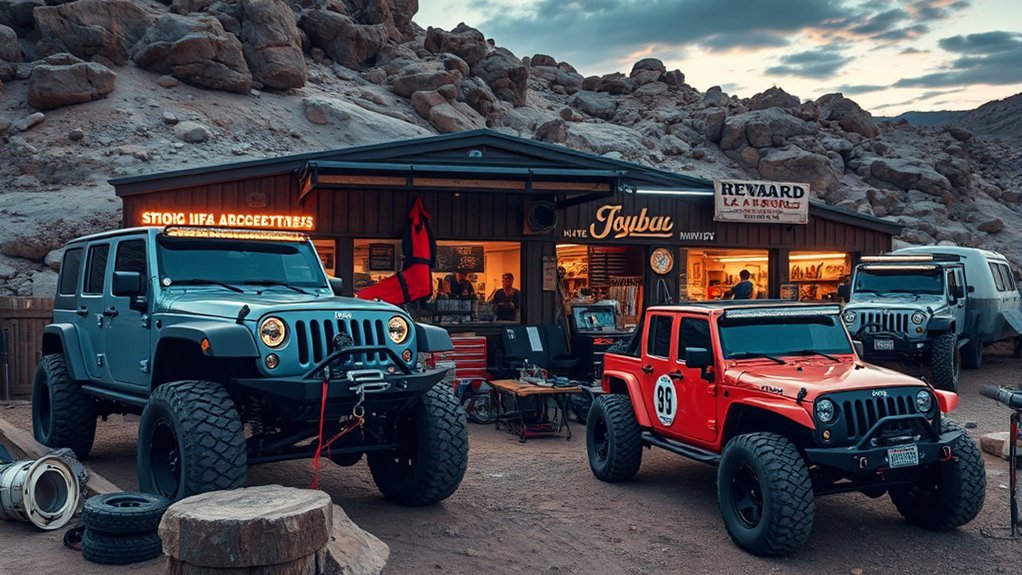
A local off-road shop can be useful for vehicle inspections, repairs, rentals, route knowledge, and properly matched recovery equipment. It should support your trail plan rather than replace official information from the land manager.
- Vehicle-specific knowledge: Staff should understand your exact year, trim, drivetrain, axle, tire load rating, and factory recovery points.
- Clear fitment checks: For parts, confirm compatibility using the VIN, model year, build date, payload label, and owner’s manual instead of relying on a generic make-and-model listing.
- Qualified service: Ask about technician experience, written estimates, torque procedures, alignment after suspension work, warranty terms, and post-install inspection.
- Responsible recommendations: A good shop explains tradeoffs. Larger tires and lift kits can affect braking, steering, gearing, wheel bearings, stability, speedometer accuracy, payload, and warranty coverage.
- Rental transparency: Review insurance, deposits, damage rules, fuel, cleaning fees, mileage or hour limits, age restrictions, required training, and what happens after a breakdown.
- Useful local knowledge: Staff may know staging areas and common hazards, but you should still verify current access with the official map and trail operator.
Read recent customer reviews for patterns involving safety, billing, repairs, and rental condition. One angry or glowing review tells you less than repeated comments about the same issue.
Off-Road Vehicle Types and Their Uses
Choose a vehicle that is legal for the route and appropriate for the terrain. Do not assume that every trail accepts every off-road vehicle.
| Vehicle Type | Best Use | Key Checks |
|---|---|---|
| ATV | Narrow trails and technical riding | Age rules, training, helmet, passenger limit, registration, and trail width |
| Side-by-side or UTV | Passengers, cargo, and longer trail days | Width, seat belts, doors or nets, helmet rules, payload, and tire condition |
| Dirt bike or dual-sport | Single-track, narrow routes, and skilled riding | Motorcycle designation, spark arrestor, protective gear, registration, and fuel range |
| Stock 4×4 SUV or truck | Forest roads, easy trails, and overland travel | Full-size access, clearance, tires, recovery points, low range, and body overhangs |
| Modified 4×4 or rock crawler | Technical rocks, ledges, and extreme routes | Roll protection, gearing, lockers, cooling, spare parts, legal transport, and experienced spotters |
ATV riders should follow the Consumer Product Safety Commission’s ATV guidance, including hands-on training, a helmet and protective gear, no extra passengers beyond the designed seating, and avoiding paved roads except where a lawful crossing is allowed.
Essential Gear for a Safe Off-Roading Experience
Pack for the route, weather, group size, and time to outside help. A short drive near town needs less equipment than a remote desert or mountain route, but every trip should cover navigation, first aid, communication, tire problems, and a safe way to stop or turn around.
Essential Safety Equipment
- Correct helmet and protective clothing for ATV or motorcycle use
- Seat belts for every seating position in a 4×4 or side-by-side
- First-aid kit, personal medications, sun protection, and weather layers
- Water and food beyond the expected trip length
- Vehicle-rated fire extinguisher when required or appropriate for the conditions
- Flashlight or headlamp, reflective marker, whistle, and emergency blanket
- Communication plan using a phone, satellite messenger, radio, or other device suited to the area
Tell a responsible person where you are going, who is with you, your vehicle description, and when to call for help. Do not rely on live location sharing where cellular coverage is uncertain.
Navigation Tools Required
Carry two layers of navigation:
- Legal-access source: The current official map, permit map, or route designation from the land manager.
- Detailed navigation source: An offline topographic or satellite map that shows your position, route, waypoints, and exits.
Apps such as Gaia GPS, onX Offroad, and trail-guide services can help with planning and offline navigation. Their information can lag behind emergency closures or local rule changes, so check the managing agency before the trip and again on the day you leave.
Recovery Gear Necessities
Recovery equipment must be rated for your vehicle and used by someone who understands the forces involved. The following list is a starting point, not a substitute for training.
| Recovery Gear | Purpose and Caution |
|---|---|
| Traction boards and shovel | Clear material and rebuild traction with relatively low stored energy |
| Rated tow or recovery equipment | Connect only to approved recovery points and use the correct type of strap, rope, shackle, or receiver |
| Winch kit | Controlled self-recovery when properly mounted, rigged, inspected, and operated |
| Air compressor and tire repair kit | Restore pressure and repair suitable tread-area punctures; sidewall damage usually requires the spare |
| Vehicle jack and base | Lift only at approved points on stable ground; never work under a vehicle supported only by a jack |
| High-lift jack | Specialized tool for compatible vehicles and trained users; follow the manufacturer’s instructions |
Warning: Vehicle recovery can release lethal energy. Keep bystanders away, inspect every component, use approved recovery points, and never connect a recovery line to a trailer ball, transport tie-down, suspension part, or unknown attachment point. Follow the equipment maker’s procedure, including the WARN winching safety guide when applicable.
What to Expect to Pay for Off-Road Rentals and Gear
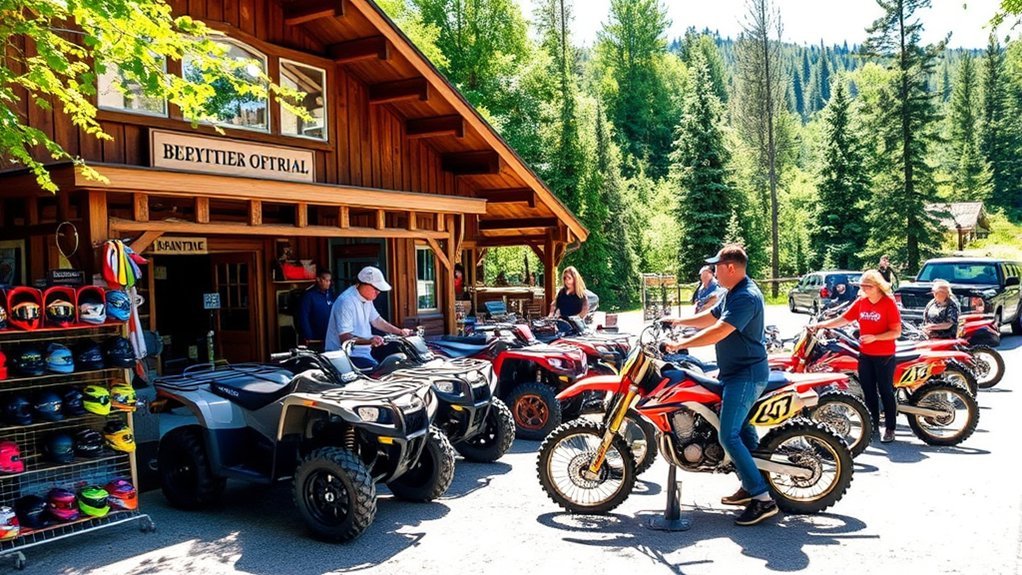
There is no reliable nationwide daily price for off-road vehicles, gear, or trail access. Costs vary by location, vehicle size, season, insurance, rental length, and whether the operator includes fuel, helmets, delivery, cleaning, or guided support.
Rental Cost Checklist
Ask for a written total that covers:
- Base rate and taxes
- Security deposit or credit-card hold
- Insurance, damage waiver, and deductible
- Fuel, charging, mileage, or engine-hour limits
- Helmet and protective-equipment rental
- Trailer, delivery, or shuttle fees
- Cleaning, mud, tire, belt, rollover, and underbody damage rules
- Late-return, cancellation, and weather policies
- Required park permit or admission
Do not compare rentals by the advertised base price alone. A lower rate can become more expensive after required fees, while a higher rate may include insurance, safety gear, a mapped route, and roadside support.
Buy, Rent, or Borrow Gear?
Rent specialized equipment when you need it once and the provider supplies training and compatible gear. Buy personal protective equipment when fit and hygiene matter. For recovery equipment, compatibility and training are more important than owning the longest list of tools.
Trail fees also vary. For one current example, Turkey Bay lists a permit valid for one to three consecutive days, while private parks may charge per person, per vehicle, or per event. Always check the current official price page before building your budget.
Note: Rental rules may prohibit certain trails, deep water, competition use, towing, or travel outside a mapped area. Breaking the rental agreement can leave you responsible for recovery and damage costs.
How to Select the Right Off-Road Vehicle for Your Adventure
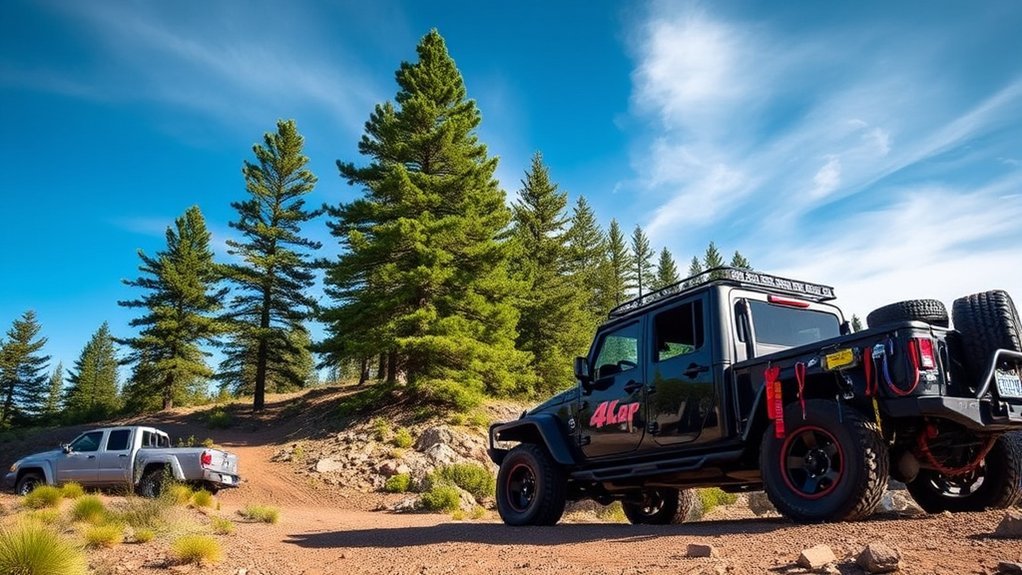
Start with the route, not the modification catalog. A trail’s vehicle class, width, obstacles, and legal requirements should determine what you drive.
- Confirm access: Verify that your vehicle class and width are allowed on every planned segment.
- Check clearance and angles: Ground clearance matters, but approach, breakover, and departure angles also affect whether the body or undercarriage will contact an obstacle.
- Use suitable tires: Choose tires for the surface and load. Inspect tread, sidewalls, valve stems, spare tire, jack points, and lug-tool fit before leaving.
- Know the drivetrain: Understand when and how to use 4WD high, 4WD low, traction controls, lockers, hill-descent control, or terrain modes according to the owner’s manual.
- Respect weight limits: Passengers, armor, roof loads, tools, water, camping gear, and a larger spare all count toward payload. Check the door-jamb label and manual.
- Verify modifications: Use the VIN and exact model year when ordering parts. After tire, wheel, steering, brake, or suspension changes, confirm clearances, alignment, torque, and safe operating limits.
The best trail vehicle is not the one with the most modifications. It is the one that is legal for the route, mechanically sound, properly loaded, and driven within the operator’s ability.
Popular Off-Roading Destinations to Research
These destinations show how different trail systems publish vehicle rules, ratings, permits, and closure information. They are not “best for everyone,” and conditions can change quickly.
- Windrock Park, Tennessee: The park currently lists 73,000 acres and more than 300 miles of trails, four difficulty groups, required permits for everyone entering the trail system, and a park navigation app.
- Black Mountain Off-Road Adventure Area, Kentucky: The operator describes about 150 miles of trails across nearly 6,000 acres. It also warns that some third-party app colors do not match the park’s official rating system.
- Adventure Off Road Park, Tennessee: The current park site describes more than 600 acres and more than 120 trails rated from mild to extreme.
- Blue Holler Offroad Park, Kentucky: Kentucky Tourism lists more than 1,000 acres for ATVs and other off-road vehicles. Confirm current hours, rules, rentals, and trail status directly with the park.
- Turkey Bay OHV Area, Kentucky: The official page lists about 100 miles of designated trails, permits, dawn-to-dark riding, and wet-weather closures when soil is saturated. Call before hauling.
Reading Reviews Before You Book or Ride
Use reviews to identify recurring issues, not to prove that a trail is open or legal. Give more weight to recent reports that name the date, vehicle, route, weather, and specific obstacle.
- Trail condition: Look for washouts, downed trees, deep ruts, snow, mud, dust, water depth, and damaged bridges.
- Vehicle context: A route that felt easy in a locked, lifted 4×4 may be difficult in a stock crossover. Compare wheelbase, tire size, clearance, and driver experience.
- Operations: Check repeated comments about map accuracy, check-in, rental condition, surprise fees, recovery response, restrooms, and staff communication.
- Family suitability: Confirm age limits, passenger rules, noise, dust, bathrooms, camping, and whether beginner routes can be reached without crossing advanced terrain.
- Closure evidence: Treat a user report as an alert, then verify it with the operator or land manager.
A dramatic photo or a five-star rating does not replace the official rules. Difficulty labels and conditions can differ by park, season, and vehicle.
Preparing for Your Off-Road Adventure: Final Checklist
Before You Leave Home
- Confirm the official route, vehicle class, permit, registration, helmet, spark-arrestor, and insurance requirements.
- Check weather, wildfire information, road access, gate status, and trail closures.
- Download the official map and offline navigation; pack a backup map and power source.
- Inspect tires, spare, wheel lugs, brakes, steering, suspension, fluids, battery, belts or chains, lights, and leaks.
- Confirm payload, roof load, trailer weight, and secure every tool and piece of cargo.
- Pack water, food, medications, first aid, clothing, lighting, communication, tire tools, and compatible recovery gear.
- Share the route, group, vehicle, start time, expected return, and overdue plan with someone who is not on the trip.
At the Trailhead
- Read posted rules and compare the kiosk map with your downloaded route.
- Check that permits are displayed and everyone has the required protective gear.
- Set radios, review hand signals, choose a lead and tail vehicle, and agree on regroup points.
- Start with the easiest segment and reassess traction, clearance, and driver comfort.
On the Trail
- Stay on the designated route and yield according to posted local rules.
- Use a spotter when the driver cannot clearly see the tires, obstacle, edge, or exit line.
- Keep speed low enough to stop within the visible trail.
- Do not enter water when depth, current, bottom, exit, or legal crossing status is unknown.
- Turn around when weather, daylight, mechanical condition, driver fatigue, or trail damage raises the risk.
- Pack out trash and avoid spinning tires, widening the trail, or bypassing obstacles outside the designated route.
Sources
- U.S. Forest Service — Motor Vehicle Use Maps — legal route designation, vehicle classes, and seasonal allowances
- Bureau of Land Management — Off-Highway Vehicles — public-land OHV planning and official recreation resources
- U.S. Consumer Product Safety Commission — ATV Safety — training, helmets, passengers, and paved-road guidance
- WARN Industries — Basic Guide to Winching — winch preparation, rigging, inspection, and safety practices
- Windrock Park — Permits and Trail Information — current trail mileage, acreage, ratings, permits, and park navigation
- Land Between the Lakes — Turkey Bay OHV Area — trail mileage, permits, hours, and wet-weather closure guidance
Frequently Asked Questions
What is the best app for off-road trails?
There is no single best app for every vehicle and region. Gaia GPS can display Forest Service motorized-use layers and offline maps, while onX Offroad offers vehicle filters, trail details, and offline navigation. Use an app for planning and position tracking, but treat the land manager’s current map, posted signs, and closure orders as the legal authority.
How do you choose a safe line when off-roading?
Stop where it is safe, walk the obstacle when allowed, and identify tire placement, underbody clearance, traction, side slope, and the exit. Use a spotter when the driver’s view is blocked. Keep movements slow and smooth, avoid sudden steering or wheelspin, and back out if the line cannot be completed without leaving the designated route.
What state is best for off-roading?
The best state depends on your vehicle, season, preferred terrain, travel distance, and permit rules. Tennessee and Kentucky have large private and public trail systems, while western states offer extensive BLM and national-forest opportunities. Compare legal mileage, vehicle restrictions, weather, travel costs, and current closures instead of choosing by a single ranking.
How much do off-road trail permits cost?
Permit and admission prices vary widely. Some designated public routes are free, while others require a daily, multi-day, annual, per-person, or per-vehicle permit. Private parks may use different event pricing. Check the official page for the exact date of your trip and include camping, rental, fuel, insurance, and deposit costs in your budget.
Can I drive on any dirt road on public land?
No. A dirt road may be closed, private, seasonally restricted, or limited to a different vehicle class. On National Forest land, consult the current Motor Vehicle Use Map. On BLM, state, county, or park land, use that manager’s official route map and posted rules.
Should beginners go off-roading alone?
A beginner is safer with an experienced group, especially on remote or technical terrain. If you travel alone, choose a short and easy legal route, avoid water and high-consequence obstacles, share a detailed trip plan, carry reliable communication, and turn around early when conditions change.
Conclusion
The safest way to find off-road trails near you is to begin with the official land manager, not the nearest tire track. Verify legal access, vehicle class, permits, closures, and difficulty; then download your maps, inspect your vehicle, and pack for navigation, first aid, tire trouble, and recovery. Start with an easier route, stay on designated trails, and be willing to turn around. Good planning protects your passengers, your vehicle, and the places you came to enjoy.







Leave a Reply