

Fifth-wheel and gooseneck hitches both place trailer weight in the pickup bed near the rear axle, but they serve different trailers and towing priorities. The right choice depends first on the trailer’s native connection, then on your exact truck ratings, payload, bed length, installation system, ride preference, and total installed cost.
Quick Answer
Choose a fifth-wheel hitch for a fifth-wheel RV when ride comfort and an articulated kingpin connection matter most. Choose a gooseneck for a native gooseneck livestock, flatbed, or equipment trailer and easier bed clearing. Neither type automatically tows more; the lowest-rated truck, trailer, hitch, axle, tire, or installation component sets the limit.
Key Takeaways
- A fifth-wheel hitch uses a kingpin and locking hitch head; a gooseneck commonly uses an in-bed ball and trailer coupler.
- Fifth wheels are common for RVs, while goosenecks are common for livestock, flatbed, and equipment trailers.
- Do not choose by an advertised hitch rating alone. Verify the truck’s GVWR, GCWR, rear GAWR, payload, tires, hitch, and loaded trailer weight.
- Short-bed trucks require careful cab-clearance checks and may need a compatible slider or rotating pin box.
- A fifth-wheel-to-gooseneck adapter never increases towing capacity and must be approved for the exact trailer frame and pin-box application.
At a Glance
| Best Fifth-Wheel Use | Fifth-wheel RVs and owners who value a broad, articulated hitch head and generally smooth towing feel. |
| Best Gooseneck Use | Native gooseneck livestock, flatbed, and equipment trailers, especially when a removable ball is useful. |
| Capacity Rule | The lowest rating in the complete truck, hitch, coupler, trailer, axle, wheel, and tire system controls. |
| Bed-Space Difference | A fifth-wheel assembly occupies more bed area. A removable or folding gooseneck ball can leave a flatter bed when not towing. |
| Biggest Safety Check | Loaded pin weight, remaining payload and rear-axle capacity, secure coupling, required chains and breakaway equipment, and cab clearance. |
Understanding Fifth-Wheel and Gooseneck Hitches
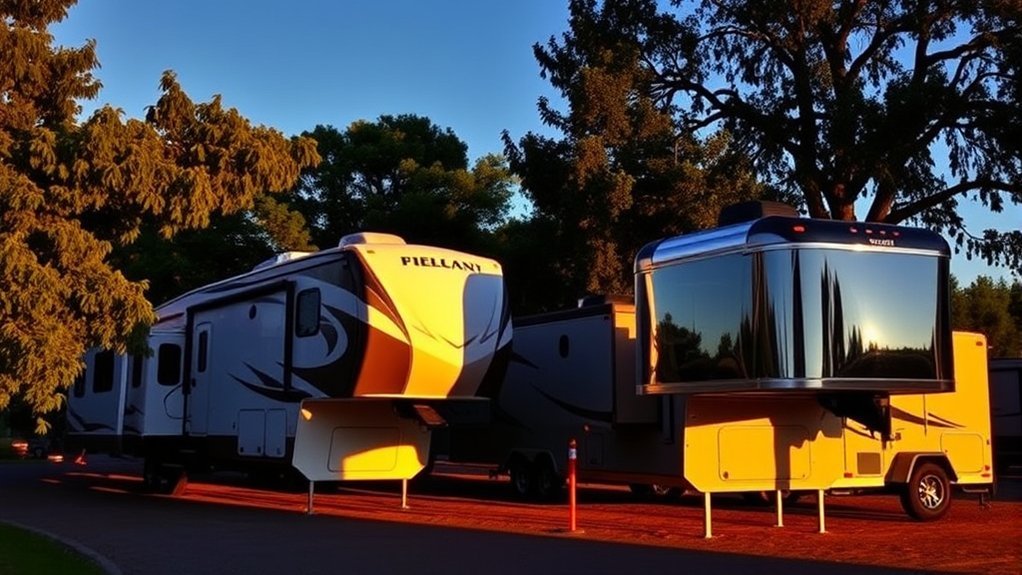
Both hitch styles move the trailer connection from the rear bumper into the pickup bed. Placing the connection near the rear axle can improve load control compared with a conventional bumper connection, but the hitch still must be attached through a vehicle-specific structure that transfers the load to the truck frame.
How a Fifth-Wheel Hitch Works
A fifth-wheel trailer has a kingpin beneath its front overhang. The kingpin slides into a hitch head in the truck bed, where locking jaws or a locking bar secure it. The hitch head normally pivots to accommodate changes in road angle and trailer movement.
This design is common on fifth-wheel RVs. Its large hitch head and articulated connection often provide a controlled, comfortable towing feel, although actual ride quality depends on the hitch, pin box, truck suspension, trailer suspension, loading, and road surface.
How a Gooseneck Hitch Works
A gooseneck trailer has a coupler at the bottom of its raised neck. That coupler lowers onto an in-bed ball, often a 2-5/16-inch ball, although the exact size and rating must match the trailer and hitch. Native gooseneck designs are common on livestock, flatbed, and heavy equipment trailers.
Many gooseneck balls can be removed, turned over, or folded below bed level when not in use. This can restore more usable cargo-bed space than leaving a complete fifth-wheel hitch assembly installed.
Key Differences Between Fifth-Wheel and Gooseneck Hitches
| Feature | Fifth-Wheel | Gooseneck |
|---|---|---|
| Connection | Kingpin enters a hitch plate and is secured by jaws or a locking bar. | Trailer coupler lowers onto an in-bed ball and is locked in place. |
| Common Trailer | Fifth-wheel RV, toy hauler, and some commercial trailers. | Livestock, flatbed, equipment, and agricultural trailers. |
| Ride Feel | Often smooth because of the broad, articulating hitch head; design quality matters. | A simple rigid coupler may transmit more shock, although cushioned couplers and suspension can improve the ride. |
| Bed Space | The hitch occupies substantial bed area until removed. | A removable or folding ball can leave the bed mostly clear. |
| Turning | Good maneuverability, but short beds may require a slider or rotating pin box. | Tight turning is possible, but trailer nose and coupler geometry must still clear the cab and bed. |
| Capacity | Varies by hitch and vehicle; no universal category range applies. | Varies by ball, coupler, hitch structure, trailer, and vehicle; no universal category range applies. |
| Typical Cost Pattern | Often higher for a complete hitch, especially with a slider or premium cushioned head. | A ball kit may cost less when the truck already has factory prep, but aftermarket frame installation can narrow the difference. |
Connection and Ride Differences
A fifth-wheel hitch surrounds the kingpin with a larger hitch head and normally provides fore-aft and side-to-side articulation. A gooseneck uses a smaller ball-and-coupler connection. Neither design should be labeled automatically stable or unstable. A correctly rated and loaded setup of either type can tow well.
A fifth-wheel connection often feels smoother for an RV because the hitch head and pin-box system can manage road movement. A rigid gooseneck coupler may send more vibration into the truck and trailer, but cushioned couplers, air-ride or coil-spring pin boxes, and better trailer suspension can change that result.
Bed Space and Turning Differences
A fifth-wheel hitch can be heavy and may require two people or lifting equipment to remove. A gooseneck ball is usually smaller and may be removable, allowing the truck bed to return to cargo duty more quickly.
Do not confuse a tight turning radius with guaranteed cab clearance. A short-bed truck can allow the front of either trailer style to contact the cab during a sharp low-speed turn. Check the truck, hitch, and trailer instructions before buying any stationary hitch.
Safety Chains, Brakes, and Breakaway Equipment
Use every safety device required by the truck, hitch, trailer, and applicable law. The 2026 Ford RV & Trailer Towing Guide instructs drivers to use safety chains and follow approved attachment instructions. Gooseneck installations commonly include dedicated chain anchors.
Also connect the trailer wiring, verify the breakaway system, test the trailer brakes, and check all lamps before moving. Do not wrap a breakaway cable around a chain or attach required hardware to an unapproved bed component.
Pros and Cons of Fifth-Wheel Hitches
Advantages of Fifth-Wheel Hitches
- Well suited to fifth-wheel RVs: The hitch is designed for the trailer’s native kingpin connection.
- Controlled articulation: A quality hitch head can pivot with road and trailer movement.
- Positive visual checks: Many designs make it possible to inspect jaw position, handle position, and kingpin engagement.
- Ride-comfort options: Sliding, air-ride, cushioned, and other specialized systems are available for compatible applications.
- Short-bed solutions: Compatible sliders or rotating pin boxes may provide added cab clearance when approved for the truck and trailer.
Disadvantages of Fifth-Wheel Hitches
- Bed-space use: The hitch assembly occupies a large part of the pickup bed.
- Weight: The hitch itself reduces remaining payload and may be difficult to remove without help.
- Potentially higher installed cost: Rails, pucks, brackets, wiring, a slider, and professional labor can increase the total.
- Bed-length limits: Short-bed trucks need careful trailer-nose and cab-clearance verification.
- Maintenance: Jaws, pivots, fasteners, wear surfaces, and lubrication points must be serviced according to the hitch instructions.
Pros and Cons of Gooseneck Hitches
Advantages of Gooseneck Hitches
- Compact in-bed hardware: A removable or folding ball can leave more usable bed space when the trailer is disconnected.
- Strong native application: The design is widely used for livestock, flatbed, equipment, and agricultural trailers.
- Good maneuverability: The in-bed pivot location supports tight low-speed positioning when cab and trailer geometry allow it.
- Simple coupling hardware: The truck-side connection can be less bulky than a complete fifth-wheel hitch.
- Factory-prep convenience: A truck with the correct OEM prep package may accept a rated ball and chain-anchor kit without permanent above-bed rails.
Disadvantages of Gooseneck Hitches
- Coupler access: The driver may need to climb into the bed to latch the coupler, attach chains, and connect the breakaway equipment.
- Possible road-shock transfer: A rigid coupler can transmit more vibration than some articulated or cushioned fifth-wheel systems.
- Bed modification: A truck without factory prep may need frame brackets, bed openings, wiring, and professional installation.
- Clearance still matters: The trailer nose, coupler, toolbox, bed rails, and cab must clear throughout the expected turn and articulation range.
- Not an automatic RV conversion: A fifth-wheel RV should not be placed on a gooseneck ball unless the exact conversion system is approved by the trailer and frame manufacturers.
How Do Fifth-Wheel and Gooseneck Hitches Compare in Towing Capacity?
There is no universal capacity winner. Current equipment alone shows why fixed category ranges are misleading: Ford offers a 35,000-pound fifth-wheel hitch and a gooseneck kit with a 40,000-pound rated component. Those hitch ratings do not mean every compatible-looking truck can tow those amounts.
Your usable towing capacity is the lowest rating among the truck, hitch, mounting structure, ball or kingpin connection, coupler, trailer, axles, wheels, and tires.
Verify all of the following before selecting either hitch:
- Maximum loaded trailer weight: The limit for the exact truck configuration, not a model-line advertisement.
- GCWR: The maximum permitted combined weight of the loaded truck and loaded trailer.
- Truck GVWR: The maximum actual weight allowed on the truck.
- Front and rear GAWR: The maximum load permitted on each truck axle.
- Payload: The capacity available for passengers, cargo, accessories, the hitch, and trailer pin or kingpin weight.
- Hitch and mounting rating: Both gross trailer weight and vertical pin-load ratings.
- Trailer ratings: Trailer GVWR, axle ratings, coupler or pin-box rating, wheel ratings, and tire capacities.
Use these basic calculations:
Available payload for pin weight = payload-label capacity − passengers − cargo − accessories − hitch weight.
Remaining rear-axle capacity = rear GAWR − actual loaded rear-axle weight before the trailer is connected.
The lower result may control before the advertised tow rating is reached. Use a public vehicle scale with the truck and trailer loaded as they will travel. The 2026 Chevrolet Trailering Guide states that fifth-wheel and gooseneck pin or kingpin weight is commonly 15% to 25% of loaded trailer weight, while also requiring owners to follow the trailer-specific recommendation and remain below GVWR and RGAWR.
Warning: Never use a hitch’s higher stamped rating to justify exceeding the truck, trailer, rear-axle, payload, wheel, tire, coupler, or mounting-system rating. A high-capacity hitch does not upgrade the vehicle.
Pro Tip: Weigh the truck by itself first, then weigh the fully loaded truck and trailer. Comparing the scale tickets shows how much load the trailer adds to the truck and rear axle instead of relying only on estimates.
What’s the Cost Difference Between Fifth-Wheel and Gooseneck Hitches?
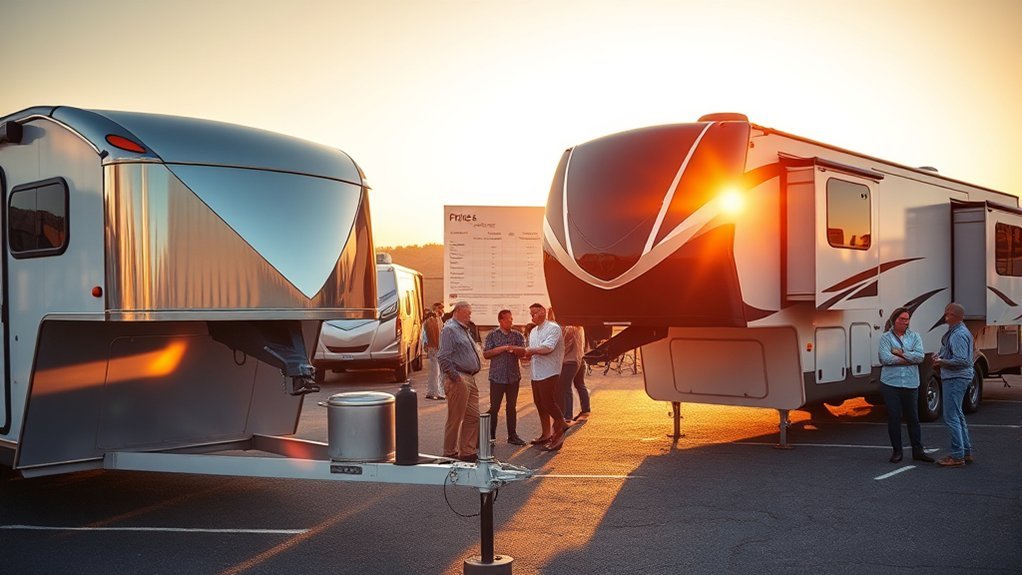
A gooseneck ball kit often costs less than a complete fifth-wheel hitch when the truck already has the correct factory prep package. The difference can shrink or reverse when the truck needs an aftermarket under-bed structure, frame brackets, wiring, bed openings, or a specialized coupler.
| Cost Factor | Fifth-Wheel | Gooseneck |
|---|---|---|
| Truck Has OEM Prep | May need only a compatible puck-mounted hitch and in-bed electrical connection. | May need only the compatible ball, chain anchors, and wiring connection. |
| Truck Lacks OEM Prep | May require rails or an under-bed mounting system, frame brackets, hardware, and wiring. | May require an under-bed frame structure, bed opening, chain anchors, hardware, and wiring. |
| Special Equipment | A slider, rotating pin box, cushioned head, or high-capacity hitch can add substantial cost. | A cushioned coupler, approved replacement pin box, or conversion hardware can add substantial cost. |
| Labor | Depends on bed length, prep package, rail type, wiring, and access to the frame. | Depends on prep package, under-bed structure, bed drilling, chain anchors, and wiring. |
| Ownership Cost | Include removal equipment, replacement wear parts, lubrication, and storage. | Include ball and coupler wear, chain hardware, lubrication, and corrosion control. |
Hardware can range from a relatively simple ball kit to a premium hitch system costing several thousand dollars before labor. Because fitment and prices change, compare written quotes that include the hitch, all mounting hardware, wiring, safety-chain anchors, required trailer-side parts, installation, taxes, and warranty terms.
Truck, Trailer, and Bed Compatibility
Verify the Exact Truck Configuration
Do not assume that every pickup can accept an in-bed hitch. Check the owner’s manual, towing guide, door labels, axle ratings, and any VIN-based towing calculator supplied by the manufacturer. Cab style, bed length, drivetrain, axle ratio, engine, wheels, tires, options, and passengers can all change the usable rating.
Some light-duty trucks are not approved for fifth-wheel or gooseneck use. For example, Ram states that the 2026 Ram 1500 cannot tow a fifth-wheel trailer and does not recommend third-party bed modifications for that application. This does not establish a rule for every half-ton truck; it shows why model- and configuration-specific verification is essential.
Check Short-Bed Clearance
Shorter beds reduce the space between the trailer nose and truck cab. Ford’s current towing guidance says the truck-and-trailer combination must provide clearance through turns up to 90 degrees. A compatible sliding fifth-wheel hitch or approved rotating pin box may help, but it must match the hitch, trailer frame, truck bed, and manufacturer instructions.
Perform the initial clearance check on level ground with a spotter. Turn slowly, stop well before contact, and check the trailer nose, cab, rear window, bed rails, tailgate, toolbox, and hitch components. Repeat the check at mild articulation angles because driveway slopes can reduce clearance.
OEM Prep Versus Aftermarket Installation
An OEM fifth-wheel/gooseneck prep package may include structural crossmembers, puck openings, a center ball opening, chain-anchor points, and an in-bed electrical connector. Without factory prep, a qualified installer may need a vehicle-specific frame kit and bed modifications.
The hitch must transfer load to the truck’s approved structural mounting points. Chevrolet’s current guide warns that the pickup bed itself must not be used as the sole structural support for a fifth-wheel or gooseneck hitch.
Choosing the Right Hitch for Towing in 2026
- Identify the trailer’s native connection. Use a fifth-wheel hitch for a native kingpin and a gooseneck ball for a native gooseneck coupler unless an approved conversion is documented.
- Confirm that the truck permits the application. Check the exact model, VIN or configuration, bed length, towing package, and owner’s manual.
- Record every rating. Include truck GVWR, GCWR, front and rear GAWR, payload, hitch gross-trailer and vertical-load ratings, trailer GVWR, axle ratings, wheel ratings, and tire capacities.
- Estimate loaded pin weight. Use the trailer manufacturer’s recommendation. For planning, many current truck guides use roughly 15% to 25% for fifth-wheel and gooseneck applications.
- Subtract real truck loads. Passengers, tools, fuel containers, bed covers, the hitch, and other accessories reduce available payload.
- Check clearance. Verify cab, bed-rail, tailgate, toolbox, and hitch clearance throughout the expected turning and articulation range.
- Compare total installed cost. Include hardware, wiring, safety equipment, trailer-side changes, labor, maintenance, and financing cost.
- Weigh the finished combination. Confirm actual truck, axle, and combined weights before a long trip.
Note: The best hitch is usually the correctly rated hitch designed for the trailer’s existing connection—not the hitch with the largest number printed on its label.
Installation and Maintenance: Essential Tips
Safe Installation Practices
- Use a vehicle-specific installation kit approved for the truck, bed length, frame, and hitch.
- Follow the exact hole locations, bracket orientation, fastener grades, torque values, and re-torque schedule in the instructions.
- Do not weld, drill, relocate wiring, or alter frame components unless the vehicle and hitch instructions specifically authorize the procedure.
- Install an in-bed electrical connection where recommended so the cable does not hang over the tailgate.
- Confirm that the hitch head, ball, chain anchors, and mounting structure carry ratings equal to or above the required load.
- Use a qualified installer when the job involves frame brackets, bed drilling, electrical work, or equipment too heavy to handle safely.
Pre-Tow Connection Check
- Park the truck and trailer on firm, level ground and chock the trailer wheels.
- Inspect the hitch, ball or kingpin, coupler, jaws, mounting pins, and frame brackets for damage or missing hardware.
- Couple the trailer and verify the lock visually; do not rely only on the handle position or sound.
- Install all required locking pins, clips, safety chains, and breakaway equipment.
- Connect the electrical plug and test running lights, brake lights, turn signals, trailer brakes, and the manual brake-controller function.
- Raise and secure the landing gear or jack completely.
- Check tire pressure cold, inspect tire condition, and confirm wheel-lug torque according to the truck and trailer instructions.
- Verify cab, bed, tailgate, and toolbox clearance before making a tight turn.
Maintenance and Inspection
Inspect the connection before every trip and follow the hitch manufacturer’s service schedule. Look for cracked welds, elongated holes, loose fasteners, bent components, corrosion, worn jaws, ball wear, coupler damage, missing clips, and damaged chains.
Lubricate only the points and surfaces specified by the manufacturer, using the recommended product. Some hitch plates require grease or a compatible lube plate, while other components must remain clean and dry. Recheck mounting-fastener torque at the interval stated in the installation instructions.
Fifth-Wheel-to-Gooseneck Conversions and Adapters
A conversion may free truck-bed space, but it does not increase towing capacity. The complete setup remains limited by its lowest-rated component.
A basic kingpin-mounted adapter extends the connection downward from the original fifth-wheel pin box. That longer lever can add stress at the pin-box and front-frame area during braking, acceleration, and road impacts. Lippert’s 2026 guidance on fifth-wheel-to-gooseneck adapters advises owners to check trailer and frame-manufacturer recommendations because warranty treatment and approved products vary.
Before converting, obtain written confirmation for all of the following:
- The trailer model, frame, and pin-box mounting pattern
- The adapter or replacement gooseneck pin box
- The truck’s gooseneck hitch, ball size, and vertical-load rating
- The trailer’s loaded weight and expected pin weight
- Required safety chains, breakaway equipment, and clearances
- Trailer-frame and structural warranty coverage
Warning: Do not install a universal fifth-wheel-to-gooseneck adapter solely because it physically fits the kingpin. Physical fit does not prove structural approval, adequate clearance, warranty compatibility, or sufficient load rating.
How to Finance Your Hitch Purchase

Start with the complete installed price rather than the advertised hitch price. Include rails or pucks, frame brackets, ball or hitch head, wiring, safety-chain anchors, a slider or approved pin-box equipment, professional installation, taxes, and any required truck or trailer upgrades.
- Request itemized quotes. Confirm that each quote covers the same rated equipment and installation work.
- Compare cash and financing. Ask a bank, credit union, dealer, or retailer for the annual percentage rate, fees, term, monthly payment, and total amount paid.
- Avoid judging by payment alone. A longer term can reduce the monthly payment while raising the total cost.
- Keep a safety reserve. Leave room in the budget for scale tickets, maintenance, tires, brake service, and unexpected fitment changes.
- Verify return and warranty terms. Confirm what happens if the equipment does not fit the truck or trailer as expected.
Note: This financing information is general education, not individualized financial advice. Review the full credit agreement and total repayment cost before signing.
Frequently Asked Questions
Why is a gooseneck better than a fifth-wheel hitch?
A gooseneck is not universally better. It is often the better match for a native gooseneck livestock, flatbed, or equipment trailer and for owners who want a removable ball and more open bed space. A fifth-wheel hitch is normally the better native match for a fifth-wheel RV and may provide a smoother, more articulated connection.
What are the disadvantages of a gooseneck trailer?
A rigid gooseneck connection may transmit more road shock, and the driver may need to enter the bed to latch the coupler and attach chains. Trucks without factory prep may require frame-mounted hardware and bed drilling. Cab, bed-rail, toolbox, and coupler clearance must also be checked carefully.
Is it better to live in an RV or a fifth wheel?
A fifth wheel is a type of RV. Compared with many travel trailers, a fifth-wheel RV often provides more interior height, storage, and residential-style floor plans. Compared with a motorhome, it separates the living space from the drivetrain, but it requires a properly rated pickup and an in-bed hitch.
Why convert a fifth wheel to a gooseneck?
Some owners convert to regain bed space or use an existing gooseneck ball. Conversion does not increase towing capacity. Use only a conversion system approved for the exact trailer frame, pin-box pattern, truck hitch, loaded weight, and pin weight, and confirm how it affects the trailer warranty.
Which hitch type has the higher towing capacity?
Neither hitch type always has the higher usable capacity. Individual products carry different ratings, and the truck, mounting structure, trailer, axles, wheels, tires, coupler, and payload may impose lower limits. The lowest rating in the complete system controls.
Can a half-ton truck tow a fifth wheel or gooseneck trailer?
Only when the manufacturer approves the exact configuration and all ratings remain within limits. Some half-ton configurations support limited in-bed towing, while others prohibit it. Payload and rear-axle capacity often become limiting factors before the advertised trailer-weight rating.
Do gooseneck and fifth-wheel trailers need safety chains?
Use every chain and emergency device required by the truck, hitch, trailer manufacturer, and applicable law. Gooseneck installations commonly include safety-chain anchors. Do not assume that chains or breakaway equipment can be omitted simply because of the hitch category.
Can I use a fifth-wheel hitch in a short-bed truck?
Possibly, but the exact truck, trailer nose, hitch location, pin box, and bed length must provide safe cab clearance. A compatible sliding hitch or approved rotating pin box may be required. Test clearance slowly with a spotter before making a sharp turn.
Conclusion
Choose a fifth-wheel hitch for a native fifth-wheel trailer when its articulated connection, RV-focused design, and ride characteristics fit your needs. Choose a gooseneck hitch for a native gooseneck work trailer when compact hardware and a clearable bed are priorities. Neither design is automatically safer, cheaper, or capable of towing more in every application.
The correct choice is the system that matches the trailer, is approved for the exact truck, remains within every weight and payload limit, clears the cab and bed, and is installed and maintained according to the manufacturers’ instructions. Verify the completed combination on a scale before relying on an advertised towing number.
Sources
- 2026 Ford RV & Trailer Towing Guide — hitch styles, weight limits, safety chains, short-bed clearance, and scale guidance.
- 2026 Chevrolet Trailering Guide — GVWR, RGAWR, pin-weight guidance, frame mounting, payload, and prep packages.
- 2026 Ram 1500 FAQ — manufacturer restriction on fifth-wheel towing for that specific model.
- Ford 35,000-lb Fifth-Wheel Hitch — example showing that fifth-wheel hitch ratings extend beyond the original article’s stated range.
- Ford 40,000-GTWR Gooseneck Hitch Kit — component capacity, ball sizes, chain anchors, prep-package requirements, and fit restrictions.
- Lippert Fifth-Wheel-to-Gooseneck Adapter Guidance — frame leverage, ride, compatibility, and warranty considerations.







Leave a Reply