
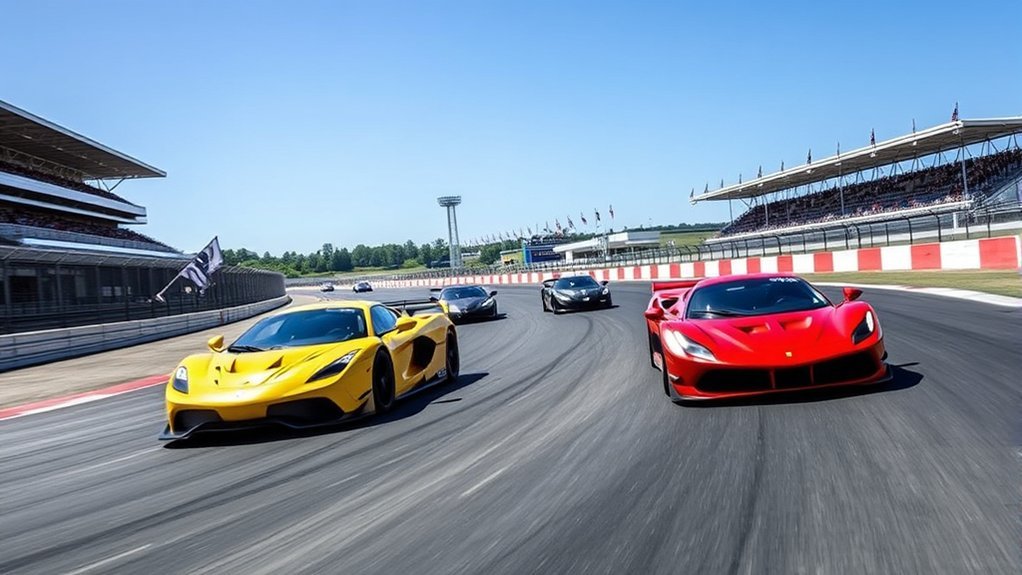
Racing schools in the USA range from beginner-friendly track programs to multi-day competition-license courses, formula-car schools, rally training, and manufacturer owner academies. The right choice depends on whether you want safer car control, faster track driving, loose-surface skills, or a recognized path into wheel-to-wheel racing. Compare the curriculum, vehicle, instructor access, safety rules, damage policy, licensing level, and total trip cost before you book.
Quick Answer
Choose a racing school by matching the course to your goal: an HPDE or track-day school for noncompetitive practice, a dedicated racing school for racecraft and possible license credit, or a rally school for loose-surface control. Expect anything from a few hundred dollars to several thousand, plus travel, gear, taxes, and possible damage-liability costs.
Key Takeaways
- A high-performance driving event is not automatically a racing school, and most track-day programs do not involve wheel-to-wheel competition.
- Some courses use school-owned race cars; others let you bring a safe street car. Equipment rules depend on the program and track.
- Course completion does not automatically issue an SCCA license. The exact accredited course, certificate level, membership, medical or declaration requirements, and on-track experience all matter.
- Published tuition is only part of the budget. Check taxes, travel, lodging, hospitality fees, gear, car rental, fuel, damage waivers, and deposits.
- Prices and accreditation can change, so verify the exact course on the school and sanctioning-body websites before paying.
At a Glance
| Time Required | Half a day to five days for most schools; advanced coaching and licensing paths may require additional events |
| Difficulty | Beginner to advanced; competition-license courses are physically and mentally demanding |
| Tools Needed | Valid identification or driver’s license when required, approved helmet or rental, closed-toe shoes, suitable clothing, and any school-specific paperwork |
| Cost | Roughly $265 for some club instruction to $8,500 or more for multi-day specialty training, before travel and optional protection |
Understanding High-Performance Driving Schools
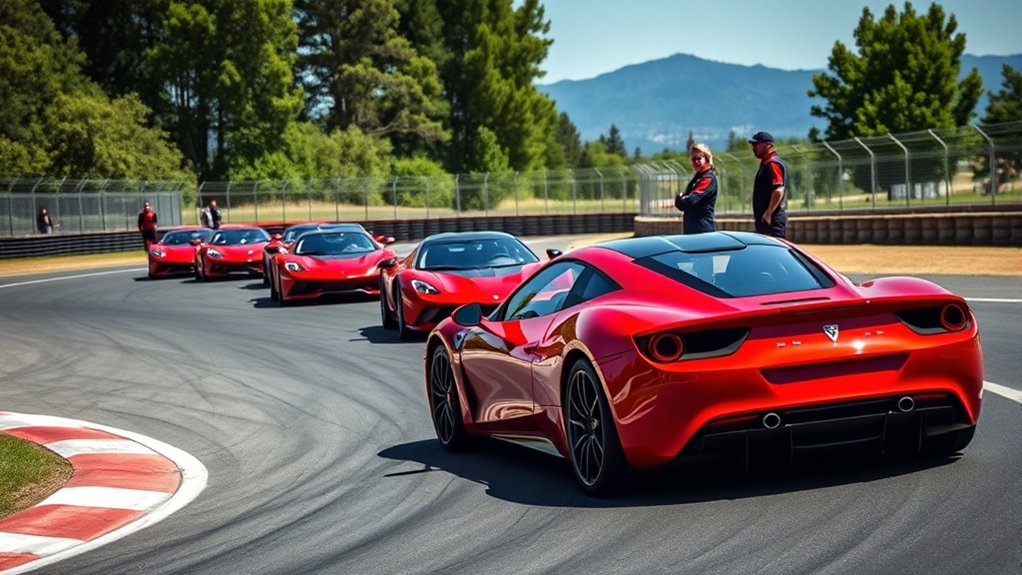
High-performance driving schools teach car control in a closed-course environment. Common lessons include visual scanning, seating and hand position, smooth steering, threshold braking, weight transfer, corner entry, apex selection, track-out, throttle application, and vehicle balance. The pace usually increases as your consistency improves.
The best school is not the one with the fastest car. It is the one that gives you clear instruction, useful seat time, a safe progression, and a curriculum that matches your goal.
The terms HPDE, track day, performance driving school, and racing school are often used loosely, but they are not identical. An HPDE or track-day program is generally noncompetitive. Passing is controlled, timing may be prohibited, and a competition license is not required. The Sports Car Club of America’s track-day guidance, for example, describes an environment for driving a safe street car with an approved helmet rather than racing for position.
A true racing school adds racecraft. Depending on the level, that may include starts, restarts, passing, drafting, flags, pit procedures, side-by-side driving, incident avoidance, and evaluation for a sanctioning-body license. Some schools supply race-prepared GT or formula cars, while others require or allow your own vehicle.
Warning: Closed-course motorsport can cause serious injury, death, or expensive vehicle damage. Follow every flag, briefing, speed-control instruction, passing rule, and safety requirement. Never practice racing techniques on public roads.
Types of Racing Schools: Finding Your Fit
Start with the result you want, not the most exciting vehicle in the advertisement. A beginner who wants to understand braking and cornering needs a different course from a driver seeking SCCA license credit or a rally competitor preparing for loose surfaces.
HPDE and Track-Day Instruction
These programs are a practical first step for drivers who want structured coaching without wheel-to-wheel racing. Novice groups may use classroom sessions, paced laps, lead-follow exercises, point-by passing, and instructor feedback. Many events accept a well-maintained street car after a technical inspection or self-tech form.
Road-Racing and GT Schools
Road-racing schools focus on paved circuits and may use production-based race cars. Programs can range from a one-day introduction to multi-day courses with open lapping, passing drills, data review, and race starts. Skip Barber’s three-day school combines classroom and driving sessions, while Radford’s GT Road Racing program offers multi-day training in school vehicles.
Formula and Open-Wheel Schools
Formula-car programs place you in a light, low, purpose-built car with quick steering and strong braking. They are useful for learning precision, momentum, and vehicle feedback, but cockpit fit, manual shifting, physical demands, and prior-course requirements may apply. Allen Berg Motorsports and Skip Barber are examples of schools offering formula-car instruction.
Rally and Loose-Surface Schools
Rally schools teach weight transfer, straight-line braking, understeer and oversteer correction, left-foot braking, throttle management, and line selection on gravel or mixed surfaces. Team O’Neil Rally School offers one- through five-day courses, while DirtFish Rally School publishes half-day, one-day, and three-day programs.
Manufacturer Owner and Experience Programs
Manufacturer-backed academies can teach owners how to use a specific performance vehicle. The Ron Fellows Corvette Owners School is a current example with subsidized tuition for eligible new Corvette owners. Programs marketed as Cadillac V-Performance Academy and other owner experiences may be tied to the vehicle, purchase date, VIN, transfer rules, and booking window, so confirm current eligibility directly.
Club and Regional License Schools
SCCA regions run scheduled drivers’ schools, and professional schools may hold SCCA accreditation for specific course levels. Regional events such as Cal Club schools can cost less than premium destination schools, but you may need a compliant car, personal safety gear, transportation, lodging, membership, and separate event fees.
How to Choose a Racing School
- Define your goal. Decide whether you want basic car control, a first track day, faster laps, rally technique, formula-car experience, racecraft, or license credit.
- Choose the vehicle format. Decide whether you prefer a school-owned car or your own vehicle. Ask about transmission type, cockpit fit, damage responsibility, and how much actual driving time is included.
- Check the curriculum. Look for braking, vision, cornering, flags, passing rules, track etiquette, data or video review, and a clear progression from drills to open laps.
- Verify instructor access. Ask about student-to-instructor ratio, whether coaching is in-car, lead-follow, radio-based, or video-based, and how often you receive individual feedback.
- Confirm prerequisites. Check age, license, medical, height and weight, manual-transmission, prior-course, and physical-fitness requirements.
- Verify licensing claims. For SCCA credit, confirm the exact course and recommendation level on the current SCCA accredited drivers’ school list.
- Price the complete trip. Add tuition, taxes, travel, lodging, meals, gear, deposits, damage-liability reduction, car rental, fuel, tires, and membership.
- Read cancellation and damage policies. Know what happens if weather, illness, a mechanical problem, or an incident ends your day early.
Pro Tip: Ask the school to state the expected seat time in minutes or sessions, not just the length of the event. A three-day program with small groups and detailed debriefs may offer more value than a cheaper course with long waits and limited feedback.
Key Benefits of Racing Schools
A well-run school gives you a controlled place to develop skills that are difficult to learn safely on your own. You can practice braking near the tire’s limit, understand how steering and throttle change vehicle balance, and learn to look farther ahead.
Experienced instructors can identify habits you may not notice, such as turning in too early, staring at the car ahead, releasing the brake abruptly, adding throttle before unwinding the steering wheel, or driving a different line every lap. Immediate feedback helps you replace guesswork with a repeatable process.
Advanced programs can add data, video, timed exercises, passing drills, and realistic race scenarios. For competition-minded drivers, an accredited course may provide school credit or a recommendation toward a novice permit or full competition license. It does not remove the separate administrative and experience requirements.
The confidence you gain should come from better judgment and consistency, not from believing that a course makes high-speed public-road driving safe. Track rules, runoff areas, corner workers, vehicle preparation, and controlled traffic do not exist on ordinary roads.
Cost Breakdown for Racing Schools
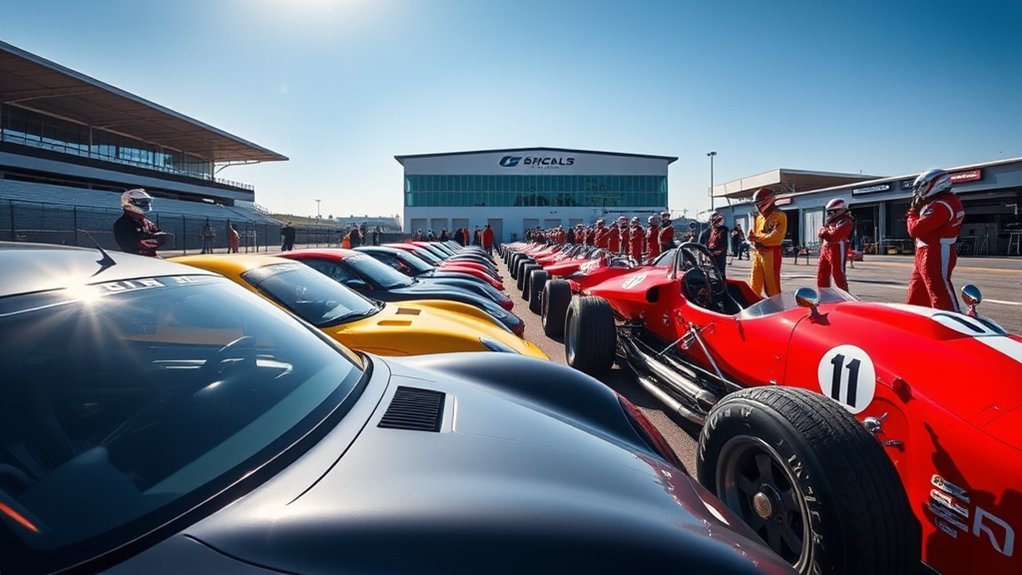
Racing-school prices vary by course length, track rental, vehicle type, instructor ratio, insurance arrangement, and included amenities. The examples below were published by official organizations and checked on July 20, 2026. They are snapshots, not guaranteed quotes.
| Program example | Published price | Important note |
|---|---|---|
| SCCA Starting Line autocross school | $265 for members; $350 package price shown for nonmembers | Uses your vehicle and is not a wheel-to-wheel racing license school |
| Ron Fellows Corvette Owners School | $1,000 for eligible owners | Subsidized, eligibility-based owner program |
| DirtFish standard programs | $1,499 half day; $2,699 one day; $6,999 three days before tax | Rally school in prepared cars; promotions may temporarily change pricing |
| Team O’Neil rally school | $1,800 one day to $8,500 five days | Published pricing states damage coverage is included; confirm current terms |
| Radford GT Road Racing | $5,999 for the three-day option shown | Hospitality fees and course-specific terms may apply |
| Fast Lane private instruction | $2,495 per day | One-to-one format; licensing path depends on selected program and days |
Premium programs at Allen Berg, Skip Barber, and other destination schools can change by circuit, car, date, and course level. Request a current written quote instead of relying on an old article or forum post.
Costs Beyond Tuition
- Travel and lodging: Destination tracks may require flights, rental cars, and several hotel nights.
- Taxes and hospitality fees: Some schools add taxes, food, helmet rental, or mandatory hospitality charges.
- Damage exposure: School-car programs may include a deductible, damage limit, deposit, or optional damage-liability reduction.
- Personal equipment: A helmet, suit, gloves, shoes, head-and-neck restraint, and underwear may be required for competition programs.
- Vehicle costs: Bring-your-own-car events can consume brakes, tires, fuel, fluids, and track insurance.
- Licensing and membership: SCCA national individual membership is $85 in 2026, plus typical regional dues of $10 to $20. Permit, license, medical, and event costs are separate.
- Race-car rental: A race-prepared Spec Miata is a common entry-level rental, but the quote may exclude transport, tires, fuel, crew, damage, and race entry.
Note: A low advertised tuition can become expensive when it requires your own race car and gear. A higher all-inclusive school may cost less than assembling a car, transport, crew, consumables, and insurance separately.
Overview of Racing School Curriculum and Activities
Most schools combine classroom or briefing sessions with progressive drills and on-track driving. The order matters: you learn a concept, practice it at manageable speed, receive feedback, and repeat it with more complexity.
Core Driving Techniques
Core lessons usually include vision, seating position, steering input, braking, downshifting when applicable, weight transfer, cornering lines, throttle control, and recovery from understeer or oversteer. Racing courses also teach flags, passing, starts, restarts, drafting, and situational awareness.
Lead-follow laps let you observe an instructor’s line and pace in real time. Skid-pad, slalom, braking, and corner exercises isolate one skill before you combine several skills on a full circuit.
Track Sessions Overview
Session formats may include paced reconnaissance laps, lead-follow groups, instructor ride-alongs, in-car coaching, radio coaching, open lapping, timed exercises, passing drills, and simulated race starts. Timed runs are not part of every novice program, and some noncompetitive events prohibit timing.
Tiered run groups help separate novices from experienced drivers. Advancement should depend on awareness, predictability, flag response, and control—not just lap time.
Instructor Guidance Methods
Instruction can be delivered in the passenger seat, through lead-follow demonstrations, by radio, from corner observations, or through video and data review. Each method has strengths. In-car coaching gives immediate corrections, while data and video reveal braking points, steering habits, and consistency after the session.
Personalized coaching is most useful when you arrive with one or two clear goals. Ask for specific feedback, such as whether you are looking far enough ahead, releasing the brake smoothly, reaching a consistent apex, or applying throttle too early.
Essential Equipment for Racing Schools
Equipment depends on the type of event. The original idea that street cars are never allowed is incorrect: many HPDE and track-day programs are designed for safe street vehicles. Wheel-to-wheel competition schools have much stricter vehicle and personal-safety requirements.
For an HPDE or Track Day
- A safe, mechanically sound car that passes the organizer’s inspection requirements
- An approved helmet that meets the organizer and track’s current standard
- Closed-toe shoes and clothing required by the event
- A valid driver’s license, waiver, and minor documents when applicable
- Proper tire condition and pressure, adequate brake pads and fluid, secure battery, and no loose items
Some venues impose stricter helmet or convertible rules than the national organizer. Confirm the event supplement before buying gear.
For a Wheel-to-Wheel Racing School
A competition car may need a compliant roll cage, racing seat, harness, window net, fire system or extinguisher, master switch, tow points, numbers, transponder, and current logbook. The exact requirements come from the sanctioning body, class rules, school, and track—not from a generic checklist.
Personal equipment may include a current auto-racing helmet, fire-resistant suit, gloves, shoes, socks, underwear, balaclava, arm restraints for some open cars, and a head-and-neck restraint. Never assume gear approved for karting, motorcycles, or an HPDE is accepted for wheel-to-wheel racing.
School-Owned Cars and Rentals
If the school supplies the car, ask what safety gear is included and what you must bring. Confirm the transmission, pedal arrangement, maximum driver dimensions, damage deductible, tire-flat-spot policy, and whether an incident can end your remaining sessions. Spec Miata rentals remain popular for club-racing schools because the cars are common and relatively approachable, but rental terms vary widely.
What Licensing and Certifications Can You Get After Training?
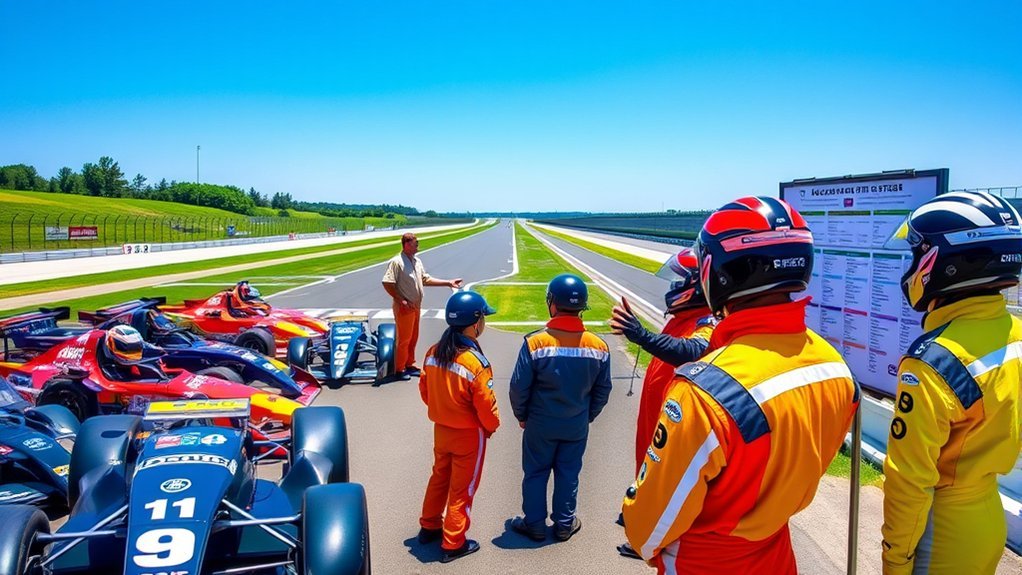
A school may give you a completion certificate, a school-specific credential, or a certificate recommending a sanctioning-body license level. Those are not all the same. Before booking, ask exactly what the named course provides and what additional steps remain.
Novice Permit Eligibility
For the SCCA pathway, accredited schools issue a Certificate of Compliance with a recommended license level. The SCCA says graduates have 365 days after completing the course to obtain the recommended novice permit or full competition license. The license process also involves membership, online modules, identity or driver’s-license documentation, medical requirements based on age, the certificate, and the applicable license purchase.
Current SCCA listings show that course credit is level-specific. A three-day Skip Barber Racing School is listed under a novice-permit pathway, while Allen Berg two- and three-day programs may provide different amounts of novice credit. Autobahn Driver Academy also appears at several credit levels. Confirm the exact course name rather than relying only on the school brand.
Full Competition License
A full competition license may be available directly after a qualifying Level 4 school, or after a novice pathway plus successful race weekends. The SCCA competition-license guide explains that drivers with school credit normally complete three successful regional race weekends before converting a novice permit to a full license, unless an accredited full-license course provides the required higher-level recommendation.
The SCCA’s accredited list includes programs from Allen Berg, Autobahn Driver Academy, Fast Lane Racing School, Radford, Skip Barber, and other providers. Allen Berg’s own licensing guidance explains that its direct full-license route involves a three-day school followed by a two-day advanced program, even though the SCCA list names the advanced course under the full-license category.
Regional Racing License
“Regional license” is often used casually, but the current SCCA terminology centers on the Novice Permit and Full Competition License. A full license allows entry into higher-level SCCA road-racing events, subject to each event’s qualifications and rules.
Older guides may mention Bertil Roos Racing School or quote a school’s past accreditation. Because schools, course names, and credit levels can change, check the current SCCA list before paying. Successful completion at Skip Barber, Allen Berg, Fast Lane, Autobahn Driver Academy, or any other school does not automatically mean every course from that provider grants the same license recommendation.
Age, Medical, and Minor-Driver Rules
Age limits vary by school, vehicle, track, and sanctioning body. Many consumer programs require a valid driver’s license and set their own minimum age. SCCA has a pathway for some drivers as young as 14 with previous racing experience, additional review, medical documentation, and parental waivers. Do not use a universal “16 and older” rule.
Medical requirements also vary by age and license type. Review the current form and declaration rules before scheduling a physical, because the SCCA updated its medical process in 2026.
How to Connect With Fellow Racing Enthusiasts
Racing schools are useful networking environments because instructors, students, mechanics, racers, and organizers share the same paddock. Introduce yourself, ask practical questions, and stay after the debrief instead of leaving as soon as the final session ends.
- Join a local SCCA region, marque club, track club, autocross group, or rally organization.
- Attend HPDE events and volunteer at races to learn how events operate.
- Use reputable online groups to find instructors, rental providers, teams, and local events, but verify safety and licensing advice against official rules.
- Keep notes on instructors and classmates you worked well with, then reconnect at future events.
- Ask about arrive-and-drive opportunities, crew work, flagging, technical inspection, and mentoring before buying a race car.
Volunteering can be one of the least expensive ways to understand racing culture, rules, and logistics. It also helps you meet people who can explain realistic budgets and next steps.
Maximizing Your Racing School Experience
Careful preparation lets you spend your school time learning rather than solving preventable problems.
Before the School
- Read the welcome packet, schedule, cancellation policy, gear list, and damage terms.
- Practice smooth manual-transmission operation only if your assigned car requires it. Manual shifting is not universal across racing schools.
- Sleep well, hydrate, and arrive physically ready for heat, noise, vibration, and sustained concentration.
- Tell the school about medical, mobility, vision, hearing, height, or cockpit-fit concerns before arrival.
- Bring glasses, contacts, medication, sunscreen, water, snacks, weather layers, and a notebook as permitted.
- If you bring your own car, complete maintenance and inspection early. Do not install untested parts the night before.
During the School
- Focus on consistency before speed.
- Ask one clear question at a time and apply the answer in the next session.
- Use the same references for braking, turn-in, apex, and track-out until the instructor asks you to change them.
- Report fatigue, dizziness, mechanical symptoms, or loss of concentration immediately.
- Accept corrections without arguing. Instructors may slow you down to build a safer, faster foundation.
After the School
- Write down three strengths, three recurring errors, and the next skill to practice.
- Save video and data files while the sessions are fresh in your mind.
- Confirm how long any completion certificate or licensing recommendation remains valid.
- Schedule the next event soon enough to retain the lessons, but do not advance before you can drive predictably and safely.
Bringing a supportive friend can help with travel, photos, meals, and logistics, but confirm whether guests are allowed in restricted areas. Your friend should never distract you during briefings or between sessions.
Frequently Asked Questions
What should I wear to a racing school?
Follow the school’s written gear list. Beginner programs may require closed-toe shoes, long pants, and an approved helmet, while wheel-to-wheel schools can require a fire-resistant suit, gloves, shoes, socks, underwear, head-and-neck restraint, and other certified equipment. Do not buy gear until you confirm the exact standard.
Are there age restrictions for attending racing schools?
Yes, but there is no universal minimum. Many consumer schools require a valid driver’s license, while certain sanctioned racing pathways allow qualified minors with prior experience, medical documentation, interviews, and parental waivers. Check the school, track, vehicle, and sanctioning-body rules.
Can I bring my own car to racing school?
Often, yes, for HPDE, track-day, autocross, and some racing-school formats. Other schools use only their own prepared cars. Your vehicle may need an inspection, proper tires and brakes, secure battery, suitable rollover protection, and compliance with convertible or electric-vehicle rules.
What is the average class size at racing schools?
There is no reliable national average. Class size can range from private one-to-one coaching to larger groups divided among several instructors. Ask for the student-to-instructor ratio, number of cars, number and length of sessions, and whether feedback is individual or group-based.
How can I prepare mentally for racing school?
Arrive rested, learn the flag meanings, review the schedule, and choose one or two skill goals. Visualize the sequence of braking, turning, looking through the corner, and unwinding the wheel. Manage stress by breathing slowly, accepting a conservative pace, and treating every session as practice rather than a test.
Does racing school automatically give me an SCCA competition license?
No. A qualifying accredited course can provide a Certificate of Compliance and a recommendation for a specific license level. You must still satisfy the current SCCA administrative, medical, membership, documentation, payment, and experience requirements for that level.
Is a one-day racing school enough for a beginner?
A one-day program can introduce basic vision, braking, cornering, and track rules. It is usually an orientation rather than mastery. Multi-day programs provide more repetition, feedback, and progression, while competition licensing normally requires a specific accredited course and additional steps.
Conclusion
A racing school can sharpen your driving, introduce you to motorsport, and create a clear path toward more advanced training. The value comes from choosing the correct format, learning from qualified instructors, respecting safety limits, and understanding the true cost and licensing outcome before you arrive. Compare current course details rather than old price lists, then focus on smooth, predictable, repeatable driving instead of chasing speed too early.
Sources
- Sports Car Club of America — Drivers’ Schools — current accredited-school categories, certificate rules, and 365-day application window
- Sports Car Club of America — Getting an SCCA Competition License — administrative, medical, novice, race-weekend, and full-license steps
- Sports Car Club of America — Track Days — distinction between noncompetitive track events and racing
- Sports Car Club of America — Membership — 2026 national and typical regional membership pricing
- Team O’Neil Rally School — Current Rally Courses — course lengths and published pricing
- DirtFish Rally School — Standard Programs — current program format, curriculum, and published pricing







Leave a Reply