
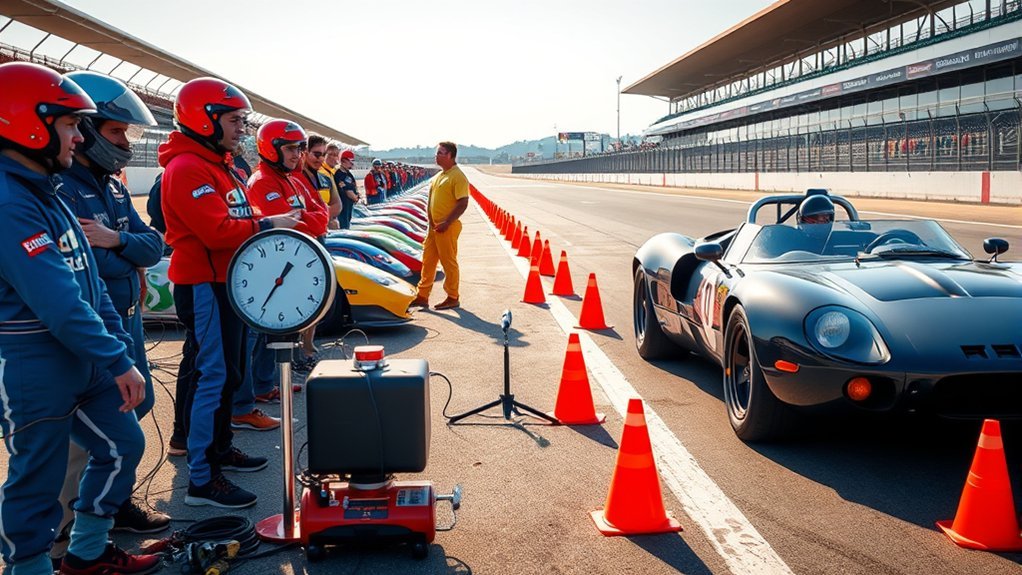
Autocross is one of the easiest ways to try competitive driving with the car you already own. You drive a timed course marked by traffic cones, one run at a time, while learning braking, steering, and vehicle control in a controlled setting. Your first goal is not to win—it is to arrive prepared, pass inspection, follow the course, and finish each run safely.
Quick Answer
To start autocross, find a local event, read its rules, register in the correct class, and bring a safe car, valid driver’s license, approved helmet, readable numbers, tire gauge, water, and weather gear. Arrive early for technical inspection, walk the course several times, attend the drivers’ meeting, and ask for novice instruction.
Key Takeaways
- Start with your current car in good mechanical condition; modifications are not required.
- Confirm the event’s vehicle class, helmet rules, registration deadline, schedule, and supplemental regulations before leaving home.
- Remove every loose item, secure the battery, inspect the tires and brakes, and present the car ready to compete at technical inspection.
- There is no universal autocross tire pressure. Begin with a sensible vehicle-specific baseline and make small adjustments.
- Walk the course more than once, look ahead while driving, and aim for a clean first run rather than maximum speed.
- Your work assignment is part of the event, not optional downtime.
At a Glance
| Time Required | Plan for most of a day, including registration, inspection, course walks, driving, and a work assignment. |
| Difficulty | Beginner-friendly, but it requires concentration, preparation, and close attention to event instructions. |
| Tools Needed | Approved helmet or confirmed loaner, tire gauge, portable inflator, torque wrench, readable number and class markings, storage tote, water, food, sunscreen, and weather gear. |
| Cost | Many regional events are about $25–$60, but membership, venue, timing, and local rules can change the price. |
What Autocross Is and What to Expect
Autocross, called Solo by the Sports Car Club of America, is a timed competition held on a temporary course in a large paved area such as a parking lot or inactive airstrip. Cones form gates, turns, slaloms, and the finish. Drivers compete against the clock rather than racing side by side.
Your fastest clean run usually determines your result at a regional event, although the exact format depends on the organizer. At SCCA National Tour events, knocking over or displacing a scored cone adds two seconds. Missing part of the course normally produces a DNF, or “Did Not Finish.” Always read the event’s supplemental regulations because regional procedures can differ.
A successful first autocross is a safe car, a clean run, a completed work assignment, and enough notes to improve at the next event.
Find and Register for Your First Autocross
- Locate an event. Use the SCCA beginner autocross guide and event finder, or search for a recognized motorsports club in your area.
- Read the event page completely. Check the location, entrance instructions, registration deadline, schedule, noise limits, helmet policy, passenger rules, lunch availability, and cancellation procedure.
- Confirm that your vehicle is eligible. Do this before paying the entry fee if you drive an SUV, pickup, van, lifted vehicle, unusually tall crossover, heavily modified car, kart, or purpose-built competition vehicle.
- Determine your class. Your model, trim, drivetrain, tires, wheel dimensions, suspension, engine changes, aerodynamic parts, and other modifications may affect classing. Consult the current SCCA Solo rules and classification information or contact the event registrar.
- Register with accurate information. Enter the correct car, class, number, driver details, and membership status. Some events fill before race day and do not accept walk-up entries.
- Review license and waiver requirements. Bring a current driver’s license unless the event specifically allows another arrangement. Drivers or guests under 18 may need completed minor-waiver documents and parent or guardian signatures.
Note: National rules establish the main safety and competition framework, but the host region’s schedule and supplemental regulations control the details of that event.
Essential Tools You Need to Start Autocross
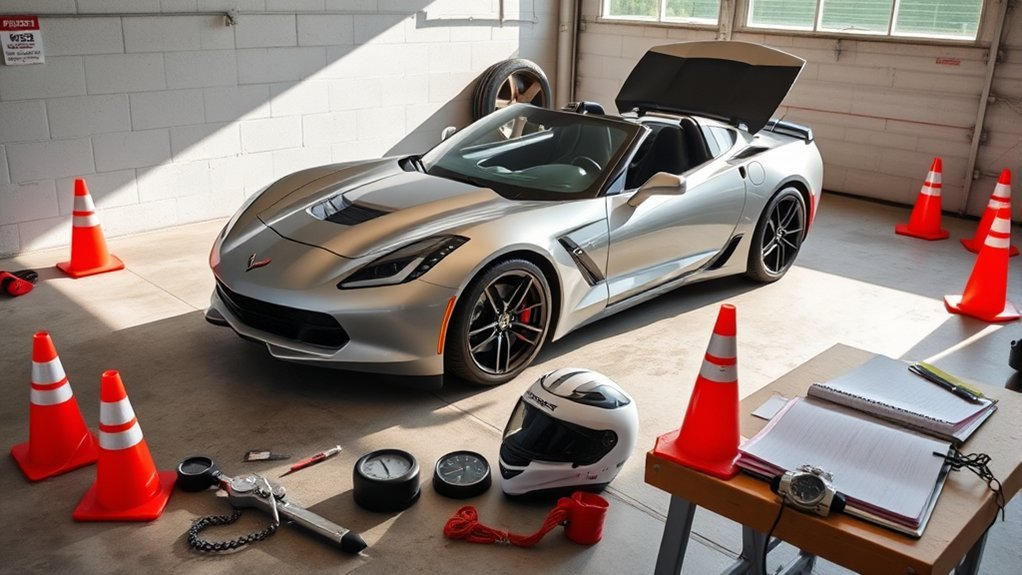
To kick off your autocross journey, bring the equipment needed to pass inspection, adjust the car, stay comfortable, and complete a long outdoor event.
Required or Event-Critical Items
- Driver’s license and registration documents: Keep them where you can reach them during check-in.
- Approved helmet: Confirm that the certification label appears on the 2026 SCCA Solo and RallyCross helmet chart. A DOT-only label does not establish SCCA eligibility. Many regions offer loaner helmets, but you should confirm availability before the event.
- Car number and class letters: Use contrasting magnetic markings, reusable vinyl, low-adhesion painter’s tape, or another method accepted by the organizer. Both the number and class must be readable from a distance.
- Closed-toe shoes: Choose a comfortable pair with a thin enough sole to feel the pedals.
- Storage tote: Your cabin and trunk must be emptied for competition. A lidded plastic tote keeps personal items together and protects them from rain.
Useful Tools and Supplies
- A reliable tire-pressure gauge
- A portable air compressor or inflator
- A torque wrench and the correct wheel socket
- A tread-depth gauge or simple tire-inspection tool
- Painter’s tape, glass marker, or magnetic numbers
- Basic hand tools appropriate for your car
- A notebook or phone note for pressures, weather, and run observations
Comfort and Weather Items
- Water, food, and electrolyte drinks
- Sunscreen, sunglasses, and a hat
- Rain jacket or rain suit, towels, and waterproof storage
- Layers for changing temperatures
- A folding chair and shade where the site permits it
- Any necessary medication and basic personal supplies
Warning: Do not assume an old helmet remains legal. For 2026 SCCA Solo, accepted 2010-dated certifications expire after December 31, 2026. When buying a helmet, select a current accepted certification that fits securely and gives you clear peripheral vision.
Get Your Car Ready for Autocross
Before hitting the autocross course, make sure your car is mechanically sound and ready to be inspected in the same condition in which it will compete. You do not need performance upgrades for your first event.
Pre-Event Mechanical Checklist
- Brakes: The pedal should feel firm, the parking brake should work, and the pads and rotors should have adequate service life.
- Tires: Look for exposed cords, cuts, bulges, cracks, punctures, severe uneven wear, or objects in the tread.
- Wheels: Verify that the wheels are undamaged and all fasteners are present. Tighten them to the vehicle or wheel manufacturer’s specification with a torque wrench.
- Battery: The battery must be securely restrained with proper hardware. A bungee cord is not an acceptable hold-down.
- Seat belts: Confirm that the driver and passenger restraints latch, retract, and remain secure.
- Throttle: Make sure the accelerator moves freely and returns normally without sticking.
- Steering and suspension: Investigate looseness, clunks, damaged components, or unusual wheel play before competing.
- Fluids: Check engine oil, coolant, brake fluid, and other serviceable fluids. Repair significant leaks before the event.
- Interior and cargo areas: Remove bottles, tools, floor mats, phone mounts, coins, child seats, spare cargo, and every other loose item unless an official specifically allows it.
Warning: Do not compete with faulty brakes, exposed tire cords, a loose battery, significant fluid leakage, loose wheel fasteners, damaged steering or suspension parts, or unsecured objects in the cabin.
Check Vehicle Eligibility Before You Arrive
Most ordinary passenger cars in reasonable condition can autocross. Vehicle eligibility is not based only on whether the registration describes the vehicle as a car, crossover, truck, or SUV. Organizers must also consider rollover risk, modifications, tire condition, suspension, and the specific course.
Large SUVs, pickups, vans, lifted vehicles, and other vehicles with a high center of gravity may be excluded. Some lower crossovers may be accepted, but you should never assume. Send the organizer the year, make, model, trim, drivetrain, tire size, suspension changes, and a clear photo if eligibility is uncertain.
Do Not Modify the Car Before Checking Its Class
Suspension parts, wheel width or offset, tire type, engine tuning, intake and exhaust changes, aerodynamic parts, seats, steering wheels, and other modifications can move a car into a different class. The simplest first-event plan is to compete with the car close to stock, learn what it does, and review the current rules before buying parts.
Pro Tip: Spend your first budget on maintenance, entry fees, instruction, and seat time. A skilled driver in a healthy stock car will learn more than a beginner trying to understand several new modifications at once.
How to Set Tire Pressure for Autocross
There is no single best pressure for every autocross car. A 2,300-pound sports car on stiff, low-profile tires may need a different setup than a heavier sedan on soft sidewalls. Front and rear pressures may also differ.
- Record the cold starting pressure. For normal road use, NHTSA directs drivers to the Tire and Loading Information label on the driver’s door area or the owner’s manual—not the maximum number molded on the tire sidewall.
- Ask for a proven novice baseline. The organizer, instructor, or experienced driver with the same vehicle and tire type may recommend a modest increase to reduce excessive sidewall rollover. Treat it as a starting point, not a universal rule.
- Measure immediately after each run. Pressure rises as the tire heats. Record hot pressure, ambient temperature, and whether the tire is rolling onto the outer sidewall.
- Adjust in small steps. Changes of about 1–2 psi are easier to evaluate than large jumps. Change one variable at a time.
- Watch behavior, not just the gauge. Too little pressure may produce sluggish response and excessive shoulder rollover. Too much may reduce grip, make the car feel nervous, or concentrate wear near the tread center.
- Restore safe road pressures before leaving. Recheck them cold after the event and correct them for normal driving.
Note: The maximum pressure printed on a tire is not a universal performance target. Stay within the tire, wheel, and vehicle manufacturer’s limits.
How to Familiarize Yourself With the Course Layout
Once your car is ready, learning the course becomes your main job. There is usually no untimed practice lap, so arrive early enough to walk the course at least two or three times.
First Walk: Learn the Route
Review the course map if one is available, then walk from the start to the finish without worrying about the fastest line. Identify the gates you must pass through, slaloms, tight turns, optional paths, and the finish timing area. Notice which cones point toward the next element and which cones define an edge.
Second Walk: Plan the Car’s Position
Look beyond each gate toward the following element. Decide where you need to slow down, where the car should be placed before a turn, and which sections reward patience. A wide entry is not automatically fast if it leaves you poorly positioned for the next gate.
Third Walk: Rehearse the Run
Visualize your hands, eyes, braking, and throttle. Pick a few memorable reference points, but do not stare at one cone at a time. Autocross becomes easier when your eyes move ahead and your hands follow.
- Ask an experienced driver or novice instructor to walk with you.
- Stand where the driver’s seat would travel, not along the outer edge of the course.
- Look backward from difficult sections to see the setup they require.
- Locate course-worker stations and understand where red flags may appear.
- Ask for clarification before the drivers’ meeting ends if a cone arrangement is confusing.
Pro Tip: A clean route driven at moderate speed is more useful than a fast opening run that earns a DNF. Learn the course first, then add speed.
What Happens on Autocross Event Day
- Arrive early. Allow time to unload, check in, inspect the car, walk the course, and handle unexpected delays.
- Enter the site carefully. Sign the waiver, follow paddock speed limits, and park only where directed.
- Complete registration. Show your license, confirm your class and number, and collect any wristband, worker information, or inspection form.
- Empty and prepare the car. Remove loose items and the driver’s floor mat, install readable markings, set the initial tire pressures, and open the hood and trunk if tech officials request it.
- Pass technical inspection. Present the car, helmet, and required documentation. Correct any issue before the inspection period closes.
- Walk the course. Complete more than one walk and join the novice walk if offered.
- Attend the drivers’ meeting. Listen for run groups, work groups, grid procedure, course changes, flag instructions, passenger rules, and local penalties.
- Report to your assignment on time. You may reset cones, carry a flag, assist in grid, help with timing, or perform another event job.
- Bring the car to grid. Grid workers will organize cars and direct you toward the start when it is your turn.
- Complete your runs. Check each time and penalty, ask an instructor for feedback where permitted, and make only measured changes between runs.
- Clean up and prepare for the road. Remove competition markings if necessary, restore suitable street pressures, secure your belongings, and inspect the vehicle before leaving.
Warning: Take the worker assignment seriously. Course workers must watch approaching cars, face the course, follow flag instructions, and remain behind the designated safety line whenever possible. Never use a phone while assigned to an active station.
Beginner Driving Techniques for Your First Runs
Make the First Run a Learning Run
Drive quickly enough to understand the course, but leave room to correct a mistake. Find every gate, establish where braking is needed, and finish cleanly. Your later runs can build on a complete reference lap.
Look Ahead
Your eyes should move toward the next element before the car reaches the current one. Looking farther ahead gives your brain more time to plan steering, braking, and vehicle placement.
Use Smooth Controls
Sudden steering, braking, or throttle can overload the tires. Brake firmly while the car is relatively straight, release the brake smoothly as you turn, and add power as you unwind the steering wheel. The exact technique varies by car, but smooth weight transfer makes the vehicle easier to control.
Slow Down Before You Get Lost
If the route becomes unclear, reduce speed and find the next gate. Missing an element to save a fraction of a second normally costs the entire run through a DNF.
Respond Correctly to a Spin or Red Flag
If the car spins, stop under control and wait until it is safe to continue. In a manual-transmission car, pressing both the clutch and brake can help prevent the engine from driving the wheels while you stop. In an automatic or clutchless car, apply the brake firmly. If a course worker displays a red flag, stop promptly and safely, then follow the worker’s directions.
How to Engage With the Autocross Community
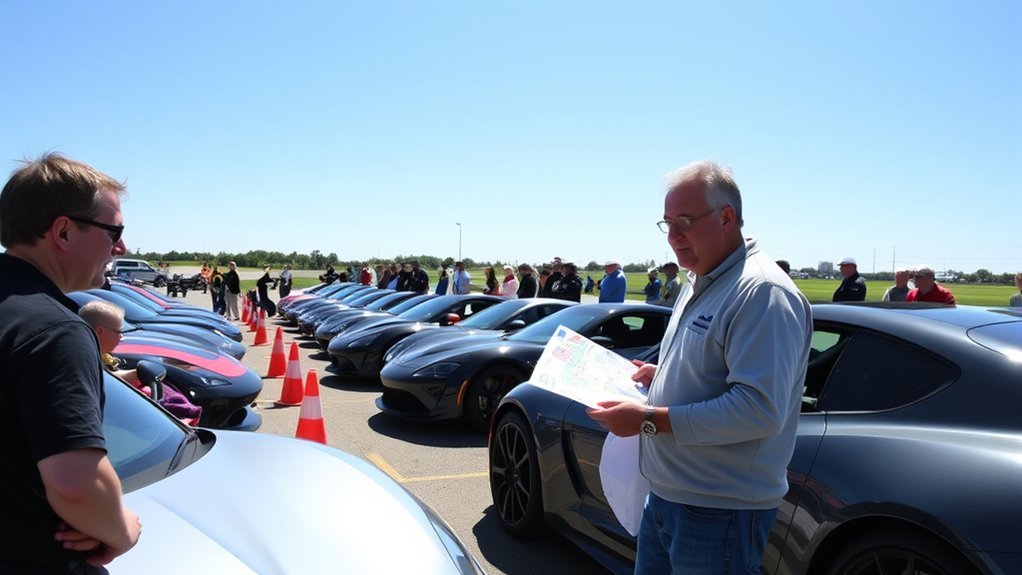
Engaging with the autocross community can greatly improve your experience and skills. Most events depend on competitors who also register drivers, inspect cars, work the course, manage grid, and operate timing.
- Join the organizing club or local region: Membership can make registration easier and helps you learn the calendar, rules, and regular competitors. Marque clubs such as Subaru, Porsche, BMW, or Mazda groups may also host or support events, but confirm which rule set they use.
- Identify yourself as a novice: Tell registration, tech, or the novice chief that it is your first event. This makes it easier for officials to direct you toward course walks and instruction.
- Ask for an instructor: Where local rules permit it, an experienced driver may ride with you or drive your car while explaining course placement and control inputs.
- Request a ride-along: Riding with a skilled driver can reveal how early they look ahead, where they slow down, and how little unnecessary steering they use. Passenger rules and helmet requirements still apply.
- Volunteer carefully: Arrive at your worker station early, listen to the station captain, and ask questions before cars begin running.
- Discuss one problem at a time: A specific question such as “Why am I late entering the slalom?” produces better advice than simply asking how to go faster.
Social media groups and club forums can help you find events, but the official registration page and supplemental regulations should be your final source for schedules and rules.
Avoid These Common Mistakes on Your First Autocross Run
- Arriving late: This can cost you course-walk time or cause you to miss registration, tech, or the drivers’ meeting.
- Assuming the helmet is legal: Check the certification label before the event instead of relying on its age, appearance, DOT label, or seller’s description.
- Bringing a full car to tech: Remove loose items before inspection, including the driver’s floor mat.
- Skipping class research: A wheel, tire, suspension, or engine change may affect your class.
- Using a universal tire-pressure number: Your car and tires require their own baseline and adjustments.
- Trying to win the first run: Rushing often produces missed gates, cone penalties, and poor learning.
- Looking at the nearest cone: Keep your vision moving ahead toward the next course element.
- Changing several settings at once: You will not know which change improved or hurt the car.
- Ignoring hydration and weather: Autocross days involve more standing, walking, sun, wind, and rain than time spent driving.
- Missing the work assignment: Competitors are part of the event staff, and failing to report can delay the event or result in penalties.
- Assuming your car is insured for competition damage: Review your policy and contact the insurer. SCCA explains that its event-related participant coverage does not itself pay for damage to your competition vehicle.
What to Do After the Event
- Return tire pressures to suitable road settings before normal driving.
- Check the tires for shoulder wear, cuts, debris, or new damage.
- Inspect the wheels, brakes, fluids, and underbody for anything unusual.
- Secure every item that was removed from the car.
- Record cold and hot pressures, weather, course conditions, best time, penalties, and driver observations.
- Write down one or two priorities for the next event rather than planning several modifications.
Frequently Asked Questions
Do I need a modified car to start autocross?
No. A mechanically sound daily driver on safe street tires is often the best first autocross car because you can focus on learning instead of diagnosing new parts or setup changes. Confirm that the model is eligible and enter it in the correct class.
What are common autocross modifications?
Common changes include tires, alignment, dampers, anti-roll bars, springs, wheels, brake pads, seats, and engine modifications. However, each category permits different changes. Review the current rulebook before buying parts because a modification that appears minor can move the car into another class.
How can I improve my autocross time?
Walk the course carefully, look farther ahead, complete a clean first run, brake before difficult elements, use smooth controls, and ask an instructor to identify the largest mistake. Improvement varies by driver and course, so avoid unsupported promises about a specific percentage.
What is PAX in autocross?
PAX, also called the Racer’s Theoretical Performance index, applies a coefficient based on class potential to a driver’s raw time. The indexed result helps compare performances from different classes. Use the coefficient adopted by that event because the index can change from season to season.
What tire pressure is best for autocross?
There is no universal pressure. Begin with the vehicle’s cold placard pressure and a vehicle-specific recommendation from the organizer or an experienced driver. Measure pressure after each run, watch for excessive shoulder rollover, and adjust in small steps without exceeding tire, wheel, or vehicle limits.
Can I autocross an SUV, pickup, or crossover?
Possibly, but eligibility depends on rollover risk and the organizer’s rules. Large SUVs, pickups, vans, lifted vehicles, and other tall vehicles may be excluded. Contact the event officials with the exact year, make, model, trim, tire size, and suspension details before registering.
Do I need a racing license for autocross?
A separate competition racing license is generally not required for an ordinary SCCA Solo event, but drivers normally need a current street driver’s license. Kart entrants, permitted drivers, and minors may have different requirements, so check the event rules and waiver instructions.
Conclusion
Your first autocross event should be about preparation, safe participation, and learning how your car responds. Register early, confirm your class and helmet, bring a mechanically sound car, walk the course several times, and tell the organizers that you are new. Focus on a clean first run, make small adjustments, complete your work assignment, and leave with useful notes for the next event. Every experienced autocrosser started with the same first trip through the cones.
Sources
- Sports Car Club of America — How Do I Autocross? — registration, licenses, technical inspection, course walks, worker assignments, and first-event procedures.
- Sports Car Club of America — Solo Cars and Rules — current Solo rulebook, vehicle classification, and competition requirements.
- SCCA 2026 Solo and RallyCross Helmet Certification Labels — helmet certifications accepted during the 2026 season.
- National Highway Traffic Safety Administration — TireWise — cold-pressure labels, tire inspection, inflation, tread, and maintenance guidance.
- Sports Car Club of America — Autocross Glossary — definitions of PAX, DNF, course workers, clean runs, and other autocross terms.
- Sports Car Club of America — Insurance at SCCA Events — distinction between event participant coverage and coverage for damage to a competitor’s vehicle.







Leave a Reply