

Florida exhaust-noise law is more detailed than a single decibel number. The legal limit depends on the vehicle category, manufacture date, and posted speed limit of the road. Florida also separately prohibits certain exhaust modifications, including changes that make a vehicle louder than it was when originally manufactured.
Quick Answer
For most Florida passenger vehicles made on or after January 1, 1979, the operating-noise limit is 72 dBA on roads posted at 35 mph or less and 79 dBA above 35 mph. Motorcycles and heavy vehicles have different limits. Florida also prohibits exhaust modifications that make a vehicle louder than it was originally manufactured.
Key Takeaways
- The familiar 72/79 dBA limits apply to most passenger vehicles, not every vehicle on the road.
- Florida’s statutory limits are based on the road’s posted speed limit and a measurement taken 50 feet from the center of the lane.
- A stationary meter reading near the tailpipe is useful for comparison, but it does not reproduce Florida’s legal operating-noise test.
- An exhaust modification may violate Florida law if it makes the vehicle louder than it was originally manufactured, even if a home meter reading seems low.
- Noise compliance does not legalize removal or disabling of catalytic converters or other emissions controls.
Legal information: This guide summarizes Florida law as of July 20, 2026. It is general information, not legal advice. The statute listed on a citation, current court instructions, and advice from a qualified Florida attorney control in a specific case.
Florida Exhaust Noise Limits
Florida Statute §316.293 sets operating-noise limits for different vehicle categories. The limits apply to total sound from the vehicle, not only the tailpipe, and are measured 50 feet from the center of the lane under approved procedures.
The speed columns refer to the posted speed limit of the road. They do not simply mean that a driver happened to be traveling below or above 35 mph when a reading was taken.
| Vehicle category | Manufacture date | Road posted at 35 mph or less | Road posted above 35 mph |
|---|---|---|---|
| Motorcycles other than motor-driven cycles | Before January 1, 1979 | 82 dBA | 86 dBA |
| Motorcycles other than motor-driven cycles | On or after January 1, 1979 | 78 dBA | 82 dBA |
| Vehicle with a GVWR or GCWR of 10,000 pounds or more | On or after January 1, 1975 | 86 dBA | 90 dBA |
| Motor-driven cycles and other vehicles not included above, including most passenger cars and light trucks | Before January 1, 1979 | 76 dBA | 82 dBA |
| Motor-driven cycles and other vehicles not included above, including most passenger cars and light trucks | On or after January 1, 1979 | 72 dBA | 79 dBA |
Florida’s 72/79 dBA figures are not universal tailpipe limits. They are operating-noise limits for a specific vehicle category, measured at a specified roadway distance.
What Florida Exhaust Law Actually Regulates
Florida uses several related rules rather than one simple “loud exhaust” test.
- Operating noise: Section 316.293 limits total vehicle sound according to vehicle class, manufacture date, and posted speed limit.
- Required equipment: Florida Statute §316.272 requires an exhaust system in good working order and constant operation, including the muffler, manifold pipe, and tailpiping.
- Cutouts and bypasses: A muffler cutout, bypass, or similar device may not be used on a vehicle on a highway.
- Louder-than-original modifications: Section 316.293(5) prohibits modifying or operating a modified exhaust or other noise-abatement device when the modification makes the vehicle louder than it was as originally manufactured.
The modification rule is important because it operates separately from the numerical table. A modified car can create a legal problem even when an informal meter check appears to fall below 72 or 79 dBA.
Vehicles Exempt From the Operating-Noise Section
Section 316.293 lists several exemptions:
- Emergency vehicles operating under the applicable emergency-vehicle provision.
- Vehicles participating in a sanctioned professional or amateur competitive event for which an admission or entry fee is charged.
- Practice sessions or time trials for those sanctioned events.
- Vehicles involved in a manufacturer’s engineering, design, or equipment test.
- Construction or agricultural equipment on a job site or traveling on a highway.
An exemption from the operating-noise section should not be read as permission to violate unrelated safety, emissions, event, property, or roadway rules.
How to Measure Your Vehicle’s Exhaust Noise at Home
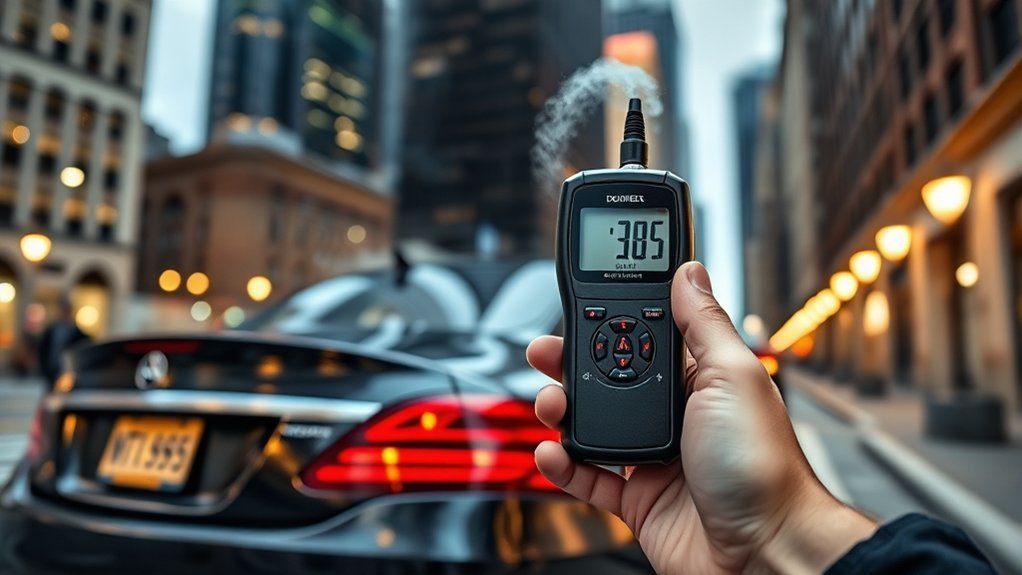
You can perform a stationary screening check to compare your exhaust before and after a repair or modification. However, this does not reproduce Florida’s legal 50-foot operating-vehicle test.
At a Glance
| Time Required | 20–30 minutes |
| Difficulty | Moderate; a helper is strongly recommended |
| Tools Needed | A-weighted sound-level meter, tripod or stable stand, tape measure, wheel chocks, tachometer or reliable RPM display, and hearing protection |
| Cost | About $0–$150, depending on whether you already own or can borrow a suitable meter |
Warning: Test only outdoors in a clear area. Never run an engine in a garage or other enclosed space. Keep people, clothing, tools, dry grass, and flammable material away from the hot exhaust. Set the parking brake, chock the wheels, use Park or Neutral as appropriate, and never exceed the manufacturer’s stationary engine-speed instructions.
- Inspect the exhaust first. Look for loose clamps, cracked pipes, black soot near a leak, missing hangers, corrosion, or a damaged muffler. Repairing a leak may reduce the sound more than changing the muffler.
- Choose a suitable test area. Use a level, open area away from walls, parked vehicles, fences, and buildings that can reflect sound. Avoid strong wind, rain, traffic, lawn equipment, and other background noise.
- Warm the vehicle normally. Bring the engine to normal operating temperature unless the vehicle or test procedure directs otherwise.
- Set the meter correctly. Use A-weighting and Fast response when available. Mount the meter so your body does not block or reflect sound into the microphone.
- Position the meter for a repeatable stationary screening check. A commonly used close-range geometry places the microphone about 19½ inches, or 0.5 meter, from the exhaust outlet at approximately a 45-degree angle. Keep the microphone near the height of the outlet and do not place it directly in the exhaust stream.
- Use a defined engine speed. Follow the RPM specified by the vehicle manufacturer, an inspection program, or a recognized test procedure. Do not guess between 50% and 75% of redline. When no official target is available, use one consistent and conservative RPM only for before-and-after comparison.
- Take at least three readings. Return to idle between runs and repeat the same meter position, RPM, and duration. Record the highest stable A-weighted reading and the test conditions.
- Investigate inconsistent results. A spread approaching 10 dB is not a minor fluctuation. Recheck the RPM, meter position, wind, reflections, background noise, and instrument settings.
Pro Tip: Mark the microphone and tire positions with removable tape. Repeating the exact geometry makes a before-and-after repair comparison far more useful.
Why a Stationary Test Does Not Prove Legal Compliance
Florida’s statutory operating limits are measured 50 feet from the center of the lane under approved operating-vehicle procedures. A reading taken 19½ inches from a stationary tailpipe uses a different distance, engine load, sound field, and test purpose.
The current SAE J1492 stationary exhaust standard also explains that its procedure does not test exhaust sound against a general noise limit for categories of road vehicles.
Use a stationary check to:
- Compare sound before and after a repair.
- Identify a sudden increase that may indicate a leak or failed component.
- Compare different valve settings on the same exhaust.
- Decide whether to seek a professional inspection.
Do not use it to claim automatically that a vehicle meets Florida’s 72, 79, or other operating-noise limit.
Note: A phone sound-meter app can help with rough before-and-after comparisons, but microphone hardware and automatic audio processing vary. It should not be treated as legal proof of compliance.
Are Aftermarket Exhausts Legal in Florida?
An aftermarket exhaust is not automatically lawful merely because it is sold for your vehicle. Florida focuses on the condition, configuration, and sound of the installed system.
Before buying or installing one, check that it:
- Retains a functioning muffler, manifold pipe, and tailpiping.
- Does not use a muffler cutout, bypass, or similar highway-use device.
- Does not make the vehicle louder than it was as originally manufactured.
- Does not create excessive or unusual noise through leaks, poor fitment, or an open exhaust valve.
- Does not remove, bypass, or disable required emissions controls.
- Is intended for the correct make, model, model year, engine, wheelbase, body style, and emissions configuration.
Claims such as “street series,” “touring,” “resonated,” or “49-state legal” are not substitutes for checking the installed system against Florida law and federal emissions requirements.
Warning: Noise and emissions are separate legal issues. The U.S. Environmental Protection Agency states that removing or disabling catalytic converters, diesel particulate filters, oxygen-sensor functions, and other required emissions controls can constitute prohibited tampering under the Clean Air Act.
Common Causes of Excessive Exhaust Noise
A vehicle may become noticeably louder even when the owner has not installed a performance exhaust. Common causes include:
- A cracked exhaust manifold or failed manifold gasket.
- A loose flange, clamp, slip joint, or V-band connection.
- A rust hole in a pipe, resonator, or muffler.
- A failed flex pipe.
- A missing, gutted, or internally damaged muffler or resonator.
- An exhaust valve stuck in its open position.
- Incorrectly fitted aftermarket components.
- Engine misfires, backfires, or abnormal combustion.
- Broken hangers that allow the exhaust to strike the body or suspension.
Exhaust leaks can expose occupants to carbon monoxide and other harmful gases. If you smell exhaust inside the cabin, hear a leak near the engine, or develop headache, dizziness, or nausea while driving, stop using the vehicle and have it inspected promptly.
Common Noise Violations and Penalties

Violations of Sections 316.272 and 316.293 are noncriminal traffic infractions handled as nonmoving violations. The total amount shown by a clerk may be higher than the statute’s base fine because court costs, assessments, administrative fees, and authorized surcharges may apply.
| Violation or procedure | Florida statutory treatment |
|---|---|
| Ordinary nonmoving exhaust or operating-noise violation | A $30 base civil penalty under §318.18(2), plus applicable court costs, administrative assessments, and authorized surcharges. |
| First violation of §316.293(5) for a prohibited noise-abatement modification | An additional $200 fine under §318.18(24), on top of other applicable penalties and costs. |
| Second or later violation of §316.293(5) | An additional $500 fine under §318.18(24), on top of other applicable penalties and costs. |
| Electing a court hearing | The preset civil-penalty process is waived. If the infraction is proved, the official may impose a civil penalty of up to $500 under §318.14(5), subject to the applicable law and facts. |
| Failure to pay, arrange a payment plan, or respond on time | Additional penalties and a driver-license suspension process may follow. The citation and clerk’s instructions should be handled before the stated deadline. |
The governing penalty provisions appear in Florida Statute §318.18. Because court costs and authorized assessments vary, check the clerk of court named on the citation for the exact amount due.
What to Do if You Get a Noise Violation
- Read the citation carefully. Identify the statute subsection, issuing agency, response deadline, and whether a hearing is required or optional.
- Do not ignore the deadline. Florida’s general noncriminal traffic-infraction procedure normally requires a response within 30 days of issuance.
- Document the vehicle’s condition. Photograph the exhaust, muffler, valves, clamps, emission-control components, and any visible damage. Keep dated repair orders and receipts.
- Check the exact allegation. A citation for excessive operating noise is not identical to a citation for a louder-than-original modification, missing equipment, or use of a cutout.
- Arrange a qualified inspection. Ask a reputable exhaust shop or other qualified technician to identify leaks, missing parts, valve problems, or improper fitment. A home decibel reading alone may not resolve the legal issue.
- Contact the listed clerk. Confirm the amount, response choices, hearing procedure, and acceptable supporting documents.
- Seek legal advice when appropriate. Consider speaking with a Florida traffic attorney if the allegation is disputed, the penalties are substantial, or a repeat offense is alleged.
Repairing the exhaust may reduce future risk, but it does not automatically dismiss an existing citation. Keep proof of the repair and follow the official procedure listed by the court or clerk.
Do Florida Cities Have Different Exhaust-Noise Limits?
Florida’s Motor Vehicle Noise Prevention and Control Act states that its provisions apply uniformly throughout the state. Section 403.415(10) limits local authorities from enacting or enforcing ordinances on matters covered by the state act unless expressly authorized.
That means you should not assume that each Florida city has its own replacement dBA table for motor vehicles. Cities and counties may still enforce applicable state traffic law and may regulate separate noise, nuisance, property, event, or conduct issues that are not displaced by the state act.
When researching a local rule, confirm:
- Whether it concerns motor-vehicle operating noise or a broader public nuisance.
- Whether it applies on public roads, private property, event grounds, or residential property.
- Whether the cited provision regulates exhaust equipment, music, engine revving, racing, or another activity.
- Whether the ordinance has been amended, repealed, or limited by state law.
How to Keep Your Exhaust Compliant
- Keep the muffler, pipes, joints, hangers, and tailpipe in good condition.
- Repair leaks before they grow larger.
- Avoid cutouts, bypasses, straight pipes, or valve settings intended to defeat normal muffling on public highways.
- Confirm that aftermarket parts match the exact vehicle and engine configuration.
- Keep the catalytic converter and other emissions controls installed and functional.
- Save the product description, invoice, installation record, and photos of the completed system.
- Compare the vehicle’s sound before and after modification using the same stationary screening setup.
- Seek a professional assessment when the vehicle is close to a limit or noticeably louder than stock.
Frequently Asked Questions
What is the exhaust-noise limit for a car in Florida?
For most passenger cars and light vehicles manufactured on or after January 1, 1979, the operating-noise limit is 72 dBA when the applicable road speed limit is 35 mph or less and 79 dBA when it is above 35 mph. The statutory measurement is taken 50 feet from the center of the lane and covers total vehicle noise.
Can police stop me for a loud exhaust in Florida?
Yes. An officer may initiate a traffic stop when there is a lawful basis to suspect an exhaust-equipment or motor-vehicle-noise violation. The eventual charge may concern excessive operating noise, missing or defective exhaust equipment, use of a cutout or bypass, or a prohibited louder-than-original modification.
What dBA reading is too loud for an exhaust?
There is no single Florida tailpipe number that applies to every vehicle and test setup. The statutory limits vary by vehicle class, manufacture date, and posted road speed. A close-range stationary reading cannot be compared directly with Florida’s 50-foot operating-noise table.
How much is an exhaust ticket in Florida?
An ordinary nonmoving violation has a $30 statutory base penalty, but court costs, administrative assessments, and authorized surcharges increase the amount due. A violation of the louder-than-original modification provision carries an additional $200 for a first offense and $500 for a second or later offense.
Is every aftermarket exhaust illegal in Florida?
No, but an aftermarket system can violate Florida law if it lacks required equipment, uses a prohibited cutout or bypass, creates excessive or unusual noise, or makes the vehicle louder than it was originally manufactured. It may also violate federal law if it removes or disables required emissions controls.
Does a 19½-inch tailpipe test prove that my exhaust is legal?
No. That geometry can provide a repeatable stationary screening measurement, but Florida’s operating limits use a different test distance and operating procedure. A stationary result is most useful for comparing the same vehicle before and after a repair or modification.
Do motorcycles have the same Florida noise limits as cars?
No. Motorcycles other than motor-driven cycles have their own limits. Motorcycles manufactured on or after January 1, 1979, are limited to 78 dBA on roads posted at 35 mph or less and 82 dBA on roads posted above 35 mph under the statutory operating test.
Conclusion
Florida does not use one universal tailpipe limit for every vehicle. You need to identify the correct vehicle category, manufacture date, and posted road speed before applying the state operating-noise table. You must also keep the exhaust in good working order and avoid modifications that make the vehicle louder than it was originally manufactured.
A stationary sound check can help you spot changes and diagnose problems, but it cannot duplicate the state’s 50-foot operating test. When in doubt, repair leaks, retain all required emissions controls, document the installed parts, and obtain a qualified inspection before driving with a significantly louder exhaust.
Sources
- Florida Statute §316.293 — Motor Vehicle Noise — operating-noise limits, measurement distance, modification rule, exemptions, and violation classification.
- Florida Statute §316.272 — Exhaust Systems and Prevention of Noise — required exhaust equipment and the cutout or bypass prohibition.
- Florida Statute §318.18 — Amount of Penalties — base nonmoving penalty, costs, assessments, and additional modification fines.
- Florida Statute §403.415 — Motor Vehicle Noise — statewide uniformity, testing authority, and replacement equipment requirements.
- SAE J1492 — Stationary Exhaust Sound Measurement — scope and limits of stationary light-vehicle exhaust testing.
- U.S. EPA — Aftermarket Defeat Devices and Tampering — federal emissions-control tampering requirements.







Leave a Reply