

Performance modifications can make a daily-driven car more responsive, capable, and enjoyable, but adding horsepower should not be the first goal. The best daily-driver upgrades improve the parts you use on every trip: tires, brakes, suspension control, seating position, and basic maintenance.
A good modification should suit your exact make, model, model year, engine, drivetrain, climate, and driving conditions. It should also preserve enough ride comfort, ground clearance, noise control, reliability, and legal compliance for normal commuting.
Quick Answer
For most daily drivers, the best performance upgrades are fresh maintenance, high-quality tires, street-focused brake pads and fluid, and a mild suspension setup followed by a proper alignment. Power mods come later. Choose vehicle-specific, emissions-compliant parts, preserve comfort and reliability, and confirm warranty and insurance effects before installation.
Key Takeaways
- Repair warning lights, leaks, worn parts, and overdue maintenance before adding performance parts.
- Tires usually create a larger real-world improvement than a mild intake or exhaust change.
- Choose street-oriented brake and suspension parts rather than track parts that need heat or sacrifice comfort.
- Engine tuning must match the installed hardware, required fuel, emissions equipment, and drivetrain limits.
- Check federal, state, local, warranty, and insurance requirements before spending money.
At a Glance
| Time Required | About 1–2 hours to plan and verify fitment; installation may take from less than an hour to a full day or more. |
| Difficulty | Beginner for simple reversible parts; intermediate to advanced for brakes, suspension, electrical work, and tuning. |
| Tools Needed | Vehicle service information, torque wrench, correct sockets, safe lifting equipment, tire-pressure gauge, scan tool where needed, and job-specific tools. |
| Cost | Varies widely. Budget for parts, labor, alignment, calibration, supporting upgrades, higher maintenance, and possible insurance changes. |
What Are the Best Performance Mods for a Daily Driver?

The best modification depends on what the car currently lacks. A vehicle with old tires and worn dampers will usually benefit more from restoring grip and control than from adding engine output. A healthy performance car may need only better tires, a careful alignment, or a more heat-tolerant street brake pad.
For most daily-driven cars, this is the most sensible upgrade order:
| Priority | Upgrade | Daily-Driving Benefit | Main Tradeoff |
|---|---|---|---|
| 1 | Maintenance and repairs | Restores the performance and safety the car was designed to provide. | Less exciting than buying a visible upgrade. |
| 2 | Appropriate tires | Improves steering response, braking traction, wet grip, and cornering. | Performance compounds may wear faster or lose capability in cold weather. |
| 3 | Alignment and brake service | Improves stability, tire wear, pedal consistency, and driver confidence. | Aggressive settings or pads can increase wear, dust, and noise. |
| 4 | Mild suspension upgrade | Controls body motion and sharpens handling. | Poorly matched parts can reduce comfort and grip. |
| 5 | Conservative power upgrade | Can improve midrange response and acceleration on suitable vehicles. | May require premium fuel, supporting parts, more maintenance, and legal verification. |
A daily-driver build is successful when the car is easier to control and still starts, stops, rides, passes inspection, and handles bad weather without drama.
Start With Maintenance and a Baseline Inspection
Do not use modifications to hide worn or faulty parts. Before buying anything, inspect the vehicle and confirm that it has no unresolved warning lights, fluid leaks, overheating, abnormal noises, misfires, charging faults, or stored diagnostic trouble codes.
At minimum, check:
- Engine oil, coolant, brake fluid, transmission fluid, and service history
- Tire age, tread, pressure, damage, and uneven wear
- Brake pad thickness, rotor condition, hoses, and fluid leaks
- Wheel bearings, ball joints, tie rods, bushings, dampers, and engine mounts
- Battery condition, grounds, charging voltage, and wiring repairs
- Cooling-system condition before any engine-output increase
- Clutch or transmission behavior before increasing torque
Pro Tip: Drive the car in factory form long enough to identify what you actually want to improve. Record tire pressures, fuel used, noises, warning lights, and maintenance before changing several systems at once.
Warning: Do not open, probe, splice, relocate, or modify orange high-voltage cables, traction batteries, inverters, electric compressors, or other high-voltage hybrid and EV components unless you have the required training, service information, protective equipment, and isolation procedures.
Tires and Wheels: The Best First Upgrade for Many Cars
Tires affect acceleration, cornering, braking, steering feel, wet-road control, noise, and ride comfort. Choose a tire for your climate and actual use rather than selecting the most aggressive compound available.
The National Highway Traffic Safety Administration recommends using the original tire size or another size approved by the vehicle manufacturer. It also directs drivers to use the cold inflation pressure on the driver-door tire label or in the owner’s manual, not the maximum pressure molded into the tire sidewall.
Before changing wheel or tire size, verify:
- Overall diameter and speedometer effect
- Load index and speed rating
- Wheel width, diameter, bolt pattern, center bore, and offset
- Brake-caliper, strut, fender, and suspension clearance
- Clearance at full steering lock and full suspension compression
- TPMS compatibility
- Whether the tire remains suitable for rain, snow, and local temperatures
Large wheels with very short sidewalls may sharpen initial steering response, but they can also increase wheel weight, road noise, impact harshness, pothole damage, and replacement cost. A lighter wheel in a sensible OEM-compatible size is often a better daily-driver choice.
Essential Brake-System Upgrades for Everyday Use
Start by restoring the factory brake system. Fresh vehicle-specific pads, sound rotors, correct fluid, properly operating calipers, and tires with adequate grip may be all a commuter needs.
A street-performance pad can provide a firmer initial response and better consistency during repeated hard braking. However, track-focused compounds may need more heat, make noise, create heavy dust, wear rotors faster, or provide poor cold behavior. Select the compound by its intended temperature range and street-use rating.
Drilled or slotted rotors are not automatically the best choice. A quality plain vented rotor may be quieter, less expensive, and fully adequate for street use. Drilled or slotted designs can improve initial response or help manage pad-surface deposits in some applications, but their value depends on the complete system and operating conditions.
Use only the brake-fluid specification listed by the vehicle manufacturer. Federal Motor Vehicle Safety Standard No. 116 establishes requirements for DOT-classified motor-vehicle brake fluids. Do not assume that the fluid with the highest advertised boiling point is compatible with every braking system.
Vehicle-specific braided brake hoses may change pedal feel, but they must be correctly designed, routed, secured, and installed. NHTSA confirms that FMVSS No. 106 applies to brake hoses, including stainless braided designs.
Warning: Brake work is safety-critical. After installation, bleed the system using the correct procedure, inspect every connection for leaks, confirm hose clearance through the full steering and suspension range, torque fasteners to specification, and test at low speed in a controlled area before normal driving.
Choosing Parts for Daily Use
Daily-driver parts should work when cold, tolerate rain and road salt, fit without rubbing, and remain comfortable during routine commuting. A component that performs well for a short track session may be unpleasant or unsuitable on public roads.
Balance Performance and Comfort
Decide which factory behavior you are willing to trade. Higher spring rates can reduce body motion but increase impact harshness. Stiffer bushings may sharpen response but transmit more noise and vibration. A louder exhaust can become tiring during highway cruising.
Adjustable parts are useful only when their settings are documented and used correctly. More adjustment does not guarantee a better result. For a street car, a proven vehicle-specific setup is often safer and easier to maintain than a highly adjustable universal component.
Quality and Durability Factors
Look beyond material names and marketing phrases. Fitment documentation, test standards, replacement-part availability, corrosion protection, installation instructions, warranty terms, and technical support matter more than labels such as “race inspired” or “aerospace grade.”
| Component | Quality Indicators | What to Verify |
|---|---|---|
| Tires | Correct size, load rating, speed rating, and seasonal capability | Vehicle approval, manufacture date, pressure, clearance, and warranty |
| Brake Pads | Published street-use range and vehicle-specific fitment | Cold behavior, dust, noise, bedding, and rotor compatibility |
| Coilovers | Matched springs and dampers, corrosion protection, serviceable parts | Travel, adjustment range, mounting design, alignment, and rebuild support |
| Springs | Vehicle-specific rate and intended lowering range | Damper compatibility, bump travel, load capacity, and settled ride height |
| Engine Parts | Model-year fitment, calibration requirements, and emissions documentation | Fuel requirement, sensor compatibility, supporting parts, and warranty terms |
When Professional Installation Matters
Simple trim pieces or a direct-fit filter may be reasonable DIY projects for an experienced owner. Brake hydraulics, springs, dampers, steering parts, wheel spacers, engine calibration, fuel systems, restraint systems, and high-current wiring require more care.
Use a qualified installer when the job requires:
- Spring compression or major suspension disassembly
- Brake-system opening, fabrication, or electronic service modes
- Welding or structural changes
- Fuel-system work
- ECU programming, data logging, or dynamometer calibration
- ADAS, steering-angle, headlight, or ride-height calibration
- High-voltage hybrid or EV isolation
Suspension Upgrades: Balancing Comfort and Performance
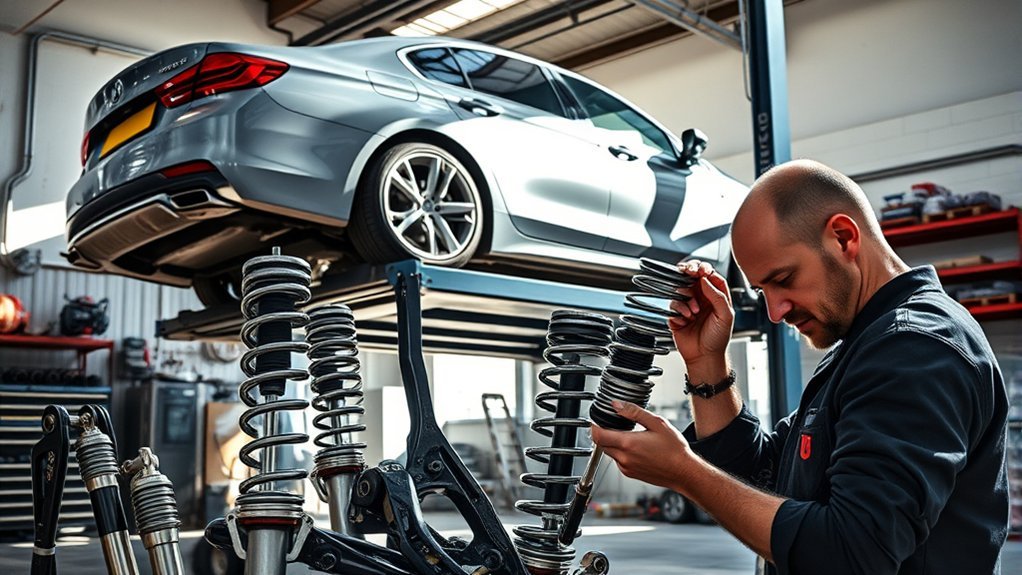
A good street suspension keeps the tires in contact with uneven pavement while controlling unwanted body motion. Excessive stiffness may feel responsive on a smooth road but reduce grip and comfort over bumps.
Selecting Progressive Suspension Components
Progressive-rate springs can use a softer portion of their travel during small movements and a firmer rate as compression increases. That can help balance comfort and body control, but the result still depends on damper tuning, available suspension travel, vehicle weight, and installation height.
| Component | Potential Benefit | Daily-Use Check |
|---|---|---|
| Progressive Springs | Balances small-bump compliance with increased body control | Confirm damper compatibility and adequate bump travel |
| Quality Shock Absorbers | Controls spring movement and improves stability | Match the damper to the vehicle weight and spring rate |
| Rubber Bushings | Preserves isolation and ride quality | Replace cracked or separated bushings before adding stiffness elsewhere |
Adjustable Coilover Benefits and Tradeoffs
Coilovers can provide ride-height adjustment, and some designs also offer damping adjustment. These features can be useful when the system is engineered for the vehicle and kept within its approved range.
- Ride-height adjustment: Allows clearance and stance changes, but excessive lowering may reduce travel, create rubbing, alter steering geometry, or damage underbody components.
- Damping adjustment: Can help match different roads or tires, but the adjustment range and recommended starting point should come from the manufacturer.
- Body-control tuning: Matched spring and damper rates may reduce roll and pitch without requiring an extreme setup.
Do not use spring preload as a substitute for correct ride-height adjustment unless the suspension manufacturer specifically instructs you to do so. Follow the supplied setup procedure rather than copying settings from a different vehicle.
Alignment After Suspension Changes
Have the alignment checked after changing ride height, springs, dampers, control arms, tie rods, bushings, or wheel fitment. Professional suspension guidance also calls for an alignment after lowering because geometry changes affect handling and tire wear.
| Alignment Aspect | Primary Effect | Daily-Driver Concern |
|---|---|---|
| Camber | Changes tire contact during cornering and straight-line driving | Excessive negative camber may increase inner-edge wear |
| Caster | Affects steering return and stability | Unequal settings can contribute to pull or inconsistent steering feel |
| Toe | Strongly influences straight-line stability and tire scrub | Incorrect toe can cause rapid or uneven tire wear |
Note: A ride-height or wheel change may also affect headlight aim, parking sensors, steering-angle calibration, adaptive cruise control, lane-support systems, and camera or radar alignment. Follow the vehicle manufacturer’s service information.
ECU Tuning Without Sacrificing Daily Usability
ECU tuning can change boost pressure, throttle behavior, ignition timing, fueling, torque limits, cooling-fan operation, and transmission behavior. The results depend on the engine, hardware, fuel, climate, calibration, and condition of the vehicle.
Before tuning, confirm:
- The engine has no misfires, leaks, overheating, or unresolved fault codes
- The spark plugs, ignition system, fuel system, and cooling system are suitable for the planned output
- The clutch, transmission, axles, and engine mounts can tolerate the requested torque
- The tune matches every installed intake, exhaust, turbocharger, intercooler, and sensor change
- The calibration keeps required emissions equipment and diagnostic monitors operating
- The tuner provides a defined fuel requirement and a method for revisions or support
In the United States, gasoline pumps display Anti-Knock Index, or AKI, using the `(R+M)/2` method. Premium is generally labeled 91–94 AKI. Other markets commonly use Research Octane Number, or RON. The U.S. Energy Information Administration’s octane guide explains the difference.
Use the exact minimum octane specified by the calibration provider. Do not substitute “91 RON” for “91 AKI,” and do not assume a higher number will correct an unsafe or mismatched tune.
Warning: Avoid calibrations that disable catalytic-converter monitoring, oxygen-sensor functions, exhaust-gas recirculation, particulate filters, diesel exhaust fluid systems, or other required emissions controls. Federal law prohibits emissions tampering and defeat devices.
Cold-Air Intakes and Cat-Back Exhaust Systems
An intake or cat-back exhaust can change engine sound and may improve airflow on a vehicle that is restricted in factory form. The actual power difference may be small, especially when the original system already supports the engine’s output.
An intake deserves extra caution when it changes the airflow path around a mass-airflow sensor. The wrong tube diameter, sensor location, filter design, or calibration can cause incorrect fuel calculations, drivability problems, or fault codes.
A cat-back exhaust generally leaves the catalytic converter in place, but that does not automatically make every system legal everywhere. Check sound limits, exhaust-outlet rules, inspection requirements, and whether the system is approved for the exact vehicle.
For a daily driver, prioritize:
- No highway drone
- A durable corrosion-resistant material
- Secure hangers and adequate body clearance
- No contact with heat shields, driveshafts, wiring, or brake lines
- Documented emissions and noise compliance where required
Do not treat either part as a guaranteed fuel-economy upgrade. Real-world consumption may remain unchanged or increase if the modification encourages higher engine load or requires premium fuel.
Mods That Commonly Hurt Daily Usability
A modification can be functional and still be a poor choice for commuting. Be cautious with:
- Extremely low ride height that reduces suspension travel or ground clearance
- Oversized wheels that add weight and reduce tire sidewall
- Track brake pads that perform poorly when cold
- Solid mounts or very stiff bushings that transmit vibration into the cabin
- Loud exhaust systems that drone during steady-speed driving
- Unknown or generic ECU files with no vehicle-specific support
- Wheel spacers, adapters, or lug hardware without verified fitment and torque instructions
- Lighting that creates glare or uses restricted colors
- Emissions-delete hardware or software
Also consider reversibility. Keeping factory parts can make it easier to diagnose problems, sell the vehicle, pass inspection, or return the car to its original configuration.
Legal, Warranty, and Insurance Issues
Emissions, Noise, and Equipment Laws
Federal law prohibits tampering with required emissions controls and prohibits manufacturing, selling, or installing defeat devices. The U.S. Environmental Protection Agency provides current enforcement guidance.
State and local rules can add inspection, sound, ride-height, lighting, tire-coverage, and exhaust requirements. In California, verify an emissions-related part in the California Air Resources Board aftermarket-parts database. A CARB Executive Order must apply to the specific part and vehicle application; an EO for one engine family or model year does not automatically cover another.
Will Modifications Void the Warranty?
An aftermarket part does not automatically cancel an entire U.S. vehicle warranty. The Federal Trade Commission states that warranty coverage remains in effect merely because aftermarket or recycled parts are used.
However, a manufacturer may deny coverage for a repair when it determines that a modification, incompatible part, incorrect calibration, or poor installation caused or contributed to the failure. Keep receipts, installation instructions, tune files, alignment reports, maintenance records, and the original parts.
How Modifications Affect Insurance
Insurance rules and policy definitions vary. The National Association of Insurance Commissioners explains that coverage depends on the policy’s insuring agreement, declarations, exclusions, limitations, and selected coverage.
Before modifying the vehicle:
- Tell the insurer what you plan to install
- Ask whether the modification changes eligibility or premium
- Ask how much custom equipment is covered after theft or a total loss
- Request written confirmation of any endorsement or agreed amount
- Keep photos, receipts, serial numbers, and installation records
Do not assume that the market value of aftermarket parts will automatically be included in a claim payment.
How to Evaluate Reliable Performance Parts
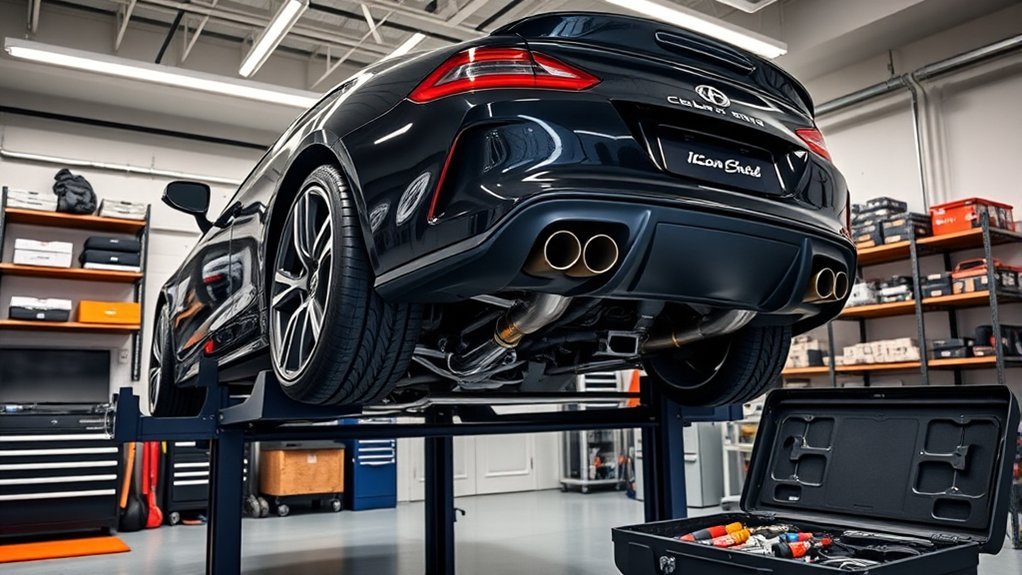
Do not choose a safety-critical component based only on appearance, material buzzwords, social-media promotion, or a claimed horsepower number. Evaluate the company and the exact part.
Look for:
- Exact fitment: The documentation should list compatible makes, models, model years, engines, drivetrains, body styles, and brake packages.
- Published specifications: Useful data may include spring rate, travel, pad operating range, rotor dimensions, wheel load rating, hose compliance, torque values, and required fuel.
- Installation instructions: The manufacturer should provide routing, clearance, torque, setup, break-in, and maintenance information.
- Replacement support: Confirm that seals, pads, rotors, dampers, joints, filters, and other wear parts can be purchased separately.
- Testing and certification: Verify applicable road-use, emissions, brake-hose, wheel-load, or other certifications rather than relying on an unsupported “tested” claim.
- Warranty and technical support: Read exclusions, claim procedures, rebuild options, and whether support is available after installation.
Pro Tip: Search by the complete vehicle configuration, not only the make and model. A part for one engine, brake package, drivetrain, or model year may not fit another version of the same car.
Maintaining a Modified Daily Driver
Modified parts may change inspection and service needs. Follow both the vehicle manufacturer’s maintenance schedule and the performance-part manufacturer’s instructions.
After installation:
- Recheck accessible fasteners at the interval specified by the part manufacturer
- Inspect for fluid leaks, exhaust contact, loose wiring, rubbing, and heat damage
- Check wheel and tire clearance with the steering turned in both directions
- Recheck tire pressure and inspect the tread for uneven wear
- Have the alignment measured after suspension or steering work
- Monitor fluid temperatures, knock data, fuel trims, boost, or fault codes when required by the tuner
- Record the part number, installation date, mileage, settings, and software version
Investigate a new vibration, pull, warning light, rubbing sound, fuel smell, soft brake pedal, overheating condition, or change in steering immediately. Do not keep driving aggressively while hoping the issue will disappear.
Frequently Asked Questions
How much will performance mods affect my daily driving costs?
Costs can rise through installation, alignment, premium fuel, shorter tire or pad life, additional maintenance, insurance changes, and repairs to related systems. Calculate the total cost rather than comparing part prices alone. A reversible tire, brake, or mild suspension upgrade is often easier to budget than a major engine build.
Can I install performance mods myself, or should I hire a professional?
DIY work is reasonable when you have the correct service information, tools, lifting equipment, torque specifications, and experience. Use a qualified professional for brake hydraulics, compressed springs, steering parts, welding, fuel systems, ECU calibration, ADAS calibration, and hybrid or EV high-voltage work.
Will performance mods void my vehicle’s warranty?
Not automatically. Using an aftermarket part does not by itself cancel the entire U.S. warranty. A manufacturer may deny a particular repair when it determines that the modification or installation caused or contributed to the failure. Keep documentation and read the written warranty before modifying the vehicle.
How often should I inspect performance-modified parts?
Use the part manufacturer’s inspection interval and inspect the vehicle after installation, after the initial settling or bedding period, and during routine services. Check more often after pothole impacts, track use, severe weather, unusual noises, warning lights, or changes in handling.
Are there performance mods that reliably improve fuel economy?
Do not expect a cold-air intake, exhaust, or performance tune to produce a guaranteed fuel-economy gain. Correct tire pressure, proper alignment, repaired fault codes, suitable oil, routine maintenance, reduced unnecessary weight, and moderate acceleration provide more predictable efficiency benefits.
What should I modify first on a daily driver?
Begin with maintenance and tires. Then consider alignment, street-focused brake service, and mild suspension improvements. Add engine power only after the chassis, cooling system, fuel system, transmission, and maintenance condition can support it.
Can an ECU tune remain reliable for daily driving?
A conservative tune may remain usable when it matches the exact hardware, fuel, climate, engine condition, and drivetrain limits. It still changes operating conditions and cannot guarantee factory-level reliability. Use a reputable calibration provider, follow the required fuel specification, retain emissions controls, and monitor the vehicle for faults.
Conclusion
The best performance mods for a daily driver are not always the parts that produce the largest horsepower number. Start with a healthy vehicle, choose tires that match your climate, restore the brakes, and use a mild suspension setup that preserves travel and comfort. Consider intake, exhaust, and ECU changes only after confirming hardware compatibility, required fuel, emissions compliance, and drivetrain capacity.
Document each change, install safety-critical parts correctly, and inspect the vehicle after the work. A well-planned daily-driver build should feel more controlled and responsive without becoming unreliable, uncomfortable, difficult to insure, or illegal to use on public roads.
Sources
- National Highway Traffic Safety Administration — TireWise — tire size, inflation pressure, inspection, and replacement guidance.
- U.S. Environmental Protection Agency — Aftermarket Defeat Devices — federal emissions anti-tampering and defeat-device requirements.
- Federal Trade Commission — Auto Warranties and Service Contracts — aftermarket parts and warranty coverage.
- California Air Resources Board — Aftermarket Performance and Add-On Parts — California Executive Order requirements and verification.
- U.S. Energy Information Administration — Gasoline Octane — AKI, RON, and U.S. fuel-grade terminology.
- National Association of Insurance Commissioners — Auto Insurance Coverage — policy coverage, exclusions, limitations, and consumer guidance.







Leave a Reply