
To maximize your performance on track days, you need to understand tire pressure management. Start with cold pressures around 28 psi for ideal grip, then monitor changes during sessions, aiming for hot pressures of 30-32 psi. Adjust by 1-3 psi based on temperature and tire wear patterns. Always check pressures after sessions and document your findings for future use. Get ready to enhance your driving experience as you learn to fine-tune your tire pressures for better handling and stability.
Understanding the Importance of Tire Pressure for Track Days

When you hit the track, understanding tire pressure becomes essential for maximizing your vehicle’s performance. Many tire pressure myths can lead you astray, like the idea that standard road pressures suffice for aggressive driving.
In reality, you often need to start with higher pressures to maintain grip and handling. Keep in mind that tire pressures can increase by 8 to 10 psi in warm conditions, so monitor them closely.
Utilizing pressure adjustment techniques after each session allows you to fine-tune your setup. A good tire-pressure gauge, ideally digital, can offer accurate readings and memory tracking for consistent performance management.
Don’t forget to visually inspect tire wear, as signs of rollover or uneven tread can indicate incorrect pressures. By mastering these aspects, you’ll reveal your vehicle’s true potential on the track, ensuring both exhilarating performance and longer tire life.
Setting Your Initial Tire Pressures: A Step-By-Step Guide
To set your initial tire pressures effectively, start by determining your vehicle’s weight, which influences your baseline settings.
For racing tires like the Toyo R888, aim for cold pressures around 28 psi, adjusting as needed based on track conditions.
Don’t forget to monitor pressure changes throughout the day to optimize performance and tire longevity.
Determine Vehicle Weight
Determining your vehicle’s weight is essential for setting the right initial tire pressures for a track day. Start by checking the manufacturer’s vehicle specifications or use a scale to get an accurate weight measurement, including all passengers and cargo.
Lighter vehicles typically benefit from lower starting pressures, while heavier ones may require higher pressures to enhance performance. For instance, if your vehicle weighs 980 kg and uses Toyo R888 tires, a cold pressure of around 28 psi can help achieve ideal hot pressures between 30-32 psi.
Remember to adjust based on your previous track experiences, as varying weights and conditions will influence your perfect settings. Monitoring cold tire pressures after each session will refine your approach for future events.
Choose Starting Pressures
With your vehicle’s weight established, it’s time to select the starting tire pressures that will set you up for success on the track.
For competition tires like Toyo R888s, aim for cold pressures around 28 psi to achieve ideal hot pressures of 30-32 psi during your sessions.
Remember, starting pressure strategies should adapt to your vehicle’s weight and track conditions, as heavier cars might need different settings for best performance.
Always refer to the manufacturer’s recommendations as a baseline.
After your initial laps, monitor tire pressure variations and make adjustments in 1-2 psi increments to fine-tune handling.
This approach guarantees you maximize grip and responsiveness, ultimately enhancing your track day experience.
Monitor Pressure Changes
While you’re focused on getting the most out of your track day, monitoring tire pressure changes is essential to optimizing your vehicle’s performance.
Start with cold tire pressures around 28 psi for track day tires like the Toyo R888. After each session, check your tire pressures immediately, adjusting by 1-3 psi based on temperature fluctuations and how your vehicle handles.
Keep a record of your cold starting pressures to refine future settings. If your front left tire shows signs of overinflation, reduce it by 1.5 psi for better handling.
Use a reliable tire pressure gauge, as warm air can mislead you—accurate tire pressure monitoring is critical for peak performance on the track.
How to Keep an Eye on Tire Pressure During Your Track Sessions?
To maintain ideal tire performance during your track sessions, regularly check your tire pressures, especially after each run when temperatures rise.
Keep a close eye on tire temperatures and assess visual wear to spot any issues early.
Regular Pressure Checks
As tire temperatures rise during your track sessions, keeping a close eye on tire pressure becomes essential for maximum performance.
Regular tire pressure maintenance is vital; check your pressures after each session to account for temperature increases, which can raise them by 8 to 10 psi.
Use a reliable digital tire-pressure gauge with memory for accuracy, tracking pressures before and after each run.
Monitor handling and grip, adjusting pressures in increments of 1-3 psi based on what you observe.
Record cold starting pressures for future reference, and don’t forget to check and adjust as ambient and track temperatures fluctuate throughout the day.
These pressure adjustment techniques will help you maintain peak performance on the track.
Temperature Monitoring
Monitoring tire temperature is essential for maintaining ideal pressure during your track sessions. As you drive, tire temperature dynamics can cause pressure fluctuations, increasing by 8 to 10 psi.
Here’s how to keep an eye on it:
- Use a reliable digital tire-pressure gauge with memory for accuracy.
- Measure temperatures at three points on the tire (outboard, middle, inboard) using a tire pyrometer.
- Track cold starting pressures and adjustments to enhance future performance.
- Inspect for tire rollover on sidewalls, adjusting by 3 pounds if necessary.
Visual Wear Assessment
A thorough visual wear assessment is essential for maintaining ideal tire pressure during your track sessions.
Regularly perform a visual inspection of your tire sidewalls for signs of rollover; proper pressure should cause rollover at the edge of the tread blocks. If you notice tires rolling onto the sidewalls, increase the pressure by 3 psi to enhance grip and prevent excessive wear.
After each session, closely monitor tire wear patterns—uneven wear can indicate the need for pressure adjustments or alignment changes.
Additionally, keep a record of tire performance and any pressure modifications made during sessions. This data will help you refine your strategy for future track days, empowering you to maximize your driving experience.
Adjusting Tire Pressure for Optimal Performance on the Track

To achieve ideal performance on the track, you need to carefully adjust your tire pressures based on your specific tire type and driving style.
Start with cold pressures around 28 psi for your first session, aiming for a hot pressure of 30-32 psi after initial laps. If you’re driving aggressively, bump up your pressures by 2-5 psi to enhance stability and reduce rollover.
Consider these key points for effective tire pressure adjustments:
- Use a pyrometer to measure temperatures across three zones: outboard, middle, and inboard.
- Document tire pressures after each session to track performance improvement.
- Adjust pressures based on previous data to refine your approach.
- Monitor tire wear and handling characteristics to guarantee peak grip.
The Impact of Temperature on Your Tire Pressure Management
Understanding how temperature affects tire pressure is essential for optimizing your track performance. Tire temperature can considerably impact your tire pressure, often increasing by 8 to 10 psi in warm conditions due to air expansion. This makes pressure adjustments critical before your track sessions.
On cooler days, you might find that starting with lower pressures—around 28 psi—enhances grip, while warmer conditions allow for higher pressures to maintain stability and prevent overheating.
Starting with lower tire pressures around 28 psi on cooler days can enhance grip, while warmer conditions benefit from higher pressures for stability.
It’s important to monitor both track and air temperatures throughout the day, as fluctuations can greatly influence your tire’s performance. On particularly hot days, keeping an eye on tire temperature will help you make necessary adjustments to avoid overheating.
Ultimately, aim for the lowest pressure that maintains stability, tailoring your settings to your riding style and the specific conditions. This proactive approach empowers you to maximize your track day experience.
Reading Tire Wear Patterns: Insights Into Your Pressure Settings
Tire wear patterns act as an essential feedback mechanism, revealing insights into your tire pressure settings. By carefully inspecting your tires, you can make informed pressure adjustments that enhance performance and safety.
- Look for slight rollover at the tread edge; this indicates ideal pressure.
- If the tires roll onto the sidewall, increase pressure by 3 psi to prevent excessive edge wear.
- A lack of rollover means pressures may be too high; reduce by 2 psi for better grip.
- Monitor tire temperatures—hotter centers compared to outer edges signal the need for pressure adjustments.
Keeping a record of tire wear patterns and pressure adjustments after each session not only sharpens your understanding but also helps refine your approach for future track days.
Tools for Accurately Measuring Tire Pressures
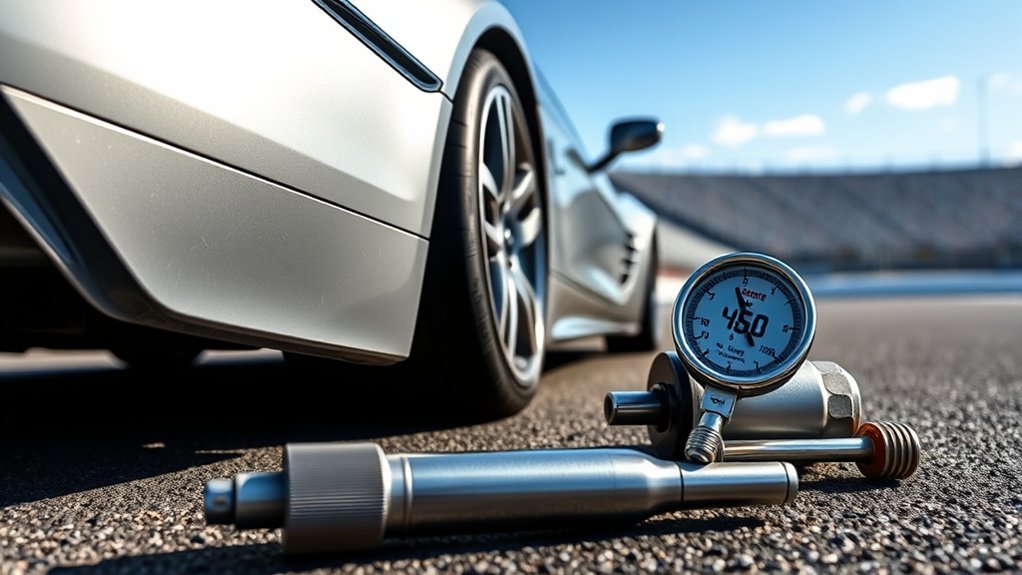
Accurate tire pressure measurement is vital for optimizing performance during track days. To achieve this, you should invest in reliable tools that guarantee measuring consistency. Digital gauges are highly recommended for their precision and features like memory functions, allowing you to track pressures before and after sessions effortlessly. However, if you’re on a budget, analog gauges can still provide accurate readings, especially when calibrated properly.
| Tool Type | Key Features |
|---|---|
| Digital Gauge | High accuracy, memory functions |
| Analog Gauge | Cost-effective, needs calibration |
| Calibration | Vital for precise readings |
| Pressure Adjustments | Quick access at the track |
Regularly checking tire pressures, especially when cold, is essential for tire maintenance and performance tracking. Remember, having access to air tanks at the track makes pressure adjustments easy throughout the day.
How to Return to Road Tire Pressures After Track Days
After a thrilling day on the track, you’ll need to switch back to the cold tire pressures recommended by the manufacturer for safe road use. This is essential, as track day pressures can spike due to heat.
Here’s how to make effective road pressure adjustments:
- Check the tire loading and information decal inside the driver’s door for cold pressure recommendations.
- Monitor tire wear and performance during your track sessions; this data helps inform your adjustments.
- Maintain a record of tire performance, including pressures used during track days, to better guide future outings.
- Always torque wheel nuts after each track session to prevent loosening before returning to regular driving conditions.
Following these steps guarantees a smooth shift back to everyday driving, balancing grip and comfort while enhancing your safety on the road.
Prioritize your track day preparation and tire management for an ideal driving experience.
Common Mistakes to Avoid When Managing Tire Pressures on the Track
While managing tire pressures on the track, many drivers overlook essential details that can greatly impact performance. One common mistake is failing to check tire pressures after each session. Remember, tire temperatures can rise by 8 to 10 psi, skewing your initial settings. Ignoring the manufacturer’s recommended cold tire pressures can lead to tire rollover and safety issues, especially during aggressive driving.
Additionally, not adjusting tire pressures based on track conditions is a critical error; for instance, increasing by 6-8 psi in wet conditions is necessary to avoid hydroplaning.
Recording tire pressures after each session is crucial, as it allows you to refine your tire management strategies over time. Finally, don’t neglect to visually inspect tire wear for signs of rollover or uneven patterns, as this can impact handling and longevity.
Frequently Asked Questions
How Often Should I Check Tire Pressure During a Track Day?
You should check tire pressure frequently throughout the track day, ideally before each session. Use reliable tire pressure tools to guarantee peak performance, as maintaining correct levels improves grip and enhances your overall driving experience.
Can I Use a Regular Tire Pressure Gauge for Track Tires?
Absolutely, you can use a regular tire pressure gauge for track tires, but make certain it’s accurate. Different track tire types may require precision; a reliable gauge can be your compass, steering you toward peak performance.
What Are the Signs of Over-Inflated Tires on the Track?
You’ll notice over-inflated tires by uneven tire wear and diminished grip. Your car might feel skittish, leading to handling issues during sharp turns. Adjusting tire pressure can restore balance and improve your overall performance on track.
How Does Tire Pressure Affect Fuel Efficiency on the Track?
Tire pressure’s like a finely tuned instrument; when it’s just right, you’ll enhance handling performance and reduce tire wear. Too low or high, and you’ll watch fuel efficiency slip away like sand through your fingers.
Should I Adjust Pressure for Wet Track Conditions?
Yes, you should adjust pressure for wet conditions. Lowering tire pressure increases the contact patch, enhancing grip on slippery surfaces. Proper pressure adjustments can greatly improve your control and confidence while traversing a wet track.
Conclusion
In summary, managing tire pressure on track days is vital for maximizing performance and safety. You might think it’s just a minor detail, but even slight adjustments can lead to significant improvements in grip and handling. By staying attentive and making informed changes, you’ll enhance your driving experience and reduce the risk of tire issues. Remember, every detail counts on the track, so don’t overlook your tire pressures—your car (and your lap times) will thank you!







Leave a Reply