

Brake-pad bedding is a controlled heating and cooling process used with pads or rotors that require a break-in cycle. It helps the working surfaces mate and can establish an even transfer layer on the rotor. However, there is no universal procedure: the correct speeds, stop counts, pressure, and cooling time depend on the exact brake product and vehicle.
Quick Answer
To bed brake pads, verify the installation, choose a dry and traffic-free route or closed course, and perform the exact stop sequence listed by the pad or rotor manufacturer. Finish with the specified cool-down. Some ceramic pads need no special bedding, so never substitute a generic routine for the product instructions.
Key Takeaways
- Read the instructions supplied with the pads and rotors before driving; bedding requirements vary by product.
- Do not begin if the brake pedal is soft, a warning light is on, fluid is leaking, a wheel is loose, or the vehicle pulls sharply.
- Use a legal, dry, low-traffic location with enough room to accelerate, decelerate, and cool the brakes safely.
- Avoid dragging the brakes or holding very hot pads against one rotor position, but always stop when traffic or safety requires it.
- Let the brakes cool naturally. Never spray hot rotors with water.
At a Glance
| Time Required | About 15–30 minutes for many street procedures; the product instructions may require more time |
| Difficulty | Moderate; the driver must control speed, spacing, heat, and cool-down safely |
| Tools Needed | Vehicle, product instructions, owner or service information, and a safe route; a torque wrench is needed if wheel torque has not been verified |
| Cost | Usually $0 beyond the installed brake parts and a small amount of fuel |
Warning: Brakes are a safety-critical system. Do not drive the vehicle if the pedal feels soft or sinks, brake fluid is leaking, a brake warning light remains on, a wheel or caliper is loose, grinding is present, or the vehicle pulls sharply. Bedding cannot repair an installation or hydraulic fault.
Understanding Brake Pad Bedding

When bedding is required, controlled stops bring the pad and rotor into their intended working range. The process can help create an even layer of friction material on the rotor and allow the pad surface to mate with it. This can improve initial brake feel, consistency, noise control, and wear.
Hawk Performance explains that its bedding process creates a transfer film so the pad works against compatible friction material instead of a bare rotor surface. PowerStop also describes an even transfer layer as a key goal of break-in for the products covered by its procedure.
Uneven material transfer may contribute to pedal pulsation, steering-wheel vibration, or brake judder. Excessive heat introduced too quickly may also glaze some friction compounds. These problems are more likely when the instructions are skipped, combined with another brand’s procedure, or performed on contaminated or damaged parts.
There is no universal brake-bedding cycle. The correct routine is the one specified for the exact pads, rotors, vehicle, and intended use.
Not every replacement pad requires an aggressive bedding routine. For example, Akebono lists its ProACT pads as requiring no break-in. Performing unnecessary repeated hard stops could add heat without providing a benefit.
Check the Correct Bedding Procedure First
Look for bedding instructions in the pad box, rotor box, manufacturer’s installation sheet, or product page. If the pad and rotor makers provide different instructions, contact them or the installer before driving. Do not combine the stop count from one procedure with the speeds or cooling time from another.
Also confirm that the components match the exact model year, trim, axle, brake package, and rotor type. The NHTSA VIN decoder can help identify basic vehicle information encoded in the VIN, but it does not replace a manufacturer parts catalog or service manual.
| Product example | Published guidance | Main lesson |
|---|---|---|
| Hawk street pads | Hawk’s street procedure uses 6–10 moderate stops from about 30–35 mph, followed by 2–3 firmer stops from about 40–45 mph and a 15-minute cool-down. | Follow the pad maker’s stop count and cooling period. |
| PowerStop pads with drilled and slotted rotors | PowerStop’s procedure uses five moderate-to-aggressive decelerations from 40 to 10 mph, followed by five moderate decelerations from 35 to 5 mph and a moving cool-down. | This familiar five-plus-five sequence is product-specific, not a universal rule. |
| PowerStop Evolution coated rotors | The coated-rotor instructions call for 30 decelerations from 30 to 5 mph with about 30 seconds between them. | Rotor construction can change the required cycle. |
| Akebono ProACT pads | Akebono states that no break-in is required for this product line. | Do not create a high-heat cycle when the installed product does not call for one. |
Note: Track pads, towing pads, fleet pads, motorcycles, carbon-ceramic systems, and racing brakes may use very different temperature cycles. Never apply a street-pad routine to a competition or specialty system unless its manufacturer specifies that procedure.
Preparing Your Vehicle for Brake Pad Bedding
Begin with a brake-system inspection. A bedding cycle should start only after the installation has been confirmed safe and complete.
- Verify the parts: Confirm the pads, rotors, hardware, and wear sensors match the exact vehicle and axle.
- Check the pedal before moving: Pump the brake pedal until it feels firm. A pedal that remains soft, sinks, or requires repeated pumping needs diagnosis.
- Inspect for leaks: Check the calipers, hoses, lines, bleeders, and master-cylinder area for brake fluid.
- Check the fluid level: It should be within the marked range and the specified fluid type must be used. Do not keep topping off an unexplained low level; low fluid may indicate worn pads or a leak.
- Confirm the rotor condition: Rotor faces must be clean and free of grease, brake fluid, oil, or protective residue. Used rotors must be serviceable and prepared as directed by the pad or rotor maker.
- Check caliper movement and hardware: Pads must move correctly, slides must operate as designed, and all clips, shims, fasteners, and sensors must be installed properly.
- Verify wheel torque: Tighten wheel fasteners to the vehicle manufacturer’s sequence and specification with a calibrated torque wrench.
- Release the parking brake: Never engage it as part of a moving bedding cycle.
- Check the instrument panel: Do not begin while a red brake warning, ABS fault, stability-control fault, or electronic-parking-brake fault remains active.
Choose a dry, level route or closed course with good visibility, a suitable speed limit, and enough space between cycles. Avoid rain, snow, gravel, steep grades, congested roads, school zones, pedestrians, and locations where repeated deceleration could surprise other drivers.
Pro Tip: Plan the full route before starting. Include a section for the stop cycles and a separate stretch where the vehicle can remain moving with little brake use during cool-down.
Avoid These Common Bedding Mistakes
Most bedding problems come from using the wrong procedure, adding too much heat, dragging the brakes, skipping cool-down, or attempting to bed a system that has an installation fault.
| Common mistake | Possible effect | How to avoid it |
|---|---|---|
| Skipping bedding when the product requires it | Weak initial feel, uneven transfer material, noise, or vibration | Complete the exact procedure supplied with the pads or rotors. |
| Bedding pads that require no special cycle | Unnecessary heat and wear | Check the product instructions before performing repeated stops. |
| Dragging or riding the brake pedal | Excessive heat, glazing, or uneven transfer | Apply the specified pressure during each deceleration, then release the pedal fully. |
| Holding very hot pads firmly at one rotor position | A localized pad imprint that may contribute to judder | Plan a route without stops, but stop normally whenever traffic or safety requires it. |
| Using excessive pressure or too many stops | Overheating, odor, fade, glazing, or rotor damage | Do not add extra cycles to “make sure” the pads are bedded. |
| Ignoring the cool-down period | Continued heat soak and inconsistent material transfer | Complete the full moving or stationary cool-down specified by the manufacturer. |
| Applying the parking brake while moving | Loss of control or overheating of rear-brake components | Keep it released during the driving cycle and follow the owner’s manual when parking. |
| Cooling hot brakes with water | Thermal shock and possible component damage | Let the brakes cool naturally. |
Step-by-Step Guide to Bedding Brake Pads
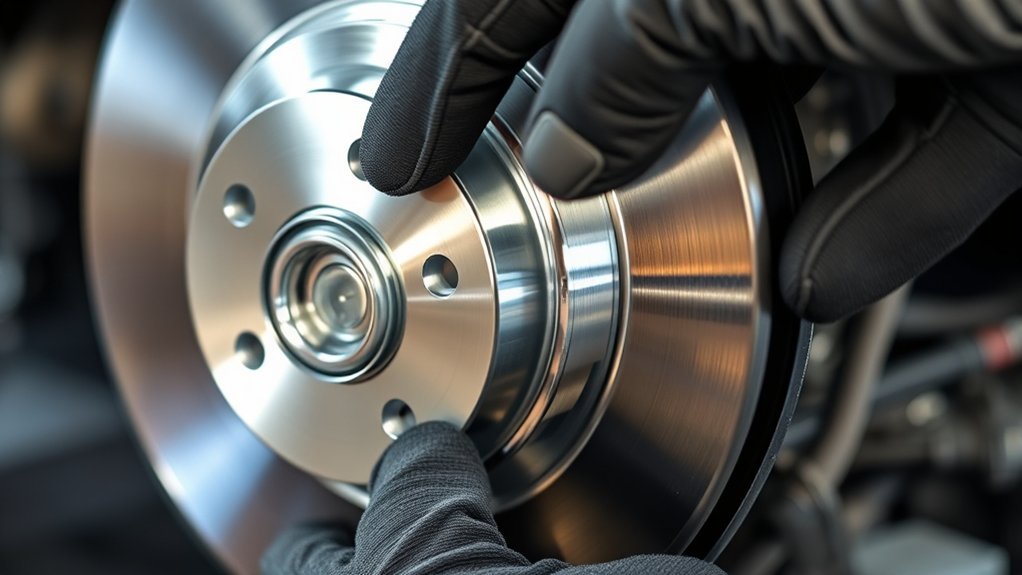
The following workflow applies only when the installed product requires bedding. Use the actual speed, pressure, stop count, spacing, and cooling time printed in its instructions.
Pre-Bedding Preparations
- Read the complete procedure. Do not rely on memory or instructions for a different pad compound or rotor type.
- Finish the safety inspection. Confirm a firm pedal, correct fluid level, no leaks, secure wheels, clean friction surfaces, and no brake-system faults.
- Choose the route. Use a legal, dry, traffic-free area with room for every acceleration, deceleration, and cooling phase.
- Secure loose cargo. Repeated braking can shift tools, luggage, or other objects in the cabin or cargo area.
- Warm the vehicle gently if instructed. Drive normally for a few minutes without riding the brakes.
Bedding Process
- Reach the stated starting speed. Keep a large safety margin in front of the vehicle.
- Apply the specified brake pressure. Decelerate smoothly to the stated lower speed. Do not activate ABS unless the procedure specifically calls for maximum braking, which is uncommon in street bedding instructions.
- Release the pedal fully. Avoid dragging the brakes between decelerations.
- Repeat only the stated number of times. Maintain the required spacing or rapid succession described by the manufacturer.
- Watch for changing pedal feel. A light hot-resin odor may occur during some procedures. A soft or sinking pedal, severe fade, grinding, heavy smoke, or a warning light is not a normal goal; end the cycle and inspect the system.
- Complete the prescribed cool-down. Use minimal braking and allow air flow to reduce component temperature.
For example, the PowerStop drilled-and-slotted procedure uses five moderate-to-aggressive decelerations from 40 to 10 mph, followed by five moderate decelerations from 35 to 5 mph. That sequence must not be assumed correct for other products. Hawk’s street-pad routine and PowerStop’s coated-rotor routine use different stop counts, speeds, and cooling periods.
Warning: Never run a red light, cross an intersection unsafely, follow another vehicle too closely, or avoid a necessary stop to preserve a bedding cycle. Stop whenever required. If traffic interrupts the procedure, let the brakes cool and repeat the cycle later only if the manufacturer directs you to do so.
Post-Bedding Cooling
- Drive at a moderate speed for the amount of time specified by the manufacturer.
- Use little brake pressure during the cooling phase, while still braking whenever safety requires it.
- Leave extra following distance so sudden stops are less likely.
- Do not ride the pedal or repeatedly test the new brakes during cool-down.
- Never spray water or cleaner onto hot rotors.
- Do not park over dry grass or other combustible material when brake components are extremely hot.
- If the parking brake operates on the serviced rear friction surfaces, allow the brakes to cool before setting it unless the owner’s manual instructs otherwise.
After the specified cooling period, allow the vehicle to sit if required by the product instructions. Resume normal driving only when the brakes have returned to normal operating temperature and the pedal remains firm.
Why the Cool-Down Phase Matters
Repeated decelerations turn vehicle motion into heat. The cool-down phase limits continued heat soak and helps the pad, rotor, caliper, fluid, and nearby components return toward normal temperature in a controlled way.
Holding a very hot pad against one rotor position can leave a localized imprint of friction material. That may contribute to pedal pulsation or judder during later stops. This is why many procedures ask the driver to keep moving after the final deceleration.
Some manufacturers also describe the cooling period as part of curing or stabilizing the pad material. That explanation applies to the friction compound covered by those instructions and should not be generalized to every ceramic, semi-metallic, organic, racing, or carbon-based pad.
Natural airflow is the safest cooling method. Water can cool one part of a hot rotor much faster than the surrounding metal, creating thermal stress.
How to Tell Whether Bedding Worked
After the brakes have cooled, test them at a low speed in a safe area. Brake response should be smooth, predictable, and consistent. The pedal should remain firm, and the vehicle should stop without a new pull, grinding sound, or strong pulsation.
| What you notice | What it may mean | Next step |
|---|---|---|
| Consistent pedal and smooth stopping | The bedding cycle likely completed normally | Resume normal use after the full cooling period. |
| Light odor during the heat cycle | Some products release an odor as they heat | Complete the prescribed cool-down and confirm the odor fades. |
| Pedal pulsation or steering-wheel vibration | Uneven transfer material, rotor runout, disc-thickness variation, hub contamination, or wheel-torque error | Inspect and measure the system instead of repeatedly performing more hard stops. |
| Vehicle pulls during braking | Caliper, hydraulic, tire, suspension, contamination, or installation problem | Stop driving until the cause is diagnosed. |
| Glassy pad surface or weak bite after overheating | Possible glazing | Follow the pad maker’s recovery instructions or have the brakes inspected. |
| Soft pedal, leak, heavy smoke, grinding, or warning light | Potential safety-critical fault or severe overheating | Stop in a safe place and do not continue driving until the system is inspected. |
How to Maintain Your Brakes After Bedding
Successful bedding does not replace routine brake inspection. Continue checking the pads, rotors, fluid, hoses, hardware, calipers, and pedal feel according to the vehicle manufacturer’s maintenance schedule.
Regular Inspections and Maintenance
- Inspect pad thickness: Around 1/8 inch, or roughly 3 mm, is a useful warning point for many street pads, but it is not a universal service limit. Follow the pad or vehicle specification and any electronic or mechanical wear indicator.
- Check both pads on each caliper: Uneven inner-to-outer wear can indicate a seized slide, piston problem, hardware fault, or installation issue.
- Inspect the rotors: Look for deep scoring, cracks, severe corrosion, heat damage, and thickness below the marked or published minimum.
- Monitor pedal feel: A soft, sinking, or changing pedal needs prompt diagnosis.
- Listen for new sounds: Persistent grinding, scraping, or a sudden change in brake noise should not be dismissed as normal bedding.
- Keep chemicals off friction surfaces: Never apply lubricant, tire dressing, wax, or oily cleaner to a rotor face or pad surface.
- Clean wheels carefully: Use products compatible with the wheel finish and avoid directing harsh chemicals onto hot brake components.
Proper Brake Fluid Management
Keep the fluid between the reservoir marks and use only the type specified by the vehicle manufacturer. Do not mix incompatible fluid types or assume that a higher DOT number is automatically suitable.
Brake-fluid replacement intervals vary. Some manufacturers specify a time interval; others use mileage, testing, maintenance reminders, or inspection-based service. As one example, the cited Honda Ridgeline maintenance information calls for replacement every three years. Use the schedule for the exact model year rather than applying that interval to every vehicle.
Any unexplained fluid loss requires inspection. A hydraulic leak can severely reduce braking ability and is not corrected by topping off the reservoir or bedding the pads again.
Hybrid, EV, and Electronic-Brake Considerations
Hybrids and electric vehicles may use regenerative braking during normal pedal application. This can reduce the work done by the friction brakes and make a generic bedding cycle ineffective or inconsistent.
Brake-by-wire systems, electronic parking brakes, service modes, and automated parking functions also vary by model. Do not disable regenerative braking, enter a brake-service mode, retract electronic calipers, or change stability-control settings unless the vehicle service information or brake manufacturer specifically requires it.
Follow the exact OEM and component instructions. When the procedure is unclear, have a qualified technician perform the bedding cycle or confirm that no special break-in is needed.
Signs Your Brake Pads Need Attention
Watch for changes in sound, pedal feel, stopping distance, and vehicle behavior. Early inspection can prevent rotor damage and reduce the chance of a brake-system failure.
- Squeaking or squealing that is new, persistent, or accompanied by reduced braking
- Grinding, scraping, or metal-on-metal noise
- A soft, spongy, sinking, or unusually low brake pedal
- Pedal pulsation or steering-wheel vibration during braking
- A vehicle that pulls to one side during a stop
- Longer stopping distances or reduced initial bite
- A brake, ABS, stability-control, or electronic-parking-brake warning light
- Visible fluid leakage, smoke, severe overheating, or a burning odor that does not fade after cooling
Do not continue driving with grinding, a hydraulic leak, a sinking pedal, heavy smoke, or sharply reduced braking. Arrange an inspection or towing as appropriate.
Frequently Asked Questions
How often should I bed my brake pads?
Perform a bedding cycle after installing pads or rotors only when the component manufacturer or vehicle service information requires it. Bedding is not routine maintenance that should be repeated regularly. Repeated high-heat cycles can add unnecessary wear.
Can I bed different types of brake pads together?
Do not mix different pad compounds or significantly different wear levels on the same axle. Replace pads in axle sets and follow the instructions for the installed components. Front and rear compounds may differ by design, but the combination must be approved for the vehicle and intended use.
What happens if I skip the bedding process?
When bedding is required, skipping it may cause weak initial feel, uneven transfer material, noise, vibration, glazing, or inconsistent performance. However, some replacement pads require no special bedding. Check the instructions before deciding that a cycle is necessary.
Is bedding required for every vehicle and brake-pad type?
No. Requirements depend on the pad compound, rotor, vehicle, and intended use. Some performance products use a staged heat cycle, some coated rotors require many light decelerations, and some ceramic replacement pads are sold as needing no break-in.
Can I use the brakes during the cooling period?
Use as little braking as practical, but always brake normally when traffic, road conditions, or safety require it. Leave extra following distance and avoid riding the pedal. If a stop interrupts the cycle, allow the system to cool and follow the product maker’s restart guidance.
Can I bed new pads on used rotors?
Sometimes, but the rotors must be above their minimum thickness, free of cracks and severe scoring, and prepared in the manner approved by the pad or rotor manufacturer. Bedding cannot correct excessive runout, deep grooves, contamination, or a rotor below its service limit.
Is a burning smell normal while bedding brakes?
A temporary hot-resin odor may occur with some pads during the specified heating cycle. Heavy smoke, flames, severe fade, a soft pedal, fluid leakage, or an odor that continues after cooling is not a normal target. Stop safely and inspect the system.
How do I bed brakes on a hybrid or electric vehicle?
Use the exact OEM or component procedure. Regenerative braking and brake-by-wire controls may change how much friction braking occurs. Do not disable systems or enter service modes unless the vehicle instructions specifically require it.
Conclusion
Brake-pad bedding works best when it is treated as a product-specific procedure rather than a universal set of hard stops. Verify the installation, read the instructions for the exact pads and rotors, use a safe route, apply only the required heat, and complete the full cool-down.
Afterward, confirm that the pedal is firm and the vehicle stops smoothly without pulling, grinding, warning lights, or strong pulsation. If anything feels unsafe, stop driving and inspect the brake system instead of attempting another bedding cycle.
Sources
- PowerStop Brake Pad Break-In Procedure — transfer-layer explanation and drilled/slotted-rotor bedding example
- PowerStop Evolution Coated Rotor Break-In Guide — coated-rotor deceleration cycle, hot-pad imprint guidance, and water-cooling warning
- Hawk Performance How-To Instructions — pre-installation inspection and street-pad bedding procedure
- Hawk Performance Brake FAQ — transfer-film, glazing, noise, and friction-surface guidance
- Akebono ProACT Brake Pads — manufacturer example of pads listed as requiring no break-in
- Honda Ridgeline Maintenance Minder — example of a vehicle-specific brake-fluid replacement interval







Leave a Reply