
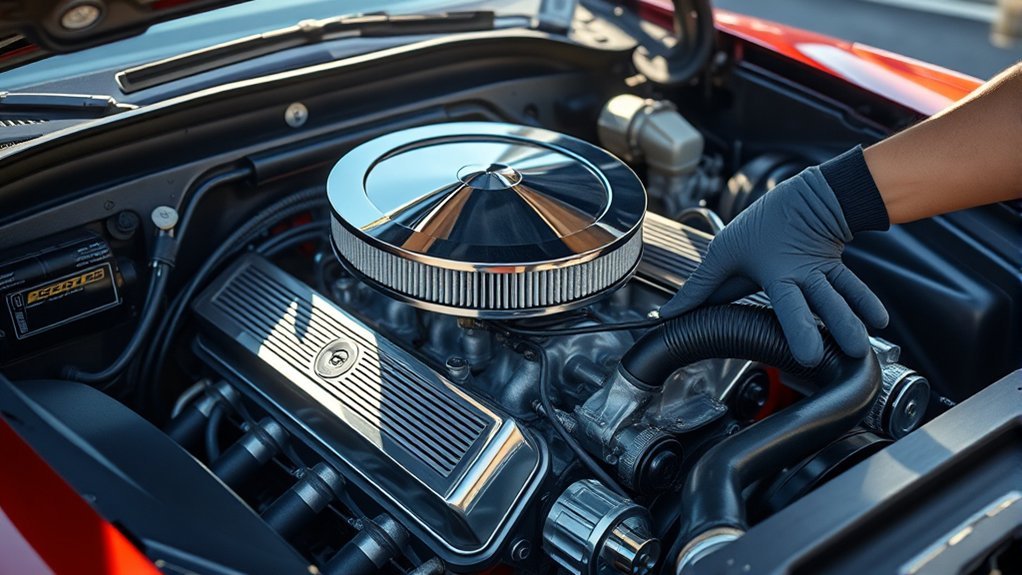
An ECU tune can improve power, throttle response, or drivability, but it can also reduce the safety margin built into the factory calibration. The best way to protect engine reliability after a tune is to start with a healthy vehicle, use the exact fuel and hardware required by the calibration, review real datalogs, and respond quickly when temperatures, fuel pressure, knock activity, or misfires move outside the tuner’s approved range.
Quick Answer
An ECU tune does not automatically make an engine unreliable, but it can add boost, torque, heat, ignition advance, and cylinder pressure. Reliability depends on engine condition, fuel quality, conservative calibration, compatible parts, and post-tune logs. Stop hard driving if knock, lean operation, overheating, misfires, or fuel-pressure loss appears.
Key Takeaways
- A tune cannot repair low compression, boost leaks, weak ignition parts, cooling faults, oil-consumption problems, or an undersized fuel system.
- Use the exact fuel grade, ethanol range, parts, and software revision required by the tuner.
- Review commanded and measured lambda, fuel trims, knock response, boost, fuel pressure, misfires, and temperatures in a datalog.
- Oil and spark-plug intervals must be based on the vehicle, parts, tune, operating conditions, and inspection results—not a universal mileage number.
- Do not disable emissions equipment or diagnostic protections on a road vehicle.
At a Glance
| Time Required | About 30–60 minutes for a basic inspection and scan; longer when collecting and reviewing several datalogs |
| Difficulty | Intermediate; full-load tuning and knock interpretation should be handled by an experienced platform-specific tuner |
| Tools Needed | Compatible scan or tuning tool, approved datalog channel list, tire-pressure gauge, fluid inspection supplies, and a correctly configured wideband sensor when required |
| Cost | Often $0–$250 for basic checks when the interface is already owned; repairs, sensors, fluids, plugs, dyno time, or supporting upgrades cost extra |
How an ECU Tune Affects Engine Reliability
An engine control unit manages fuel delivery, ignition timing, boost or load targets, throttle behavior, torque limits, temperature protections, and many other functions. A performance calibration may change several of these settings at the same time.
Extra power is not automatically unsafe. The risk depends on how much additional cylinder pressure and heat the tune creates, how often the engine is operated at high load, and whether the fuel, cooling, ignition, turbocharger, transmission, and lubrication systems can support the new demand.
A conservative tune normally keeps useful protection strategies active and leaves room for changes in weather, fuel quality, intake-air temperature, component wear, and manufacturing variation. An aggressive tune may deliver more peak output while leaving less room for an unexpected drop in fuel pressure or rise in temperature.
Note: “Stage 1,” “Stage 2,” and “Stage 3” are product labels, not universal engineering standards. Always read the required hardware, fuel, torque, and software notes for the exact tune and vehicle.
Check Engine Health Before Installing a Tune
A calibration should not be used to hide an existing mechanical problem. Complete the factory maintenance that is due and correct known faults before increasing load.
Pre-Tune Inspection Checklist
- Scan every control module: Record active, pending, and permanent diagnostic trouble codes before clearing anything.
- Check fluid condition and level: Inspect engine oil, coolant, transmission fluid where serviceable, and any separate intercooler-cooling circuit.
- Inspect for leaks: Look for oil, coolant, fuel, intake, vacuum, charge-pipe, and exhaust leaks.
- Confirm ignition health: Check spark-plug type, heat range, gap, installation torque, coil condition, and misfire history.
- Verify fuel delivery: Confirm that the pump, injectors, pressure sensors, and fuel-pressure targets can support the requested output.
- Inspect the cooling system: Check the radiator, hoses, thermostat operation, fans, coolant mixture, water pump, and heat exchangers.
- Confirm hardware compatibility: The intake, exhaust, intercooler, turbocharger, sensors, injectors, and transmission setup must match the tune description.
- Investigate engine wear: Compression, leak-down, oil-pressure, or borescope testing may be appropriate when the engine has high mileage, oil consumption, prior overheating, repeated misfires, or uneven cylinder behavior.
Save the stock calibration and record the vehicle identification number, engine and transmission software versions, installed parts, current fuel, and tune revision. This information makes later troubleshooting much easier.
What to Check Immediately After the Tune
Do not begin with a full-throttle pull. Give the engine control modules time to complete startup checks and confirm that the basic data is reasonable first.
- Start the engine and let it idle. Watch for warning lights, fuel or coolant leaks, rough running, unusual smoke, or abnormal mechanical noise.
- Scan for new codes. A code that appeared immediately after flashing may point to a software mismatch, disconnected sensor, unsupported part, or interrupted programming event.
- Check idle data. Review voltage, fuel pressure, coolant temperature, fuel trims, lambda, and misfire counters using the tuner’s approved channel list.
- Complete a gentle road test. Use light throttle and several normal gears while checking throttle response, shifting, boost control, and temperature behavior.
- Create the requested datalog. Follow the tuner’s exact gear, RPM, throttle, road-safety, and fuel instructions. Do not improvise a full-load test on a public road.
- Inspect the vehicle again. Look for loose clamps, fluid leaks, new odors, excessive heat, or oil and coolant loss.
Warning: Lift off the throttle and stop the test if you hear sustained knock, see a flashing warning light, lose oil or fuel pressure, develop a severe misfire, or exceed the temperature limit approved for the vehicle. Save the log and contact the tuner instead of repeating the pull.
Symptoms of a Poor Tune or Supporting Problem
A problem that appears after tuning is not always caused by the calibration. The tune may expose a weak component that was still able to operate at factory load. Use the symptom as a starting point, then confirm the cause with codes, inspection, and logged data.
| Symptom | Possible Causes | Next Action |
| Rough idle or stalling | Air leak, incorrect injector data, throttle adaptation, fuel-pressure fault, dirty sensor, camshaft change, or unsuitable idle settings | Scan codes, check fuel trims and pressure, inspect for leaks, and send an idle log to the tuner |
| Knock correction under load | Low-octane fuel, excessive ignition advance, high intake temperature, lean operation, oil contamination, deposits, or false sensor noise | Stop repeated pulls and have the tuner review load, RPM, timing, lambda, fuel pressure, and knock channels together |
| Boost overshoot or unstable boost | Wastegate setup, boost leak, control-solenoid fault, incorrect hardware map, exhaust restriction, or control-table error | Inspect the charge system and wastegate hardware before changing boost tables |
| Misfire at high load | Worn or incorrectly gapped plugs, weak coils, low fuel pressure, injector limits, excessive cylinder pressure, or mechanical damage | Avoid full load, identify the affected cylinder, and inspect ignition and fuel delivery |
| Rising coolant or oil temperature | Added load, heat-soaked intercooler, cooling fault, low fluid, airflow problem, or repeated pulls with too little recovery time | Reduce load, allow the vehicle to cool, inspect the cooling system, and compare the log with approved limits |
| Poor fuel economy | Richer calibration, added boost use, fuel-trim fault, tire pressure, weather, short trips, dragging brakes, or changed fuel blend | Compare similar routes and conditions, then inspect trims, codes, tire pressure, and mechanical drag |
Diagnosing Unusual Noises and Vibrations
A metallic ping or rattle during acceleration can be combustion knock, but exhaust contact, loose heat shields, drivetrain movement, or normal direct-injection noise can sound similar. Do not diagnose a tune by sound alone.
Record when the noise happens: engine speed, gear, throttle opening, boost, fuel used, coolant temperature, and whether the engine was heat-soaked. Check the log and inspect the vehicle before repeating the condition.
A new vibration can come from a misfire, damaged engine mount, driveline angle, clutch problem, wheel issue, or torque increase that exposes a worn part. Scan misfire counters and inspect the drivetrain instead of assuming every vibration is detonation.
Monitoring Fuel Economy Changes
Compare fuel economy over several full tanks on similar routes. One short tank is not enough because traffic, temperature, ethanol content, tire pressure, idle time, and driving style can change the result.
A tune may reduce fuel use during some light-load conditions, but the extra fuel required during boost can outweigh that gain. A sudden drop combined with large fuel trims, rich exhaust odor, misfires, smoke, or warning lights deserves diagnosis.
Data to Monitor After an ECU Tune
A useful datalog records the channels needed to compare what the ECU requested with what the engine delivered. Current tuning tools can record live data across a representative operating range. Follow the tuner’s instructions for the exact vehicle and software.
- Commanded and measured lambda: Shows whether fueling follows the target.
- Short- and long-term fuel trims: Helps identify air leaks, sensor errors, fuel-delivery problems, or calibration mismatch during closed-loop operation.
- Knock correction, knock retard, or platform-specific knock channels: Must be read with RPM, load, timing, temperature, and fuel quality.
- Boost or manifold absolute pressure: Compare requested and measured pressure and watch for overshoot or throttle intervention.
- Low- and high-pressure fuel data: Direct-injection vehicles may need both sides logged under load.
- Injector duty or injection time: Helps show whether the injectors are approaching their usable operating limit.
- Coolant, oil, intake-air, charge-air, and transmission temperatures: Available channels vary by vehicle.
- Oil pressure: Log it when a reliable sensor and supported channel are available.
- Misfire counters: Review cylinder-specific activity instead of relying only on a warning light.
- Throttle angle and torque intervention: A closing throttle may show that the ECU is limiting torque, boost, temperature, or traction.
- Battery voltage: Low voltage can cause flashing, sensor, ignition, and fuel-delivery problems.
Pro Tip: Use the same fuel, road or dyno procedure, gear, starting temperature, and tune revision when comparing logs. A controlled comparison is more useful than collecting random data from unrelated conditions.
Maintenance Tips for a Tuned Engine
A tuned engine may need more frequent inspection because it can create more heat, cylinder pressure, and load. That does not mean every tuned vehicle needs the same shortened service interval.
Use the Correct Engine Oil and Service Interval
Use an oil that meets the viscosity and performance specification required by the vehicle manufacturer unless the engine builder or qualified tuner provides a documented alternative. A thicker oil is not automatically safer, and the wrong viscosity can affect cold flow, variable valve timing, turbocharger lubrication, and oil-pressure control.
Start with the factory normal- or severe-service interval. Consider a shorter interval when the vehicle sees repeated track sessions, towing, extended boost, high oil temperature, short trips, fuel dilution, ethanol-rich fuel, or measurable oil consumption.
Check the level often after tuning. Record how much oil is added and inspect for fuel odor, coolant contamination, metal debris, or an unexpected change in pressure. Used-oil analysis can help establish a practical interval for a frequently tracked or heavily modified engine, but it does not replace mechanical diagnosis.
Monitor Engine and Fluid Temperatures
More power usually creates more heat. Watch coolant, oil, intake-air, charge-air, and transmission temperatures when those channels are available.
There is no single safe temperature number for every vehicle. Use limits from the manufacturer, engine builder, fluid supplier, and tuner. Compare normal commuting, hot-weather traffic, towing, and repeated high-load runs rather than judging one isolated reading.
A larger radiator, intercooler, oil cooler, transmission cooler, improved ducting, or revised fan strategy may help when logs show a real heat problem. Do not add parts blindly. An oversized or poorly controlled cooler can create warm-up and pressure problems of its own.
Inspect Spark Plugs and Ignition Components
Inspect the plugs soon after a major tune or hardware change, then set the next interval from the results, vehicle requirements, plug type, fuel, boost level, and use. Do not apply one 10,000- or 20,000-mile rule to every tuned engine.
NGK explains that plug appearance can provide useful tuning clues. A light tan or gray firing end can indicate healthy operating temperature, while wet, black, glazed, cracked, or melted parts require investigation. Deposits can result from several causes, so plug appearance should be combined with codes, compression, fuel trims, and logged data.
- Use the exact plug part number or approved alternative specified for the setup.
- Confirm the required heat range instead of assuming every tuned engine needs a colder plug.
- Measure the gap with the proper tool and use the tuner’s specification.
- Install the plug using the manufacturer’s torque procedure.
- Replace damaged boots and weak coils rather than hiding a misfire with an excessively tight gap.
Fuel Quality, Octane, and Ethanol Content
A tune designed for a certain octane rating must receive at least that fuel grade. Higher octane than required is generally acceptable, but lower octane may increase knock and force the ECU to reduce timing or load. Some calibrations have limited ability to protect the engine when the fuel is far outside the expected range.
Do not assume that every pump labeled E85 contains the same ethanol percentage. Seasonal and regional composition can vary. A flex-fuel tune needs a working content sensor and calibration that adjusts fuel, ignition, starting, and boost correctly across the approved range.
Old, contaminated, or accidentally mixed fuel should be corrected before a full-load test. Tell the tuner what fuel is actually in the tank, including octane, ethanol content when known, and any race-fuel or additive use.
Warning: Do not try to “drive through” severe knock after filling with the wrong fuel. Avoid boost, follow the tuner’s instructions, and replace or dilute the fuel only through a safe, approved procedure.
Maintaining the Correct Air-Fuel Ratio and Lambda
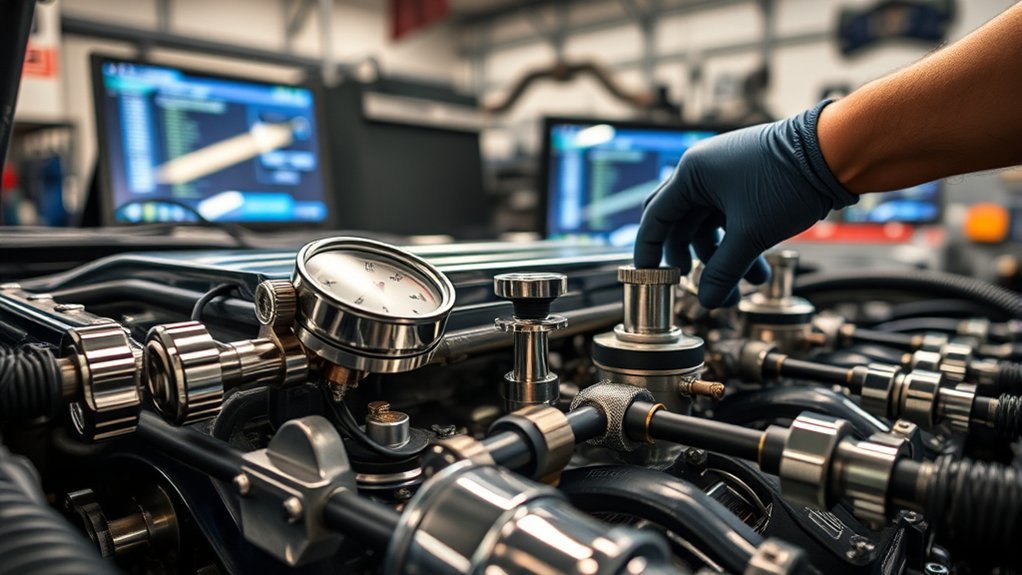
Air-fuel ratio describes the mass of air compared with fuel. Lambda describes the measured mixture relative to the stoichiometric mixture for the fuel being used. Lambda 1 is stoichiometric, a value below 1 is richer, and a value above 1 is leaner.
Conventional gasoline is often represented as approximately 14.7:1 at lambda 1, but ethanol and other fuels have different stoichiometric AFR values. For that reason, lambda is usually clearer when comparing gasoline, ethanol blends, and flex-fuel operation.
At idle and light load, many gasoline engines operate near lambda 1 when conditions allow. Under high load, the correct target depends on the engine, combustion system, fuel, boost, cooling, catalyst strategy, and calibration. There is no universal full-load AFR that is safe for every tuned engine.
A properly installed and configured wideband sensor provides much more useful mixture data than a narrowband sensor during high-load tuning. Haltech recommends wideband AFR monitoring when an engine is tuned under load, and Bosch describes wideband lambda sensing across rich and lean ranges.
Do not judge fueling from the dashboard AFR number alone. Verify that the logger is using the correct fuel scale, sensor calibration, analog input, CAN configuration, and exhaust location. An exhaust leak ahead of the sensor can also produce misleading readings.
Supporting Upgrades That May Protect Reliability
Supporting hardware should solve a measured limit or satisfy a tune requirement. More parts do not automatically create a safer vehicle.
- Intercooler: May reduce charge temperature and improve repeatability when the factory unit heat-soaks.
- Fuel pump or injectors: Required when logged pressure, injection time, or flow reaches the safe capacity of the original system.
- Radiator or oil cooler: Useful when verified coolant or oil temperatures exceed the approved range during the intended use.
- Clutch or transmission calibration: May be needed when added torque exceeds clutch holding capacity or factory torque-management limits.
- Turbocharger and wastegate: Must stay within approved pressure ratio, speed, temperature, and mechanical limits.
- Catalytic converter and exhaust: Must remain compatible with legal emissions operation and the calibration.
- Engine internals: Pistons, rods, bearings, fasteners, and head sealing may become limiting factors at higher cylinder pressure.
Install only the hardware listed for the calibration. Running a map intended for a different intake, turbocharger, sensor, injector, downpipe, or fuel can create incorrect airflow, boost, and fueling calculations.
Choosing Tuning Software and an Experienced Tuner
Quality software is useful only when the calibration and data are interpreted correctly. Choose a tuner who has documented experience with the exact engine, transmission, fuel, hardware, and intended use.
A responsible tuner should provide:
- A complete list of required and prohibited hardware
- The minimum fuel grade and approved ethanol range
- Clear instructions for flashing, battery support, and recovery
- A vehicle-specific datalog channel list
- Safe test conditions and stop-test criteria
- Revision numbers and a record of calibration changes
- An explanation of retained engine, catalyst, overboost, temperature, and torque protections
- Support for reviewing logs after installation or hardware changes
- Accurate emissions and road-use information
HP Tuners’ logging instructions show the value of recording real-time data across a useful range of operating conditions. Follow the procedure supplied for your platform rather than copying channels or thresholds from an unrelated vehicle.
Off-the-Shelf Versus Custom Tunes
An off-the-shelf tune is built for a defined group of vehicles and parts. It can work well when the vehicle exactly matches those requirements and remains mechanically healthy.
A custom tune can account for specific hardware, fuel, altitude, engine changes, or motorsport use, but “custom” does not automatically mean safer. The quality depends on the tuner’s process, measurements, safeguards, and willingness to revise the calibration when the data shows a problem.
Troubleshooting Engine Performance After a Tune
Use a repeatable process instead of changing several parts or tables at once.
- Stop high-load operation. Do not repeat the condition that caused knock, fuel-pressure loss, overheating, or severe misfire.
- Record the exact setup. Note the tune revision, fuel, ethanol content when available, modifications, weather, and recent service.
- Save codes and freeze-frame data. Do this before clearing the fault.
- Inspect simple mechanical causes. Check clamps, connectors, vacuum hoses, fluid level, plugs, coils, fuses, and visible leaks.
- Review the relevant log. Compare requested and measured values around the moment the symptom occurred.
- Return to the last known-good configuration when appropriate. Follow the tuner’s instructions before reflashing or reinstalling stock hardware.
- Change one variable at a time. Confirm the result with another controlled log.
- Escalate mechanical testing. Use fuel-pressure, compression, leak-down, smoke, cooling-system, or oil-pressure tests when the data points away from calibration alone.
Do not clear codes repeatedly, disable knock response, hide misfire detection, or command richer fuel simply to mask a mechanical fault. Those actions can remove evidence while the underlying problem gets worse.
Emissions Legality, Inspections, and Warranty
Federal law prohibits tampering with required emissions controls on vehicles and engines. The U.S. Environmental Protection Agency explains that emissions controls can include physical parts and calibrations that manage engine operation. State and local inspection rules may add further requirements.
Use a calibration and hardware combination that is legal for the vehicle’s registration and road use. Do not disable catalytic-converter monitoring, oxygen-sensor diagnostics, exhaust-gas recirculation, diesel particulate filters, selective catalytic reduction, or other required systems.
A tune or aftermarket part does not automatically cancel every part of a written warranty. However, a manufacturer may deny coverage for a failure caused by the modification or outside service. The Federal Trade Commission explains the distinction between using third-party parts and damage caused by those parts. Read the vehicle, tune, and parts warranties before installation and keep invoices, logs, and service records.
Frequently Asked Questions
Can a tune improve engine reliability?
A calibration can improve drivability or correct fueling and control problems created by compatible modifications. It does not guarantee longer engine life. Reliability still depends on engine condition, added torque and heat, fuel quality, protections, maintenance, and how the vehicle is used.
Does a Stage 1 tune decrease reliability?
The Stage 1 label alone cannot answer that question. Compare the actual torque increase, boost target, required fuel, temperature controls, engine condition, transmission limits, and tune documentation. A modest, well-tested calibration may retain a large safety margin, while an aggressive file sold under the same label may not.
Does a Stage 2 tune affect reliability?
A Stage 2 package often adds hardware or higher output, but the definition varies by company and platform. Reliability depends on whether every required part is installed, the fuel and cooling systems meet demand, the drivetrain can hold the torque, and the calibration is verified with logs.
What are the main disadvantages of tuning a car?
Possible disadvantages include reduced durability margin, higher fuel and maintenance costs, added heat, faster clutch or transmission wear, emissions or inspection problems, warranty disputes, and the need for supporting parts. The risk grows when the calibration is aggressive or poorly matched to the vehicle.
What should I monitor after installing an ECU tune?
Use the tuner’s vehicle-specific list. Common channels include measured and commanded lambda, fuel trims, knock response, boost, fuel pressure, injector use, misfires, coolant temperature, oil temperature or pressure, intake-air temperature, throttle closure, and battery voltage.
Can using the wrong fuel damage a tuned engine?
Yes. Fuel with less octane than the calibration requires can increase knock risk, especially under high load. Incorrect ethanol content can also change the fuel volume and ignition needs. Avoid boost and contact the tuner when the tank contains fuel outside the approved range.
Conclusion
Engine reliability after a tune depends less on the stage name and more on the condition of the vehicle, the calibration’s true output, fuel quality, supporting hardware, retained protections, and logged results. Begin with a healthy engine, follow the exact tune requirements, and compare requested values with measured data before using full power regularly.
Do not ignore knock, misfires, fuel-pressure loss, overheating, oil-pressure changes, or warning lights. Reducing load and diagnosing the first sign of trouble is far less expensive than continuing a test until a weak component fails.
Sources
- U.S. Environmental Protection Agency — Stopping Aftermarket Defeat Devices — federal emissions-tampering requirements and the role of engine calibrations
- Federal Trade Commission — Warranty Restrictions and Third-Party Parts — warranty coverage and modification-caused damage
- Bosch Motorsport — Lambda Sensor LSU ADV — wideband lambda measurement and fuel compatibility
- NGK Spark Plugs — How to Read a Spark Plug — plug appearance, fouling, overheating, and diagnostic limitations
- Haltech — Modifying Tuning Tables — wideband monitoring during engine tuning
- HP Tuners — Generating a Data Log — collecting real-time vehicle data for tuning and diagnosis







Leave a Reply