
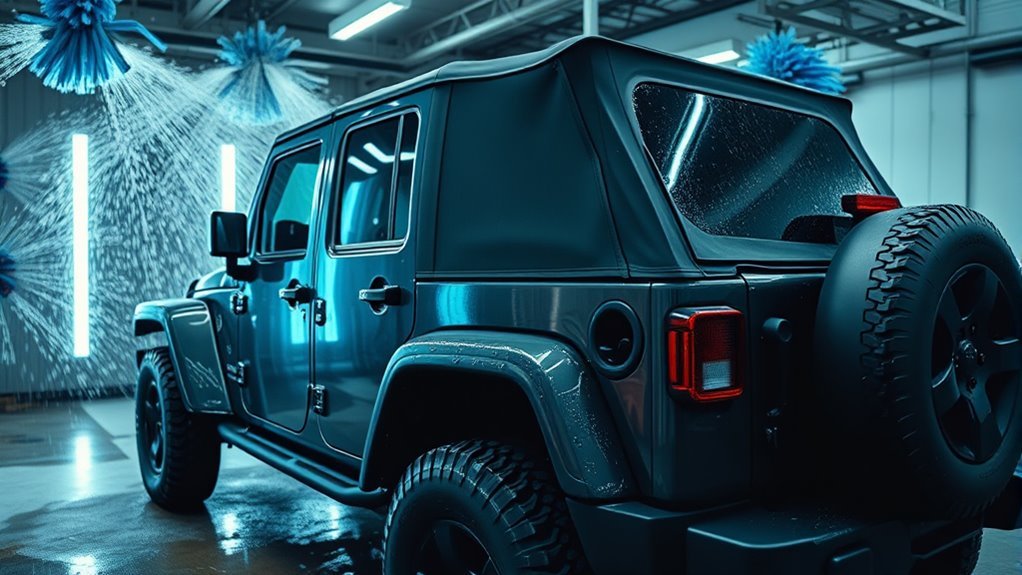
A soft-top Jeep is not a one-rule-fits-all car-wash case. The safest choice depends on the exact Jeep model year, the top manufacturer, and the care instructions for that top. Jeep’s current Wrangler guidance says not to run a factory fabric top through an automatic car wash, while some aftermarket manufacturers permit touchless washing. Hand washing remains the lowest-risk option.
Quick Answer
Do not take a factory Jeep fabric top through an automatic car wash unless your exact owner’s manual says it is allowed. For an aftermarket top, follow that manufacturer’s instructions; some permit touchless washes but prohibit brushes. When the guidance is unclear, hand-wash the top with low-pressure water and top-safe products.
Key Takeaways
- A touchless wash is still an automatic wash, so factory Jeep guidance takes priority over general advice.
- Never use a wash with spinning brushes, cloth strips, or a shared bay brush on the fabric or plastic windows.
- Check the top, seals, windows, zippers, latches, and door surrounds before washing.
- Use low-pressure water, mild or top-specific cleaner, a soft brush on fabric only, and a wet microfiber cloth on plastic windows.
- Let the top dry completely before folding or storing it.
At a Glance
| Time Required | About 30–60 minutes for a careful hand wash and inspection |
| Difficulty | Easy |
| Tools Needed | Hose with gentle flow, top-safe cleaner, soft-bristle brush, microfiber cloths, and optional manufacturer-approved protectant |
| Cost | Low; it depends on which cleaner and protectant your top requires |
Can You Take a Soft-Top Jeep Through a Car Wash?
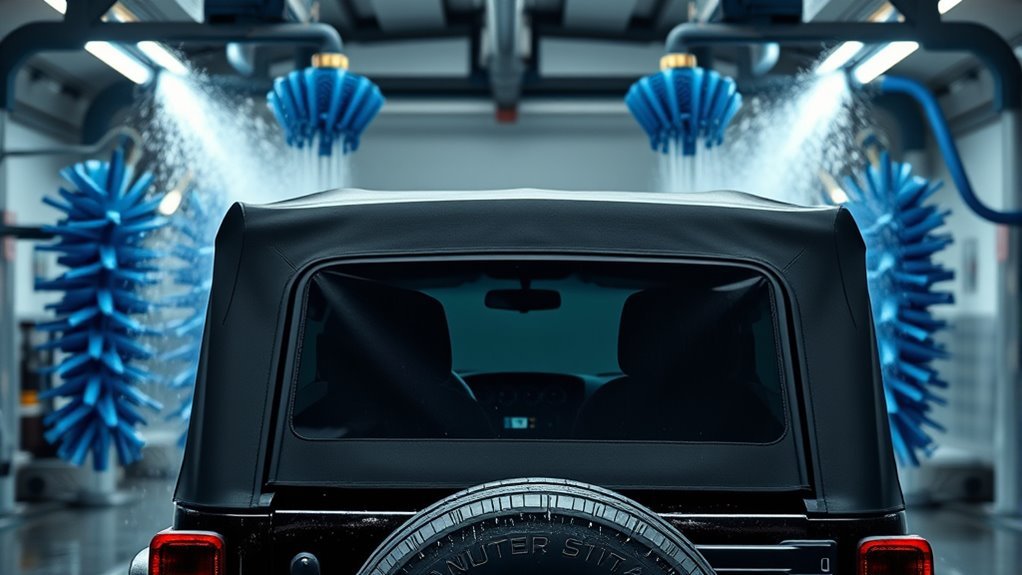
For a factory Jeep fabric top, the safest answer is no. The 2026 Jeep Wrangler Owner’s Manual tells owners not to run a fabric top through an automatic car wash because window scratching and wax buildup may result. That restriction includes automatic touchless washes unless the manual for your exact vehicle says otherwise.
Aftermarket guidance can differ. For example, Bestop’s care guidance permits touchless or manual washing for its soft tops but warns against automatic washes that use brushes. This is why the top manufacturer’s instructions matter more than broad advice found online.
Warning: Do not assume a touchless wash is approved just because it has no brushes. Concentrated spray and wash chemicals can still reach seams, weatherstrips, zippers, and plastic windows.
Quick Decision Checklist
| Situation | Best Choice | Why |
|---|---|---|
| Factory Jeep fabric top | Hand wash | Current Jeep guidance says not to use an automatic car wash. |
| Aftermarket top whose manual permits touchless washing | Touchless may be used cautiously | The manufacturer has approved that method for the specific top. |
| Unknown brand, missing instructions, or uncertain fit | Hand wash | There is no reliable basis for judging pressure or chemical tolerance. |
| Brushes, cloth strips, or a shared self-service brush | Skip it | Contact can abrade fabric and scratch plastic windows. |
| Cracked windows, loose stitching, damaged seals, or poor fit | Repair first | Water and pressure can worsen an existing problem. |
Identify Your Jeep and Soft Top Before Washing
Start with the vehicle’s model year and top type. Wrangler YJ, TJ, JK, and JL models use different roof systems, hardware, windows, and care instructions. Gladiator soft tops also have their own guidance. Use the VIN to confirm the model year when you are unsure, then check the owner’s manual for that exact vehicle.
Next, determine whether the top is factory-installed or aftermarket. Look for a manufacturer label near a window, zipper, header, or interior seam. If the top was replaced, the vehicle manual may not be enough; use the care sheet for the installed top. Do not judge wash safety by price, fabric thickness, or whether the top appears “OEM-quality.”
Note: A tight fit does not make an otherwise prohibited wash safe. Fit affects sealing, but the manufacturer’s wash restriction still controls.
Why Brush Car Washes Are Risky for Soft Tops
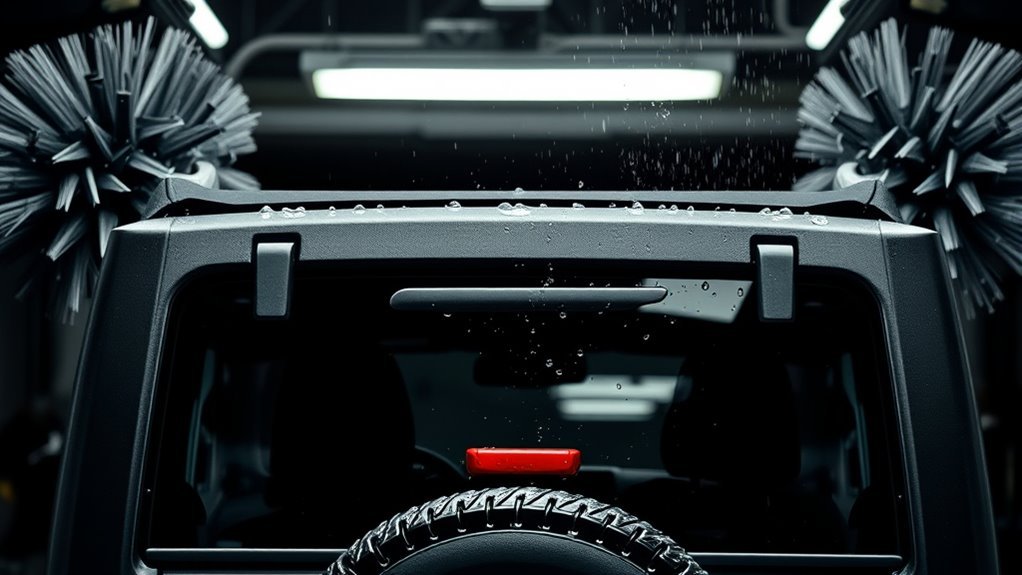
Brush-style washes expose the roof and windows to repeated contact. Dirt trapped in brushes or cloth strips can act like an abrasive. The moving equipment can also catch an edge, rub stitching, or press against the rear and side windows.
Plastic soft-top windows need special care because dry wiping and abrasive contact can scratch them. Bestop advises using a water-soaked microfiber cloth or sponge and says not to use a brush on the windows. Jeep also warns that automatic washing can lead to window scratches and wax buildup.
The main risk is not simply getting the top wet; it is uncontrolled contact, pressure, and chemistry on fabric, seams, seals, and plastic windows.
When a Touchless Car Wash May Be Acceptable
A touchless wash may be reasonable only when the installed top’s manufacturer explicitly allows it. Bestop, for example, recommends touchless or manual washing for its products and advises owners to avoid brush-style systems. That permission does not automatically apply to a factory Jeep top or another aftermarket brand.
Even when touchless washing is allowed, choose the gentlest available cycle. Avoid optional waxes, sealants, tire shine overspray, and unfamiliar chemical packages unless the top manufacturer approves them. Do not aim a self-service pressure wand at window edges, zippers, seams, door surrounds, or weatherstrips.
Pro Tip: Ask the wash operator whether the cycle applies wax or protectant to the roof. “Touchless” describes the equipment, not the chemicals.
Pre-Wash Inspection and Preparation
Do not wash first and inspect later. A two-minute check can reveal problems that water may worsen.
- Inspect the fabric: Look for tears, thinning, stains, loose stitching, stretched areas, and lifted edges.
- Check the windows: Look for cracks, haze, deep scratches, loose edging, or separation from the surrounding fabric.
- Inspect seals and channels: Remove leaves, grit, and other debris from the header, door surrounds, tailgate bar, and weatherstrips.
- Close and secure everything: Fully close doors and windows, engage header latches, seat retainers, and close zippers according to the top instructions.
- Remove loose accessories: Take off anything that could flap, snag, or redirect water.
- Skip the wash if damage is present: Repair loose seams, failed seals, cracked windows, or missing hardware before cleaning.
How to Hand-Wash a Jeep Soft Top
Hand washing gives you control over water pressure, brush contact, and product placement. Follow the care sheet for your top, because allowed soaps and protectants vary by material.
- Park in the shade. Make sure the top is cool before applying cleaner.
- Pre-rinse gently. Use cool or lukewarm water to float away loose dust and grit. Do not direct a concentrated stream into seams or seals.
- Apply an approved cleaner. Jeep permits mild soap or an equivalent top cleaner for its fabric tops; aftermarket instructions may call for a dedicated product.
- Clean the fabric gently. Use a clean, soft-bristle brush on the fabric only. Work in light, even strokes. Support the roof from underneath if the manufacturer instructs you to do so for spot cleaning.
- Rinse completely. Remove all cleaner residue with gentle, clean water.
- Clean the windows separately. Use the window method below rather than brushing them with the fabric.
- Dry fully. Blot excess water where appropriate and let the top air-dry completely before folding, lowering, or storing it.
How to Clean Plastic Soft-Top Windows
Soft-top side and rear windows are often flexible plastic, not automotive glass. Treat them as a separate surface.
- Rinse off loose grit before touching the window.
- Use a clean microfiber or soft cotton cloth that is wet with cool or lukewarm water.
- Use only mild soap or a plastic-window cleaner approved by the top manufacturer.
- Wipe gently in one direction rather than scrubbing in circles.
- Never use a dry cloth, a brush, paper towels, household glass cleaner, alcohol, solvents, abrasive polish, an ice scraper, or de-icing chemicals unless the manufacturer specifically approves the product.
- Rinse well and use a clean, slightly damp cloth for the final pass.
Inspect the Top After Washing
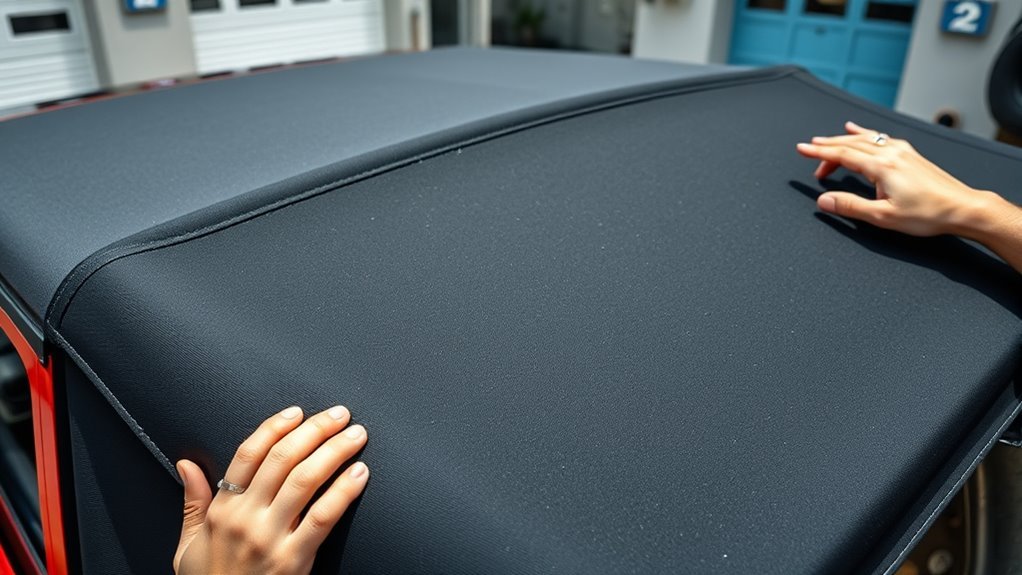
Check the vehicle before parking it for the day. Look along the front header, door surrounds, side-window channels, rear corners, tailgate bar, and zipper lines. Inside the Jeep, check the carpet, roll-bar padding, cargo area, and door openings for damp spots.
Also inspect the fabric and windows in good light. New scuffs, cloudy patches, displaced seals, or loosened stitching can point to excessive contact, unsuitable chemicals, or water pressure. If you find a leak, dry the interior and top, clear debris from the sealing surfaces, and reseat the top according to the manual before testing it again with gentle hose flow.
Drying, Zipper Care, and Protectant
Let the top dry completely before folding it. Trapped moisture can contribute to staining, odor, or mildew. Avoid high heat, compressed air at close range, or aggressive rubbing. Plastic windows should remain supported and should not be folded sharply.
Clean zippers according to the top manufacturer’s directions, then use a zipper-specific lubricant if recommended. Do not spray a general-purpose silicone product across fabric, seals, or windows; overspray can leave residue and may not be approved for the material. Apply protectant only when it matches the top material. Vinyl, twill, sailcloth, and plastic windows may require different products.
Troubleshooting Leaks, Haze, and Other Problems
| Problem | Likely Cause | What to Do |
|---|---|---|
| Water near a door or header | Debris, a displaced seal, an unseated retainer, or concentrated spray | Dry the area, clean the channel, reseat the top, and retest with gentle water flow. |
| Cloudy or streaked plastic window | Wax, chemical residue, dry wiping, or abrasion | Rinse gently and use an approved plastic-window cleaner. Stop if the surface is cracked or deeply scratched. |
| Stiff or gritty zipper | Dirt or dried residue in the teeth | Clean gently and use only the lubricant recommended by the top maker. |
| Frayed stitching or lifted edge | Wear, snagging, or pressure on an existing weak point | Stop using automatic washes and have the area repaired before more water exposure. |
| Musty odor or dampness | The top was folded wet or the interior did not dry fully | Open and dry the Jeep in a ventilated area, then inspect for a continuing leak. |
Frequently Asked Questions
Can a car wash void my soft-top warranty?
A wash does not automatically erase the vehicle’s entire warranty. However, a manufacturer may deny coverage for damage caused by misuse, improper care, or failure to follow instructions. The Federal Trade Commission’s warranty guidance explains that warranty coverage cannot generally be conditioned on buying a specific service, but damage caused by improper maintenance may be excluded. Keep the care instructions and document any damage.
Will high-pressure rinsing damage stitched seams?
It can worsen weak stitching or force water past weatherstrips. Use gentle hose pressure and keep concentrated spray away from seams, zippers, retainers, and window edges.
Can snow foam or spray wax harm a fabric top?
It depends on the formula and the top material. Avoid unapproved waxes, harsh cleaners, bleach, and solvents. Wax or chemical residue can also cloud or streak plastic windows. Use only products approved by the vehicle or top manufacturer.
Is it safe to leave a window partly open during a wash?
No. Close the doors and windows fully, latch the header, and secure the top before washing. A partially open window allows direct water entry and can leave the interior wet.
How often should I clean the underside of the top?
There is no universal three- or six-month interval. Inspect it during routine cleaning and clean it when you see dust, salt residue, stains, mildew, or odor. Follow the top maker’s product and drying instructions.
Can I use the foaming brush at a self-service car wash?
Do not use a shared bay brush on the soft top or plastic windows. It may contain grit from previous vehicles, and the bristles can scratch windows or abrade fabric.
What should I do if the top leaks after washing?
Dry the interior and top first. Remove debris from seals and channels, check that all retainers and latches are seated, and inspect for tears or displaced weatherstrips. Retest with gentle hose flow. Persistent leaks need repair or professional inspection.
Conclusion
The safest routine is simple: check the instructions for your exact Jeep and installed top, avoid brushes, and hand-wash when the guidance is unclear. Factory Jeep fabric-top instructions are stricter than some aftermarket advice, so do not treat every touchless wash as automatically safe. Gentle cleaning, separate care for plastic windows, complete drying, and a quick leak inspection will protect the top better than convenience-first washing.
Sources
- 2026 Jeep Wrangler Owner’s Manual — factory soft-top wash, window, drying, and sealing guidance.
- 2024 Jeep Wrangler Owner’s Manual — fabric-top washing precautions and care of plastic windows.
- Bestop Frequently Asked Questions — aftermarket soft-top car-wash, fabric, and window-care guidance.
- Federal Trade Commission: Warranties — consumer warranty principles and limits.




Leave a Reply