
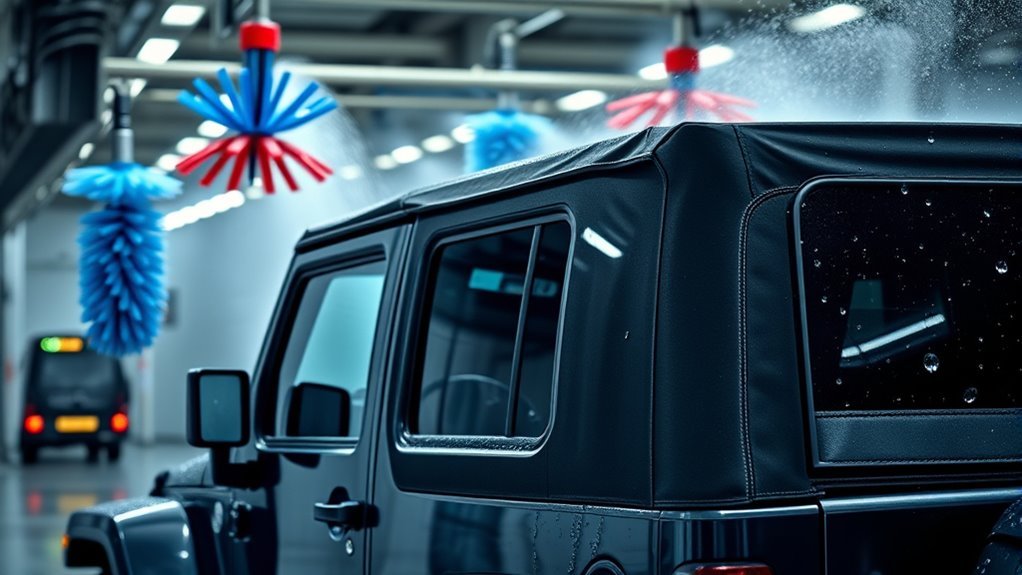
A Jeep soft top needs gentler cleaning than painted metal or a hard roof. The safest answer depends on the exact top: Jeep’s factory guidance for Wrangler fabric tops says to avoid automatic car washes, while some aftermarket manufacturers allow touchless washing if necessary. Before washing, confirm your model year, top brand, material, and care instructions.
Quick Answer
For a factory Jeep Wrangler fabric soft top, follow Jeep’s manual and skip automatic car washes, including touchless systems. Hand-washing is the safest choice. Some aftermarket manufacturers, including Bestop, allow touchless washing if necessary, but still prefer hand-washing. Never use a brush-style tunnel, and keep pressure away from seals and plastic windows.
Key Takeaways
- Jeep’s factory Wrangler manual says not to run a fabric top through an automatic car wash because window scratches and wax buildup may result.
- Aftermarket instructions can differ. Bestop recommends hand-washing and permits touchless washing only when an automatic wash is unavoidable.
- Brushes, cloth strips, harsh cleaners, wax cycles, and focused spray near weather-strip seals create the greatest risk.
- Wash the fabric and flexible windows separately, rinse away all cleaner, and let the top dry completely before folding or lowering it.
- Use only cleaners, protectants, and zipper products approved for your exact top material and hardware.
At a Glance
| Time Required | About 30–60 minutes, plus air-drying time |
| Difficulty | Easy |
| Tools Needed | Garden hose, bucket, soft-bristle brush, clean microfiber or soft cotton cloths, and top-approved cleaner |
| Cost | Low; varies by the approved cleaner and protectant required for your top |
Can a Jeep Soft Top Go Through a Car Wash?
Do not treat every Jeep soft top the same. The correct answer depends on whether the top is factory-installed or aftermarket, its material, and the instructions for that exact product.
Factory Jeep Soft Top Guidance
The 2024 Jeep Wrangler owner’s manual says not to run a fabric top through an automatic car wash. Jeep specifically warns that window scratches and wax buildup may result. It also warns that water pressure aimed at weather-strip seals can cause water to enter the cabin.
That means a factory-top owner should not assume a touchless automatic wash is approved simply because it has no brushes. The factory recommendation is hand-washing.
Aftermarket Soft Top Guidance
Aftermarket rules may differ. Bestop recommends hand-washing for the best results and longest service life. If an automatic wash is unavoidable, Bestop says to choose touchless only, avoid brush-style systems, fully close the zippers, and secure the top.
Do not assume one brand’s advice applies to another. Check the top label, purchase record, or installation manual to identify the manufacturer and material before choosing a wash method.
Warning: Never enter a brush or cloth-strip car wash with a Jeep soft top. The moving equipment can abrade the fabric, scratch flexible windows, catch loose edges, and push dirt across clear plastic.
Automatic Brush, Touchless, and Hand-Wash Methods Compared
| Wash Method | Factory Jeep Fabric Top | Main Risk |
|---|---|---|
| Brush or cloth-strip automatic wash | Do not use | Abrasion, scratched windows, wax residue, pulled edges, and leaks |
| Touchless automatic wash | Not approved by Jeep’s general automatic-wash guidance | Focused pressure at seals and unapproved detergents or wax cycles |
| Self-service spray bay | Use only with gentle, distant spray and no direct aim at seals or windows | A close or concentrated jet can force water through weather stripping |
| Hand wash | Recommended | Low risk when approved products and separate window care are used |
The absence of brushes does not make an automatic wash factory-approved. For an OEM Jeep fabric top, the owner’s manual remains the deciding source.
Why Brush-Style Car Washes Can Damage a Soft Top
A brush-style automatic wash combines repeated contact, trapped grit, detergents, water pressure, and often a wax cycle. Those conditions are harder on flexible roof material and plastic windows than a controlled hand wash.
Fabric Abrasion and Edge Damage
Rotating brushes and hanging cloth strips can rub the same areas several times. Dirt held in the wash material may act like an abrasive. Loose fabric, hook-and-loop sections, retainers, or poorly seated edges can also be pulled or shifted.
Plastic Window Scratches and Haze
Jeep’s manual describes the soft-top windows as pliable plastic that scratches unless handled carefully. It says never to remove dust with a dry cloth and directs owners to use a water-moistened microfiber or soft cotton cloth. Automatic brushes cannot provide that controlled, clean contact.
Seal and Water-Intrusion Risk
A sound soft top should resist normal rain, but concentrated wash pressure is different from rainfall. Water aimed at the windshield header, door surrounds, window retainers, or weather-strip joints can find a small gap and enter the cabin. A top that is installed unevenly or has worn seals is more likely to leak.
Touchless Car Washes: Pressure, Chemicals, and Wax
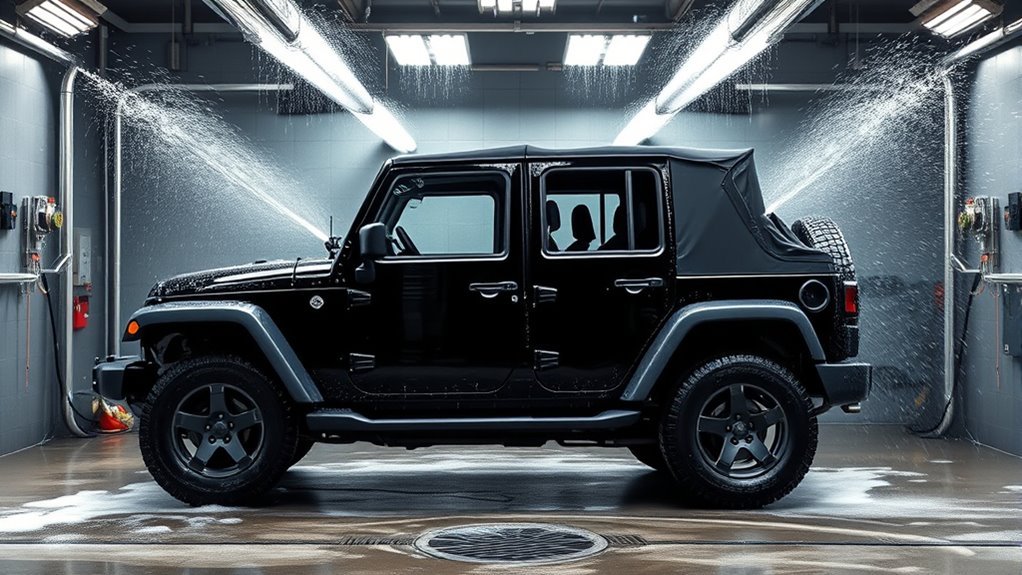
Touchless systems remove brush contact, but they still use directed spray and a fixed chemical program. For a factory Jeep fabric top, that does not override the manual’s instruction to avoid automatic car washes.
For an aftermarket top whose manufacturer permits touchless washing, choose the simplest cycle available. Skip spray wax, tire shine overspray, and any optional treatment not approved for the top. Make sure the top is fully latched, all windows or panels are correctly seated, and every zipper or retainer is closed before entering.
Note: A general pressure-washer limit for painted body panels is not a safe target for soft-top fabric, plastic windows, or seals. Use the top manufacturer’s instructions, keep the spray broad and distant, and never aim a concentrated stream at a seam or weather strip.
Commercial Car Wash Safety Checklist
If the exact top manufacturer allows touchless washing, complete this check before entering. For a factory Jeep fabric top, use the same list before hand-washing or using a gentle self-service rinse.
- Confirm the exact top: Identify the Jeep model year, factory or aftermarket brand, and material.
- Read the correct instructions: Use the owner’s manual or the top’s installation and care guide, not general forum advice.
- Inspect the fit: Check the windshield header, door surrounds, side panels, rear panel, retainers, seams, and fasteners.
- Close everything: Fully latch the header and seat all windows, zippers, hook-and-loop sections, and lower retainers.
- Check for damage: Do not wash automatically if the fabric is torn, a window is cracked, a seam is separating, or a seal is loose.
- Remove loose accessories: Secure straps, antennas, roof accessories, and anything the wash could catch.
- Choose no-contact only when permitted: Reject any wash using brushes, rollers, or cloth strips.
- Skip wax and harsh add-ons: Use only treatments approved by the top manufacturer.
Pro Tip: Place a dry towel along the inside edge of the windshield header and door surrounds during your first gentle wash. It can help you spot the exact source of a small leak without soaking the interior.
Why Hand-Washing Is the Safest Choice
Hand-washing lets you control pressure, product choice, brush contact, rinse direction, and drying. It also gives you time to inspect seams, retainers, windows, and seals before a small problem becomes a leak or tear.
Jeep directs owners to use mild soap suds, lukewarm water, and a soft-bristle brush on the top material. If more cleaning is needed, the manual calls for a suitable convertible-cloth cleaner or mild foaming cleaner and says to support the top from underneath. It also requires a complete rinse and full drying before the top is lowered.
How to Wash a Jeep Soft Top at Home
- Park in shade and let the top cool. Hot material can dry soap too quickly and leave residue.
- Secure and inspect the top. Latch the header, seat all panels and retainers, and look for tears, loose seams, worn seals, or cracked windows.
- Remove loose dirt with a gentle rinse. Use clean, cool or lukewarm water. Keep the nozzle back and direct water down and away from weather-strip joints.
- Clean the fabric. Apply mild soap or a cleaner approved for the exact material. Agitate lightly with a clean soft-bristle brush. Support the fabric from below if you must work on a stubborn area.
- Clean flexible windows separately. Flush away grit first. Use a water-soaked microfiber or soft cotton cloth and a plastic-window cleaner approved by the top maker. Wipe across the window rather than scrubbing in circles or wiping up and down.
- Rinse thoroughly. Remove every trace of soap or cleaner from the fabric, seams, retainers, and painted surfaces.
- Dry without folding the top. Let the fabric air-dry completely. Gently blot remaining water with clean cloths where the manufacturer permits.
- Inspect the interior. Check the header, doors, rear corners, and cargo area for moisture. Correct panel seating or seal problems before the next rain.
What Not to Use
- Dry towels or brushes on dusty plastic windows
- Household bleach, strong solvents, scouring products, or abrasive polish
- Stiff brushes on the fabric or any brush on flexible windows
- Focused high-pressure spray at seals, seams, retainers, latches, or window edges
- Automatic wax unless the top manufacturer specifically approves it
- Unverified household protectants, dressings, silicone sprays, or petroleum products
Post-Wash Care: Windows, Retainers, Zippers, and Protectant
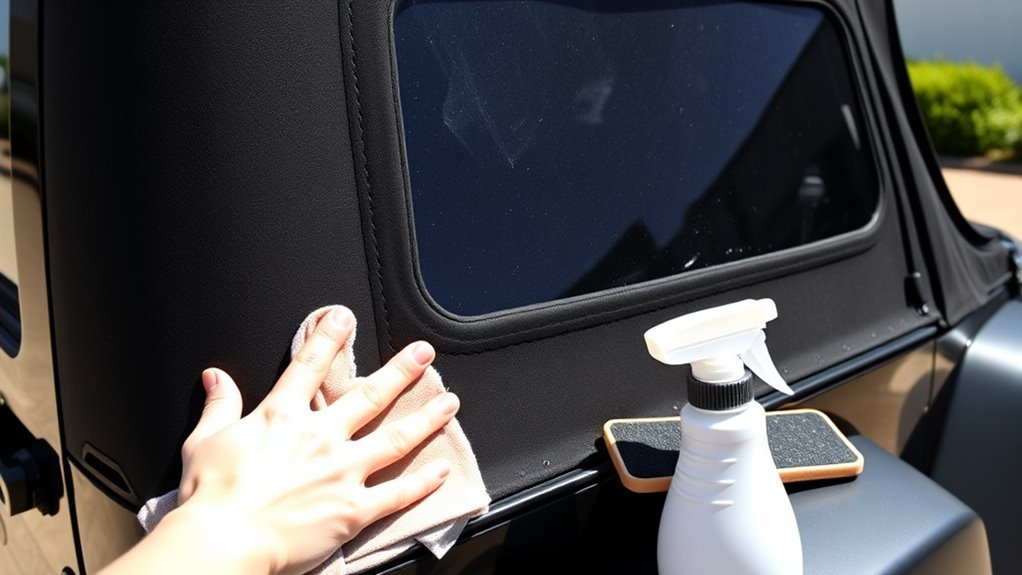
Post-wash care must match the top’s design. Current factory tops may use sliding plastic retainers where older or aftermarket tops use more zippers, so a blanket instruction to lubricate every moving part is not appropriate.
- Flexible windows: Use a cleaner made for pliable vinyl or plastic windows. Never clean them dry, and do not use household glass cleaner unless the manufacturer approves it.
- Plastic retainers: Remove road dust with mild soap and a small soft brush. Dirt in the channels can make installation harder and may scratch nearby surfaces.
- Zippers, if equipped: Clean grit from the teeth and use only the zipper cleaner or lubricant specified by the top manufacturer. Wipe away excess.
- Fabric protectant: Apply only a product approved for the exact vinyl, sailcloth, or twill material. Keep fabric products off the windows and painted bodywork.
- Storage: Do not fold, roll, or store the top or windows while wet or dirty. Use a window storage bag with clean dividers when available.
Common Problems After Washing and How to Fix Them
Water Leaks
Dry the interior, then check whether each panel, retainer, header latch, and door surround is fully seated. Clean debris from seal channels and inspect weather stripping for folds, cuts, or gaps. Do not apply a generic seam sealer until the top manufacturer or a qualified Jeep technician confirms the correct repair; the wrong product can stain material or interfere with later service.
Scratched or Cloudy Windows
Wash away grit before polishing. A manufacturer-approved plastic-window cleaner may reduce light haze or fine marks, but deep scratches, cracks, or visibility distortion usually require window-panel replacement. Do not use abrasive automotive compound intended for painted clear coat.
Soap, Wax, or White Residue
Rinse the affected area with clean water and use the top maker’s approved cleaner if residue remains. Avoid stronger solvents or repeated hard scrubbing. Wax buildup on flexible windows can be difficult to remove without adding scratches, which is one reason Jeep warns against automatic washes.
Fading, Stains, or Mildew
Use an approved top cleaner and follow its dwell-time directions. Do not use bleach unless the top manufacturer specifically permits it. Let the top dry fully before lowering or covering it. Persistent mildew, seam separation, or fabric that has become brittle should be evaluated for repair or replacement.
Stiff Zippers or Retainers
Do not force them. Rinse or brush out sand and road dust, then use the manufacturer-approved lubricant only if the design calls for it. Forcing a jammed zipper or retainer can damage the slider, channel, stitching, or window panel.
Frequently Asked Questions
Can pressure from rinsing force water into door seals?
Yes. Jeep warns that water pressure directed at weather-strip seals can cause water to leak into the interior. Use a broad, gentle rinse, keep the nozzle back, and avoid aiming directly at the windshield header, door surrounds, panel joints, and window edges.
Will car wash soap void my soft-top warranty?
Soap does not automatically void every warranty, but damage caused by improper cleaning, an automatic wash, harsh chemicals, or failure to follow product instructions may be excluded. Bestop’s warranty terms, for example, list car-wash damage and improper or inadequate maintenance among exclusions. Follow the exact warranty and care guide for your top and keep product receipts.
Can automated dryers warp or crease a fabric top?
There is no universal manufacturer rule that every dryer will warp a top, but automatic washing is already prohibited for factory Jeep fabric tops. Strong air can also stress a loose edge or poorly secured panel. Avoid the automatic wash and let the top air-dry fully before folding or lowering it.
Can high-pressure jets damage latches, retainers, or seals?
A focused jet can force water past seals and may shift a loose or damaged component. Keep spray away from latches, seams, retainer channels, window edges, and weather stripping. Repair loose hardware before washing rather than relying on water pressure to test it.
Can frequent washing accelerate seam or adhesive failure?
Frequent gentle washing with approved products should not be confused with repeated harsh cleaning. Abrasive brushing, strong chemicals, concentrated pressure, incomplete rinsing, and folding the top while wet can shorten service life. Clean when needed and follow the manufacturer’s method rather than a fixed aggressive schedule.
Can I use a pressure washer on a Jeep soft top?
A garden hose is safer. Bestop advises avoiding pressure washers in its general care guidance, and Jeep warns against directing water pressure at weather-strip seals. When using a self-service wand, keep it far away, use the gentlest setting, and never hold the stream on one spot.
Should I apply protectant after every wash?
Not automatically. Use the interval and product specified for the exact material. Vinyl, sailcloth, and twill tops can require different products. Applying the wrong protectant, using too much, or getting it on flexible windows may create residue or staining.
Conclusion
For a factory Jeep Wrangler fabric top, the safest and manufacturer-aligned choice is to skip automatic car washes and wash by hand. An aftermarket manufacturer may permit a touchless wash, but that exception should come from the exact product instructions—not a general rule. Use mild approved products, protect the flexible windows from dry contact, keep pressure away from seals, rinse completely, and let the top dry before lowering it.
Sources
- 2024 Jeep Wrangler Owner’s Manual — factory warnings about automatic car washes, water pressure at seals, fabric washing, drying, and plastic-window care.
- Mopar Owner’s Manual Center — source for checking the instructions for the exact Jeep model and year.
- Bestop Soft Top Comparison and Care Guidance — hand-wash preference, touchless-only exception, and general care precautions.
- Bestop Soft Top Care Guide — product-specific cleaner, protectant, window, and zipper guidance.
- Bestop Warranty Information — exclusions involving car-wash damage, improper maintenance, and noncompliance with product instructions.




Leave a Reply