
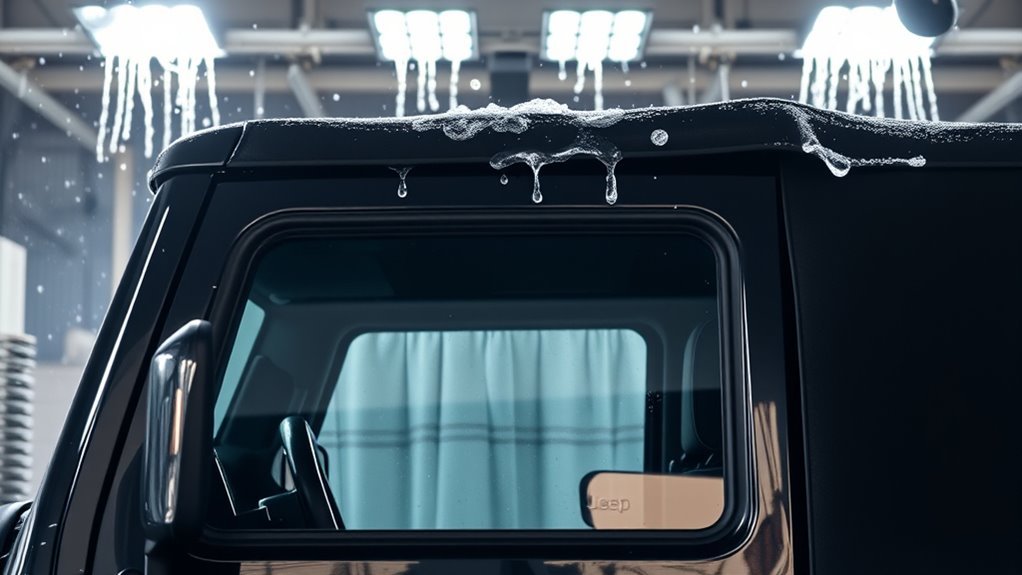
A soft-top Jeep needs gentler washing than a vehicle with a fixed metal roof. Although some aftermarket-top makers permit limited use of touchless washes, Jeep’s Wrangler guidance advises owners not to run a fabric top through an automatic car wash. Hand washing gives you the best control over pressure, cleaner strength, seams, and flexible plastic windows.
Quick Answer
Jeep advises against putting a fabric soft top through an automatic car wash because the windows may scratch and wax may build up. Hand washing is safest. If an aftermarket top maker permits touchless washing, use a basic no-wax cycle and keep concentrated spray away from seams, seals, and plastic windows.
Key Takeaways
- Jeep’s published guidance says not to run a fabric top through an automatic car wash.
- A touchless wash removes the brush-abrasion risk, but its pressure, detergent, and wax can still affect seals, windows, or top material.
- Use mild soap, lukewarm water, a gentle hose stream, and a soft-bristle brush on the top material only.
- Clean flexible plastic windows separately with water and a wet microfiber or soft cotton cloth. Never wipe them dry.
- Choose cleaners and protectants made for your exact vinyl-coated fabric, twill, or other top material.
At a Glance
| Time Required | 30–60 minutes, plus complete air-drying time |
| Difficulty | Easy |
| Tools Needed | Gentle hose nozzle, mild car-wash soap, bucket, soft-bristle brush, sponge or wash mitt, microfiber cloths, and an approved soft-window cleaner if needed |
| Cost | About $0–$40, depending on the supplies already available |
Can You Safely Take a Soft-Top Jeep Through a Car Wash?
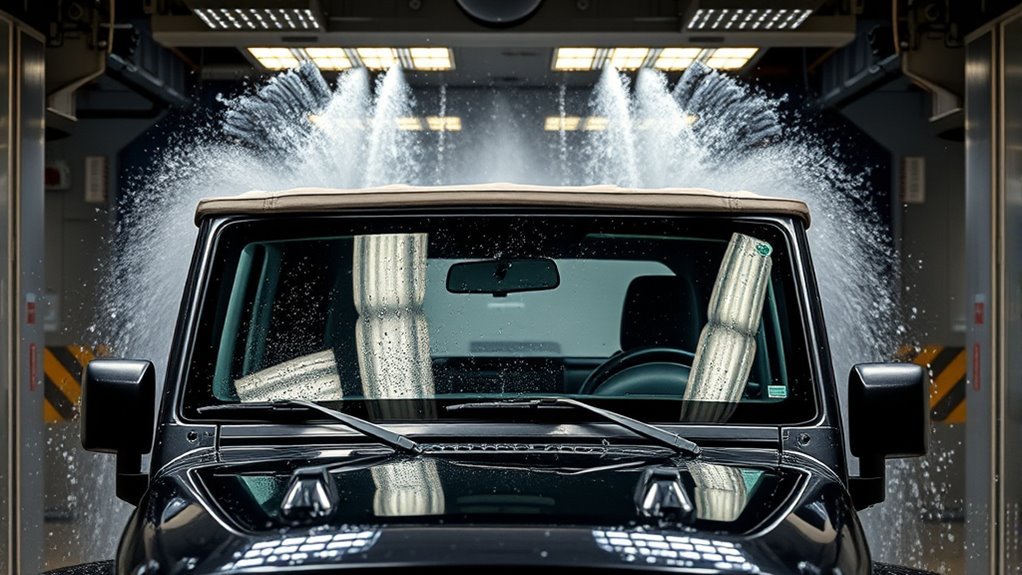
For an original-equipment Jeep fabric top, the safest answer is no automatic car wash. The 2023 Jeep Wrangler Owner’s Manual states that a fabric top should not be run through an automatic wash because the windows may scratch and wax may build up. It recommends mild soap suds, lukewarm water, a soft-bristle brush, a thorough clean-water rinse, and full drying before the top is lowered.
An aftermarket top may have different instructions. For example, Bestop advises against automatic washes that use brushes and identifies touchless washing as the automatic option to choose when one must be used. The instructions supplied with your exact top should take priority.
Warning: Do not assume a touchless wash is approved simply because it has no brushes. It may still use concentrated jets, strong alkaline or acidic cleaners, wax, and drying equipment that your top manufacturer does not recommend.
Before choosing a wash method, check three things:
- Your model-year manual: Look under “Appearance Care for Fabric Top Models” or a similar heading.
- The top manufacturer: OEM, Bestop, and other replacement tops may use different fabrics, coatings, windows, and care products.
- The top’s condition: Avoid all automated washing if you see loose stitching, cracked windows, damaged seals, unsecured retainers, fraying, or an existing leak.
How Pressure, Brushes, and Chemicals Harm Soft Tops
A soft top combines coated fabric or woven material, stitching, seals, retainers, zippers, and flexible windows. A wash method that is harmless to painted metal can be hard on one or more of those parts.
- Brushes and rollers: Repeated contact may abrade the top and scratch the soft windows. Dirt trapped in wash equipment can increase the risk.
- Concentrated water pressure: A direct jet can push water past weather stripping or through a weak seam. Jeep warns that pressure aimed at weather-strip seals may cause an interior leak.
- Wax and rinse aids: Wax can build up on flexible windows or leave residue on the top.
- Strong cleaners: Bleach, solvents, alcohol, strong degreasers, and unsuitable detergents can stain, fade, stiffen, or otherwise damage the material.
- Hot water and dry wiping: Both can be harmful to flexible plastic windows. Dirt rubbed across a dry window can leave permanent scratches.
The safest wash is the one that lets you control the water pressure, cleaning product, brush contact, and treatment of the flexible windows.
Safest Car-Wash Types for Soft-Top Jeeps
| Wash Method | Risk Level | Recommendation |
|---|---|---|
| Hand wash | Lowest when done correctly | Preferred. Use mild soap, gentle water, and separate tools for the fabric and windows. |
| Touchless automatic wash | Moderate and system-dependent | Use only when the exact top maker permits it. Select a basic no-wax cycle and avoid known high-pressure systems. |
| Brush or roller wash | High | Avoid. Brushes can contact the fabric, stitching, windows, and exterior hardware. |
| Self-service pressure wand | Moderate to high | Use only at reduced pressure and from a safe distance. Never direct the jet at seals, seams, zippers, or window edges. |
Using a Commercial Car Wash: Step-by-Step Precautions
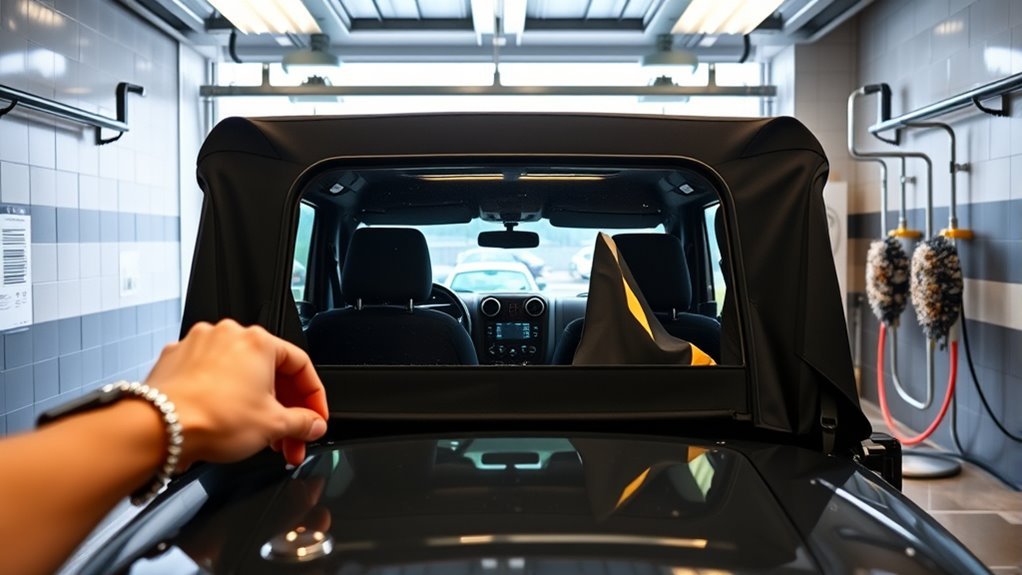
Hand washing remains the preferred method. When time or local restrictions make a commercial wash necessary, use the following precautions only after confirming that the top manufacturer permits touchless washing.
- Inspect the top. Look for cracked or cloudy windows, frayed stitching, separated seams, loose fabric, missing retainers, and existing leaks.
- Fully install and latch it. Close the doors and windows, secure the header latches, and confirm that all window panels and lower retainers are seated correctly.
- Choose touchless only. Do not use a tunnel with brushes, rollers, hanging scrubbers, or workers who will scrub the plastic windows.
- Select the basic cycle. Skip spray wax, tire shine, underbody options that may splash chemicals upward, and other unnecessary add-ons.
- Ask about pressure when possible. Avoid a wash known for aggressive overhead or side jets. Most automatic systems cannot adjust pressure for one vehicle.
- Do not lower a wet top. Let it dry completely while fully installed.
- Inspect immediately afterward. Check the header, door surrounds, window channels, seams, cargo area, and floor for water.
Pro Tip: Before the first heavy rain or any commercial wash, test the top at home with a gentle hose stream. That makes it easier to identify a weak seal without exposing the roof to a full automatic cycle.
Best Home-Wash Routine for a Jeep Soft Top
Wash the Jeep in the shade while the top and body are cool. Use products approved for automotive soft tops, and keep brushes and fabric protectants away from the flexible windows.
| Step | Tool | Purpose |
|---|---|---|
| Rinse gently | Low-pressure hose stream | Lift loose dust, mud, and grit without forcing water through seals |
| Clean the top | Mild soap and soft-bristle brush | Clean coated fabric or twill with gentle, even strokes |
| Clean windows | Water and wet microfiber or soft cotton cloth | Remove dirt without dry scratching the pliable plastic |
| Protect | Material-compatible top protectant | Restore the protection specified by the top manufacturer |
| Inspect | Clean towel and visual check | Catch leaks, wear, loose retainers, and damaged stitching early |
- Remove loose debris. Brush off leaves by hand and gently rinse dust and mud from the top. Do not use a concentrated pressure-washer stream.
- Prepare mild soap. Use a pH-neutral automotive wash soap or the cleaner recommended by the top maker. Avoid bleach, alcohol, solvents, abrasive powders, strong degreasers, and household multipurpose cleaners.
- Wash the entire top evenly. Use a clean soft-bristle brush or sponge with light pressure. Work from the roof downward so dirty water does not run over areas already cleaned.
- Support stubborn areas. When gently brushing a heavily soiled section, support the material from underneath when practical instead of pressing hard against unsupported fabric.
- Rinse completely. Soap residue can attract dirt and cause uneven marks. Use clean water and a gentle stream until no suds remain.
- Clean the windows separately. Follow the window method in the next section. Never use the fabric brush on clear plastic.
- Air-dry with the top raised. Keep the top fully installed until every section is dry. Do not fold or lower damp material.
- Apply protectant only when appropriate. Confirm whether the top is vinyl-coated fabric, twill, canvas-like woven fabric, or another material. Follow the product label for application temperature, drying, and curing.
There is no single weekly cleaning schedule for every owner. Wash the top when it is visibly dirty and after heavy mud, road salt, bird droppings, tree sap, or other contamination. Prompt spot cleaning can prevent a stain from becoming harder to remove.
Choose Products for the Exact Top Material
Soft tops that look similar may require different products. An OEM vinyl-coated fabric top, a premium acrylic twill replacement, and a cloth convertible top should not automatically receive the same cleaner or protectant.
- OEM Jeep fabric top: Follow the model-year owner’s manual and Mopar-equivalent product guidance.
- Bestop vinyl fabric: Bestop specifies cleaner and protectant intended for its vinyl top material.
- Bestop twill: Use a twill-compatible product rather than assuming a vinyl dressing is suitable.
- Other cloth or vinyl tops: The Haartz cleaning guide separates cloth-top and vinyl-top instructions because the outer surfaces require different care.
Note: 303 Fabric Guard, formerly sold in marine-oriented packaging as well, may be used on compatible outdoor fabric and convertible tops to restore water and stain repellency. It is not a universal treatment for vinyl, and its manufacturer states that it does not provide direct UV protection. Apply it only to clean, dry, compatible fabric and follow all ventilation, flammability, temperature, and curing instructions.
How to Clean the Flexible Plastic Windows
Flexible soft-top windows scratch more easily than automotive glass. Treat them as a separate surface from both the painted body and the top fabric.
- Flush loose grit away with clean, cool or lukewarm water.
- Wet a clean microfiber towel or soft cotton cloth.
- Wipe gently across the window in one direction rather than scrubbing in circles.
- If water is not enough, use mild soap or a cleaner specifically approved for flexible vinyl windows.
- Rinse thoroughly and wipe with another soft, slightly damp cloth.
Never use a dry cloth, paper towel, fabric brush, stiff sponge, hot water, household glass cleaner containing alcohol or ammonia, solvent, ice scraper, or de-icing chemical on the flexible windows. Do not polish a deep scratch aggressively; replacement may be safer than thinning or distorting the window.
Care for Seals, Zippers, Seams, and Retainers
- Weather seals: Rinse away sand and dirt with gentle water, then wipe with a damp cloth. Do not aim a pressure nozzle directly into the seal.
- Seams and stitching: Inspect for pulled thread, separation, abrasion, and staining. Persistent seepage may need professional repair rather than another layer of chemical treatment.
- Zippers: Remove dirt carefully and use only a zipper cleaner or lubricant approved by the top manufacturer. Wipe away excess product so it does not stain the fabric or windows.
- Window retainers and channels: Clean accumulated mud and salt with mild soap and a small soft brush. Make sure the retainers are fully seated after cleaning.
- Header latches and door surrounds: Confirm that all hardware is aligned and fully engaged before driving or exposing the vehicle to rain.
Troubleshooting Problems After Washing
Water appears near the header or doors: Dry the area, clean the weather stripping, verify that the top and door surrounds are positioned correctly, and check for folded or damaged seals. Do not repeatedly blast the area with water.
The plastic window looks hazy: Wash it again with clean water and an approved flexible-window product. Do not use an abrasive household polish unless the window maker specifically permits it.
The top has a musty smell: Keep it fully raised in a ventilated area until completely dry. Clean visible contamination with an approved top cleaner. Do not use bleach unless the top manufacturer expressly authorizes it.
A seam continues to leak: Examine the stitching and seam coating. A dealer, upholstery specialist, or convertible-top shop should inspect ongoing leakage, torn material, or separated seams.
A window or retainer comes loose: Stop using automated washes. Reinstall the component according to the top instructions and replace damaged channels, clips, or retainers before exposing it to heavy rain.
Frequently Asked Questions
Can you use a drive-through car wash with a Jeep soft top?
Jeep advises against running a fabric top through an automatic car wash. Hand washing is the safest method. A touchless wash should be considered only when the exact aftermarket-top manufacturer permits it, and even then it carries pressure and chemical risks.
Is a touchless wash safe for a soft-top Jeep?
It is less likely than a brush wash to abrade the material, but it is not risk-free. High-pressure jets can reach seals, and strong detergent or wax may not be approved for the top. Check the Jeep manual and the top manufacturer’s instructions first.
Can I use a pressure washer on a Jeep soft top?
A concentrated pressure-washer stream is not recommended around the top, windows, seams, or weather stripping. Use a normal hose with a gentle spray. If pressurized equipment must be used elsewhere on the vehicle, maintain distance and never direct the jet at the soft-top components.
How do you wash a Jeep with a soft top?
Rinse with a gentle stream, wash the top using mild soap and a soft-bristle brush, rinse away all soap, clean the flexible windows separately with water and a wet microfiber cloth, and let the top dry completely while raised. Apply only a material-compatible protectant.
Can I take a soft topper through a car wash?
Check the topper manufacturer’s instructions because truck toppers, Jeep soft tops, and convertible roofs are not identical. Avoid brush washes. Use a touchless system only when the maker permits it and the topper has no damaged seams, loose hardware, cracked windows, or leaks.
Should you lower a Jeep soft top while it is wet?
No. Let the top dry completely while fully installed. Folding damp material can trap moisture, allow water to drip into the vehicle, and contribute to staining or mildew.
Can you clean soft-top windows with regular glass cleaner?
Do not use ordinary glass cleaner unless the label specifically says it is safe for flexible vinyl windows. Products containing alcohol, ammonia, solvents, or abrasives may haze, discolor, dry, or damage the plastic. Use water, mild soap, or an approved soft-window cleaner.
Conclusion
Jeep’s manufacturer guidance makes hand washing the clear choice for an OEM fabric soft top. Brush and roller washes can scratch or abrade the top and windows, while touchless systems can still expose seals to concentrated pressure and unapproved chemicals. Use mild soap, gentle water, separate window-cleaning tools, and a protectant matched to the exact material. A careful wash takes longer than an automatic cycle, but it gives you the best chance of preventing leaks, haze, scratches, and premature wear.
Sources
- 2023 Jeep Wrangler Owner’s Manual — backs the automatic-wash warning, mild-soap cleaning method, drying instructions, seal-pressure caution, and flexible-window care.
- Bestop Frequently Asked Questions — backs the recommendation to avoid automatic brush washes.
- Bestop Soft-Top Care Guide — backs material-specific cleaning, protectant, window, and zipper-product guidance.
- Haartz Cloth-Top Cleaning Guide — backs hand washing and lower-risk treatment of cloth convertible-top material.
- Haartz Vinyl-Top Cleaning Guide — backs separate care guidance for vinyl top material.
- 303 Fabric Guard Product Instructions — backs compatible-fabric use, water- and stain-repellency claims, curing requirements, and flammability precautions.




Leave a Reply