
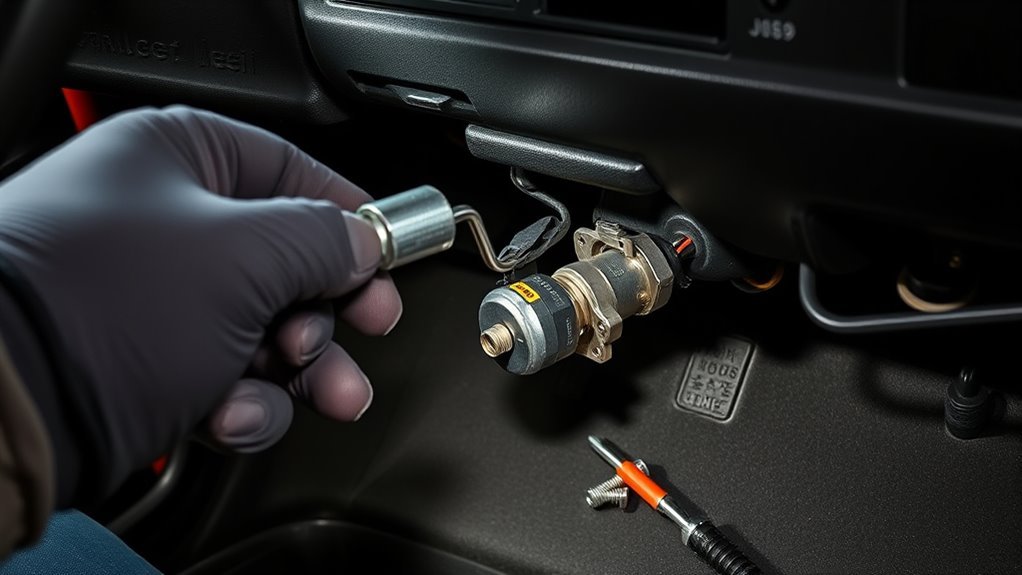
A missing or broken Jeep key does not automatically mean you should force the ignition lock cylinder out. Jeep has used several mechanical and electronic ignition systems, and the correct repair depends on the model year, platform, trim, and key type. Verify the vehicle by VIN before ordering parts or removing steering-column trim.
Quick Answer
Removing a Jeep ignition lock cylinder without a working key is not a universal DIY job. The design changes by model year and ignition type, and modern Sentry Key systems may require programming. Verify the VIN and use a qualified automotive locksmith or Jeep dealer instead of drilling, forcing, or bypassing the ignition.
Key Takeaways
- Confirm the Jeep’s model year, VIN, ignition type, and key system before ordering a cylinder.
- Do not use a screwdriver, chisel, drill, or wiring bypass to defeat the ignition.
- A lost key may require cutting, transponder programming, rekeying, or immobilizer diagnosis rather than cylinder replacement.
- Steering-column work may involve airbag wiring, so the exact factory shutdown procedure must be followed.
- A verified automotive locksmith or authorized Jeep dealer is the safest choice when no working key is available.
At a Glance
| Time Required | About 30 minutes to two hours for diagnosis and replacement, depending on the Jeep and the damage |
| Difficulty | Advanced; professional service is recommended when no working key is available |
| Information Needed | VIN, model year, registration or title, photo ID, ignition type, and all available keys or fobs |
| Cost | Varies by cylinder type, key cutting, programming, parts availability, labor, and whether other steering-column components are damaged |
Warning: Work only on a vehicle you own or are authorized to service. Do not drill the cylinder, force the keyway, connect ignition wiring, or try to defeat the immobilizer. These actions can damage the steering column, cause an electrical short, disable security equipment, or allow unauthorized vehicle operation.
Why a Jeep Ignition Cylinder May Need Service
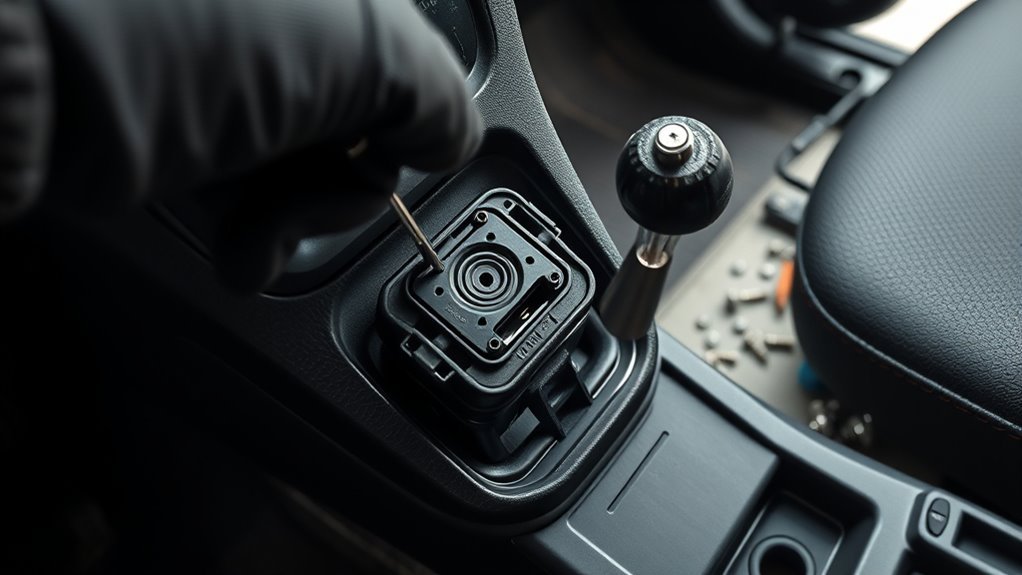
A Jeep ignition lock cylinder may need attention when the key is lost, broken, badly worn, difficult to insert, or hard to turn. Replacement may also be necessary after attempted theft, internal lock damage, or a failed cylinder-retaining mechanism.
However, the cylinder is not always the cause of an ignition problem. Similar symptoms can come from a worn key, a loaded steering lock, a weak key-fob battery, a damaged electrical ignition switch, a failed immobilizer antenna, a wiring fault, or a security-module problem.
Replacing a good cylinder will not correct an electronic no-start condition. Diagnose the symptom before buying parts.
Identify Your Jeep’s Ignition System First
Jeep ignition systems vary widely. Before any repair, record the complete VIN and use the official Mopar vehicle information center to locate the owner’s manual for the exact model and year. Professional repair procedures are available through TechAuthority.
| Ignition Type | What to Know |
|---|---|
| Mechanical key cylinder | The mechanical cylinder, electrical switch, and steering lock may be separate parts. The release procedure is platform-specific. |
| Transponder key or FOBIK | A correctly cut key may still need an electronic credential programmed to the vehicle. |
| Push-button ignition | The problem may involve the fob, receiver, start button, brake or clutch input, steering lock, or another control module rather than a removable key cylinder. |
| 4xe plug-in hybrid | The vehicle also contains a high-voltage system. Ignition or steering-column work must not extend into orange high-voltage cables, connectors, batteries, or service disconnects. |
Note: Even vehicles with similar exterior styling may use different columns, cylinders, keys, modules, and programming procedures. Match parts by VIN rather than appearance alone.
Safe Options When You Do Not Have a Working Key
When the key is missing, broken, or unable to turn the lock, the safest solution is usually one of the following:
- Request lockout assistance. Roadside assistance may help you enter the passenger compartment when the keys are locked inside. Coverage and limits vary, and lockout service normally does not include replacement-key costs.
- Call a qualified automotive locksmith. A legitimate locksmith can verify ownership, inspect the cylinder, extract a broken key, originate a replacement key when supported, rekey a replacement cylinder, and program compatible transponders or fobs.
- Contact an authorized Jeep dealer. A dealer can identify the correct key, cylinder, module, and programming requirements from the VIN. Use the official Mopar dealer locator to find a service department.
- Arrange towing when the vehicle cannot be secured or started. Do not keep forcing a jammed cylinder while stranded. Additional damage can make the repair more expensive.
Be prepared to show photo identification and current proof of ownership. Have the VIN, registration or title, license-plate information, and every remaining key or fob available.
Safety Before Steering-Column Work
Steering-column trim may be close to Supplemental Restraint System wiring and other safety equipment. A generic instruction to disconnect the negative battery terminal is not enough for every Jeep.
- Park on a level surface, select PARK or the appropriate gear, apply the parking brake, and switch the ignition fully off.
- Follow the exact battery-disconnection and waiting procedure in the service information for that VIN.
- Do not probe, test, or apply power to yellow SRS connectors or wiring.
- Do not rotate or disturb steering components in a way that could damage the clock spring.
- Keep the disconnected battery cable isolated so it cannot contact the terminal.
- Do not reconnect the battery while ignition connectors or steering-column modules remain unplugged.
Warning for Jeep 4xe Models: Disconnecting the 12-volt battery does not authorize high-voltage service. Do not touch, unplug, open, drill near, or tamper with orange cables, high-voltage connectors, the traction battery, its case, or its service disconnect. High-voltage work belongs to qualified technicians.
Information and Tools Needed for a Proper Repair
A correct repair starts with vehicle information, not a screwdriver placed in the keyway. Depending on the Jeep, a trained repairer may need:
- The VIN, model year, platform, trim, and ignition-system description
- Factory service information and current technical bulletins
- Proof of ownership and photo identification
- All existing keys and fobs
- Nonmarring trim tools and the specified fastener drivers
- Battery-isolation equipment
- A capable diagnostic scan tool
- Approved key-cutting, rekeying, extraction, and programming equipment
- The correct VIN-matched cylinder, key, switch, housing, or module
- Specified torque tools for reassembly
Exact tool sizes, fastener locations, connector locks, and retention methods should come from the service procedure for the vehicle—not from a generic Jeep article.
How Professional Removal and Replacement Works
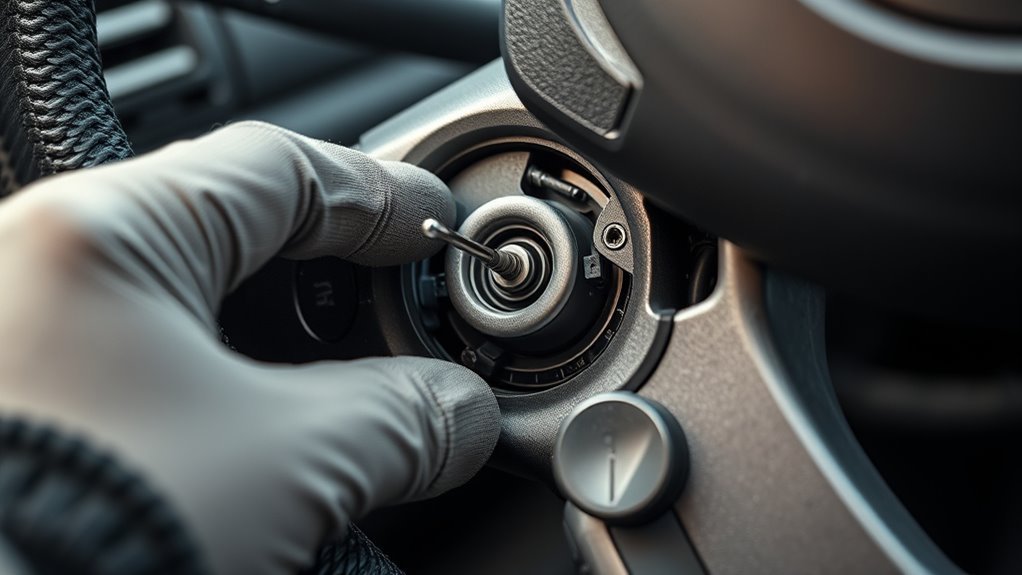
The details vary, but a responsible ignition-cylinder repair generally follows this order:
- Verify the vehicle and ownership. Confirm the VIN, model year, ignition type, and the customer’s authority to repair the vehicle.
- Diagnose the actual fault. Check the key, cylinder, steering lock, electrical switch, fob battery, immobilizer indicators, stored fault codes, and relevant inputs.
- Identify the correct replacement strategy. The repair may involve key extraction, a new key, rekeying, cylinder replacement, switch replacement, wiring repair, or electronic programming.
- Disable affected electrical and restraint systems. Follow the exact service-manual sequence before removing steering-column trim or unplugging components.
- Remove trim and access the ignition assembly. Use the specified fasteners and connector-release methods to avoid broken trim, damaged wiring, or clock-spring movement.
- Remove the failed part using the approved procedure. When no working key exists, a verified locksmith or dealer uses controlled professional methods appropriate to that lock and housing.
- Install and secure the correct component. Confirm that the new cylinder, switch, housing, key cut, and security parts match the vehicle.
- Rekey or program as required. Mechanical locks may need to match the door key. Transponder keys or fobs may need programming to the vehicle electronics.
- Reassemble and test. Check key insertion, rotation, start authorization, steering-lock operation, security indicators, accessories, stored fault codes, and trim fit.
Pro Tip: Bring every existing key or fob to the appointment. Some programming or security-service procedures require all valid credentials to be present, and omitted keys may no longer work afterward.
Why Common “Without-a-Key” Tricks Are Risky
Online guides often recommend forcing or defeating the ignition. These methods are not safe general repair procedures.
| Unsafe Technique | Why It Is a Problem | Safer Alternative |
|---|---|---|
| Turning the keyway with a screwdriver or chisel | Can break the cylinder, housing, steering lock, electrical switch, or immobilizer components | Have a locksmith inspect the keyway and originate or extract the key |
| Drilling the cylinder | May destroy the housing and spread metal debris into nearby electrical parts | Use a verified automotive locksmith or authorized repairer |
| Connecting ignition or starter wires | Risks a short, fire, module damage, theft-system faults, and unauthorized operation | Diagnose the immobilizer and program the correct key or fob |
| Flooding the lock with penetrating oil | Can collect dirt or contaminate lock and electrical components | Use only a lock product approved for the application or have the lock serviced |
A replacement key or professional lock repair is usually less costly than repairing a damaged steering column, ignition housing, immobilizer system, and wiring.
Troubleshooting Before Replacing the Cylinder
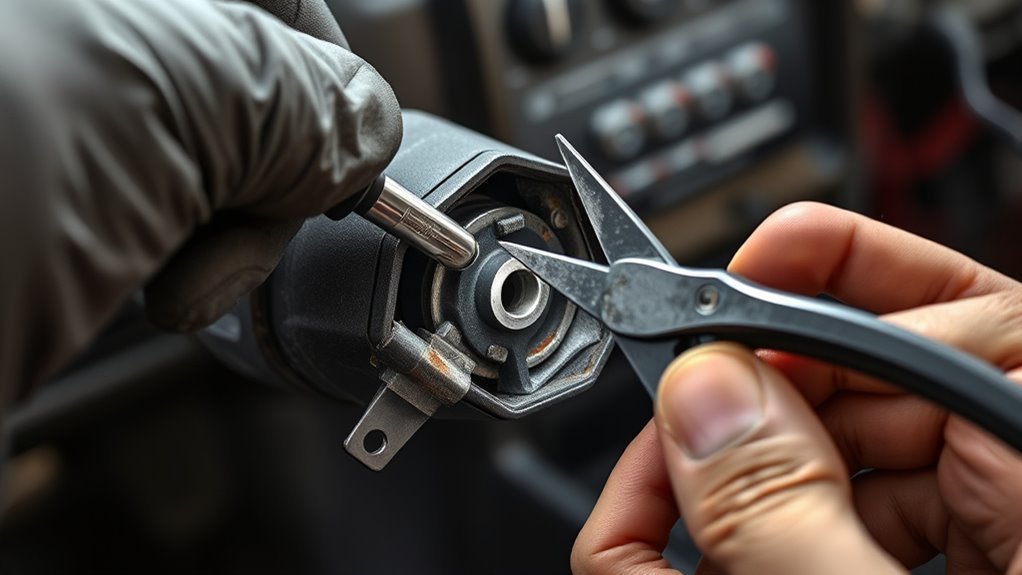
The key will not turn: Do not force it. Confirm the transmission is fully in PARK when applicable, lightly unload pressure from the steering wheel, and try an undamaged spare key. Stop if the key begins to bend or the lock feels rough.
The key will not insert fully: Inspect the key for bending, heavy wear, or debris. Do not push foreign tools into the keyway. A locksmith can inspect and clean the cylinder without damaging its wafers or tumblers.
The key broke in the cylinder: Avoid glue, screws, or improvised hooks. These can push the fragment deeper or damage the keyway. A locksmith has extraction tools designed for this work.
The key turns but the engine will not start: The problem may be the electrical switch, battery, starter circuit, immobilizer, key transponder, or another control input. Watch the security indicator and scan the vehicle before replacing the cylinder.
The security light stays on or flashes: An invalid or unprogrammed key, damaged fob, receiver fault, or vehicle-electronics problem may be preventing start authorization. Applicable Jeep Sentry Key systems allow only programmed credentials to operate the vehicle.
A push-button Jeep does not recognize the fob: Check the fob battery and follow the backup-start directions in the exact owner’s manual. If recognition problems continue with a known-good fob, professional diagnosis is needed.
The steering wheel remains locked: Do not apply heavy force. The steering lock, ignition housing, key, or electronic steering-lock system may be damaged.
Matching and Installing the Replacement Cylinder
A replacement that physically fits may still be wrong for the vehicle. Confirm all of the following before installation:
- VIN and model-year compatibility
- Mechanical key profile and cut
- Cylinder and housing design
- Ignition-switch interface
- Immobilizer antenna or receiver compatibility
- Required keys, transponders, fobs, or security modules
- Rekeying and programming needs
A used cylinder may arrive with the wrong key and unknown wear. It may also create a situation in which the doors and ignition use different keys. A new or professionally rekeyed cylinder is usually the cleaner solution.
After installation, confirm that the key enters and turns smoothly, the engine starts with every authorized key, the security light behaves normally, the steering lock releases and engages correctly, accessories work, and no warning lights or diagnostic codes remain.
Tips for Managing Your Jeep Keys
- Keep at least one spare key or fob in a secure location outside the vehicle.
- Do not attach a very heavy keychain to a mechanical ignition key.
- Replace a worn, bent, or cracked key before it breaks in the cylinder.
- Replace weak fob batteries using the procedure and battery type listed in the owner’s manual.
- Record the VIN and keep ownership documents accessible.
- Use a Bluetooth key finder if keys are often misplaced.
- When buying a used Jeep, confirm that all supplied keys work and ask whether any missing keys have been removed from the vehicle’s authorized-key list.
When Should You Call a Professional?
Call an automotive locksmith or Jeep dealer when:
- No working key is available
- A key is broken inside the cylinder
- The cylinder will not rotate without excessive force
- The steering lock remains engaged
- The vehicle shows a security or immobilizer warning
- A new key or fob needs programming
- The Jeep has push-button ignition
- The steering column shows theft or impact damage
- SRS wiring or modules must be moved
- The vehicle is a 4xe and the work approaches high-voltage components
- The correct replacement part cannot be confirmed by VIN
Professional help often costs less than replacing a damaged ignition housing, column, clock spring, wiring harness, security module, and cylinder after a failed forced-removal attempt.
Frequently Asked Questions
Can you bypass a Jeep ignition button or lock cylinder?
You should not bypass the ignition, connect starter wiring, drill the cylinder, or defeat the immobilizer. These actions can cause electrical damage, fire, security faults, or unauthorized operation. Use the correct programmed key or have a verified locksmith or Jeep dealer diagnose the system.
Can a locksmith make a replacement Jeep key from the VIN?
A qualified automotive locksmith or dealer may be able to originate a key using the VIN and authorized key-code resources, depending on the model, year, records, and local requirements. Expect to provide photo identification and current proof of ownership. Electronic keys and fobs may also require programming.
Does a new ignition cylinder need programming?
The mechanical cylinder itself may not contain the vehicle’s electronic credential, but the key, fob, transponder, receiver, or related security module may require matching or programming. Requirements vary by Jeep platform and model year.
Can you install a used Jeep ignition cylinder?
A used cylinder may fit, but it can have hidden wear, an incompatible key cut, or the wrong interface. It may need professional rekeying, and related electronic components may not transfer or program correctly. Verify every part by VIN before installation.
Will disconnecting the battery erase the programmed keys?
A routine 12-volt battery disconnection does not normally erase authorized keys, but it may reset clocks, windows, learned settings, or diagnostic information. Follow the owner’s manual and service procedure for the exact Jeep before disconnecting or reconnecting the battery.
Conclusion
A Jeep ignition lock cylinder should not be forced out simply because the key is missing. First identify the model, year, VIN, and ignition system, then determine whether the fault is mechanical or electronic. A verified automotive locksmith or authorized Jeep dealer can replace or rekey the cylinder, create the correct key, complete any required programming, and protect the steering column and anti-theft system from further damage.
Sources
- Mopar Vehicle Information — VIN- and model-specific owner resources and manuals
- 2023 Jeep Wrangler Owner’s Manual — Sentry Key operation, programmed-key requirements, replacement fobs, and lockout service
- TechAuthority — official Stellantis service manuals and technical information
- NHTSA Vehicle Theft Prevention — immobilizers, ignition-bypass prevention, and vehicle-security guidance
- NHTSA Air Bags — airbag-system safety information
- 2023 Jeep Grand Cherokee 4xe Hybrid Supplement — high-voltage service restrictions and safety warnings






Leave a Reply