
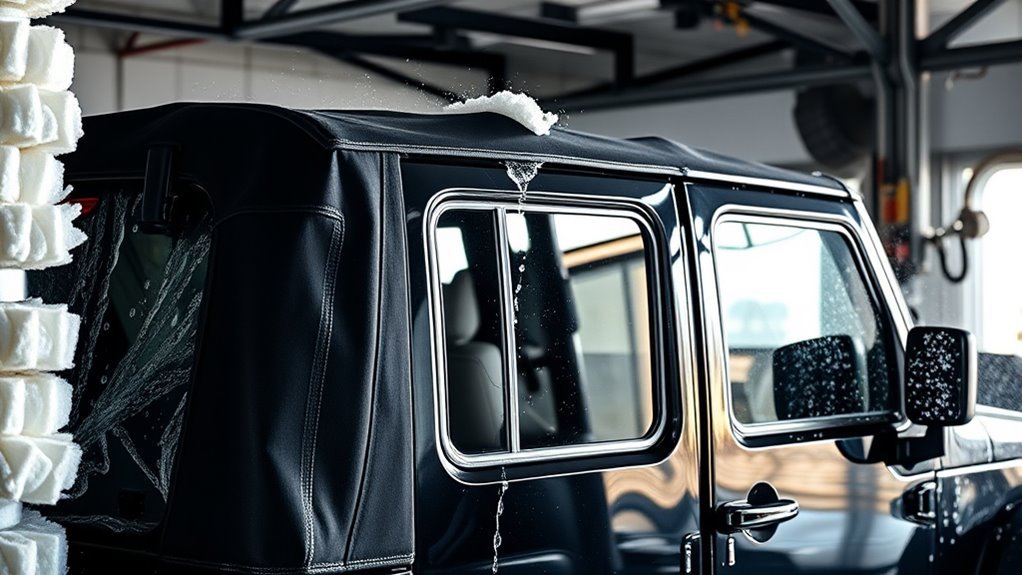
A soft-top Jeep should not be treated like a hard-roof vehicle at a car wash. The safest method is a controlled hand wash. Jeep’s current Wrangler owner guidance says not to run a factory fabric top through an automatic car wash, while some aftermarket-top manufacturers permit touchless washes. Check the instructions for your exact top before choosing a wash.
Quick Answer
Hand washing is the safest choice. Jeep’s Wrangler manual says not to run a factory fabric top through an automatic car wash because window scratches and wax buildup may result. Some aftermarket tops permit touchless washes, but only when their manufacturer expressly allows it. Avoid brushes, pressure washers, and direct high-pressure spray at seals.
Key Takeaways
- Hand washing with lukewarm water, mild soap, and a soft-bristle brush gives you the best control.
- Do not take a factory Jeep fabric top through an automatic car wash unless the manual for your exact model says otherwise.
- Never use a brush tunnel on a soft top or its pliable plastic windows.
- Use a touchless wash only when the top manufacturer specifically permits it.
- Do not aim a pressure washer or concentrated spray at seams, zippers, windows, or weather-strip seals.
- Let the top dry completely before lowering, folding, or storing it.
At a Glance
| Time Required | About 30–45 minutes, plus drying time |
| Difficulty | Easy |
| Tools Needed | Garden hose, two buckets, soft-bristle brush, microfiber cloths, mild soap or a cleaner approved for the top |
| Cost | Low; limited to cleaning products and reusable washing supplies |
Short Answer: Can a Soft-Top Jeep Go Through a Car Wash?
Whether your Jeep can enter a car wash depends on the type of wash and the instructions for the exact top. For a factory Wrangler fabric top, the safest and manufacturer-supported answer is no automatic car wash. The 2025 Jeep Wrangler Owner’s Manual tells owners not to run a fabric top through an automatic car wash.
An aftermarket top may have different instructions. For example, Bestop permits touchless washing for its soft tops, although it still recommends hand washing for the longest service life. Do not assume that guidance for one top applies to every factory or aftermarket top.
Warning: Do not use a brush tunnel or pressure washer on a Jeep soft top. Brushes can scratch the plastic windows and abrade the fabric, while concentrated water can enter around seams and weather-strip seals.
“Do not run a fabric top through an automatic car wash.” — Jeep Wrangler Owner’s Manual
Factory vs. Aftermarket Soft Tops: Which Instructions Control?
The instructions for your exact top take priority over general car-wash advice. Start by identifying whether the top is the original Jeep equipment or an aftermarket replacement.
- Factory Jeep fabric top: Follow the owner’s manual for the Jeep’s exact model year. Current Wrangler guidance says to wash the top by hand rather than use an automatic car wash.
- Bestop soft top: Bestop says a manual or touchless wash may be used, but brush washes should be avoided. Its separate care guidance also recommends avoiding pressure washers.
- Another aftermarket brand: Read the care section in that manufacturer’s installation guide or warranty information.
- Unknown top: Treat it conservatively and hand-wash it until you can identify the brand and material.
Note: Verify the model year and top type rather than relying only on the Jeep’s appearance. A used Wrangler may have an aftermarket replacement top that follows different care instructions from the original equipment.
Why Manufacturers Warn Against Automatic Car Washes
Automatic washes are designed mainly for rigid painted panels and glass. A Jeep soft top includes flexible fabric, seams, retainers, zippers, weather seals, and often pliable plastic windows. Those parts need gentler treatment.
Jeep identifies window scratching and wax buildup as automatic-wash risks. Its care instructions call for mild soap, lukewarm water, a soft-bristle brush on the fabric, thorough rinsing, and complete drying before the top is lowered. Jeep also warns that water pressure aimed at weather-strip seals can allow water into the cabin.
Aftermarket instructions may differ. Bestop’s current care guidance permits touchless washes for Bestop products but advises against automatic washes that use brushes.
Brush Tunnel Washes: Damage to Soft-Top Fabric and Windows
A brush-based tunnel is the highest-risk common wash option for a soft-top Jeep. Rotating brushes and hanging cloth strips can drag grit across the top, rub against stitched edges, and scratch pliable plastic windows. Repeated contact may also wear protective finishes and place unnecessary stress on loose seams or retainers.
Plastic windows are especially easy to mark. Jeep and Bestop both advise against wiping them while dry because dust and grit can scratch the surface. A large rotating wash brush creates the same basic problem on a much larger scale.
Skip any wash that uses:
- Rotating roof brushes
- Hanging cloth strips
- Manual scrub brushes shared between vehicles
- Automatic wax or polishing applications over the fabric and plastic windows
- Equipment that catches loose straps, flaps, or damaged edges
Touchless Car Washes for Soft-Top Jeeps: Pros and Cons
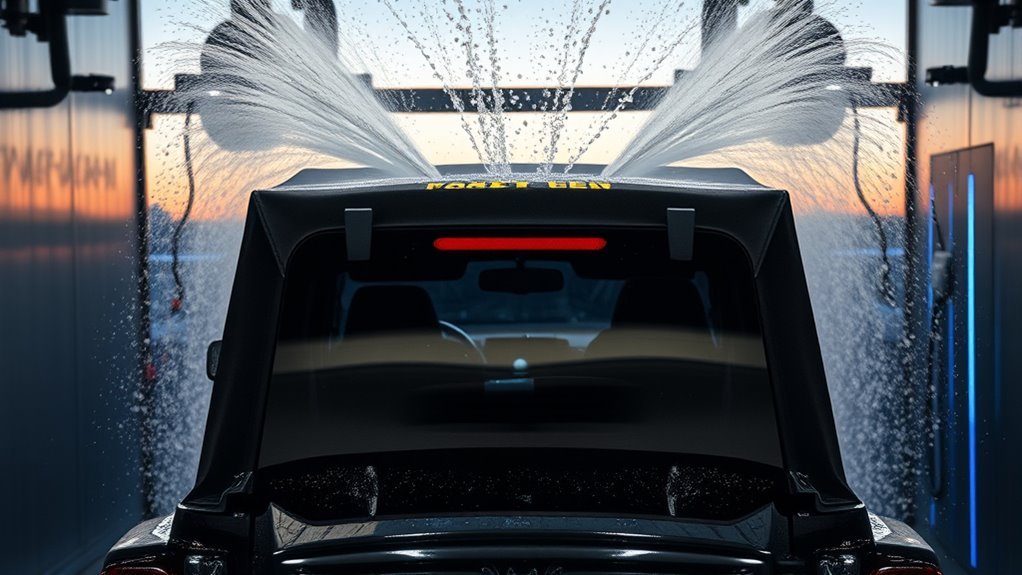
A touchless wash removes the brush-abrasion risk, but it still uses pressurized water and strong cleaning products. That makes it less aggressive than a brush tunnel, not automatically safe for every soft top.
| Wash Method | General Guidance | Main Concern |
|---|---|---|
| Hand wash | Preferred for factory and aftermarket tops | Incorrect cleaner or rubbing grit into windows |
| Brush tunnel | Avoid | Abrasion, scratches, snagging, and wax buildup |
| Touchless automatic wash | Use only if the top manufacturer permits it | Pressurized spray at seals and unknown chemicals |
| Self-service pressure wand | Do not spray the top at high pressure | A concentrated jet can enter seams and seals |
If your aftermarket manufacturer permits touchless washing, make sure the top is fully raised, latched, and secured. Inspect the fabric, windows, seams, and interior immediately afterward. Do not use a touchless wash to test a top that already has loose seams, brittle seals, damaged windows, or an existing leak.
How High Water Pressure and Jets Cause Leaks
A soft top is designed to shed ordinary rain, but a concentrated wash jet can direct water at seams and seals from an angle and force that normal weather may not reproduce. The risk is highest around door surrounds, windshield-header seals, window retainers, zipper areas, corners, and damaged stitching.
High-Pressure Jet Impact
High-pressure nozzles focus water on a small area. When the stream is held close to the top, it can press flexible material inward and drive water toward pinholes, worn stitching, loose retainers, or damaged edges.
Use a normal garden hose and a broad, gentle flow. Do not hold a pressure-washer nozzle against the fabric or use a self-service spray wand to blast mud from the top.
Seal Integrity Compromise
Water can enter when a weather strip is dirty, folded, displaced, brittle, or no longer compressed evenly. Pressure directed at that seal makes an existing fit problem easier to notice, but it does not necessarily mean the fabric itself has failed.
Before washing, remove debris from seal contact points and confirm that the top is seated correctly. After washing, look for dampness around the windshield header, door openings, zipper ends, and rear corners.
Window Channel Forcing
Soft-top side and rear windows may use zippers, retainers, channels, or a combination of attachment methods. A concentrated stream aimed into those junctions can send water behind the window rather than over its outer surface.
Rinse downward from the roof toward the body. Do not aim upward under window edges or directly into channels, zipper seams, and corners.
Chemicals to Avoid on Soft Tops
Use a cleaner approved for the top’s material. A product intended for painted metal, glass, tires, or a different type of fabric may damage the soft top or its windows.
| Avoid | Why | Use Instead |
|---|---|---|
| Bleach, solvents, degreasers, and harsh household cleaners | May discolor or damage the top and plastic windows | Mild soap or a dedicated soft-top cleaner |
| Glass cleaner containing alcohol or other strong solvents | May haze or damage pliable plastic windows | Clean water and a plastic-window-safe cleaner |
| Wax, polish, or abrasive compounds on the top | Can leave buildup or alter the material’s appearance | A protectant approved for the exact vinyl or twill material |
| Stiff brushes or scouring pads | Can abrade the fabric and scratch windows | A soft-bristle brush for fabric and damp microfiber for windows |
Test an unfamiliar cleaner on a hidden part of the fabric and follow its dilution, rinsing, drying, and curing directions. Keep fabric cleaners and protectants off plastic windows unless the product label specifically says they are safe for that surface.
Pre-Wash Checklist: What to Secure, Inspect, or Remove
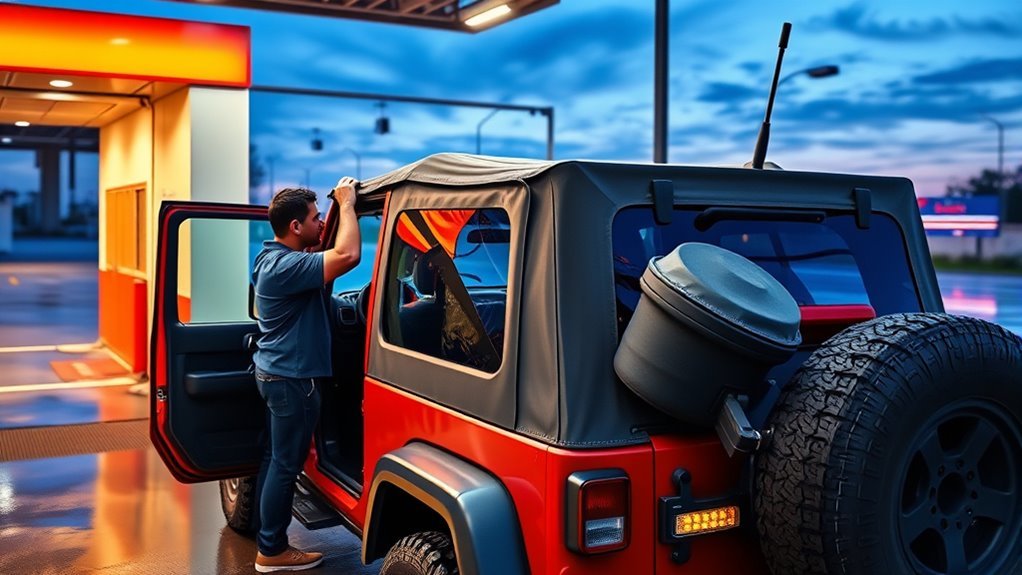
Inspect the top before adding water. Washing can reveal an existing fit or seal problem, and damaged areas should be repaired before they are exposed to concentrated spray.
- Raise the top fully and latch it to the windshield header.
- Install and secure all side and rear windows correctly.
- Close zippers, retainers, snaps, flaps, and straps.
- Look for tears, pinholes, loose stitching, separated seams, and damaged window edges.
- Check that weather strips are clean, seated, and free of folded sections.
- Remove sand, dry mud, and loose grit with a gentle water rinse before touching the fabric.
- Move electronics, documents, and other water-sensitive items away from areas where an existing leak might drip.
- Confirm that the chosen cleaner matches the top material and plastic windows.
Do not apply a protectant immediately before washing. Protectants normally belong on a clean, completely dry surface and may need time to cure before they are exposed to water.
Safe Wash Options: Hand Wash, Low-Pressure Rinse, and Approved Touchless Washes
Hand washing is the best all-purpose option because you control the cleaner, contact pressure, water direction, and drying process. A low-pressure hose can also remove loose dust or trail dirt between full washes. Use an automatic touchless wash only when the manufacturer of the installed top specifically permits it.
How to Hand-Wash a Jeep Soft Top
- Park in the shade. Allow hot fabric and windows to cool before washing.
- Rinse loose grit away. Use a garden hose with a broad, low-pressure stream. Work from the roof downward.
- Prepare the cleaner. Mix mild soap or a dedicated soft-top cleaner according to its directions.
- Wash the fabric. Use a soft-bristle brush with light, even strokes. Do not use the brush on plastic windows.
- Clean the windows separately. Wet a clean microfiber or soft cotton cloth, then wipe gently across the window. Never rub a dusty window while it is dry.
- Rinse thoroughly. Remove all soap and cleaner residue with clean water.
- Dry the windows. Blot gently with a clean, damp microfiber cloth rather than scrubbing.
- Let the top air-dry. Keep the top fully raised until the fabric, seams, and windows are completely dry.
- Apply protectant only if appropriate. Use a material-specific product and follow its drying and curing instructions.
Pro Tip: Use separate cloths for the body, fabric top, and plastic windows. A cloth that picked up grit from wheels or painted panels can permanently mark a soft window.
When a Touchless Wash May Be Acceptable
A touchless wash may be considered when all of the following are true:
- The top manufacturer expressly allows touchless washing.
- The fabric, seams, windows, and seals are in good condition.
- The top is fully raised, latched, and secured.
- The wash does not include brushes, cloth strips, or a manual pre-scrub.
- You are prepared to inspect the top and interior immediately afterward.
If any condition is uncertain, hand-wash the Jeep instead.
Aftercare: Drying, Seal Checks, and Protectants
Leave the top raised until it is completely dry. Lowering or folding damp material can trap water, transfer dirt to the plastic windows, and encourage stains or mildew.
- Blot plastic windows and seams with a clean microfiber cloth.
- Let the fabric air-dry in the shade with the top fully installed.
- Check the seats, carpets, cargo area, door openings, and windshield header for moisture.
- Inspect seals for dirt, folds, cracks, or sections that have moved out of position.
- Clean and lubricate zippers or retainers only with a product approved by the top manufacturer.
- Apply a vinyl- or twill-specific protectant only after the top is clean and completely dry.
- Allow the protectant to cure for the time stated on its label before exposing it to water.
Bestop provides different products for vinyl fabric, twill fabric, plastic windows, and zippers. Its soft-top care instructions emphasize using each product only on the surface for which it was designed.
What to Do If the Top Leaks After Washing
A small drip does not always mean the fabric has failed. Water may enter because the top or window is not seated correctly, a weather strip contains debris, a retainer has pulled loose, or concentrated spray was directed into a seal.
- Dry the interior promptly. Remove wet mats and towels so trapped moisture does not cause odor or mildew.
- Locate the entry point. Check the area above the first wet spot rather than assuming the water entered directly beside it.
- Inspect the fit. Look at the windshield header, door surrounds, window channels, zipper ends, rear corners, and tailgate bar.
- Clean and reseat components. Remove dirt and reinstall any loose retainer, window edge, or weather strip according to the manual.
- Test gently. Use a low-flow garden hose on one small section at a time while another person watches inside.
- Repair visible damage. Follow the top manufacturer’s approved repair method or have a dealer or convertible-top specialist inspect it.
Do not apply household caulk, general-purpose adhesive, or an unapproved waterproof coating. Those products may stain the top, interfere with future repairs, or damage the material.
Owner Experiences and a Quick Rule-of-Thumb Decision Guide
Owner reports about automatic car washes vary because the vehicles, top brands, top ages, wash equipment, and seal conditions differ. An uneventful trip through one wash does not prove that another wash or another soft top will be safe.
Real-World Owner Experiences
Anecdotal reports generally fall into four patterns:
- A permitted touchless wash causes no obvious problem on a well-fitted aftermarket top.
- A brush wash leaves fine scratches or haze on plastic windows.
- Concentrated spray exposes an existing gap around a seal, retainer, or zipper.
- A controlled hand wash reveals a loose seam or damaged window before it becomes worse.
These outcomes are useful reminders, not substitutes for the instructions supplied with the top.
Risks Versus Convenience
Automatic washing is faster, but hand washing gives you control over every factor that matters: cleaner strength, brush softness, water direction, pressure, and drying. Repairing a scratched plastic window or finding the source of an interior leak can take much longer than a careful hand wash.
If convenience is essential and the aftermarket manufacturer permits touchless washing, use it selectively and inspect the top afterward. Do not continue using the wash if you notice new dampness, haze, loose stitching, discoloration, or a change in fit.
Quick Decision Checklist
- Factory Jeep fabric top? Follow the owner’s manual and hand-wash it.
- Aftermarket top with written touchless approval? A touchless wash may be used, but hand washing remains the lower-risk option.
- Brushes or cloth strips? Do not enter.
- Self-service pressure wand? Use it only on suitable hard surfaces and keep concentrated spray away from the soft top, windows, and seals.
- Top is old, damaged, leaking, or unidentified? Hand-wash with low pressure and inspect it before further use.
- Plastic windows are dusty? Wet them before wiping and use a separate soft cloth.
Frequently Asked Questions
How should you wash a Jeep with a soft top?
Rinse loose grit away with a low-pressure garden hose, wash the fabric with lukewarm water, mild soap, and a soft-bristle brush, and clean plastic windows separately with a damp microfiber cloth. Rinse thoroughly and leave the top raised until it is completely dry.
Can you go through a car wash with a soft-top Jeep?
Do not take a factory Jeep fabric top through an automatic car wash when the owner’s manual prohibits it. Some aftermarket-top manufacturers permit touchless washes. Check the written instructions for your exact top and avoid every wash that uses brushes or cloth strips.
Is a touchless car wash safe for a Jeep soft top?
It is acceptable only when the top manufacturer specifically permits touchless washing. Touchless equipment removes the brush-abrasion risk but still uses pressurized spray and cleaning chemicals. Hand washing remains the safest general choice.
Can you use a pressure washer on a Jeep soft top?
A pressure washer is not recommended. A concentrated jet can drive water toward weather seals, seams, zippers, and window channels. Use a garden hose with a broad, low-pressure flow instead.
What is the best cleaner for a soft-top roof?
Use mild soap or a dedicated cleaner approved for the top’s exact material. Vinyl and premium twill may require different protectants. Use a separate plastic-window-safe cleaner on pliable windows, and avoid bleach, solvents, abrasives, waxes, and household glass cleaner.
What should you do if the soft top leaks after washing?
Dry the interior, inspect the windshield header, door seals, window retainers, zipper ends, and rear corners, and reseat any loose component according to the manual. Test one area at a time with a low-flow hose. Have damaged fabric or seals repaired with a manufacturer-approved method.
Sources
- 2025 Jeep Wrangler Owner’s Manual — factory fabric-top washing, drying, seal, and plastic-window precautions
- Bestop Frequently Asked Questions — manufacturer guidance for Bestop car-wash use and material care
- Bestop Soft Top Comparison and Care Guide — hand-washing, touchless-wash, pressure-washer, and protectant guidance
- Bestop Soft-Top Window Cleaning Guide — cleaning and protecting pliable vinyl windows
Conclusion
Hand washing is the safest way to clean a soft-top Jeep. Avoid brush tunnels and concentrated pressure, use mild products suited to the fabric and plastic windows, rinse thoroughly, and let the top dry completely before lowering it. A touchless wash is an option only when the manufacturer of the installed top specifically permits it. When the top brand or instructions are unknown, choose the gentler hand-wash method.


Leave a Reply