
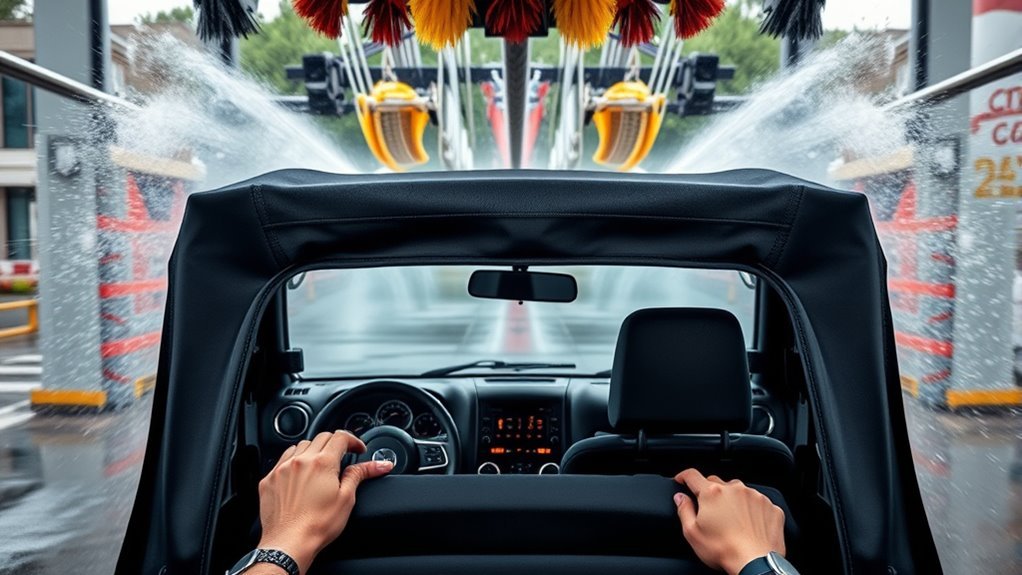
A soft-top Jeep needs a gentler wash than a hardtop. The safest default is a careful hand wash with mild soap, low-pressure water, a soft-bristle brush on the top material, and a damp microfiber cloth on the clear plastic windows. Some aftermarket-top makers permit touchless washes, but Jeep factory guidance may rule out automatic washes entirely, so check the instructions for your exact model year and top before choosing a wash.
Quick Answer
Hand washing is the safest choice for a soft-top Jeep. Jeep’s factory guidance for fabric-top Wranglers warns against automatic car washes, while some aftermarket manufacturers allow touchless washes. Never use a brush wash, and avoid directing high-pressure water at seams, zippers, plastic windows, or weather-strip seals.
Key Takeaways
- Use the owner’s manual for your exact Jeep and top as the final authority.
- For a factory fabric top, the safest answer is to skip automatic washes and wash by hand.
- An aftermarket manufacturer may allow a touchless wash, but brush or cloth-strip systems remain a poor choice.
- Clean clear plastic windows separately with water, mild soap, and a damp microfiber cloth; never wipe them dry.
- Let the top dry completely before folding or lowering it, and address damaged seams or seals before washing.
At a Glance
| Time Required | About 30–60 minutes of active washing, plus complete air-drying time |
| Difficulty | Easy |
| Tools Needed | Garden hose, two buckets, soft-bristle brush, microfiber towels, soft sponge, top-safe cleaner |
| Cost | Low; it varies with the cleaner and protectant you already own |
Can a Soft-Top Jeep Go Through a Car Wash? Manual-Based Verdict
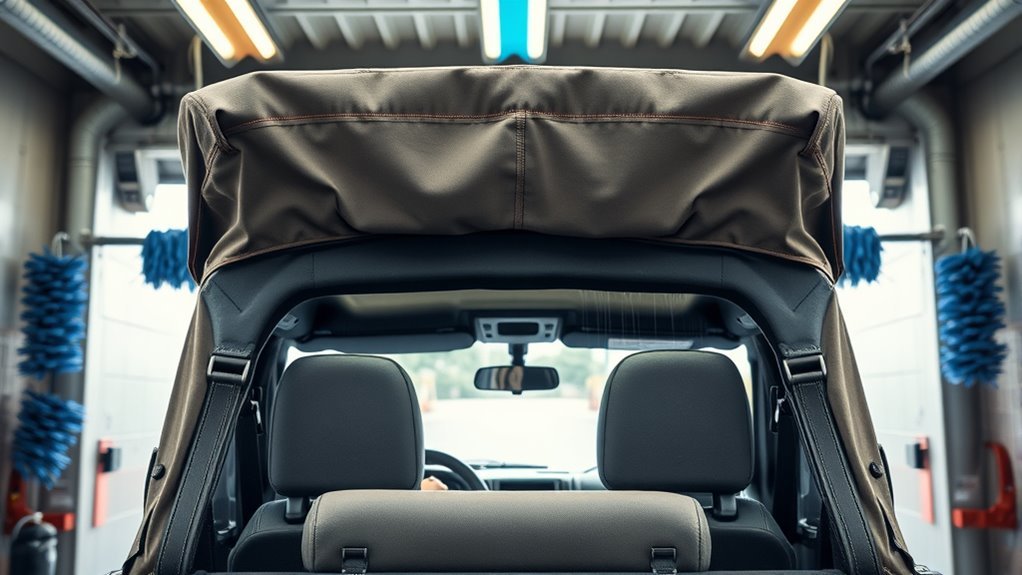
The answer depends on who made the top. The 2023 Jeep Wrangler Owner’s Manual tells owners not to run a factory fabric top through an automatic car wash because the windows may scratch and wax may build up. It also recommends mild soap, lukewarm water, a soft-bristle brush, thorough rinsing, and complete drying before lowering the top.
Aftermarket instructions can differ. Bestop’s current care guidance recommends manual or touchless washing for its tops and warns against automatic washes with brushes. That does not override Jeep’s instructions for a factory top. When the vehicle manual and an aftermarket-top manual differ, follow the instructions for the top actually installed and choose the more cautious method if anything is unclear.
- Factory removable fabric top: Default to hand washing unless the exact owner’s manual says otherwise.
- Aftermarket soft top: Follow the top manufacturer’s care guide and warranty terms.
- Sky One-Touch or another power-sliding top: Do not assume ordinary soft-top instructions apply; use the power-top section of the correct manual.
- Unknown top: Identify the brand and material before applying cleaner, protectant, wax, or high-pressure water.
Warning: A “touchless” label does not automatically make a wash safe for every Jeep soft top. Touchless bays can still use concentrated detergents and forceful jets. If your factory manual prohibits automatic washing, use a hand wash instead.
For a factory fabric-top Wrangler, the manufacturer’s conservative answer is simple: skip the automatic wash and clean the top by hand.
Which Car-Wash Types Are Safest for Soft Tops?
Hand washing is the lowest-risk choice because you control the cleaner, water pressure, brush softness, and contact with the plastic windows. It also lets you support the fabric from below when working on a stubborn spot.
A touchless automatic wash is conditional, not universally safe. It may be acceptable for some aftermarket tops when the manufacturer specifically permits it. It is not the right choice when the Jeep owner’s manual says to avoid automatic washes, the top leaks, or the wash uses aggressive chemicals or closely aimed jets.
A self-serve bay gives you control, but the wand can be too powerful. Use the bay for the painted body and wheels, then clean the top separately by hand. If water must contact the top, select the gentlest setting, keep the nozzle well back, use a broad spray, and never trace seams, zippers, window edges, or weather strips with the jet.
Brush, roller, and cloth-strip tunnel washes are the highest-risk option. Their moving equipment can rub dirt against the top, mark clear plastic windows, pull at loose edges, and leave wax or detergent residue. Skip them even when the fabric looks new.
How Brushes, Water Pressure, and Dryers Can Damage Fabric Tops and Plastic Windows
Clear soft-top windows are much easier to scratch than automotive glass. A dry cloth, dirty brush, or contaminated wash strip can drag grit across the surface and leave haze or fine scratches. Jeep and Bestop both direct owners to use wet, soft materials on these windows and to keep brushes away from them.
High-pressure water creates a different problem. Jeep warns that water aimed at weather-strip seals can enter the cabin. Pressure can also drive cleaner and grit into seams or around window edges. Use flowing water rather than a concentrated jet on the top.
Manufacturer manuals do not usually give a precise damage threshold for high-velocity dryers. Still, a powerful blower can make a loose or poorly tensioned top flap. If a dryer visibly lifts the fabric, moves a window edge, or pulls at a seal, stop using that wash and inspect the attachments before driving.
- Never allow a brush, pad, or wash strip to contact clear plastic windows.
- Do not aim a pressure-washer nozzle at seams, zippers, retainers, or weather strips.
- Do not use automatic wax or polish on the fabric or clear windows.
- Inspect the top after any touchless or self-serve wash for fresh leaks, loose edges, residue, or window marks.
When to Skip the Car Wash: Age, Fit, Seams, and Window Warning Signs
Skip every automated option when the top shows damage or does not fit tightly. Water pressure and moving wash equipment can turn a small defect into a larger leak or tear.
- Frayed stitching, split seams, loose binding, punctures, or thin fabric
- Gaps at the windshield header, doors, tailgate, or side-window edges
- Zippers or plastic retainers that do not close or seat fully
- Cloudy, deeply scratched, brittle, cracked, or delaminating windows
- A top that sags, flaps, or has uneven tension
- Recent repairs, adhesive patches, or seal work that has not fully cured
- Any known leak during ordinary rain or a gentle hose test
Repair or re-seat the top first. A hand wash cannot fix a worn seal, misaligned panel, separated seam, or damaged window, but it can help you avoid making the problem worse.
Prep Checklist Before Washing a Soft-Top Jeep
Take five minutes to inspect and secure the top before water touches the vehicle:
- Confirm the top is fully raised, latched, and seated in every channel.
- Close the doors, tailgate, windows, zippers, hook-and-loop flaps, and retainers.
- Remove roof accessories or loose exterior items that the top is not designed to carry.
- Brush or rinse away loose sand, mud, leaves, and salt before wiping any surface.
- Check clear windows for grit, cracks, and stiff areas.
- Inspect weather strips for dirt, folds, gaps, or displacement.
- Test an unfamiliar cleaner on a hidden area and confirm that it matches the top material.
- Keep separate towels and tools for paint, top fabric, and clear plastic windows.
Note: Use the Mopar owner-manual portal to locate the instructions for your model year and equipment. An aftermarket-top label or purchase record can help identify a replacement top.
Home Washing: Foam Cannons, Cleaners, and Step-by-Step Method
A foam cannon is optional, not required. The official Jeep method is simpler: mild soap or an approved convertible-top cleaner, lukewarm water, and a soft-bristle brush on the fabric. If you use a foam cannon or hose-end foamer, use it only to lay down approved cleaner. Do not treat it as permission to pressure-wash the top, and do not blast the seams or windows.
- Park in shade and let the top cool. Remove jewelry or tools that could scrape the windows.
- Rinse loose dirt with low-pressure water. Let water flow from the roof downward instead of driving it into seals.
- Mix a material-safe cleaner. Follow the Jeep, top-maker, or product-label dilution instructions. Avoid bleach, solvents, degreasers, abrasive cleaners, and household glass cleaner.
- Clean the top material. Work in small sections with a soft-bristle brush and gentle, even strokes. Support the fabric from underneath when extra cleaning is needed.
- Clean clear windows separately. Use a water-soaked microfiber cloth or soft sponge and mild soap or a vinyl-window cleaner. Do not use the top brush on the windows.
- Rinse thoroughly. Remove every trace of cleaner, especially around seams, retainers, and window edges.
- Dry gently. Blot the clear windows with a clean damp microfiber cloth and let the top air-dry fully. Do not fold, roll, or lower a wet top.
- Inspect and protect. Check for leaks or loosened parts. Apply a material-compatible protectant only after the top is clean and completely dry.
Pro Tip: Use three clearly separated cleaning kits: one for painted body panels, one for the top fabric or vinyl, and one for clear plastic windows. This prevents grit, wax, and strong chemicals from moving between surfaces.
How to Clean Clear Plastic Soft-Top Windows Without Clouding Them
Clear soft-top windows need their own cleaning method. The Jeep manual says not to remove dust with a dry cloth. Wet the surface first, use clean water with a microfiber or soft cotton cloth, and wipe across the window rather than scrubbing in circles. Bestop likewise says never to wipe its vinyl windows dry and never to use a brush on them.
- Use cool or lukewarm water, never hot water.
- Use mild soap or a cleaner specifically approved for clear vinyl or soft-glass windows.
- Avoid ammonia, alcohol, solvents, abrasive polish, paper towels, household glass cleaner, and rough sponges.
- Rinse away all soap before gently blotting or wiping with a clean, damp microfiber cloth.
- Never use an ice scraper or de-icing chemical on a plastic window.
- Do not roll, fold, or flex a cold, stiff window.
If the window is already hazy or lightly scratched, use only a polish or cleaner approved by the top or window manufacturer. Deep cracks, yellowing, delamination, or poor visibility usually call for replacement rather than aggressive polishing.
What to Do If the Soft Top Leaks After Washing
A small drip does not always mean the fabric has failed. Water can enter when a jet is aimed directly at a weather strip, when a panel or zipper is not fully seated, or when a wet top is opened before it drains. Use this troubleshooting order:
- Dry the interior and the top completely so you can trace fresh water.
- Re-seat the windshield header, door surrounds, side windows, rear window, tailgate bar, and retainers.
- Clean dirt from seals and channels with mild soap and water; do not stretch or pry them.
- Run a gentle hose over one small area at a time while another person watches inside.
- Mark the entry point with removable painter’s tape on the body or glass, not on the plastic window.
- Have a torn seam, split seal, cracked window, bent frame, or repeated leak inspected by a Jeep dealer or the top manufacturer.
Avoid coating every seam with a random sealant before finding the source. The wrong product can stain the material, interfere with future repairs, or be incompatible with the top’s fabric, vinyl, or adhesive.
Winter and Salt-Season Care for Soft-Top Jeeps After Washing
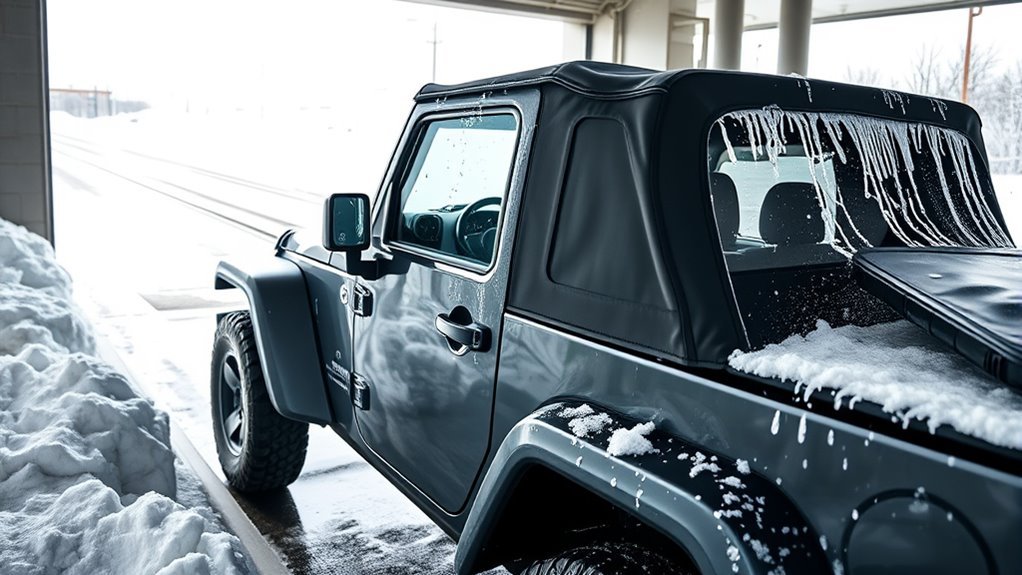
Road salt and gritty winter debris should not sit on the top, window retainers, body, or undercarriage. Rinse visible buildup with gentle water, then let the top dry completely. Jeep’s maintenance guidance calls for regular cleaning of soft-top window retainers because sand, dirt, dust, and salt can affect their operation; it also recommends hosing the undercarriage at least monthly when driving on salted or dusty roads.
- Do not force a frozen zipper, retainer, or window edge.
- Do not use a scraper or de-icing chemical on clear plastic windows; use warm water only when quick cleaning is necessary.
- For factory fabric tops covered by the Jeep guidance, do not lower the top or roll the rear or side curtains at 41°F (5°C) or below.
- Dry seams, zippers, and retainers before overnight freezing temperatures.
- Use cabin heat and ventilation gradually; do not direct extreme heat at plastic windows.
- Keep the top raised and properly seated until it is fully dry.
Salt-season cleaning frequency should match actual exposure. A heavily salted Jeep may need a rinse sooner than a vehicle driven on dry roads, but “after every trip” is not a universal manufacturer rule.
Maintenance Tips to Prevent Buildup and Extend Your Soft Top’s Life
Use condition-based care instead of a rigid one-size-fits-all schedule. Clean the top when dirt, pollen, bird droppings, tree sap, mud, or salt is present, and follow the installed top manufacturer’s interval for protectant and zipper lubricant.
- Match products to the material. Fabric or twill, coated vinyl, and clear vinyl windows may require different cleaners and protectants.
- Use protectant only on approved surfaces. 303 Fabric Guard, including the marine-labeled version, is marketed for fabric convertible tops to restore water and stain repellency. Use it only when the top maker and label approve it, and keep it off clear windows and any surface not listed on the label.
- Do not substitute body wax. Automatic wash wax and paint polish can leave residue on fabric and clear windows.
- Keep zippers and retainers clean. Remove grit first, then use a lubricant designed for soft-top zippers or retainers.
- Never store the top wet. Let it dry fully before folding, lowering, or covering it.
- Reduce long-term sun exposure. Park in shade or use suitable storage when practical, while avoiding a cover that traps moisture against a wet top.
- Repair early. Address loose stitching, worn seals, small tears, and window damage before they spread.
Bestop’s care guidance also recommends mild soap, a soft brush, thorough rinsing, complete air-drying, and a protectant made for the specific top material. Follow the product label rather than applying a universal monthly schedule.
Frequently Asked Questions
How do you wash a Jeep with a soft top?
Rinse loose dirt with low-pressure water, apply mild soap or an approved soft-top cleaner, gently brush the top material with a soft-bristle brush, and rinse completely. Clean clear plastic windows separately with a damp microfiber cloth or soft sponge. Let the top dry fully before folding or lowering it.
Can you use a drive-through car wash with a soft top?
Not as a universal rule. Jeep’s factory fabric-top guidance says to avoid automatic car washes. Some aftermarket-top manufacturers allow touchless washes, but brush and cloth-strip washes should be avoided. Follow the manual for the exact vehicle and installed top.
Can a soft-top car go through a car wash?
It depends on the vehicle and top manufacturer. Hand washing is the safest general method. Use a touchless automatic wash only when the manufacturer permits it, and never assume guidance for one convertible or Jeep top applies to another.
Is a touchless car wash safe for a soft-top Jeep?
It can be acceptable for certain aftermarket tops, including products whose maker specifically allows touchless washing. It is not automatically safe for a factory top whose owner’s manual prohibits automatic washes. Strong detergents and closely aimed jets can still cause leaks or residue.
Can you pressure-wash a Jeep soft top?
Avoid pressure-washing the top. Concentrated water can force past weather strips and into the cabin. Use a garden hose or another low-pressure rinse, and keep the stream away from seams, zippers, window edges, and seals.
Can you wax or waterproof a Jeep soft top?
Do not put ordinary body wax on the fabric or clear plastic windows. Use only a protectant approved for the installed material. Fabric guards are for compatible cloth or twill tops, while coated vinyl and clear vinyl windows may require different products.
What should you do if the soft top leaks after washing?
Dry the Jeep, re-seat the top and windows, clean the seals, and test one area at a time with a gentle hose. If the leak returns, have damaged stitching, seals, windows, or frame parts inspected before using another wash.
Conclusion
You can protect a soft-top Jeep without giving up convenient cleaning, but the safest method is usually a careful hand wash. Check the exact owner’s manual and top manufacturer first, avoid brushes and concentrated pressure, clean clear windows with wet soft materials, and let the top dry completely. When the top is worn, loose, leaking, or cold and stiff, stop and repair or warm it before washing or folding it.
Sources
- 2023 Jeep Wrangler Owner’s Manual — factory fabric-top washing, automatic-wash cautions, clear-window care, cold-weather handling, and salt-related maintenance.
- Mopar Owner’s Manual Portal — model-year and equipment-specific owner information.
- Bestop Frequently Asked Questions — aftermarket soft-top car-wash, fabric, window, and zipper guidance.
- Bestop Soft Top Comparison and Care Guidance — hand-wash preference, conditional touchless use, pressure-washer caution, and material-specific maintenance.
- 303 Fabric Guard Product Guidance — compatible fabric convertible-top use and restoration of water and stain repellency.



Leave a Reply