
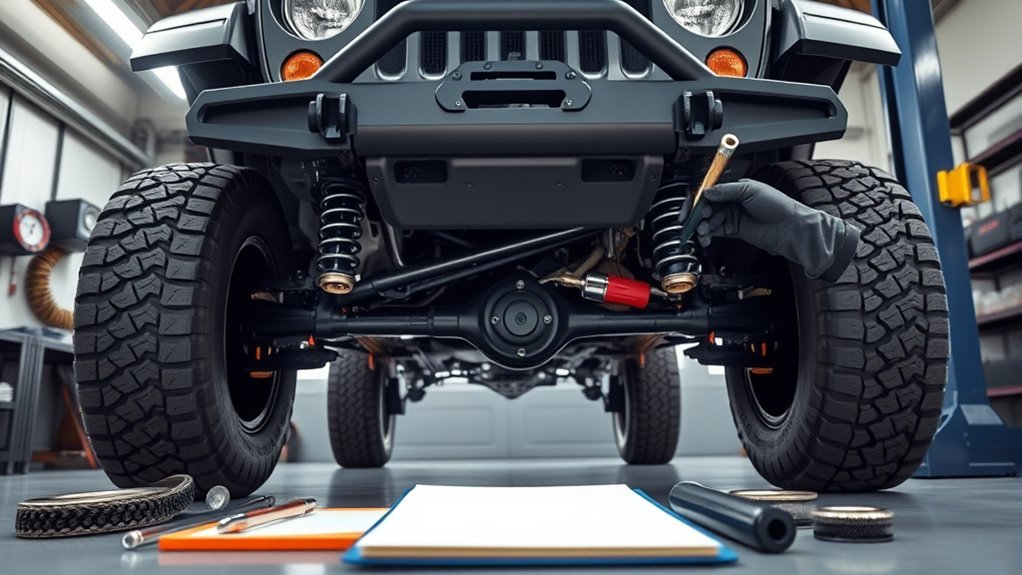
A Jeep lift can cost a few hundred dollars for a basic spacer setup or more than $10,000 for a premium suspension, tires, gearing, steering, and driveline work. For most street-driven Jeep Wranglers, a realistic planning budget is about $1,000–$5,000 installed before wheels and tires. The exact price depends on the model year, trim, engine, lift design, and what the kit leaves out.
Quick Answer
Most Jeep Wrangler lift projects cost about $1,000–$5,000 installed before wheels and tires. A spacer setup can stay below $1,000, while a complete 3- to 4-inch suspension may reach $6,000 or more. Premium long-arm or coilover builds with tires, gearing, and steering upgrades can exceed $10,000.
Key Takeaways
- The lift-kit price is only the starting point; alignment, wheels, tires, calibration, and steering or driveline parts can equal or exceed the kit cost.
- A lift height does not guarantee a tire size. Trim, fenders, wheel backspacing, bump stops, axle position, and actual tire dimensions all matter.
- Verify the exact year, model, door count, trim, engine, and axle package before ordering. Wrangler 4xe, Rubicon 392, diesel, and Gladiator kits are often different.
- Aftermarket parts do not automatically cancel the entire factory warranty, but damage caused by a part or poor installation may be excluded.
- For a daily driver, a complete 2- to 2.5-inch system from a reputable manufacturer is usually easier to align and live with than the cheapest parts-only kit.
At a Glance
| Time Required | About 4 hours for some basic bolt-on kits; a full day or longer for complete or custom systems |
| Difficulty | Intermediate to advanced; professional installation is best when steering, driveline, welding, or high-voltage components are involved |
| Tools Needed | Rated floor jack and stands, wheel chocks, complete hand-tool set, torque wrenches, and the kit maker’s required specialty tools |
| Cost | Roughly $300–$20,000+ depending on lift type, labor, tires, wheels, gearing, and supporting upgrades |
Quick Cost Takeaway: Typical Ranges to Expect
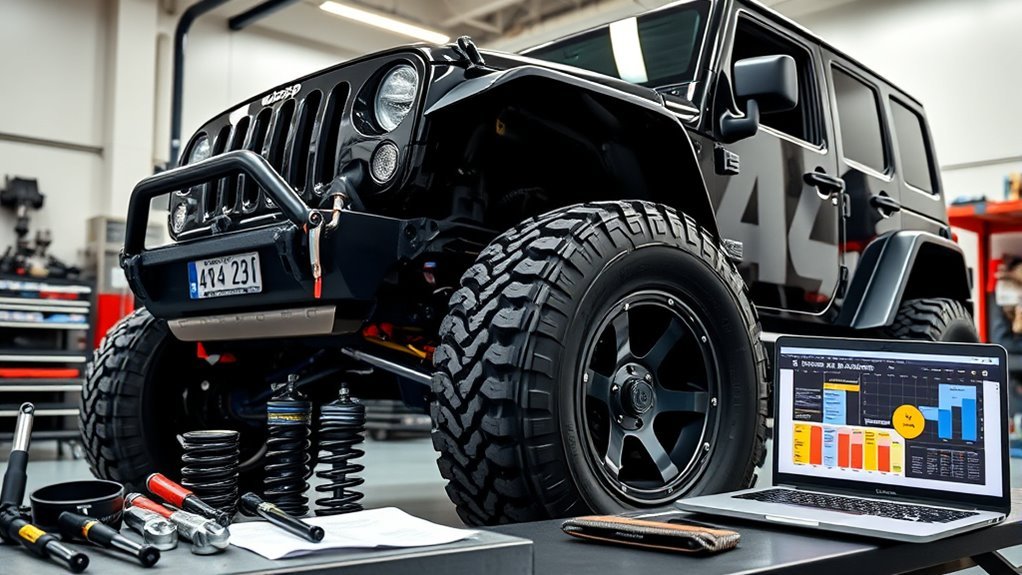
The table below is a budgeting guide for common Wrangler-style builds in the United States, not a guaranteed quote. Prices vary by Jeep generation, trim, engine, region, shop rate, and product availability. Figures are current planning ranges as of July 19, 2026.
| Lift type | Typical parts budget | Typical installed budget* | Best fit |
|---|---|---|---|
| Spacer, leveling, or small body lift | $100–$500 | $300–$1,200 | Appearance, mild tire clearance, or correcting factory rake |
| Complete 2–2.5-inch suspension | $500–$2,500 | $1,000–$4,000 | Daily driving, trail use, and moderate tire upgrades |
| Complete 3–3.5-inch short- or mid-arm system | $1,500–$5,000 | $3,000–$8,000 | More articulation and larger tires with geometry correction |
| 4-inch-plus, long-arm, or coilover build | $4,000–$13,000+ | $7,000–$20,000+ | Specialized off-road use and heavily modified vehicles |
*Installed budgets exclude wheels and tires unless a shop quote specifically includes them.
Current manufacturer pricing shows why one national number is misleading. A TeraFlex 2.5-inch JL spacer kit is listed at $382.99 and estimates four labor hours, but the base kit does not include shocks and lists additional wheel, bump-stop, and shock requirements. An official Jeep Performance Parts 2-inch lift kit is listed near $2,000 for a specific JL configuration. At the other end, premium Rock Krawler JL long-arm and coilover systems can cost well above $5,000 in parts alone.
The cheapest kit is rarely the cheapest completed build. Compare what is included, what is required, and what must be corrected after installation.
Why Jeep Model, Year, Trim, and Engine Change the Cost
“Jeep” covers very different vehicles. A Wrangler YJ, TJ, JK, or JL does not use the same suspension as a Gladiator JT, Grand Cherokee, Cherokee, or Compass. Even within one Wrangler generation, a two-door Sport, four-door Rubicon, 4xe, diesel, and Rubicon 392 may need different springs, shocks, brackets, or calibrations.
Before buying a kit, verify all of the following:
- Model year and generation: The 2018 model year included both JK and JL Wranglers, so “2018 Wrangler” is not specific enough.
- Body and trim: Two-door versus four-door, Sport/Sahara/Willys versus Rubicon, and factory fender height affect fitment.
- Engine and vehicle weight: Gas, diesel, 4xe, and 392 models use different spring rates and may have different driveline needs.
- Axles and existing options: Axle type, factory gearing, electronic sway-bar disconnect, steel bumpers, winches, and towing equipment change weight and geometry.
- Wheel specifications: Width, offset, and backspacing affect tire-to-suspension and tire-to-fender clearance.
- Intended use: A street vehicle, overland build, rock crawler, and tow vehicle need different compromises.
Pro Tip: Give the seller or installer your VIN, current tire size, wheel specifications, bumper and winch weight, and intended use. Ask for a written list of included parts, required add-ons, labor, alignment, calibration, and post-install inspections.
Lift Kit Cost by Type and Height
Leveling Kits and Spacer Lifts
Spacers sit above or below the factory springs to raise the body without replacing every suspension component. They are usually the lowest-cost route, but “parts-only” pricing can be misleading. Longer shocks or extensions, bump stops, wheel spacers or different wheels, alignment correction, and sway-bar links may still be required.
Body Lifts
On body-on-frame models such as the Wrangler, a body lift raises the body away from the frame while leaving most suspension geometry unchanged. It can create limited tire clearance at a low parts cost, but it does not increase axle clearance or suspension travel. Larger body lifts may need bumper, shifter, fan-shroud, fuel-filler, or steering adjustments, depending on the vehicle.
Two- to 2.5-Inch Suspension Lifts
This is a common range for a daily-driven Wrangler because it can improve clearance without automatically requiring a full custom suspension. A complete kit may include springs, matched shocks, bump stops, sway-bar links, and geometry correction. However, the exact tire size still depends on trim, wheel placement, fenders, and how the Jeep is used at full steering lock and suspension compression.
Three- to 3.5-Inch Lifts
At this height, control-arm angles, caster, axle centering, bump-stop length, brake-line travel, and driveshaft clearance become more important. Better systems commonly add adjustable control arms, track bars, or correction brackets. The extra parts and setup time explain why two kits with the same advertised height can differ by thousands of dollars.
Four-Inch-Plus, Long-Arm, and Coilover Systems
Large lifts are complete vehicle projects, not simple spring swaps. They may involve cutting or welding, new control-arm mounts, driveshafts, steering changes, axle upgrades, brake changes, gearing, and custom shock tuning. These systems are better suited to experienced specialty shops and purpose-built off-road vehicles.
Note: Lift height alone does not determine tire fitment. A manufacturer’s fitment notes for your exact Jeep, wheel backspacing, and trim are more reliable than a generic “2 inches equals 35s” rule.
What Parts and Labor Drive Jeep Lift Kit Cost
A low-priced kit may contain only spacers or springs. A more complete system can include matched shocks, front and rear track bars, adjustable control arms, sway-bar links, bump stops, brake-line brackets, steering correction, and hardware. Compare kits line by line instead of comparing only lift height.
| Cost driver | Why it matters |
|---|---|
| Springs or spacers | Set ride height, but spring rate must match vehicle weight and added accessories. |
| Shocks | Must match lift height and travel; remote-reservoir or adjustable shocks increase cost. |
| Control arms and brackets | Help restore caster, pinion angle, wheelbase, and suspension movement. |
| Track bars | Recenter solid axles after ride height changes. |
| Bump stops and sway-bar links | Protect shocks, tires, fenders, brake hoses, and driveline parts at full compression or droop. |
| Installation and alignment | Rust, seized bolts, cutting, welding, and repeated geometry adjustments add labor. |
Ask whether the labor quote includes an alignment, tire-size programming, steering-wheel centering, test drive, and a follow-up torque check. A low initial quote may not include those steps.
Hidden Costs That Surprise Jeep Owners
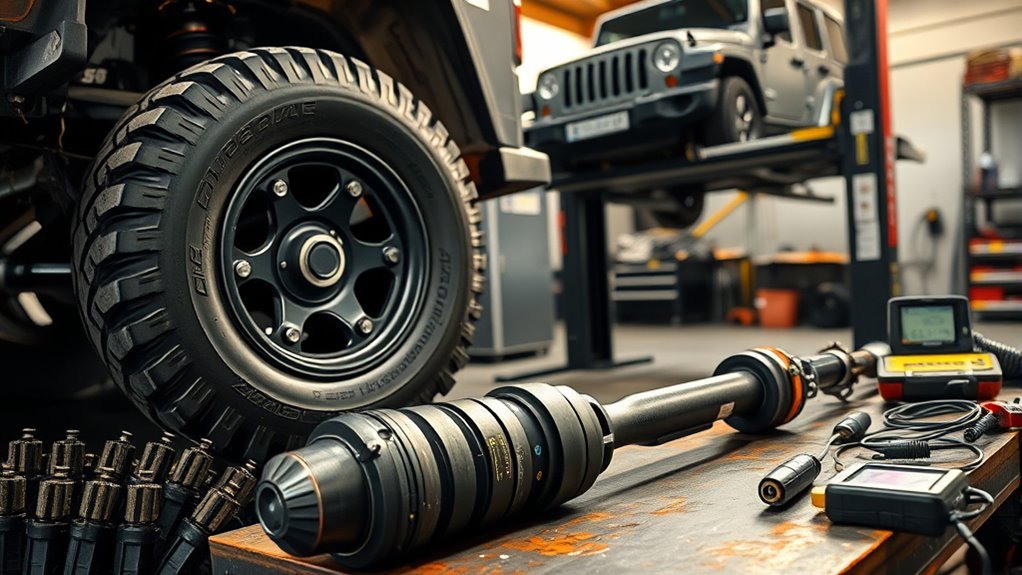
Because a lift affects the whole vehicle, the supporting work can cost as much as the suspension. Use these rough planning ranges only until you have model-specific quotes:
- Wheels and tires: A set of four or five larger tires can add roughly $1,200–$3,000+, while new wheels can add $800–$2,500+.
- Alignment: Every suspension lift should be checked and aligned after installation; extra adjustment time or replacement steering parts raises the bill.
- Tire-size calibration: Larger tires can change indicated speed, shift behavior, and electronic calculations. Programming may require a scan tool or aftermarket module.
- Driveshafts: They are not automatically required at one universal lift height. Need depends on Jeep generation, shaft design, suspension travel, pinion angle, and use.
- Gearing: Larger, heavier tires can make acceleration and transmission behavior feel worse. Re-gearing both axles is often a four-figure upgrade.
- Steering and axle parts: Worn ball joints, tie-rod ends, track-bar joints, unit bearings, or weak axle shafts may become more noticeable after larger tires are installed.
- Spare-tire support: A larger spare may require a reinforced carrier, hinge support, relocation bracket, or different bumper.
- Brakes: Larger tire mass and diameter can increase braking demands. Some builds benefit from upgraded pads, rotors, or complete brake packages.
- Insurance and inspection: Ask your insurer how modifications affect coverage and confirm state and local bumper, lighting, fender, and inspection rules before spending money.
Choose replacement tires with the correct size, load capacity, speed rating, and approved wheel width, then maintain inflation and inspect them regularly. The National Highway Traffic Safety Administration’s tire guidance explains basic pressure, tread, and load-safety practices.
Warning: Never work beneath a Jeep supported only by a hydraulic jack. Use level ground, wheel chocks, correctly rated jack stands, and the manufacturer’s lift points and torque specifications. On Wrangler 4xe models, do not cut, crush, probe, or move orange high-voltage cables or components; use a qualified technician when work approaches the high-voltage system.
How a Lift Affects Road Manners and Capability
A well-designed lift can improve approach, breakover, and departure clearance and create room for larger tires. It does not increase the distance beneath the axle differentials unless the tire diameter also increases. A lift also raises the center of gravity, and larger tires add weight and leverage to steering, brakes, axles, and wheel bearings.
Expect possible changes in:
- Steering feel, crosswind response, and emergency handling
- Braking distance and brake temperature
- Fuel economy, road noise, and acceleration
- Speedometer and transmission calibration
- Suspension travel, ride firmness, and component wear
- Garage clearance, step-in height, roof-rack access, and spare-tire weight
A lift does not increase the Jeep’s certified payload, gross axle weight ratings, or towing rating. Added bumpers, winches, wheels, tires, skid plates, and suspension parts consume available payload.
Save on Lifts: DIY vs. Professional Installation, Warranties, and Financing
When DIY Makes Sense
DIY can save labor when the kit is truly bolt-on, the vehicle is rust-free, and you have safe lifting equipment, calibrated torque wrenches, service information, and suspension experience. Read the complete instructions before ordering because some kits require tools or parts not shown in the main product photo.
When to Use a Professional Shop
Use a qualified shop when the project needs welding, control-arm mount changes, driveshaft setup, steering correction, advanced alignment, gear installation, or work near 4xe high-voltage components. A specialist should also inspect any Jeep with looseness, clunks, wandering, vibration, or recurring steering shimmy before adding lift height or larger tires.
What a Lift Does to the Warranty
A lift does not automatically void the entire vehicle warranty. The Federal Trade Commission explains that a manufacturer or dealer generally must connect an aftermarket part or improper installation to the damage before denying coverage for that repair. The aftermarket kit itself is covered by its own warranty, not Jeep’s factory warranty, and Jeep may exclude damage caused by modification.
Keep the purchase receipt, kit part number, instructions, alignment printout, calibration record, and installer invoice. Ask both the kit manufacturer and Jeep dealer how the modification affects your specific coverage before installation.
Financing Without Overpaying
Compare the total financed cost, not only the monthly payment. Include interest, fees, deferred-interest deadlines, and the cost of required add-ons. It is usually safer to complete the suspension, alignment, tires, and calibration as one funded project than to drive an unfinished combination while waiting for the next upgrade.
How to Get an Accurate Jeep Lift Quote
- Define the goal. State the desired tire size, trail use, daily-driving needs, towing use, and ride preference.
- Identify the Jeep exactly. Provide the VIN, model year, generation, door count, trim, engine, axle package, and current modifications.
- Request an itemized parts list. Confirm springs, shocks, arms, track bars, links, bump stops, brackets, hardware, driveshafts, wheels, and calibration.
- Ask for the full labor scope. Include installation, alignment, programming, welding, road testing, and follow-up inspection.
- Inspect existing wear items. Have the shop check steering joints, ball joints, bearings, bushings, brakes, driveshafts, and tires before installation.
- Compare equal quotes. A $1,500 parts-only quote is not cheaper than a $3,000 complete quote if it omits shocks, alignment, and required geometry parts.
- Reserve a contingency. Set aside about 10%–20% for seized hardware, worn parts, shipping, tax, or model-specific add-ons.
Post-Installation Checklist
- Complete a four-wheel alignment and center the steering wheel.
- Confirm brake hoses, ABS wiring, driveshafts, exhaust, and tires have clearance at full steering lock, compression, and droop.
- Program the correct tire size when required.
- Set tire pressure based on the actual tire, load, and vehicle—not the tire sidewall maximum.
- Road-test at low speed first and stop if there is binding, vibration, pulling, clunking, or steering instability.
- Recheck fastener torque according to the kit instructions after the specified break-in distance.
- Inspect tire wear, suspension joints, and steering parts regularly.
Frequently Asked Questions
How much does it cost to get a Jeep lifted?
Most common Wrangler lift projects cost about $1,000–$5,000 installed before wheels and tires. A simple spacer setup may cost less, while a complete 3- to 4-inch system can reach $6,000–$8,000. Long-arm, coilover, gearing, axle, steering, wheel, and tire upgrades can push a build past $10,000.
Does a 2-inch lift make a difference?
Yes. A 2-inch suspension lift can improve body clearance, approach and departure angles, and room for tire travel. It does not add two inches beneath the axle differentials by itself. Ride and handling depend on spring rate, shock tuning, caster, axle centering, and the rest of the kit.
Can a 2-inch lift fit 35-inch tires?
Sometimes, but not on every Jeep or with every wheel. Trim, fender height, wheel width and backspacing, bump stops, steering clearance, actual tire measurements, and off-road articulation all affect fit. Follow the kit maker’s exact fitment notes for your model and test clearance through the full range of motion.
Does lifting a Jeep void the warranty?
Not automatically. The lift kit is not covered by Jeep’s factory warranty, and damage caused by the kit or incorrect installation may be excluded. However, an unrelated factory defect is not automatically uncovered simply because an aftermarket lift is installed. Keep records and ask the dealer about your exact vehicle and modification.
Do I need a new driveshaft after lifting my Jeep?
There is no universal lift-height cutoff. Driveshaft needs depend on the Jeep generation, wheelbase, shaft design, pinion angle, shock travel, and how far the suspension droops. Follow the kit instructions and inspect for joint binding, boot contact, vibration, and inadequate slip travel.
Will larger tires require re-gearing?
Not always, but larger and heavier tires reduce effective gearing. Re-gearing becomes more useful when acceleration, crawl control, automatic-transmission behavior, towing, or fuel economy suffers. The best ratio depends on tire diameter, axle ratio, transmission, engine, vehicle weight, and use.
Conclusion
For most owners, the best-value Jeep lift is not the tallest or cheapest kit. It is the complete system that fits the exact vehicle, supports the intended tire size, preserves safe steering and suspension geometry, and includes alignment and calibration. Plan on roughly $1,000–$5,000 installed before wheels and tires for a common Wrangler build, with premium projects reaching $10,000 or more. Verify fitment by VIN, price every required supporting part, and leave room in the budget for worn components discovered during installation.
Sources
- Jeep Performance Parts 2-inch Wrangler JL lift kit — current OEM kit scope, fitment, and pricing example.
- TeraFlex JL 2.5-inch spacer lift kit — parts price, estimated labor time, and required supporting components.
- Rock Krawler Jeep Wrangler JL long-arm systems — current premium suspension and coilover pricing examples.
- Federal Trade Commission: Auto Warranties and Service Contracts — aftermarket-part and warranty guidance.
- National Highway Traffic Safety Administration: Tire Safety — tire pressure, load, tread, and maintenance guidance.
- Mopar Wrangler 4xe Emergency Response Guide — high-voltage cable and component safety warnings.






Leave a Reply