
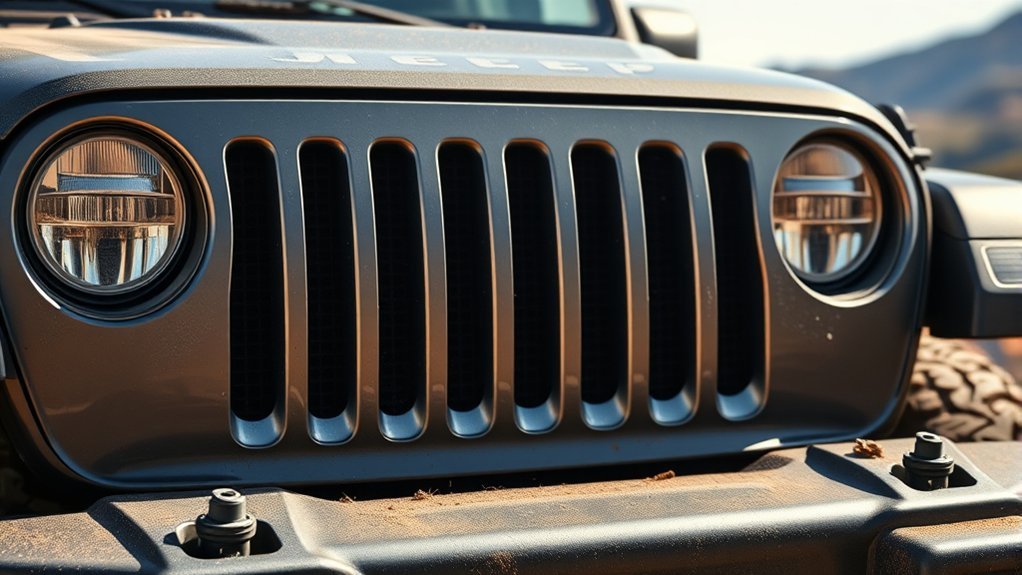
Jeep’s seven-slot grille began as a practical change to the first full-production civilian Jeep, the 1945 CJ-2A, and later became one of the brand’s most recognizable design features. The familiar story that Willys removed two slots solely to avoid a Ford patent is widely repeated, but official Jeep history gives a more practical explanation: the civilian model needed room for larger headlights.
Quick Answer
Jeeps have seven grille slots because Willys-Overland changed the military Jeep’s nine-opening front design for the civilian CJ-2A in 1945. Official Jeep design history says the CJ-2A required larger headlights, so the two outer grille openings were removed. The seven-slot layout then grew into a protected Jeep brand signature.
Key Takeaways
- The seven-slot grille first appeared on the full-production civilian Jeep CJ-2A in 1945.
- Official Jeep history connects the change from nine openings to the CJ-2A’s larger headlights—not to a documented Ford patent dispute.
- Claims that the seven slots represent seven continents, seas, or other groups of seven are enthusiast legends rather than confirmed history.
- Not every historical Jeep used seven slots, although Jeep says the design became consistent across its model range in 1998.
- Before installing a grille, insert, guard, or light, verify airflow, model fitment, radar, cameras, parking sensors, and other front-end equipment.
Why Do Jeeps Have Seven Grille Slots?
The best-supported explanation starts with the transition from a military vehicle to a civilian work vehicle. The wartime Willys MB and Ford GPW used a stamped front panel with nine vertical openings. When Willys-Overland prepared the CJ-2A for civilian production, it added larger headlights and removed the two outer grille openings to make room.
That left seven vertical slots. According to Stellantis’ official Jeep design history, the seven-slot layout was introduced on the 1945 CJ-2A for this practical reason. A 2026 Jeep design release also identifies the CJ-2A as the model that introduced the signature.
The seven-slot grille began as a functional CJ-2A design change and became a visual shorthand for the Jeep brand.
Protect Your Jeep: Essential Grille Accessories
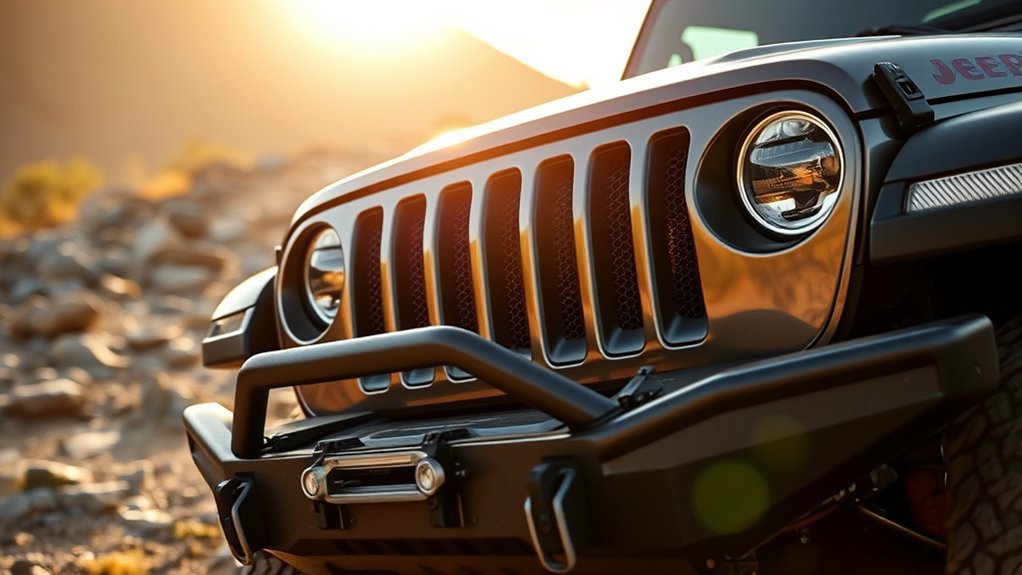
Jeep grille accessories serve different purposes, so it helps to know exactly what you are buying:
- Grille inserts: Decorative pieces that fit inside the existing slots. Depending on their shape and opening area, they may also help keep larger debris away from the radiator.
- Mesh screens: Fine or medium mesh placed behind the grille. These can block stones and insects, but very dense mesh may collect mud, snow, or leaves and restrict airflow.
- Replacement grille shells: Complete exterior grille panels that change the front appearance. They must match the Jeep’s model code, trim, lights, cameras, and other equipment.
- Bull bars and bumper hoops: Tubular accessories mounted around the center of the bumper. They may offer limited protection from brush or light contact but do not cover the entire front end.
- Full grille guards: Larger steel structures that may extend toward the headlights. Their mounting system, weight, sensor clearance, and effect on the bumper must all be checked.
A guard can help protect against branches, brush, and some low-speed trail contact, but it should not be treated as guaranteed crash protection. Its behavior depends on the guard, attachment points, bumper, airbag calibration, and complete vehicle design. The National Highway Traffic Safety Administration has explained that a guard can change front-end loading or crash-sensor behavior in some installations.
Warning: Do not install a grille, guard, mesh panel, light, badge, or camera cover that blocks the radiator, active grille shutters, headlights, radar, forward camera, parking sensors, tow hooks, or recovery points. Jeep’s Wrangler manual warns that accessories and aftermarket grilles installed near the front radar can cause adaptive-cruise or forward-collision-system malfunctions.
From Nine Slots to Seven: Why Willys Changed the Grille
The grille did not begin with seven openings. Jeep’s official history describes a sequence involving several early military-vehicle designs:
| Period | Grille Development | Why It Matters |
|---|---|---|
| Early 1940s | Early Willys designs used vertical grille bars. | The vertical-opening theme predates the civilian Jeep. |
| World War II | Ford introduced a simpler stamped-steel panel with nine openings, which the military standardized for production Jeeps. | The design was easier to manufacture than a grille assembled from separate bars. |
| 1945 CJ-2A | Willys-Overland removed the two outer openings when fitting larger civilian headlights. | The resulting seven-slot front became closely associated with civilian Jeeps. |
| Later decades | CJ models retained seven slots, while some Wagons, pickups, Wagoneers, Cherokees, and other vehicles used different counts. | The seven-slot design was important, but it was not universal across every historical Jeep. |
| Since 1998 | Jeep says all of its models have used a form of the seven-slot signature. | The design became a consistent family identifier across the modern range. |
The official Jeep history of the 1940s describes the CJ-2A as a substantially modified civilian version of the military MB. Along with larger seven-inch headlights, it gained a tailgate, side-mounted spare tire, external fuel filler, revised gearing, better cooling, and more comfortable suspension and seating.
Debunking Myths About the Seven-Slot Grille
The grille’s fame has produced several appealing origin stories. Some are possible interpretations of what the design represents today, but they should not be confused with documented reasons for its creation.
Did Willys Use Seven Slots to Avoid a Ford Patent?
The claim that Willys removed two openings specifically to escape a Ford patent or legal dispute is one of the most common Jeep stories. Ford did introduce the stamped nine-opening grille used on wartime production vehicles, but the article’s original claim of a confirmed patent problem is not supported by the official Jeep sources cited here.
Jeep’s own design history instead gives a direct physical reason: the CJ-2A needed larger headlights, and removing the two outer grille openings made room for them. No documented Ford-versus-Willys grille lawsuit is needed to explain the change.
Note: It is reasonable to say that seven slots helped distinguish the civilian Willys product. It is not accurate to state that a Ford patent dispute forced the change unless reliable documentation for that specific claim is produced.
Do the Slots Represent the Seven Continents?
There is no confirmed official evidence that the openings were chosen to represent the seven continents. Other fan explanations connect them to seven seas, seven wonders, seven summits, colors of the rainbow, or even directions of travel.
These interpretations are part of Jeep culture, but official Jeep design material describes them as legends rather than established history. The number’s modern association with exploration developed after the grille became a recognizable brand feature.
How Design Choices Shaped the Grille’s Look
The CJ-2A’s front end balanced manufacturing, cooling, lighting, and brand recognition. Its larger headlights helped make the civilian model more suitable for everyday use, while the vertical openings continued to admit air toward the cooling system.
Seven slots also produced a balanced front appearance: one central opening with three on each side. Over time, Jeep designers changed the openings’ height, width, angle, depth, trim, and surrounding fascia while preserving the seven-part visual rhythm.
- Packaging: The outer openings were removed to accommodate the CJ-2A’s larger headlights.
- Cooling: The remaining openings continued to provide a route for air to reach heat exchangers behind the front panel.
- Recognition: Repeated use gradually made seven vertical openings identifiable as a Jeep design cue.
- Adaptability: The theme can be reshaped for upright Wranglers, wider SUVs, compact crossovers, and electrified models without looking identical on every vehicle.
The design is now legally important as well as visually important. Jeep’s current legal information lists both the “Jeep grille design” and “Seven-Slot Grille” among the registered trademarks of FCA US LLC.
What the Seven-Slot Grille Means Today
The original change appears to have been practical, but a design can acquire meaning after it is created. For owners and enthusiasts, the seven slots now connect modern Jeep vehicles with the CJ family and the brand’s military-era roots.
Jeep continues to reinterpret the signature rather than reproduce one identical grille forever. Slot shapes can be functional openings, partly closed decorative forms, illuminated elements, or sections integrated into a larger front fascia. The exact treatment depends on cooling needs, aerodynamics, pedestrian-protection requirements, lighting, sensors, and the vehicle’s powertrain.
This is why the grille can reasonably symbolize Jeep heritage today without proving that Willys originally selected the number seven to encode a message about continents or global travel.
How the Grille Affects Cooling and Performance
A grille provides an opening between the outside air and front-mounted components such as the radiator, air-conditioning condenser, intercooler, or other heat exchangers. However, the number seven does not independently add horsepower, traction, ground clearance, or off-road capability.
Cooling depends on the total open area, vehicle speed, fan operation, radiator condition, coolant system, shutters or ducting, ambient temperature, engine load, and calibration. A replacement grille with small openings, dense mesh, blocked slots, or accumulated mud may reduce airflow even when it preserves the seven-slot appearance.
Pro Tip: After installing an insert or replacement grille, watch for rising coolant temperature, reduced air-conditioning performance at low speed, active-shutter warnings, adaptive-cruise faults, or unusual fan operation. Remove the accessory and inspect the installation if a problem begins immediately afterward.
Selecting the Right Grille for Your Jeep
Start with the exact vehicle rather than the appearance you want. A grille that physically resembles your original part may still conflict with mounting clips, hood latches, headlights, cameras, radar, parking sensors, wiring, active shutters, or trim-specific components.
Material and Durability Considerations
- Molded plastic or ABS-style shells: Common for factory-style replacement panels because they are light, corrosion-resistant, and easy to shape. Quality varies, so inspect mounting tabs and surface finish.
- Aluminum inserts: Light and corrosion-resistant. They are often used for mesh or slot inserts rather than the full structural grille shell.
- Stainless-steel inserts: Strong and corrosion-resistant but heavier than aluminum. Poorly finished edges or mounting hardware can still damage surrounding paint or plastic.
- Powder-coated steel guards: Strong enough for protective structures, but chips should be repaired before exposed steel begins to rust.
- Polycarbonate accessories: Light and impact-resistant when properly designed, although UV exposure and low-quality coatings can cause fading or brittleness.
Material alone does not prove that a part is durable. Mounting design, hardware quality, coating preparation, drainage, vibration resistance, and fit are just as important.
Design Compatibility With Your Model
| Jeep Family | Fitment Check | Common Concern |
|---|---|---|
| CJ | Confirm the exact CJ model, year, body condition, and whether the front panel is original or modified. | Restored vehicles may use reproduction tubs, altered mounts, or non-original lighting. |
| YJ and TJ | Match the generation and inspect headlight, turn-signal, hood-latch, and mounting locations. | Parts marketed simply as “classic Wrangler” are not automatically interchangeable. |
| JK | Confirm JK fitment rather than relying only on the registration year. | The 2018 model year can cause confusion because both JK and JL Wranglers were sold. |
| JL and JT Gladiator | Check trim, engine, front camera, radar, trail camera, lights, and accessory package. | Modern driver-assistance hardware may limit acceptable grille and guard designs. |
| Cherokee, Grand Cherokee, Compass, Renegade, Wagoneer, and other models | Use the complete year, model, trim, VIN, equipment list, and manufacturer part number. | The seven-slot theme does not make grille assemblies interchangeable between vehicle lines. |
Pro Tip: Use your VIN and model code when checking a grille or guard. Compare the supplier’s complete part number, trim exclusions, sensor notes, engine restrictions, and installation instructions before ordering.
Installation Ease and Options
A simple slot insert may attach with clips or small fasteners, while a complete grille shell can require removal of trim clips, wiring connectors, lamps, camera brackets, or other front-fascia parts. A steel guard or bumper hoop usually requires more substantial mounting and careful torque checks.
Before installation:
- Read the vehicle manual and the accessory manufacturer’s complete instructions.
- Confirm that all brackets, clips, fasteners, spacers, and wiring components are included.
- Check clearance around the radiator, shutters, lights, cameras, radar, parking sensors, tow hooks, winch controls, and hood latch.
- Verify that auxiliary lights comply with applicable road-use and aiming requirements.
- Protect painted surfaces while removing clips or positioning metal parts.
- Tighten hardware to the accessory manufacturer’s stated torque values.
- Test lights, cameras, parking sensors, adaptive cruise control, forward-collision warning, and other affected systems before normal driving.
- Reinspect fasteners after the manufacturer’s recommended break-in period and after demanding trail use.
Check local requirements for front license-plate visibility, bumper height, protruding components, auxiliary lighting, and other modifications. Rules can vary by state and locality.
Cleaning, Painting, and Maintaining a Jeep Grille
Regular cleaning keeps debris from collecting in the slots and gives you a chance to find damaged clips, chipped coatings, loose inserts, corrosion, or blocked sensors.
How to Clean the Grille
- Allow the engine and front cooling components to cool.
- Rinse away loose dirt using gentle water pressure.
- Wash the grille with automotive soap, water, and a soft microfiber mitt or soft detailing brush.
- Clean mud and insects from slot edges without forcing debris deeper into the radiator fins.
- Rinse thoroughly and dry with a clean microfiber towel or low-pressure air.
- Clean radar covers and camera lenses only as directed in the owner’s manual.
- Inspect metal guards for coating chips and treat exposed steel before rust spreads.
Avoid stiff wire brushes, harsh household solvents, and pressure-washer nozzles held close to plastic trim, paint, camera lenses, electrical connectors, radiator fins, or sensor covers.
How to Paint a Jeep Grille Safely
You can paint many removable grille shells and inserts, but the preparation and coating must match the material.
- Remove the grille when practical and when the service procedure allows it.
- Wash it thoroughly and remove wax, silicone, grease, and dressing residue with a product that is safe for the material.
- Scuff the paintable surface evenly with an appropriate fine abrasive or scuff pad.
- Mask emblems, mounting surfaces, electrical contacts, lights, cameras, radar covers, and other unpainted components.
- Apply plastic adhesion promoter to exposed paintable plastic when required by the coating manufacturer.
- Apply compatible primer, color coats, and clear coat in light, even passes.
- Allow the finish to cure for the full time stated by the paint manufacturer before handling or reinstalling the part.
- Reinstall the grille and test every light, camera, sensor, and driver-assistance feature affected by the work.
Warning: Never paint a radar cover, camera lens, parking sensor face, headlight lens, active grille shutter, radiator, condenser, electrical connector, or safety label. A coating that looks transparent may still interfere with a sensor.
Customizing Your Jeep: Practical Tips
A grille can change the look of a Jeep without altering its basic character. Factory-style inserts preserve the traditional design, while mesh, contrasting trim, lighting, or a replacement shell can create a more personal appearance.
Keep the modification proportional to how you use the vehicle:
- Daily driving: Prioritize factory-like fit, legal lighting, easy cleaning, low wind noise, and full sensor compatibility.
- Mud and trail use: Choose openings that are easy to clear and avoid fine mesh that traps thick mud against the cooling stack.
- Rock crawling: Confirm that guards do not block rated recovery points, winch access, airflow, or the approach angle.
- Overlanding: Consider the combined weight of the bumper, winch, guard, lights, and other front accessories—not just the grille itself.
- Show builds: Use reversible mounting where possible and avoid cutting structural or sensor-related components merely for appearance.
Suspension and lighting upgrades can improve capability or visibility when correctly selected, but they are separate systems from the grille. Treat each modification as its own engineering and fitment decision rather than assuming that every off-road-looking accessory improves off-road performance.
Why the Seven-Slot Grille Still Matters
The seven-slot grille is important because it connects modern Jeep design to the 1945 CJ-2A while remaining flexible enough to change with new body styles and technology.
- Heritage: The layout traces directly to the first full-production civilian Jeep.
- Recognition: Seven repeated vertical forms make vehicles from different Jeep lines look like members of the same family.
- Adaptability: Designers can reshape, trim, close, widen, illuminate, or integrate the slots while preserving the overall signature.
- Community: Owners use the motif on accessories, decals, artwork, and Jeep “Easter eggs,” giving it meaning beyond the original engineering decision.
- Legal identity: The grille design is part of Jeep’s protected brand property.
The grille’s real history is compelling without adding an unsupported patent battle or secret seven-part code. A practical packaging change became one of the most recognizable front-end designs in the automotive world.
Frequently Asked Questions
How does the seven-slot grille affect Jeep performance?
The grille provides an airflow path toward the radiator and other heat exchangers, but having seven openings does not independently increase horsepower or off-road capability. Cooling depends on the total open area, radiator, fan, shutters, ducting, engine load, and vehicle calibration. A restrictive insert can reduce airflow.
Are there aftermarket grilles that maintain the seven-slot design?
Yes. Factory-style replacement shells, inserts, mesh panels, and custom grilles can retain seven openings. Confirm the exact model code, trim, VIN, headlights, camera, radar, parking sensors, active shutters, and manufacturer part number before buying.
What materials are commonly used for Jeep grilles?
Factory-style grille shells are commonly molded from lightweight plastic, while aftermarket inserts and protective guards may use aluminum, stainless steel, powder-coated steel, or polycarbonate. Mounting quality, coating, drainage, fit, and sensor clearance matter as much as the material name.
Can I paint my Jeep’s grille without damaging it?
Many removable grille shells and inserts can be painted after cleaning, degreasing, scuffing, priming, and using a coating made for the material. Do not paint lights, camera lenses, radar covers, parking sensors, active shutters, radiators, connectors, or mounting surfaces.
How can I clean and maintain my Jeep’s grille?
Use automotive soap, water, a microfiber mitt, and a soft detailing brush. Rinse at gentle pressure, dry the grille, clear debris from the openings, and inspect clips and coatings. Follow the owner’s manual when cleaning radar covers, cameras, and other sensors.
Do the seven slots represent the seven continents?
There is no confirmed official evidence for that explanation. Jeep has acknowledged the seven-continent story as one of several legends surrounding the grille. The documented design history connects the seven openings to the larger headlights fitted to the 1945 CJ-2A.
Has every Jeep model always had seven grille slots?
No. CJ models used seven slots, but several historical Jeep Wagons, pickups, Wagoneers, Cherokees, and other models used different numbers of vertical openings. Jeep’s official design history says seven slots became consistent across the complete model range in 1998.
Conclusion
Jeeps have seven grille slots because the 1945 CJ-2A’s civilian design needed space for larger headlights, leading Willys-Overland to remove the two outer openings from the earlier nine-opening arrangement. That practical change became a lasting Jeep signature.
The Ford-patent and seven-continent stories remain popular parts of Jeep folklore, but they should not replace the documented explanation. Whether you keep the factory grille or customize it, protect airflow and verify compatibility with your exact model, VIN, lights, radar, cameras, sensors, and front-end equipment.
Sources
- Stellantis: Form and Functionality—The Pillars of Jeep Design — explains the military grille history, larger CJ-2A headlights, removal of the outer openings, historical slot-count variations, and seven-slot legends.
- Stellantis: An Icon Evolves—The New Seven-Slot Grille — confirms in 2026 that the signature was introduced with the 1945 CJ-2A.
- Jeep: 1940s Brand and Vehicle History — documents the Willys MB, CJ-2A production period, larger headlights, cooling changes, and other civilian features.
- Jeep Legal, Safety, and Trademark Information — identifies the Jeep grille design and Seven-Slot Grille as registered FCA US LLC trademarks.
- 2024 Jeep Wrangler Owner’s Manual — warns that accessories and aftermarket grilles near the front radar may cause adaptive-cruise or forward-collision-system malfunctions.
- NHTSA Interpretation on Brush and Grille Guards — discusses guard installation, safety-system considerations, and state authority over owner modifications.





Leave a Reply