
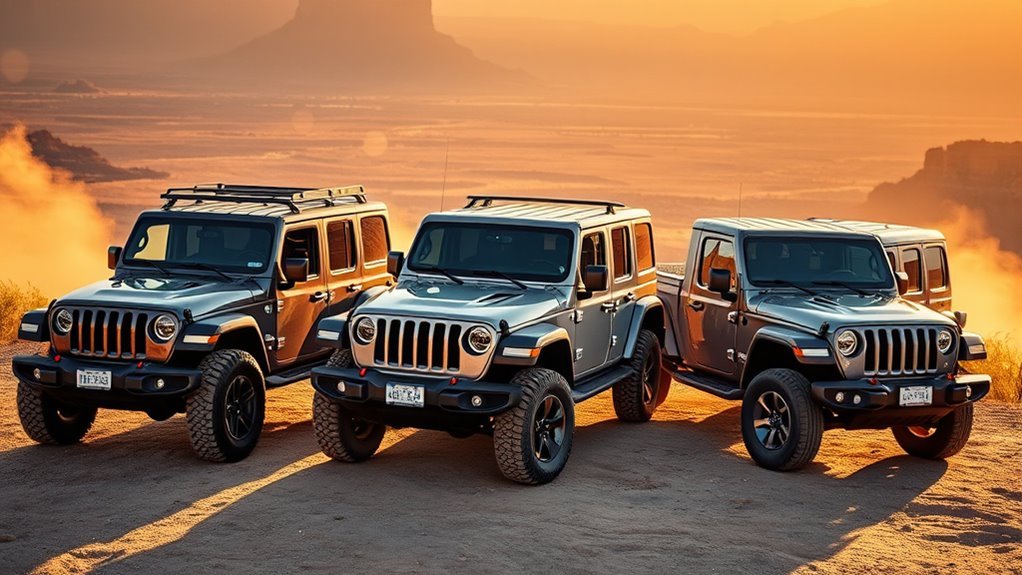
Jeep names can be confusing because model names, trim levels, body styles, powertrains, and special-edition packages often appear together in the same listing. The key distinction is simple: Wrangler is a Jeep model, while names such as Sport, Sahara, and Rubicon are Wrangler trims. Cherokee, Compass, Gladiator, and Wagoneer are separate Jeep vehicles. This guide reflects the U.S. lineup available as of July 19, 2026; trim availability can differ by model year and market.
Quick Answer
The Jeep Cherokee is not a Jeep Wrangler sub-model. It is a separate Jeep SUV with its own platform, trims, powertrain, and history. Wrangler names such as Sport, Willys, Sahara, Rubicon, and Rubicon X are trims; “Unlimited” identifies the four-door body, while 4xe identifies a plug-in-hybrid powertrain where offered.
Key Takeaways
- Cherokee is a separate Jeep model, not a Wrangler trim or body style.
- The core 2026 U.S. Wrangler trims are Sport, Sport S, Willys, Sahara, Rubicon, Rubicon X, and Moab 392.
- Unlimited refers to a four-door Wrangler, while 4xe is Jeep’s plug-in-hybrid designation.
- Names such as High Altitude and Rubicon 392 may be valid for earlier model years even when they are absent from the current core lineup.
- Use the VIN, certification label, original window sticker, and official build information to confirm a used Wrangler’s identity and equipment.
Which Option Is Not a Jeep Wrangler Sub-Model?
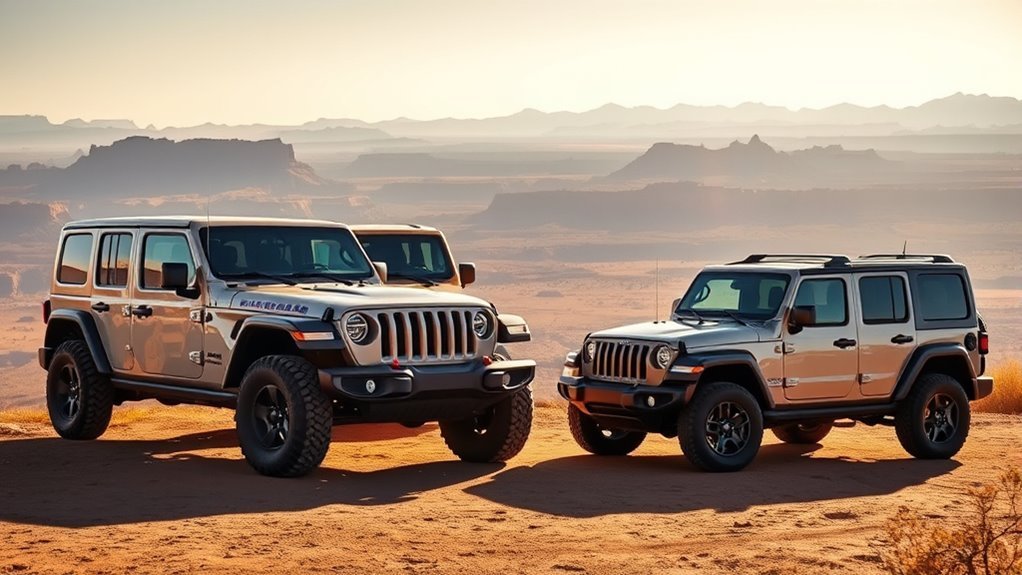
The Jeep Cherokee is not a Wrangler sub-model. Neither are the Compass, Gladiator, Grand Cherokee, Wagoneer, or Grand Wagoneer. Each is a separate vehicle line with its own body, specifications, trims, and intended use.
By contrast, Sport, Sport S, Willys, Sahara, Rubicon, Rubicon X, and Moab 392 are names used within the current Wrangler lineup. Special editions may add more names during a model year, but those vehicles are still Wranglers.
A trim changes the equipment fitted to a Wrangler. Choosing a Cherokee changes the vehicle itself.
Note: Jeep trim names change over time. A name that is missing from the current lineup may still be correct for an older Wrangler, so always compare vehicles within the same model year.
Model vs. Trim, Body Style, Powertrain, and Special Edition
Many incorrect vehicle listings result from mixing several different types of names. Use these definitions when comparing Wranglers:
| Type | Example | What It Means |
|---|---|---|
| Model | Wrangler or Cherokee | A distinct vehicle line. |
| Trim | Sport, Sahara, or Rubicon | An equipment and capability level within the Wrangler model. |
| Body style | Two-door or four-door Unlimited | The body configuration, not a normal equipment trim. |
| Powertrain badge | 4xe or 392 | Identifies an electrified or V8 powertrain used with an eligible trim or edition. |
| Special edition or package | 85th Anniversary or Willys ’41 | A limited or themed configuration based on an existing Wrangler. |
| Generation code | JL or JK | An internal platform or generation identifier, not a trim. |
For example, “Wrangler Unlimited Rubicon 4xe” can describe one vehicle using four types of information: Wrangler is the model, Unlimited is the four-door body, Rubicon is the trim, and 4xe is the plug-in-hybrid powertrain designation.
Current 2026 Jeep Wrangler Trims
As of July 19, 2026, the official U.S. Jeep Wrangler lineup presents seven core trims. Limited editions and packages may appear in addition to these models during the year.
| Trim | Best Fit | General Focus |
|---|---|---|
| Sport | Lowest-cost entry point | Basic Wrangler capability with fewer convenience features. |
| Sport S | Mixed daily and recreational use | Adds comfort, convenience, and available driver-assistance equipment. |
| Willys | Off-road value | More trail-focused equipment and styling than the basic trims. |
| Sahara | Daily driving and road trips | Four-door comfort, appearance, and everyday convenience. |
| Rubicon | Technical trails and rock crawling | Dedicated off-road hardware such as the available Rock-Trac system, locking differentials, and electronic sway-bar disconnect. |
| Rubicon X | Premium trail use | Rubicon capability combined with additional comfort and premium equipment. |
| Moab 392 | V8 performance | The current core V8 flagship and successor to the Rubicon 392 name. |
Jeep also offers rotating special editions and appearance or equipment packages. These are not separate Jeep vehicle lines, and they may be available only for part of the model year.
What About High Altitude, Rubicon 392, Unlimited, and 4xe?
These names are real, but they do not all describe the same type of thing:
- High Altitude was a luxury-focused Wrangler name in earlier lineups. Its absence from the current core list does not make an older High Altitude fake.
- Rubicon 392 was the earlier V8 performance flagship. The 2026 core lineup now uses the Moab 392 name.
- Unlimited identifies the longer four-door Wrangler body. It is normally paired with a trim, such as Wrangler Unlimited Sahara or Unlimited Rubicon.
- 4xe is Jeep’s plug-in-hybrid designation. It may be combined with eligible Wrangler trims in model years and markets where that configuration is offered.
Do not assume that every trim was offered with every body or powertrain in every year. The original window sticker or factory build information is the best record of the exact combination.
Why the Jeep Cherokee Is Not a Wrangler Sub-Model
The Cherokee has its own history, design, powertrain, dimensions, trims, and target buyer. The all-new 2026 Jeep Cherokee is a midsize SUV with a no-plug turbo-hybrid powertrain. It is designed around passenger space, daily comfort, efficiency, technology, and all-weather use.
The Wrangler follows a different formula. It uses a separate frame, solid front and rear axles, removable roof options, removable doors, and trail-focused hardware. Its shape and controls are designed to support open-air driving and more demanding off-road use.
The Cherokee’s history also did not begin in 1984. The Cherokee name appeared on the full-size SJ generation in the 1970s. The smaller XJ Cherokee arrived for the 1984 model year and helped define the compact four-door SUV format. Neither generation was a Wrangler trim.
Wrangler Trims vs. Other Jeep Models
All Jeep vehicles share some brand styling and available four-wheel-drive technology, but they are not interchangeable model families.
| Name | Classification | Primary Focus |
|---|---|---|
| Wrangler | Separate Jeep model | Open-air driving and trail capability. |
| Wrangler Sport, Sahara, or Rubicon | Wrangler trims | Different equipment levels within the Wrangler model. |
| Cherokee | Separate midsize SUV | Daily comfort, hybrid efficiency, cargo room, and all-weather use. |
| Compass | Separate SUV model | Compact dimensions and everyday practicality. |
| Gladiator | Separate pickup model | Wrangler-like capability combined with a cargo bed. |
| Wagoneer | Separate full-size SUV | Passenger space, towing, comfort, and premium equipment. |
How to Choose the Right Jeep Wrangler Trim
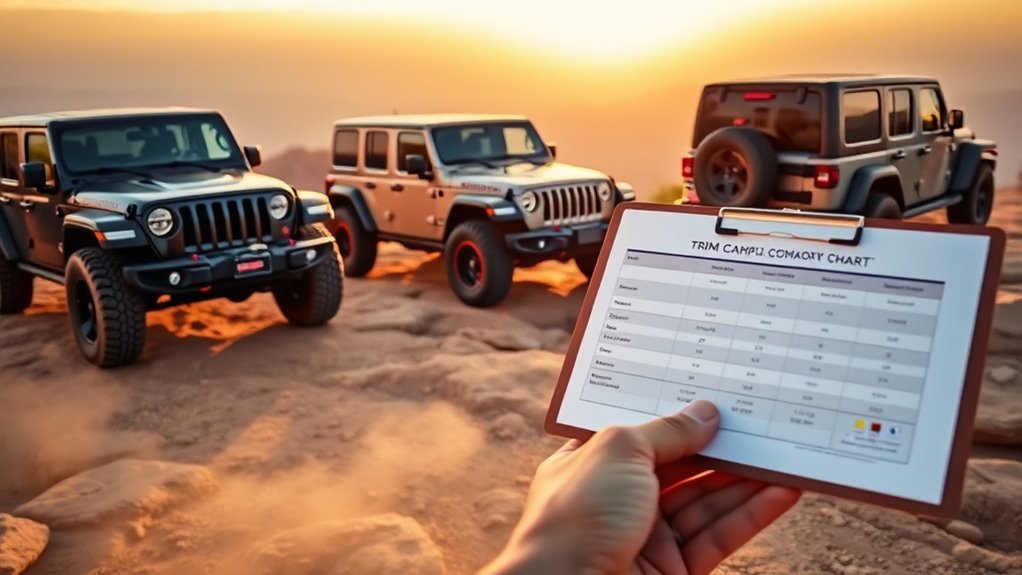
Choose a Wrangler trim according to how the vehicle will actually be used, not just its wheels, decals, or advertised monthly payment.
- Choose Sport when price and basic Wrangler capability matter more than convenience equipment.
- Choose Sport S for a better balance of daily comfort, available safety technology, and recreational use.
- Choose Willys for added off-road character and capability without moving to a Rubicon.
- Choose Sahara when four-door practicality, road manners, comfort, and appearance are the priorities.
- Choose Rubicon for difficult trails, low-range crawling, locking differentials, and greater suspension articulation.
- Choose Rubicon X when Rubicon trail hardware and more premium cabin equipment are both important.
- Choose Moab 392 when V8 performance is a central part of the purchase and its higher operating costs fit the budget.
Towing needs must be checked separately. According to the 2026 Wrangler specifications published by Jeep, a properly equipped two-door model can tow up to 2,000 pounds, while a properly equipped four-door can tow up to 5,000 pounds. Some configurations are rated for less.
Warning: Never select a trailer based only on the Wrangler name or the highest advertised towing number. Confirm the rating for the vehicle’s engine, axle ratio, transmission, tow package, door count, payload, and VIN-specific documentation.
How to Verify a Jeep Wrangler Model and Trim
Badges and appearance can help identify a vehicle, but they are not proof. A previous owner can add Rubicon decals, larger tires, bumpers, rock rails, a different roof, or aftermarket suspension parts to a Sport or Sahara.
- Read the 17-character VIN. Find it at the lower driver-side windshield and on the certification label inside the driver-side door opening.
- Decode the VIN through an official source. NHTSA’s vehicle safety resources can confirm basic encoded information such as the manufacturer, model year, model, body type, and some powertrain data.
- Compare every VIN location. The windshield VIN, certification label, title, registration, and sales documents should match exactly.
- Request the original window sticker or factory build information. These records are more useful than a basic VIN decoder for confirming the trim, packages, axle ratio, roof, wheels, towing equipment, and factory-installed options.
- Check open safety recalls. Use the official NHTSA recall lookup and arrange any required repair through an authorized dealer.
- Review the title and vehicle history separately. A recall lookup is not an accident, ownership, service, flood, salvage, or title-history report.
- Have modified vehicles inspected. An experienced Jeep technician or off-road specialist can identify unsafe suspension work, incorrect gearing, damaged mounts, poorly installed electrical accessories, and hidden trail damage.
Pro Tip: When a dealer advertisement and the original window sticker disagree, rely on the VIN-matched factory documentation. Dealer inventory systems sometimes use broad or incorrect trim descriptions.
Quick Checklist for Confirming a Vehicle Is a Wrangler
- The VIN decodes to Jeep Wrangler for the stated model year.
- The windshield VIN matches the certification label, title, and registration.
- The vehicle has Wrangler body and chassis characteristics, including solid front and rear axles.
- The body configuration matches the listing: two-door or four-door Unlimited.
- The original window sticker or build information confirms the advertised trim and packages.
- Factory and aftermarket parts are clearly identified.
- Open recalls, title history, accident history, and major modifications have been reviewed before purchase.
The seven-slot grille, round headlights, removable roof, exposed hinges, high ground clearance, and Wrangler-shaped body are useful visual clues. They should support the documentation, not replace it.
Frequently Asked Questions
What are the core 2026 Jeep Wrangler trims?
The core U.S. lineup consists of Sport, Sport S, Willys, Sahara, Rubicon, Rubicon X, and Moab 392. Jeep may also offer special editions and packages during the model year.
Is the Jeep Cherokee a Wrangler trim?
No. Cherokee is a separate Jeep SUV with its own history, body, powertrain, trims, dimensions, and specifications.
Is Wrangler Unlimited a trim level?
Unlimited normally identifies the longer four-door Wrangler body. It is combined with a trim name, such as Unlimited Sport, Unlimited Sahara, or Unlimited Rubicon.
Is 4xe a Jeep Wrangler sub-model?
4xe is Jeep’s plug-in-hybrid powertrain designation rather than a separate Jeep model. A vehicle may combine the Wrangler model, a trim such as Sahara or Rubicon, and the 4xe powertrain badge where that combination is offered.
What is the top Jeep Wrangler model?
For the 2026 core lineup, Moab 392 is the V8 performance flagship. Rubicon is the focused trail trim, while Rubicon X combines Rubicon capability with more premium equipment. The best choice depends on whether performance, technical off-roading, comfort, or value matters most.
Can a VIN confirm that a Wrangler is a Rubicon?
A VIN decoder can confirm the basic vehicle identity and some encoded specifications, but it may not show every package or factory option. Use the VIN-matched window sticker, build information, certification label, and dealer records to confirm the exact trim.
Conclusion
The Jeep Cherokee is not a Wrangler sub-model. It is a separate Jeep SUV, just like the Compass, Gladiator, and Wagoneer. Within the 2026 Wrangler lineup, names such as Sport, Willys, Sahara, Rubicon, Rubicon X, and Moab 392 identify trims, while Unlimited describes the four-door body and 4xe describes a plug-in-hybrid powertrain where offered.
When comparing a new or used Wrangler, match the trim to the intended use and verify the model year carefully. Do not rely on badges, wheels, tires, or removable body parts alone. Confirm the VIN, certification label, original window sticker, factory equipment, towing rating, recall status, and major modifications before buying.
Sources
- Jeep — 2026 Wrangler Overview — current core trims, model positioning, and limited-edition information.
- Jeep — 2026 Wrangler Frequently Asked Questions — towing limits, generation codes, dimensions, and drivetrain information.
- Jeep — 2026 Wrangler Capability — solid axles, Rubicon trail hardware, 4×4 systems, and Wrangler 392 capability.
- Jeep — 2026 Cherokee Overview — current Cherokee positioning and hybrid powertrain.
- Jeep — 1970s Model History — the original full-size Cherokee SJ lineage.
- National Highway Traffic Safety Administration — Vehicle Safety Resources — official VIN-decoding and safety-recall guidance.







Leave a Reply