
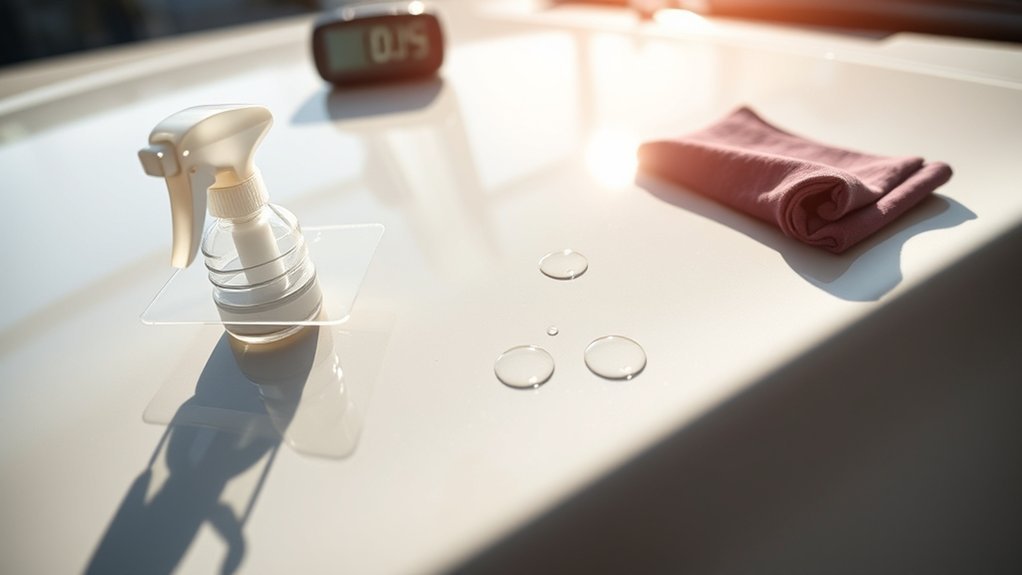
Water spots can make clean paint look dull, and the wrong removal method can add scratches or thin the clear coat. The safest approach is to wash the car first, identify whether the marks are loose mineral deposits or etched paint, and then move from the least aggressive treatment to polishing only when needed.
Quick Answer
Wash and dry the car on a cool surface, then try a paint-safe water spot remover or a brief 1:1 white-vinegar and distilled-water treatment on glossy factory paint. If rough deposits remain, use lubricated detailing clay. If only cloudy rings or pits remain, the paint needs polishing or professional correction.
Key Takeaways
- Clean the vehicle before treating spots so dirt is not rubbed across the paint.
- Start with the mildest method and inspect the finish after each step.
- Clay removes bonded contamination, but it does not repair etched clear coat.
- Compounding, machine polishing, and wet sanding remove paint and require extra care.
- Matte paint, vinyl wraps, paint-protection film, and ceramic coatings need surface-specific products.
At a Glance
| Time Required | 20–60 minutes for light or moderate spots; longer if polishing is needed |
| Difficulty | Easy for surface deposits; intermediate to advanced for paint correction |
| Tools Needed | Car-wash soap, wash mitt, microfiber towels, distilled water, paint-safe spot remover, optional clay and polish |
| Cost | Low to moderate for DIY supplies; professional correction varies with paint condition |
What Are Car Water Spots?
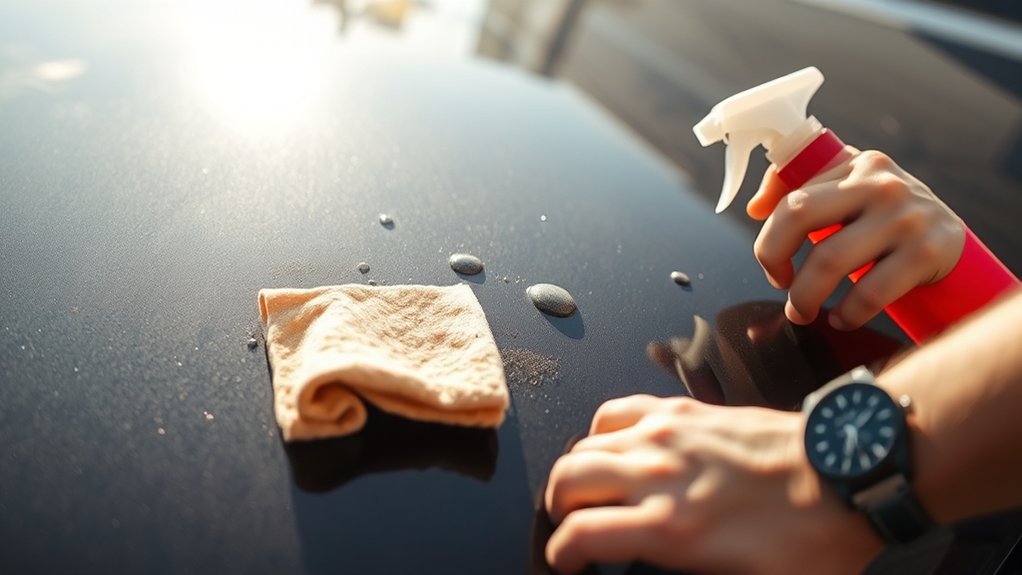
Water spots form when droplets evaporate and leave dissolved material behind. Hard water contains elevated amounts of calcium and magnesium, according to the U.S. Geological Survey, but sprinkler water, rain, road spray, and wash water can also leave other dissolved solids or contamination.
Fresh deposits sit on top of the finish. Older marks may react with or etch the clear coat, especially when water dries repeatedly on a hot panel. Once the mineral residue is gone, a pale ring, cloudy outline, or shallow pit that remains is a paint defect rather than a removable deposit.
If the mark disappears while the panel is wet but returns when it dries, mineral residue or light etching is still present.
How to Identify Water Spot Severity
You do not need a complicated Type I, II, or III label. A simple inspection tells you which removal step to try next.
Surface Mineral Deposits
These spots look chalky or ring-shaped and often improve after a normal wash. The paint may feel smooth once clean. Start with a paint-safe water spot remover or a short vinegar treatment on an approved surface.
Bonded Contamination
If the clean paint feels rough through a thin plastic bag, minerals or other contamination may be bonded to the surface. A properly lubricated automotive clay bar can remove bonded contamination. Meguiar’s describes detailing clay as a non-abrasive way to remove bonded surface contaminants, but poor lubrication or trapped grit can still mar paint.
Etched Clear Coat
If the surface feels clean but a ring, haze, or pit remains, the clear coat is likely etched. Chemical removers and clay cannot rebuild missing clear coat. Light etching may respond to polish; deeper defects may require compounding or professional refinishing.
Warning: Do not use vinegar, detailing clay, compound, polish, or a general water spot remover on matte or satin paint, vinyl wraps, paint-protection film, or a ceramic coating unless the surface manufacturer specifically approves it. Abrasives can create permanent glossy patches or damage the film.
Tools and Supplies
- pH-neutral automotive wash soap
- Clean wash mitt and rinse buckets
- Several clean microfiber towels
- Distilled or deionized water for the final rinse or wipe
- Paint-safe water spot remover
- Optional spray bottle with equal parts white vinegar and distilled water
- Optional automotive clay bar or synthetic clay mitt with clay lubricant
- Optional fine finishing polish and foam applicator
- Wax, sealant, or another protection product approved for the surface
- Nitrile gloves and eye protection when required by the product label
Read the remover’s label before use. “pH-balanced” is not a guarantee that a product is suitable for every finish; the label must specifically list the surface you plan to treat.
Prepare the Car Before Removing Water Spots
- Move into shade. Let the body panels cool completely.
- Rinse loose dirt away. Pay attention to rocker panels, mirrors, trim edges, and areas below sprinklers or roof drains.
- Wash the vehicle. Use automotive soap and a clean wash mitt. Do not scrub dry spots with a towel.
- Rinse thoroughly. Remove all soap before it dries.
- Dry gently. Blot or glide a clean microfiber drying towel across the surface instead of pressing hard.
- Inspect a small test area. Choose the mildest method that matches the condition of the spot.
Pro Tip: Work one small panel at a time. It is easier to control dwell time and prevent a cleaner from drying on the paint.
How to Remove Light Water Spots
Method 1: Rewash and Dry
Fresh spots sometimes come off during a careful contact wash. Rewash the affected panel, rinse it, and dry it immediately with a clean microfiber towel. If the marks remain, move to a chemical treatment rather than scrubbing harder.
Method 2: Use a Paint-Safe Water Spot Remover
- Confirm that the product is approved for glossy automotive paint and any coating on the vehicle.
- Apply it to a cool, clean test area according to the label.
- Keep the applicator and towel wet enough to glide without dragging.
- Do not exceed the stated dwell time or let the product dry.
- Wipe or rinse the area as directed, then inspect it under bright, angled light.
Some removers work chemically, while others include mild polishing action. For example, Meguiar’s Water Spot Remover is labeled for glossy clear-coat paint but not for flat, matte, or satin finishes.
Method 3: Try Diluted Vinegar on Compatible Glossy Paint
White vinegar contains acetic acid, which can help dissolve mineral residue. The USGS notes that vinegar’s acidity can dissolve mineral particles, but that chemistry does not make it automatically safe for every automotive surface.
- Mix equal parts plain white vinegar and distilled water in a clean spray bottle.
- Spot-test the mixture on a hidden area of cool, glossy factory paint.
- Dampen a microfiber towel with the solution and hold it against the spot for about 30–60 seconds.
- Wipe gently. Do not scrub and do not allow the solution to dry.
- Rinse or rewash the area, then dry it completely.
- Reapply wax or sealant if water behavior changes, because the treatment may weaken existing protection.
Note: Skip homemade vinegar mixtures on matte paint, wraps, paint-protection film, fresh repaint work, or a coated vehicle unless the installer or product maker approves the method.
How to Remove Bonded Mineral Deposits With Clay
Use detailing clay only after washing and only when the surface still feels rough. Clay can lift above-surface contamination, but it cannot remove a crater or cloudy ring etched into the clear coat.
- Divide the clay into a small, manageable piece and flatten it.
- Apply plenty of dedicated clay lubricant to a small section.
- Glide the clay lightly in straight passes. Do not press hard.
- Inspect the clay often. Fold it to expose a clean face when it becomes dirty.
- Discard clay that falls on the ground.
- Wipe the panel with a clean microfiber towel and inspect for marring.
The Meguiar’s clay guidance supports using automotive clay for bonded surface contamination. A light finishing polish may be needed afterward, especially on dark or soft paint.
How to Correct Etched Water Spots
When the deposits are gone but visible rings remain, the defect is in the paint. Start with the least aggressive paint-correction product that can improve it.
- Measure or assess the paint condition before correction, especially on repainted or previously polished panels.
- Test a fine finishing polish by hand on a small area.
- If needed, use a dual-action polisher with a mild pad-and-polish combination.
- Inspect after a few passes and stop when the defect is acceptably reduced.
- Remove polishing residue and apply paint protection.
Automotive compounds and machine polishes can remove water spots and other surface defects, as shown in 3M’s rubbing-compound guidance. They work by leveling a small amount of the finish, so repeated correction is not harmless.
Warning: Wet sanding removes clear coat quickly and can expose the color coat or create an uneven finish. Leave it to an experienced paint-correction professional or collision-repair technician with appropriate film-thickness checks.
Water Spots on Glass, Trim, Wraps, and Paint-Protection Film
Automotive Glass
Use a product labeled for exterior automotive glass. Keep abrasive glass polish away from painted trim, plastic, tint film, camera lenses, and sensor covers. Do not assume a paint product is safe for glass or vice versa.
Plastic and Rubber Trim
Acidic cleaners and polishes can stain porous trim. Mask nearby trim before polishing and remove any residue promptly with a product approved for that material.
Matte Paint, Vinyl Wraps, and PPF
These surfaces need non-abrasive, manufacturer-approved care. 3M’s film-care guidance advises careful washing, quick drying, and avoiding abrasive polishes or rubbing compounds on its automotive films. Contact the installer when a mark will not release with approved washing products.
Ceramic-Coated Paint
Use the coating maker’s approved mineral-deposit remover or maintenance process. Strong acids, clay, and polishing can reduce or remove the coating even when the underlying paint is unharmed.
When to Ask for Professional Help
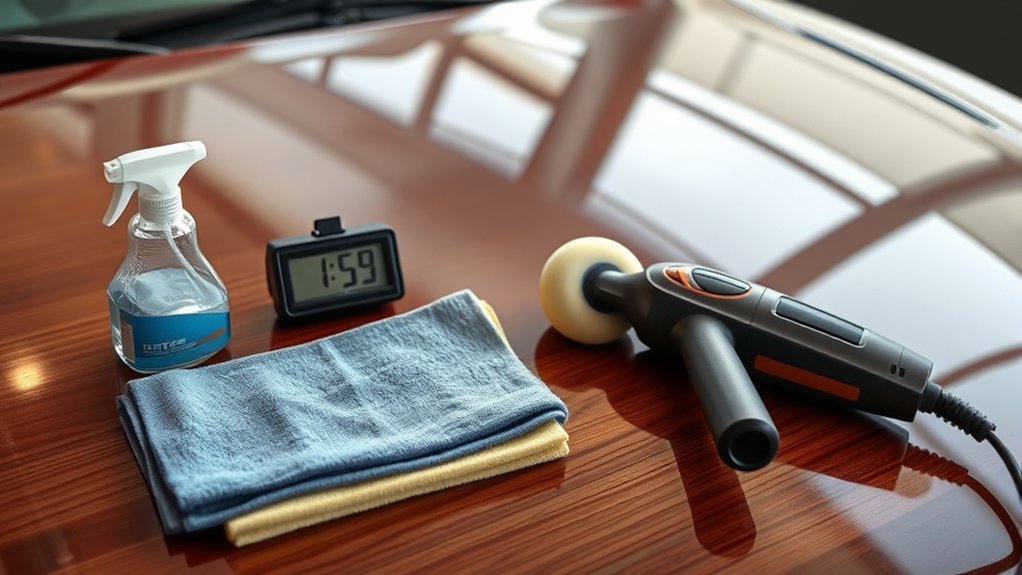
Stop DIY work when the defect does not improve with a mild, surface-approved method or when correction would require aggressive abrasion.
| Sign | Why Professional Help Matters |
|---|---|
| Rings or pits remain after deposits are removed | The clear coat may need measured polishing or refinishing |
| The panel has been repainted or polished several times | Remaining film thickness may be limited or uneven |
| The finish is matte, wrapped, filmed, or coated | Incorrect chemicals or abrasion can permanently alter the surface |
| Wet sanding appears necessary | A small mistake can cut through the clear coat |
Common Water Spot Removal Mistakes
- Treating a dirty car: rubbing mineral deposits through road grit can create scratches.
- Working in direct sun: cleaners can dry too quickly and leave new marks.
- Using household abrasives: baking soda, scouring pads, and melamine foam can dull automotive finishes.
- Assuming clay fixes etching: clay removes contamination above the paint; it does not level etched clear coat.
- Using too much pressure: more force increases marring without making the chemistry work faster.
- Ignoring the product label: a remover approved for glossy paint may be unsafe for matte paint, film, trim, or coatings.
- Skipping protection after polishing: polishing can remove wax, sealant, or coating along with the defect.
How to Prevent Water Spots
- Wash the vehicle in shade and keep each panel wet until the final rinse.
- Dry the car immediately with a clean microfiber towel or filtered-air blower.
- Use softened, deionized, or low-mineral water for the final rinse when practical.
- Move the vehicle away from lawn sprinklers and building runoff.
- Remove fresh rain or sprinkler residue before it repeatedly bakes onto the finish.
- Maintain wax, sealant, coating, wrap, or film with products approved by its manufacturer.
- Clean drying towels regularly and replace any that feel rough or collect debris.
Protection can make cleaning easier and reduce how strongly deposits bond, but no wax or coating makes a vehicle immune to spots. Prompt drying remains the most reliable habit.
Frequently Asked Questions
What is the best way to remove water spots from car paint?
Wash and dry the vehicle first. Then use a remover specifically approved for the surface and follow its label. If the paint feels rough afterward, lubricated automotive clay may remove bonded contamination. A ring that remains on a smooth surface usually needs polishing rather than more chemical cleaner.
How do I properly use a water spot remover?
Work on a clean, cool panel in the shade. Test a hidden area, use the amount and dwell time on the label, and never let the product dry. Wipe or rinse as directed, inspect the finish, and repeat only when the manufacturer permits it.
What tools do I need to remove water spots?
For light spots, you need automotive wash soap, a wash mitt, clean microfiber towels, and a paint-safe remover. Distilled water is useful for the final wipe. Add clay and lubricant for bonded contamination, or a fine polish and applicator for light etching.
How do I make a vinegar water spot remover?
Mix equal parts plain white vinegar and distilled water. Use it only as a brief, patch-tested treatment on compatible glossy paint, keep the panel cool, and do not let the mixture dry. Rinse or rewash the area afterward. Do not use it on matte paint, wraps, PPF, or coatings without approval.
Can water spots permanently damage clear coat?
Yes. Minerals and contamination can leave etching that remains after the deposit is removed. Light etching may polish out, while deep pits may not be safely removable without thinning the clear coat too much.
Will vinegar remove a ceramic coating?
A brief diluted treatment may not remove every coating, but it can change water behavior or weaken some protection systems. Use the coating maker’s approved mineral-removal product instead, especially when warranty coverage matters.
Sources
- U.S. Geological Survey: Hardness of Water — calcium, magnesium, mineral deposits, and vinegar’s effect on scale
- Meguiar’s Water Spot Remover — compatible glossy surfaces and matte-finish restriction
- Meguiar’s Smooth Surface Clay Kit — use of automotive clay for bonded contamination
- 3M Rubbing Compound — correction of water spots and other paint defects
- 3M Automotive Film Support — washing, drying, and avoiding abrasive compounds on automotive films
Conclusion
Safe water spot removal is a process, not a scrubbing contest. Wash first, confirm the surface type, and work from a labeled cleaner to clay and then polishing only when the previous step cannot solve the problem. Drying the vehicle promptly and maintaining the correct surface protection will make future spots easier to manage.






Leave a Reply