
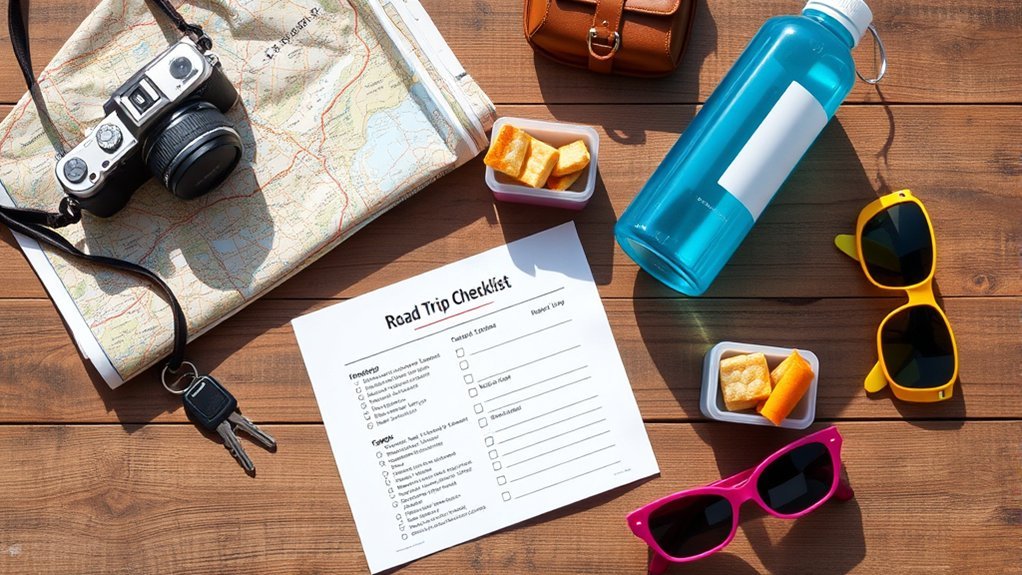
A safe road trip starts before you load the car. A complete road trip car checklist should cover the vehicle, emergency supplies, passengers, food, navigation, weather, overnight stops, and a realistic rest plan. Give yourself enough time to correct problems instead of discovering worn tires, a weak battery, or an open recall on departure morning.
Quick Answer
Before a road trip, inspect the tires, lights, wipers, fluids, battery, brakes, belts, hoses, and spare or repair kit. Check recalls, weather, road conditions, and your route. Pack emergency gear, secure cargo, plan rest stops, and stop driving immediately if you feel drowsy.
Key Takeaways
- Complete major maintenance and repair work at least several days before departure so you have time to correct problems.
- Check cold tire pressure against the driver-door placard, not the maximum pressure printed on the tire sidewall.
- Use your exact owner’s manual for fluid specifications, jack points, towing limits, tire equipment, and warning-light instructions.
- Plan breaks before you become tired, but pull over sooner whenever you notice drowsiness or loss of concentration.
- Carry an emergency kit, download offline maps, secure every load, and keep perishable food at 40°F or below.
At a Glance
| Time Required | About 45–90 minutes for basic checks, plus service time for any repairs |
| Difficulty | Easy to moderate; use a qualified technician for uncertain, high-voltage, brake, battery, or leak-related work |
| Tools Needed | Owner’s manual, tire-pressure gauge, flashlight, tread gauge or penny, clean cloth, phone, and vehicle-supplied tire tools |
| Cost | Basic checks may cost nothing; emergency supplies, replacement parts, and professional service vary by vehicle |
Road Trip Car Preparation Timeline
Do not leave every task until the morning you plan to depart. Dividing the work into stages gives you time to order parts, schedule service, test replacement equipment, and adjust the route if weather changes.
One to Two Weeks Before Departure
- Review the maintenance schedule in your owner’s manual and complete any service that will become due during the trip.
- Arrange a professional inspection if the vehicle has warning lights, braking changes, unusual noises, vibration, fluid leaks, starting problems, overheating, or uneven tire wear.
- Check for open safety recalls using your VIN or license plate through the NHTSA recall lookup.
- Inspect tire condition and confirm that a replacement tire, special-order fluid, battery, or other needed part can be obtained before departure.
- Review roadside-assistance coverage, insurance limits, towing provisions, and rental-car benefits.
The Day Before Departure
- Check tire pressure while the tires are cold.
- Test the lights, horn, wipers, washer system, climate control, and phone chargers.
- Inspect fluid levels using the procedures in the owner’s manual.
- Check the weather, traffic, road closures, construction, fuel or charging stops, and overnight reservations.
- Charge phones, power banks, flashlights, jump starters, and portable medical equipment.
- Chill food before placing it in the cooler and freeze enough ice packs for the planned travel day.
Departure-Day Check
- Walk around the vehicle and look for leaks, damaged tires, low corners, loose cargo, and objects behind the vehicle.
- Confirm that luggage does not block the driver’s view and that heavy items cannot become projectiles during sudden braking.
- Adjust mirrors and seats before moving.
- Buckle every passenger in an appropriate seat belt, car seat, or booster.
- Confirm that the first fuel, charging, meal, and rest stops are realistic.
Essential Vehicle Checks Before Hitting the Road
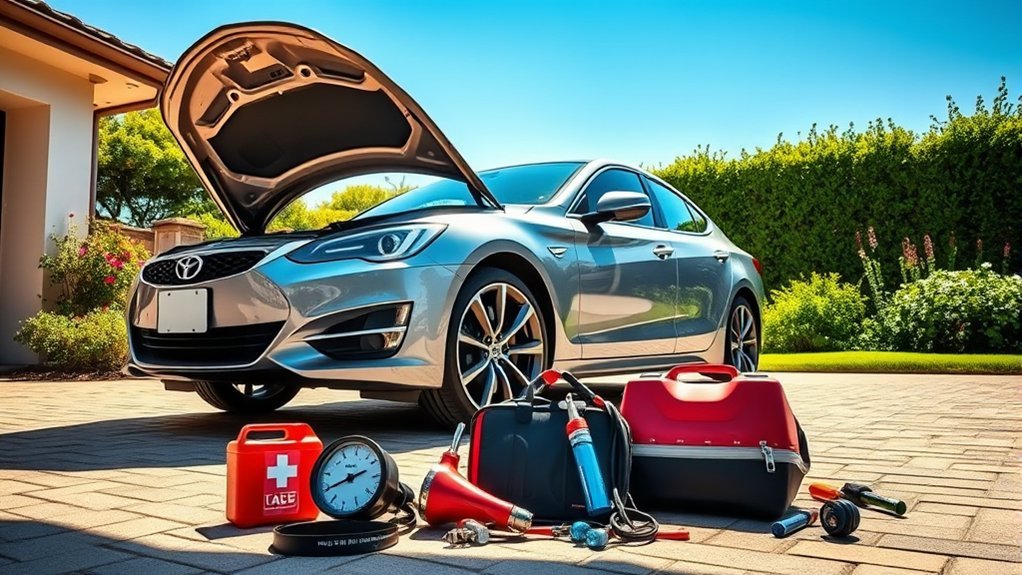
Use the vehicle’s owner’s manual as the primary reference. Tire pressure, fluid specifications, jack points, maintenance intervals, towing limits, and emergency procedures can differ even between two vehicles from the same manufacturer.
Check Tire Pressure, Tread, and Condition
Check all tires, including the spare when equipped, before a long trip. The NHTSA road-trip guidance recommends using the vehicle manufacturer’s cold inflation pressure shown in the owner’s manual or on the driver-door placard.
- Measure pressure before driving or after the vehicle has been parked for at least three hours.
- Do not use the maximum pressure molded into the tire sidewall as the vehicle’s target pressure.
- Inspect the tread and sidewalls for cuts, punctures, bulges, cracks, exposed cords, objects, or uneven wear.
- Make sure tread depth is legal and adequate for expected rain, snow, gravel, or unpaved roads.
- If a tire repeatedly loses pressure, have it inspected rather than repeatedly adding air.
- Do not begin a long trip on a temporary spare unless its label and the owner’s manual permit the planned speed and distance.
Pro Tip: Check pressure before loading the car. After loading, confirm that the combined weight of passengers and cargo remains within the capacity shown on the vehicle’s tire-and-loading label.
Verify the Spare or Tire-Repair System
Some vehicles do not include a conventional spare tire. Your vehicle may use run-flat tires, a sealant-and-inflator kit, or roadside assistance instead.
- Confirm which system your vehicle has and whether the sealant has expired.
- Locate the jack, lug wrench, tow eye, wheel-lock key, inflator, and spare-tire release tool.
- Make sure the tools fit the vehicle and are not buried beneath luggage.
- Read the owner’s manual before attempting a roadside tire change.
Inspect Brakes and Steering
Brakes should feel predictable and the vehicle should track normally. Arrange service before travel if you notice a soft or sinking pedal, grinding, scraping, pulling, vibration, a burning smell, reduced stopping ability, a brake warning light, or repeatedly low brake fluid.
Do not assume that adding brake fluid corrects the cause. A low level may be associated with normal pad wear, a leak, or another brake-system concern that requires inspection.
Test Lights, Wipers, and Visibility
- Test low and high beams, brake lights, turn signals, hazard flashers, reverse lights, license-plate lights, and trailer lights when applicable.
- Replace wiper blades that streak, chatter, split, or leave part of the windshield uncleared.
- Fill the washer reservoir with a product suitable for the expected temperatures.
- Clean the windshield, mirrors, cameras, headlights, and driver-assistance sensors according to the manufacturer’s instructions.
- Secure floor mats with the correct retainers so they cannot interfere with the accelerator or brake pedal.
Check Fluids Safely
Depending on the vehicle, applicable fluids may include engine oil, coolant, brake fluid, transmission or clutch fluid, hydraulic power-steering fluid, diesel exhaust fluid, and windshield washer fluid. Check each one only as directed by the owner’s manual.
Warning: Never remove a radiator or pressurized coolant-reservoir cap while the engine is hot. Use only the specified fluid, never mix fluids unless the manufacturer permits it, and obtain service for visible leaks or a level that drops again after correction.
If an oil change, coolant service, brake service, or other scheduled maintenance will become due during the trip, complete it before leaving. Do not overfill a reservoir, and do not rely on fluid color alone to determine condition.
Check the Battery, Belts, Hoses, and Climate System
- Have the battery and charging system tested if the engine cranks slowly, the battery is old, lights dim, or corrosion is visible.
- Inspect accessible belts and hoses for cracks, glazing, fraying, swelling, blistering, soft spots, or loose connections.
- Confirm that air conditioning, heating, and defrosting work before travel through extreme heat, cold, rain, or snow.
- Do not place tools or metal objects across battery terminals.
Note: Electric and hybrid vehicles still require tire, brake, lighting, wiper, cooling, 12-volt battery, and applicable-fluid checks. Do not touch, disconnect, probe, or repair orange high-voltage cables or damaged high-voltage components. Use a qualified technician.
Check Dashboard Warnings and Recalls
Do not ignore an illuminated oil-pressure, temperature, brake, battery, airbag, tire-pressure, or charging-system warning. Consult the manual and correct the underlying problem before a long trip.
Enter the 17-character VIN or license plate into the NHTSA recall tool. If a recall is open, follow the manufacturer’s repair or interim safety instructions. Recently announced recalls may not immediately include every affected VIN, so also review current manufacturer communications when appropriate.
A pre-trip inspection cannot prevent every breakdown, but it can reveal worn, damaged, overdue, or recalled equipment while you still have time to correct it.
Check Documents, Roadside Coverage, and Cargo
Documents and Essential Information
- Driver’s license
- Vehicle registration
- Current proof of insurance
- Roadside-assistance membership or insurer contact information
- Medication list, allergy information, and emergency contacts when relevant
- Hotel, campground, ferry, attraction, and charging reservations
- A paper or saved digital copy of important phone numbers and addresses
Keep sensitive documents secure and avoid leaving them visible in an unattended vehicle.
Secure Luggage and Equipment
Place heavy items low and as far forward in the cargo area as practical. Use the vehicle’s approved tie-down points for coolers, tools, mobility equipment, pet crates, and other heavy objects. Do not exceed the vehicle’s payload, axle, roof-rack, hitch, or trailer limits.
Nothing should obstruct the driver’s view, interfere with seat belts, cover required lights, or rest loose on the rear parcel shelf. Recheck straps and trailer connections after the first few miles and at fuel or charging stops.
Essential Safety Gear You Need for Your Road Trip
Even a well-maintained vehicle can experience a flat tire, dead battery, weather delay, collision, or mechanical failure. Build a kit based on the vehicle, route, season, passengers, and distance from help. The Ready.gov car-safety list is a useful starting point.
| Essential Gear | Purpose and Checks |
|---|---|
| Communication and power | Charged phone, vehicle charger, power bank, emergency contacts, and roadside-assistance details |
| First aid and medication | Stocked first-aid kit, personal medications, allergy supplies, and any required medical equipment |
| Visibility | Flashlight, spare batteries, reflective vest, and reflective triangles or approved road flares where legal and safe |
| Battery support | Compatible jumper cables or a charged jump starter, used according to both vehicles’ manuals |
| Tire equipment | Pressure gauge, spare or repair kit, jack, lug wrench, wheel-lock key, gloves, and a stable ground mat |
| Basic tools | Manufacturer-suitable hand tools, multi-tool, shop towels, and duct tape for limited temporary use |
| Food and water | Drinking water and non-perishable food for passengers, with extra supplies for remote or severe-weather travel |
| Seasonal supplies | Blankets, warm clothing, rain gear, sun protection, ice scraper, snow brush, traction aid, or extra washer fluid as conditions require |
| Navigation backup | Downloaded maps, written addresses, and a current paper map for remote areas |
Warning: Do not use an open flame or pyrotechnic flare near leaking fuel, dry vegetation, or another fire hazard. Never crawl beneath a vehicle supported only by a jack, and do not attempt a repair beside fast-moving traffic.
Comprehensive Packing List for Your Journey
A useful packing list separates essential items from optional comfort gear. Pack by category so frequently used items remain accessible without unloading the entire vehicle.
Clothing and Comfort Items
- Weather-appropriate layers, rain protection, and a change of clothes
- Supportive footwear
- Travel pillow and blanket for passengers or overnight lodging
- Sunglasses, sunscreen, hat, and insect protection when appropriate
- Reusable water bottles
Do not add cushions, covers, or accessories that interfere with the seat belt, head restraint, side airbag, seat sensor, or driving controls.
Electronics and Entertainment
- Phone and device chargers
- Power bank and charging cables
- Downloaded audiobooks, podcasts, music, and children’s activities
- Headphones for passengers, used at a safe volume
- Camera equipment and memory cards
Set the route, playlist, climate controls, and entertainment before moving. The driver should not type, search, or handle devices while driving.
Food, Drinks, and Cooler Supplies
- Water and shelf-stable snacks such as crackers, nuts, dried fruit, or unopened bars
- Pre-chilled perishable food
- Ice, frozen gel packs, or frozen water bottles
- Cooler thermometer
- Airtight, leak-resistant food containers
- Napkins, utensils, waste bags, and hand-cleaning supplies
Children, Pets, and Accessibility Needs
- Correctly installed car seats or boosters for each child’s age and size
- Diapers, wipes, feeding supplies, spare clothing, and comfort items
- Pet restraint, secured crate, leash, food, water, medication, and waste bags
- Mobility aids, charging equipment, hearing or vision supplies, and backup medical necessities
Never leave a child, dependent adult, or pet unattended in a parked vehicle. Cabin temperatures can become dangerous quickly, even when outside temperatures seem mild.
Organize the Cabin and Cargo Area
Use packing cubes, storage boxes, seat-back organizers, and labeled bags to keep the vehicle orderly. Store emergency equipment where it can be reached without removing all the luggage. Keep loose toys, bottles, tools, and electronics secured when the vehicle is moving.
Plan Your Route and Select Overnight Stops
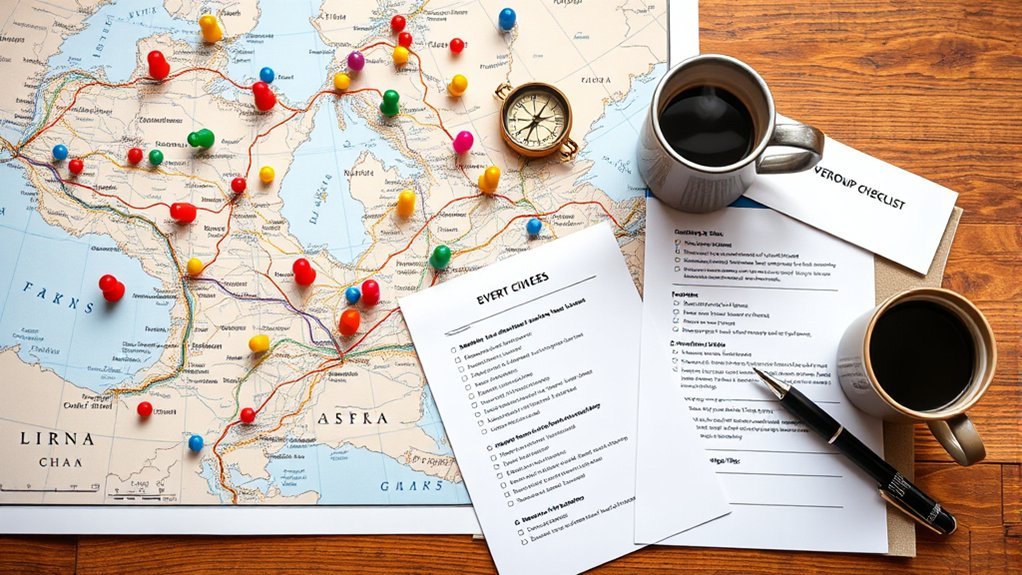
Balance efficient travel with realistic rest, meal, fuel, charging, and sightseeing stops. Do not treat a fixed number of driving hours as safe for every person or every day. A rested driver on a clear daytime highway faces different demands from a tired driver in heavy rain, darkness, mountains, construction, or congestion.
Check Weather, Traffic, and Road Conditions
- Review the forecast for the entire route, not only the destination.
- Check state transportation or 511 services for closures, chain restrictions, construction, crashes, and severe-weather impacts.
- Allow extra time for urban traffic, mountain roads, border crossings, ferries, charging, and holiday congestion.
- Delay or reroute the trip when official guidance warns against travel.
Plan Fuel or Charging Stops
Do not assume the next station will be open, compatible, operational, or reachable with the remaining range. In remote areas, refill earlier than you would at home.
For an electric vehicle, verify connector compatibility, charging speed, access hours, payment requirements, and backup stations. Allow for range changes caused by speed, temperature, elevation, headwinds, towing, cabin heating, or heavy loads.
Download Maps and Save Essential Information
Download the route and surrounding area before departure. Google Maps offline guidance explains that a downloaded area can support navigation without a connection when the route is contained within that area. Live traffic and alternate routes may not be available offline.
- Save hotel, campground, fuel, charging, hospital, and roadside-assistance locations.
- Write down important addresses and confirmation numbers.
- Carry a current paper map for remote regions.
- Share the route, overnight stops, and expected arrival time with a trusted person.
Choose Overnight Stops
Book ahead during holidays, major events, and peak seasons. Choose a stop before fatigue is likely to become a problem, not after it begins. Consider parking security, trailer access, pet rules, accessibility, check-in hours, and on-site charging where relevant.
Leave reasonable flexibility for delays and optional attractions, but do not sacrifice sleep to preserve an overpacked itinerary.
Road Trip Comfort Tips
Comfort supports attention, but comfort accessories must not interfere with vehicle safety systems.
- Adjust the seat so the driver can fully operate the pedals while maintaining a slight bend in the knees and elbows.
- Position the head restraint near the back of the head rather than the neck.
- Keep the cabin at a comfortable temperature and use sunshades only when they do not obstruct required visibility.
- Drink water regularly, but coordinate restroom breaks so they do not create rushed driving.
- Use backseat organizers to keep snacks, games, wipes, and charging cables within passengers’ reach.
- Rotate activities for children and plan safe places for movement and bathroom breaks.
- Stop to stretch and walk rather than attempting exercises that distract the driver.
Prevent Drowsy Driving
A schedule cannot make a tired driver safe. The NHTSA drowsy-driving guidance recommends beginning a long trip after adequate sleep and recognizing that the midnight-to-6 a.m. period and late afternoon are common sleepiness periods.
Plan Rest Before You Need It
- Start the trip after a normal night of sleep.
- Plan a safe stop about every two hours as a baseline, with earlier stops for children, pets, pain, stress, poor weather, or driver fatigue.
- Change drivers before the current driver becomes exhausted.
- Check prescription and over-the-counter medication labels for drowsiness warnings.
- Avoid alcohol before driving.
Recognize Drowsiness Warning Signs
- Heavy eyelids, frequent blinking, or repeated yawning
- Difficulty focusing or remembering the last few miles
- Missing exits, signs, or turns
- Drifting within or outside the lane
- Hitting a rumble strip
- Restlessness, irritability, or disconnected thoughts
Warning: If you become drowsy, do not continue to the next planned stop. Pull into a safe, legal location, change drivers, or rest. Loud music, cold air, open windows, and caffeine alone do not correct serious sleep deprivation.
Keep Food Safe During the Trip
Do not judge cooler safety by the number of days the food has been packed. The USDA food-safety guidance recommends keeping cold food at 40°F or below.
- Pre-chill food and drinks before placing them in the cooler.
- Use plenty of ice, frozen gel packs, or another reliable cold source.
- Place a thermometer inside the cooler and monitor the temperature.
- Keep food in sealed containers and separate raw animal products from ready-to-eat food.
- Use a separate drinks cooler when possible so the food cooler is opened less often.
- Keep the cooler in the air-conditioned cabin or shade rather than a hot trunk whenever practical.
- Replace melted ice as needed and discard perishable food when safe temperature control is uncertain.
- Never taste questionable food to decide whether it is safe.
What to Do If Your Vehicle Breaks Down
- Move out of traffic if possible. Signal, reduce speed smoothly, and pull as far from moving lanes as conditions allow.
- Turn on hazard flashers. Make the vehicle visible without standing in traffic.
- Assess the location. Remaining belted inside may be safer than exiting beside fast-moving traffic. If you must exit, use the side away from traffic when possible.
- Call for help. Contact roadside assistance. Call 911 for a collision, fire, medical emergency, fuel leak, unsafe traffic position, downed power line, or immediate danger.
- Share precise location information. Provide the road name, direction of travel, mile marker, nearest exit, landmark, and vehicle description.
- Use warning devices only when safe. Place reflective triangles according to their instructions and local law. Do not walk into a live traffic lane.
- Attempt only safe, permitted work. Follow the owner’s manual. Do not work under a jack-supported vehicle, open a hot cooling system, or attempt repairs near moving traffic.
- Watch for fire and electrical hazards. Move away from smoke, flames, leaking fuel, damaged high-voltage components, or downed wires and wait for emergency responders.
Note: A tire sealant kit may not repair a sidewall cut, large puncture, separated tread, damaged wheel, or tire that has been driven while severely underinflated. Call for assistance when the damage exceeds the kit’s instructions.
Printable Road Trip Car Prep Checklist for Easy Reference
Print this list or save it to your phone. Items marked as vehicle-specific should be verified in your exact owner’s manual.
Vehicle Condition
- ☐ Scheduled maintenance will not become overdue during the trip
- ☐ No unresolved warning lights, leaks, overheating, unusual noises, or braking concerns
- ☐ Open safety recalls checked by VIN or license plate
- ☐ Cold tire pressure checked against the driver-door placard
- ☐ Spare-tire pressure checked, if equipped
- ☐ Tread and sidewalls inspected for wear, damage, bulges, cracks, or punctures
- ☐ Spare, run-flat system, or inflator kit identified and ready
- ☐ Jack, lug wrench, wheel-lock key, tow eye, and repair tools located
- ☐ Brake operation feels normal
- ☐ Engine oil checked according to the manual, if applicable
- ☐ Coolant checked only when safe and cool
- ☐ Brake, transmission, clutch, power-steering, washer, and other applicable fluids checked
- ☐ Battery and charging system show no signs of weakness
- ☐ Belts and hoses inspected for visible damage
- ☐ Headlights, brake lights, turn signals, reverse lights, and hazard flashers tested
- ☐ Wipers and washer system tested
- ☐ Air conditioning, heating, and defrosting tested
- ☐ Windshield, mirrors, cameras, lights, and sensors cleaned
- ☐ Floor mats secured and clear of pedals
Emergency Kit
- ☐ Charged phone and vehicle charger
- ☐ Charged power bank
- ☐ First-aid kit and personal medications
- ☐ Flashlight and spare batteries
- ☐ Reflective vest and warning triangles
- ☐ Compatible jumper cables or charged jump starter
- ☐ Tire-pressure gauge
- ☐ Work gloves and basic vehicle-appropriate tools
- ☐ Drinking water and non-perishable food
- ☐ Blankets, rain gear, or seasonal clothing
- ☐ Ice scraper, snow brush, traction aid, or sun protection as needed
- ☐ Paper towels, cleaning wipes, and waste bags
Documents, Navigation, and Route
- ☐ Driver’s license, registration, and proof of insurance
- ☐ Roadside-assistance and insurer contact information
- ☐ Reservations and confirmation numbers saved
- ☐ Weather and road conditions checked for the full route
- ☐ State 511 or transportation resources identified
- ☐ Fuel or charging stops planned with backups
- ☐ Offline maps downloaded and updated
- ☐ Paper map or written route available for remote travel
- ☐ Route and expected arrival shared with a trusted person
- ☐ Realistic rest and overnight stops planned
Passengers, Food, and Cargo
- ☐ Correct car seats or boosters installed
- ☐ Pet crate or restraint secured
- ☐ Medications, accessibility equipment, and child supplies packed
- ☐ Cooler packed with enough cold sources
- ☐ Cooler thermometer included
- ☐ Drinking water accessible
- ☐ Heavy cargo placed low and secured
- ☐ Vehicle, roof-rack, hitch, and trailer limits not exceeded
- ☐ Emergency kit remains accessible
- ☐ Nothing blocks windows, mirrors, lights, or driver controls
Final Departure Check
- ☐ Walk-around completed
- ☐ No new leaks or visibly low tires
- ☐ Doors, hood, hatch, roof box, and trailer connections secured
- ☐ Mirrors and seat adjusted
- ☐ Every occupant buckled correctly
- ☐ Phone mounted or stored before driving
- ☐ First stop and backup route confirmed
- ☐ Driver is rested and fit to drive
Frequently Asked Questions
How often should I perform vehicle checks before road trips?
Complete a basic check before every long trip and continue the maintenance schedule in your owner’s manual. Tire pressure, visible damage, lights, wipers, fluid levels, warning lights, and emergency equipment should be reviewed again shortly before departure. Arrange service when maintenance is due or symptoms suggest a problem.
What should I do if my tire pressure is low?
Measure the tire when cold and inflate it to the pressure shown on the driver-door placard or in the owner’s manual. Inspect for a puncture, valve problem, sidewall damage, or repeated air loss. Do not use the sidewall maximum as the target pressure, and have recurring pressure loss inspected.
Can I use regular tools for emergency repairs?
Use only tools that fit the vehicle and only for procedures permitted by the owner’s manual. Work in a safe location away from traffic. Never crawl under a vehicle supported only by a jack, open a hot cooling system, improvise on brakes or steering, or touch EV or hybrid high-voltage components.
How can I keep my food fresh during the trip?
Pre-chill the food, use enough ice or frozen packs, and monitor the cooler with a thermometer. Keep perishable food at 40°F or below, open the cooler as little as possible, and separate raw foods from ready-to-eat items. Discard perishable food when safe temperature control is uncertain.
What are the best apps for road trip navigation?
Choose a navigation app that provides current traffic, closures, route options, and offline maps in the areas you will visit. Download the route before departure and carry written addresses or a paper map. Offline navigation may not include live traffic, new closures, or alternate routes.
Should I have a mechanic inspect my car before a road trip?
A professional inspection is sensible when maintenance is due, the vehicle has been sitting, the battery is weak, the tires are damaged or unevenly worn, warning lights are on, fluids are leaking, braking has changed, or you are not comfortable performing the checks yourself.
What should I carry if my car does not have a spare tire?
Confirm whether the vehicle uses run-flat tires, a sealant-and-inflator kit, or roadside assistance. Check the kit’s expiration date, operating instructions, and damage limitations. Carry the required tow eye or wheel-lock key, and know that sealant cannot repair every puncture or sidewall failure.
Conclusion
Complete your road trip car checklist early enough to correct anything you find. Verify the tires, brakes, fluids, battery, lights, wipers, emergency equipment, recalls, route, weather, passengers, food, and cargo before departure. A flexible schedule, adequate sleep, regular stops, and a clear breakdown plan will make the journey safer and easier to manage.
Sources
- National Highway Traffic Safety Administration — Summer Driving and Road Trip Tips — vehicle inspections, tires, lights, fluids, batteries, emergency kits, route planning, and occupant safety
- National Highway Traffic Safety Administration — Recall Lookup — VIN and license-plate safety-recall checks
- Ready.gov — Car Safety — vehicle emergency-kit and seasonal-preparedness guidance
- National Highway Traffic Safety Administration — Drowsy Driving — fatigue risks, warning signs, sleep guidance, and safe responses
- USDA Food Safety and Inspection Service — Danger Zone — safe cold-food temperatures and cooler handling
- Google Maps Help — Download Areas and Navigate Offline — offline-map setup and limitations






Leave a Reply