
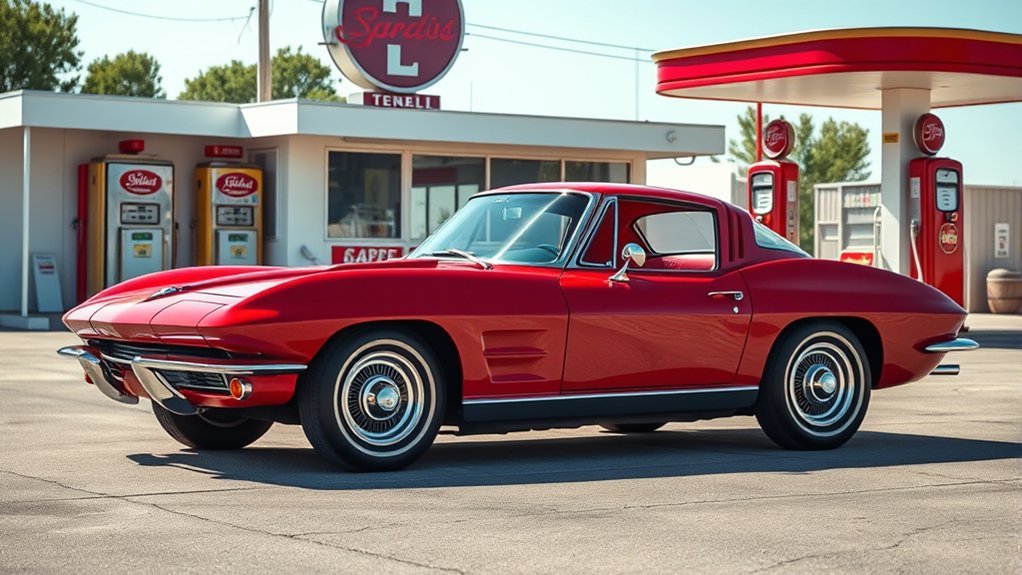
Car design in the 1960s changed more than body shapes. The decade brought compact cars, pony cars, muscle machines, personal-luxury coupes, cleaner European sports cars, and a stronger focus on occupant protection. It also showed how advertising, youth culture, global competition, and new federal rules could shape what automakers built and how drivers saw themselves.
Quick Answer
1960s car design moved from the tailfin-heavy look of the late 1950s toward cleaner lines, fastbacks, compact packaging, and performance-focused models. The decade also introduced major safety changes, popularized pony and muscle cars, strengthened Japanese competition in the United States, and turned automobiles into powerful symbols of identity and freedom.
Key Takeaways
- Early-1960s cars often used restrained, boxier forms, while mid- and late-decade models embraced fastbacks, hidden headlights, and sculpted “coke-bottle” sides.
- The Ford Mustang created the pony-car formula; muscle cars used larger engines in relatively affordable midsize bodies, while the Corvette remained a sports car.
- The 1966 federal safety law led to the first U.S. Federal Motor Vehicle Safety Standards for the 1968 model year.
- British cars influenced performance and proportions, while Japanese brands gained U.S. credibility through compact, practical, and increasingly reliable models.
- Women and Black designers made important contributions, but design studios remained far less inclusive than the customer base they served.
The Evolution of Car Design in the 1960s
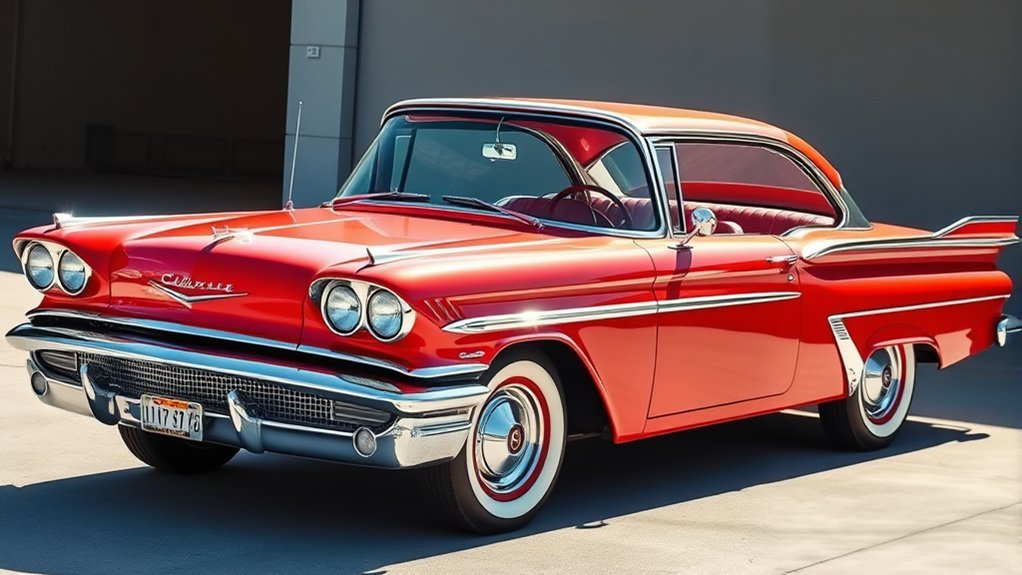
Car design did not follow one single 1960s style. At the start of the decade, many American cars moved away from the tallest tailfins and heavy chrome of the late 1950s. Designers used straighter rooflines, flatter body sides, and more formal grilles. By the middle of the decade, sporty proportions and more sculpted surfaces became common.
The long hood and short rear deck of the Ford Mustang helped define the pony car. Fastback roofs appeared on models such as the Mustang, Dodge Charger, Plymouth Barracuda, and AMC Marlin. Hidden headlights, flowing fender lines, and “coke-bottle” curves gave many late-1960s cars a lower and more muscular appearance.
Consumer choices also widened. Full-size sedans and station wagons remained important, but compact cars such as the Ford Falcon, Chevrolet Corvair, Plymouth Valiant, and imported Volkswagen Beetle showed that buyers also wanted easier parking, lower purchase prices, and better economy.
Ford introduced the Mustang to the public at the 1964 New York World’s Fair and sold more than 418,000 units during its first year, proving that sporty styling could succeed at mass-market prices.
How the Decade Changed From Early to Late 1960s
Early-decade styling was often crisp and restrained. Mid-decade cars became more youthful and expressive, and late-decade designs grew wider, more aggressive, and more performance oriented. This progression can be seen in the transition from upright compacts to fastback pony cars and bold personal-luxury coupes.
The change was not only visual. Automakers relied more heavily on market research, model variations, trim packages, and annual styling updates. A single platform could support a practical sedan, a sporty coupe, a wagon, or a luxury version, allowing manufacturers to serve more buyers without creating every vehicle from scratch.
Body Construction, Packaging, and Materials
Unibody construction became more common, especially in compact and imported cars, although body-on-frame construction remained widespread in larger American vehicles. Unibody designs could reduce weight and help manufacturers package passenger space more efficiently.
The 1966 Oldsmobile Toronado brought front-wheel drive back to high-volume U.S. production for the first time since the Cord 810 and 812 of the 1930s. The Mini, introduced in 1959 but highly influential throughout the 1960s, used a transverse engine and front-wheel drive to devote more of its small footprint to passengers.
Fiberglass remained important to the Chevrolet Corvette, while steel dominated mass-produced bodies. Designers also used vinyl roof coverings, wood-look trim, bucket seats, center consoles, and bright interior colors to create distinct identities without changing the basic structure.
Innovative Features That Defined 1960s Cars
The decade’s most important innovations included safer braking systems, energy-absorbing interior components, improved visibility equipment, stronger performance packages, and new drivetrain layouts. Convenience features such as power steering, power brakes, air conditioning, automatic transmissions, and power windows also became available across more model lines, although many remained optional.
Safety Innovations in Cars
Safety moved from a secondary selling point toward a regulated design requirement. Lap belts became more common during the early and middle 1960s, but the turning point was the National Traffic and Motor Vehicle Safety Act of 1966. The law led to the first Federal Motor Vehicle Safety Standards for the 1968 model year.
Those early standards addressed items such as seat belts, braking, lighting, windshield performance, door latches, mirrors, and energy-absorbing steering systems. Padded instrument panels, dual-circuit brakes, improved glass, and collapsible steering columns became more prominent as manufacturers prepared for the new rules.
The Volvo 144, introduced in 1966, showed how safety could be designed into the whole vehicle. Its notable features included four-wheel disc brakes and a triangular-split dual-circuit braking system that could preserve braking at three wheels if one circuit failed.
Note: “Standard equipment” and “legally required” are not the same. Some manufacturers installed belts and padded interiors before federal rules took effect, while requirements varied by model year, seating position, and vehicle type.
Performance Enhancements and Engines
Performance became a central part of 1960s marketing. Automakers offered larger-displacement V8 engines, multiple carburetors, high-compression ratios, performance camshafts, heavy-duty cooling, stronger transmissions, limited-slip differentials, and upgraded suspension or brake packages.
Factory horsepower ratings rose sharply in some models. The 1967 Corvette offered a 427-cubic-inch V8 rated as high as 435 gross horsepower, while the 1964 Pontiac GTO’s standard 389-cubic-inch V8 was rated at 325 gross horsepower and could be ordered in more powerful forms. These period “gross” ratings were measured differently from the later SAE net ratings used on modern vehicles, so direct comparisons can be misleading.
Engine power was only part of the design story. Hood scoops, racing stripes, tachometers, bucket seats, floor shifters, redline tires, and model-specific badges made performance visible even when the underlying car shared many parts with a family sedan.
Ford also disclosed sodium-sulfur battery research in the 1960s, but the technology remained experimental and did not shape ordinary production-car design during the decade. Gasoline engines, not battery-electric drivetrains, defined the era’s mass market.
Comfort, Convenience, and Interior Design
Interiors became more specialized. Sporty models used deep-set gauges, center consoles, bucket seats, and floor-mounted shifters. Luxury cars emphasized broad bench seats, wood or wood-look trim, quieter cabins, and power accessories. Station wagons and family sedans focused on passenger room, luggage space, and flexible seating.
Color was also important. Buyers could choose bright exterior paint, contrasting vinyl roofs, patterned upholstery, and coordinated dashboards. These choices helped turn a car from basic transportation into a personal statement.
Top Iconic Muscle Cars of the 1960s
The muscle-car era grew from a simple formula: place a large, powerful engine in a relatively affordable midsize body. The formula produced some of the decade’s most recognizable cars, but not every fast American coupe was technically a muscle car.
Muscle Cars, Pony Cars, and Sports Cars
- Muscle car: A midsize or intermediate American car built around straight-line performance, usually with a large-displacement V8. Examples include the Pontiac GTO, Oldsmobile 4-4-2, Chevrolet Chevelle SS, and Plymouth Road Runner.
- Pony car: A compact, stylish, long-hood coupe with many trim and engine choices. The Ford Mustang created the category; the Chevrolet Camaro, Pontiac Firebird, Plymouth Barracuda, and AMC Javelin followed.
- Sports car: A car designed more specifically around handling, braking, and two-seat or close-coupled performance. The Chevrolet Corvette fits this category better than the traditional muscle-car label.
Legendary Muscle Car Models
- 1964 Pontiac GTO: Often credited with popularizing the classic muscle-car formula by combining an intermediate body with Pontiac’s 389-cubic-inch V8.
- 1966 Dodge Charger: Used a dramatic fastback roof, four-place seating, and available big-block power to blend performance with a distinctive grand-touring look.
- 1968 Plymouth Road Runner: Focused on affordable performance, using a 383-cubic-inch V8 as standard equipment and offering the 426 Hemi as a costly option.
- Chevrolet Chevelle SS 396: Paired Chevrolet’s midsize platform with big-block power and a strong street-performance identity.
- Oldsmobile 4-4-2: Combined performance with a more polished image, showing that muscle cars could offer handling and comfort as well as acceleration.
The 1967 Corvette Sting Ray and 1968 Ford Mustang remain essential icons of the same performance culture. The Corvette was a sports car, and the Mustang was a pony car, but both helped make speed, style, and personalization central to American car design.
Performance and Power Features
Manufacturers competed through engine displacement, carburetion, compression, axle ratios, and racing-inspired option packages. The 1968 Mustang could be ordered with a 390-cubic-inch V8, the Road Runner’s 383 was rated at 335 gross horsepower, and the Dodge Charger offered the 426 Hemi for buyers willing to pay for maximum performance.
Period acceleration and top-speed figures vary because road tests used different tires, gearing, weather, fuel, and test methods. Factory horsepower claims also reflected marketing as well as engineering. For that reason, a careful historical comparison should identify the engine code, transmission, axle ratio, and rating method rather than relying on a single headline number.
Cultural Impact and Legacy
Muscle and pony cars became symbols of youth, independence, and competition. Drag racing, stock-car racing, road racing, drive-in culture, movies, television, and popular music all reinforced the connection between cars and personal identity.
Automakers sold that identity through memorable names, bold graphics, racing victories, and option lists that allowed buyers to create anything from an economical six-cylinder commuter to a high-powered weekend car. That mix of accessibility and aspiration is a major reason these models remain collectible.
How British Luxury Cars Redefined Performance in the 1960s
British manufacturers offered a different view of performance. Instead of relying only on large engines and dramatic size, they often combined lighter proportions, responsive handling, carefully detailed interiors, and competition-influenced engineering.
The 1961 Jaguar E-Type became famous for its long hood, compact cabin, covered headlights on early cars, and flowing body shaped with aerodynamic thinking. The Aston Martin DB5 combined a hand-finished grand-touring cabin with strong six-cylinder performance and gained worldwide recognition through its association with James Bond.
The Rolls-Royce Silver Shadow, introduced in 1965, represented another major shift. Its unibody construction, independent suspension, and more compact proportions brought the brand’s traditional craftsmanship into a more modern package.
The Mini belongs in the decade’s broader British design story, not in the luxury category. Its space-efficient front-wheel-drive layout influenced generations of small cars and demonstrated that clever packaging could matter as much as exterior size.
Japanese Car Design Innovations in the 1960s: Breaking Into the U.S. Market
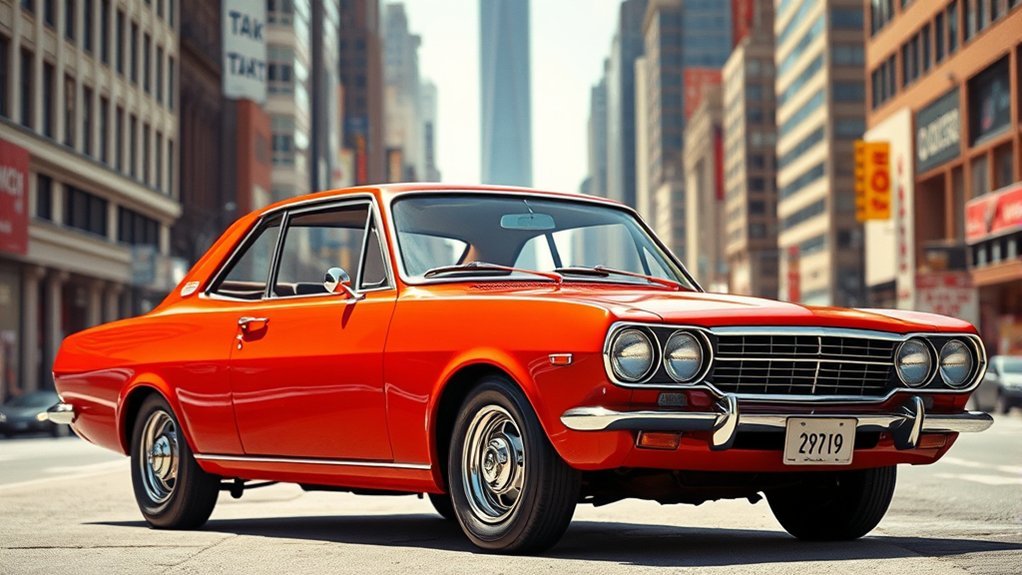
Japanese automakers entered the U.S. market before the 1960s, but the decade was when several brands began overcoming early doubts about size, performance, parts support, and highway suitability. Their strongest designs focused on practical dimensions, efficient engines, useful interiors, and steady improvements in quality.
According to Toyota’s U.S. company history, the Corona became the brand’s first popular American model after its 1965 introduction, and the Corolla reached American drivers in 1968. These cars gave buyers compact alternatives at a time when many domestic models were still large and fuel was inexpensive.
Datsun strengthened its reputation with the 510 sedan and then the 240Z, which was introduced in late 1969 and sold in North America as a 1970 model. The Z showed that a Japanese brand could offer sports-car proportions, strong performance, and everyday usability at a competitive price.
Honda began automobile production in Japan with the T360 mini truck in 1963. The company’s N600 reached Hawaii in December 1969 and the mainland United States in 1970, so it should not be described as a major mainland U.S. success during the middle of the decade.
Japanese cars did not dominate the U.S. market in the 1960s, but their progress changed expectations. Compact size no longer had to mean crude engineering, and imported cars increasingly competed on reliability, value, and thoughtful packaging.
How Design Shaped Automotive Culture in the 1960s
In the 1960s, a car communicated age, income, taste, and ambition. A Mustang suggested youthful sportiness, a Cadillac projected status, a station wagon signaled family use, and a Volkswagen Beetle could suggest practicality or nonconformity. Design helped drivers choose not only transportation, but also an identity.
Advertising made those meanings stronger. The Mustang’s 1964 World’s Fair launch, coordinated television campaigns, print ads, dealer displays, and product placement showed how a new car could become a national event. Manufacturers increasingly sold lifestyles—adventure, sophistication, rebellion, family security, or competition—rather than specifications alone.
Motorsport also influenced production design. Drag strips encouraged big engines and visual performance cues. Road racing strengthened the appeal of disc brakes, better suspension, and aerodynamic shapes. NASCAR success supported showroom sales, while European endurance racing gave brands such as Ferrari, Porsche, Ford, and Jaguar global prestige.
At the same time, safety concerns challenged the idea that style and speed should come first. Public criticism, crash research, and federal action pushed designers to integrate protection into dashboards, steering columns, brakes, glass, lighting, and body structures.
Significant Auto Shows and Public Debuts
The Geneva Motor Show introduced the Jaguar E-Type in 1961. The New York World’s Fair gave the Mustang an unusually large public stage in 1964. Detroit’s annual auto show and manufacturer-run displays presented new models and concept cars to American buyers, while European shows in Paris, London, Frankfurt, and Turin helped spread international design ideas.
These events mattered because photographs, news reports, and television coverage carried new designs far beyond the show floor. A successful debut could establish a car’s image before most buyers had taken a test drive.
Gender and Racial Representation in 1960s Car Design
Automotive design studios in the 1960s were still dominated by white men, even though women were major drivers, passengers, and household decision-makers. The gap was not caused by a lack of talent. Hiring practices, workplace culture, limited access to transportation-design programs, and narrow ideas about who should design cars restricted opportunity.
General Motors had recruited a small group of women designers in the 1950s, later publicized as the “Damsels of Design.” The Smithsonian Libraries record on these pioneers helps document their work. Most of the group had left GM before the 1960s, although designers such as Suzanne Vanderbilt continued and contributed to interiors and safety-related concepts.
McKinley Thompson Jr. became Ford’s first African American automobile designer after joining the company in 1956. During the 1960s, he contributed ideas to concept vehicles and production programs including the Mustang and Bronco, while also developing his independent Warrior vehicle concept.
These examples correct the idea that underrepresented designers were entirely absent. They were present and influential, but they remained exceptions inside institutions that offered too few opportunities. A complete history of 1960s car design should name their work rather than relying on unsupported statistics or vague references to unnamed films.
Safety Innovations and Their Impact on 1960s Automotive Design
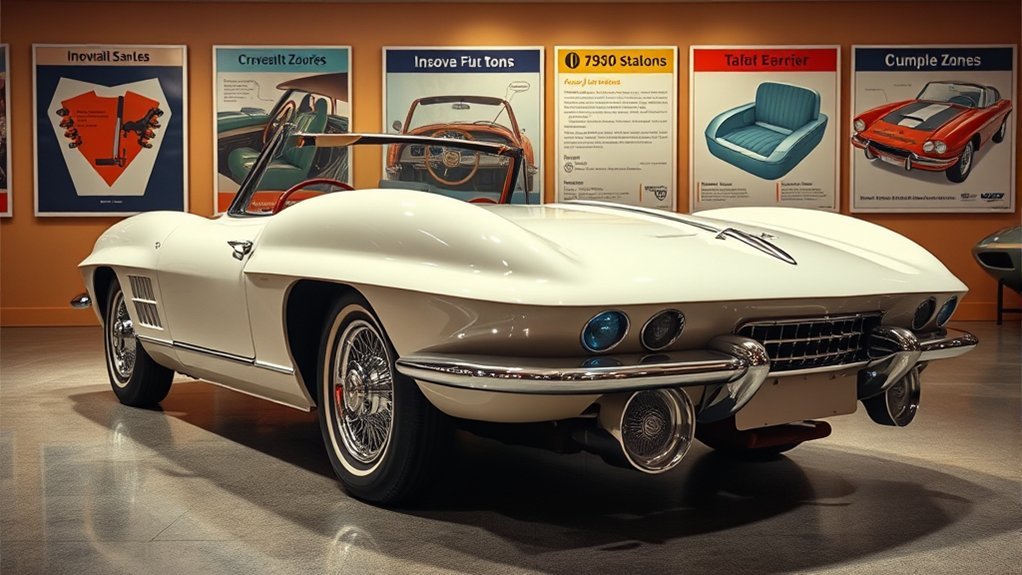
Safety changed both visible and hidden parts of the car. Padded dashboards altered interior shapes. Energy-absorbing steering columns affected packaging around the driver. Better door latches, windshield retention, mirrors, lighting, and braking systems required engineers and stylists to coordinate more closely.
The 1966 federal safety law created a national framework for vehicle standards. Requirements that began with the 1968 model year reduced the industry’s ability to treat safety as an optional trim feature. Manufacturers still used safety in advertising, but they also had to certify that vehicles met minimum performance standards.
European manufacturers had already developed influential safety ideas. Volvo made the three-point belt standard in its cars before the decade began and advanced redundant braking systems during the 1960s. Mercedes-Benz had introduced production crumple-zone design in 1959. The decade’s lasting change was the growing expectation that occupant protection should be engineered into the whole vehicle.
Warning: A restored 1960s car should not be assumed to provide modern crash protection. Many lack airbags, head restraints, side-impact structures, modern three-point belts, anti-lock brakes, and contemporary tire performance. Any safety upgrade should be chosen and installed with help from a qualified classic-car specialist.
Collecting and Preserving Classic 1960s Cars
Interest in 1960s cars remains strong because the decade produced recognizable designs across many price levels. Values vary widely by model, engine, trim, documentation, originality, condition, and restoration quality. A fixed price range for a nameplate such as the Ford Ranchero is not reliable without identifying the year and configuration.
How to Verify a 1960s Classic Car
- Confirm the model year: Check the VIN or serial number, body tag, production date, and manufacturer records. VIN formats were not fully standardized to the modern 17-character system until 1981.
- Decode the drivetrain: Compare engine casting numbers, stampings, transmission codes, axle codes, and option tags with model-specific references.
- Inspect structural rust: Look closely at frames or subframes, rocker panels, floor pans, suspension mounts, cowl areas, wheel arches, and trunk floors.
- Review documentation: Registration history, invoices, restoration photographs, build sheets, protect-o-plates, window stickers, and judging records can support authenticity.
- Check parts availability: Popular cars such as Mustangs and Camaros have broad reproduction support, while rare trims and imported models may require hard-to-find components.
- Evaluate modifications: Upgrades can improve drivability, but undocumented engine swaps, cut bodywork, or incorrect trim may reduce historical value.
Pro Tip: Buy the best-documented, least-rusted example you can afford. Cosmetic work is visible, but structural rust, missing model-specific trim, and an incorrectly represented drivetrain can be far more expensive to correct.
Preservation Versus Restoration
Preservation keeps as much original material as possible, including paint, upholstery, finishes, and factory markings. Restoration returns a car toward an earlier condition by repairing or replacing worn parts. Neither approach is automatically better; the right choice depends on rarity, condition, intended use, and the owner’s goals.
Document every change, store removed original parts when practical, use correct fluids and service procedures, and avoid irreversible modifications on historically important cars. Collector clubs, marque specialists, museum archives, and factory literature can help confirm details.
Frequently Asked Questions
What were the major influences on 1960s car design aesthetics?
Major influences included the move away from 1950s tailfins, jet-age and space-age imagery, European sports-car proportions, motorsport, youth culture, new manufacturing methods, and stronger competition from compact imports. Early-decade cars tended to be cleaner and more formal, while later models often used fastbacks, hidden headlights, and sculpted body sides.
How did consumer preferences shape car designs in the 1960s?
Buyers wanted more choice. Some preferred large, comfortable sedans and wagons, while others wanted compact cars, affordable sportiness, luxury coupes, or high-performance packages. Automakers responded with more body styles, trim levels, engines, colors, and options built from shared platforms.
What role did advertising play in 1960s car marketing?
Advertising linked cars to freedom, status, family life, adventure, and performance. Television, magazines, dealer displays, auto shows, motorsport, and product placement helped turn new models into cultural events. The Mustang’s coordinated 1964 launch is one of the clearest examples.
Which automotive shows were significant in the 1960s?
The Geneva Motor Show, Detroit’s major annual auto show, and European shows in Paris, London, Frankfurt, and Turin were important industry stages. The 1964 New York World’s Fair was especially significant because Ford used it to introduce the Mustang to a mass public audience.
How did global events affect car design trends in the 1960s?
Economic growth, suburbanization, expanding highways, the space race, social change, motorsport, and rising international trade all influenced design. Growing concern about traffic deaths also led to the 1966 U.S. safety law and federal standards that began reshaping vehicles for the 1968 model year.
Conclusion
The 1960s transformed car design by widening the range of vehicles buyers could choose and by changing what those vehicles represented. Compact cars, pony cars, muscle cars, British grand tourers, Japanese imports, and safer family vehicles all developed side by side. The decade’s best designs balanced style, packaging, performance, and identity—while its safety rules and overlooked designers helped set the direction for the years that followed.
Sources
- National Highway Traffic Safety Administration — How Vehicle Safety Has Improved Over the Decades — seat-belt and vehicle-safety context.
- Ford Motor Company — Mustang Debut at the World’s Fair — 1964 launch and first-year sales.
- Volvo Cars — Volvo 144 Legacy Model — model introduction and safety significance.
- Toyota USA — Company History — U.S. introduction of the Corona and Corolla.
- Smithsonian Libraries and Archives — Damsels in Design — documentation of pioneering women in automotive design.
- The Henry Ford — McKinley Thompson Jr. — career and 1960s design contributions.







Leave a Reply