
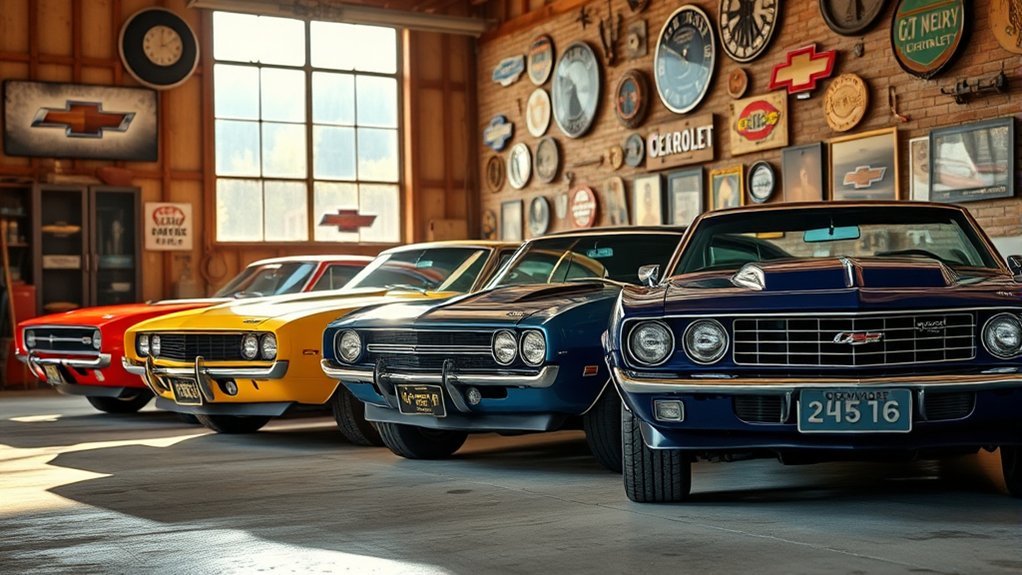
The Chevrolet Camaro arrived for the 1967 model year as Chevrolet’s answer to the Ford Mustang. It grew from a relatively affordable pony car into a six-generation performance icon known for models such as the Z/28, SS, IROC-Z, ZL1, and COPO Camaro. Although production of the road-going Camaro ended after the 2024 model year, its influence remains strong in racing, restoration, and American car culture.
Quick Answer
The Chevrolet Camaro was introduced in 1966 for the 1967 model year and continued through six generations. Major milestones included the original Z/28, the rare 1969 ZL1, the 1985 IROC-Z, the 2010 revival, and the 650-horsepower sixth-generation ZL1. Chevrolet retired the road car after the 2024 model year.
Key Takeaways
- Chevrolet introduced the Camaro for 1967 to compete in the growing pony-car market.
- The Camaro had six generations: 1967–1969, 1970–1981, 1982–1992, 1993–2002, 2010–2015, and 2016–2024.
- Z/28, SS, ZL1, 1LE, RS, and COPO identify different appearance, performance, track, or racing packages.
- Camaro production reached its single-model-year peak in 1979, when Chevrolet produced 282,571 cars.
- The sixth-generation road car is discontinued, and Chevrolet has not announced a production successor as of July 19, 2026.
Chevrolet Camaro Generation Timeline
| Generation | Model Years | Defining Developments |
|---|---|---|
| First | 1967–1969 | Original coupe and convertible; RS, SS, and Z/28 packages; 1969 COPO and ZL1 models |
| Second | 1970–1981 | Longer, lower body; no convertible; changing emissions and bumper rules; 1979 production peak |
| Third | 1982–1992 | Hatchback body, electronic fuel injection, IROC-Z, and the return of the convertible |
| Fourth | 1993–2002 | Aerodynamic body, LT1 and LS1 V8 engines, 1998 redesign, and end of production in 2002 |
| Fifth | 2010–2015 | Heritage-inspired revival; 426-hp SS, 580-hp ZL1, and 505-hp Z/28 |
| Sixth | 2016–2024 | Lighter Alpha architecture, turbo four-cylinder option, expanded 1LE packages, and 650-hp ZL1 |
The Origins of the Chevrolet Camaro
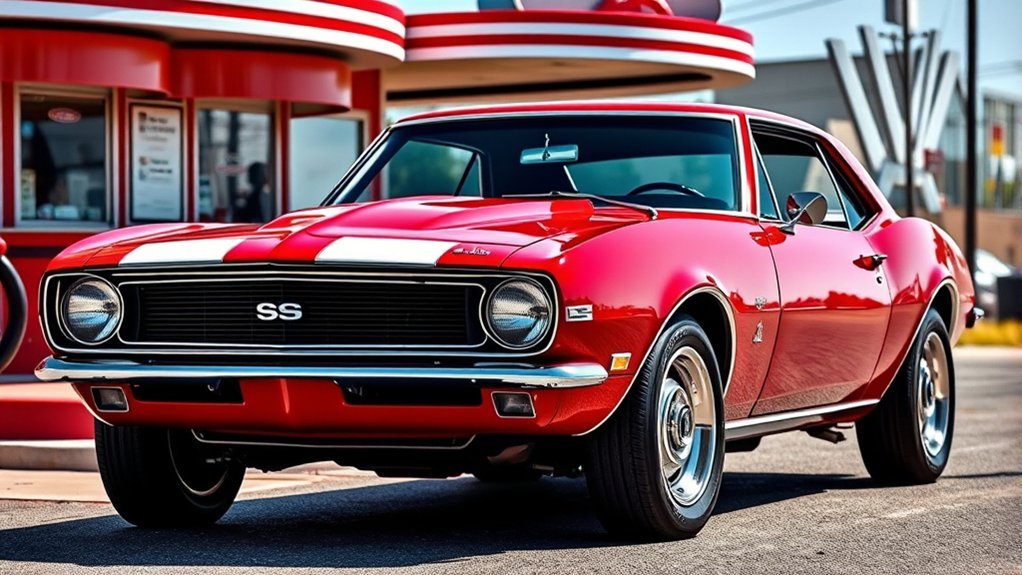
The Camaro was created after the Ford Mustang demonstrated the demand for a compact, stylish car with a long options list and room for powerful engines. Chevrolet introduced its new model in 1966 and began selling it as a 1967 model.
The base six-cylinder coupe started at approximately $2,466, while buyers could add larger engines, appearance packages, performance equipment, or a convertible body. Chevrolet offered numerous combinations, helping the Camaro appeal to commuters, style-conscious buyers, drag racers, and road-racing enthusiasts.
The Camaro used General Motors’ new rear-wheel-drive F-body architecture, which it shared with the Pontiac Firebird. The structure combined a unitized body with a separate front subframe. Model-year brochures and specifications are available through the GM Heritage Archive.
Before Camaro was selected, the development program was associated with the internal name “Panther.” Chevrolet later referenced that history with the black-themed 2024 Collector’s Edition.
First Generation: 1967–1969
The first-generation Camaro was sold as a two-door coupe or convertible. Its engine range began with inline-six choices and extended through several small-block and big-block V8s. Chevrolet also created packages that would shape the nameplate for decades:
- RS: Primarily an appearance package, best known on early cars for concealed headlights and revised trim.
- SS: A performance package built around larger engines, upgraded chassis equipment, and Super Sport identification.
- Z/28: A road-racing package centered on a high-revving 302-cubic-inch small-block, firmer suspension, front disc brakes, and other competition-oriented equipment.
Approximately 221,000 Camaros were produced for the 1967 model year. That same year, a Camaro served as the Indianapolis 500 pace car, giving the new model immediate national exposure.
The Z/28 became closely associated with SCCA Trans-Am racing. Team Penske and driver Mark Donohue helped Chevrolet win the 1968 championship, and the team repeated its success in 1969. The racing Z/28 used a 302-cubic-inch engine built to fit the series’ five-liter displacement limit—not a 396-cubic-inch big-block.
Production for 1969 reached approximately 243,000 cars. The redesigned 1969 body is one of the most recognizable Camaro shapes, but it did not represent the nameplate’s all-time annual production peak.
The Rare 1969 ZL1 Camaro
The 1969 ZL1 is one of the most valuable and historically important Camaros. Dealers used Chevrolet’s Central Office Production Order system to obtain cars equipped with an aluminum 427-cubic-inch big-block derived from racing technology.
Only 69 production ZL1 Camaros were built. Their rarity, unusual engine, and factory documentation make authentic examples especially valuable. Because many standard Camaros have since been modified or cloned, identification should rely on paperwork, trim information, component dates, and expert inspection rather than badges alone.
Only 69 production ZL1 Camaros were built for 1969, making the aluminum-block 427 model one of the rarest factory Camaros.
Second Generation: 1970–1981
The second-generation Camaro arrived during the 1970 model year with an entirely new body. It retained a 108-inch wheelbase but looked longer, lower, and more European in profile. Chevrolet offered only a coupe; a factory convertible would not return until the third generation.
The early second-generation Z/28 used Chevrolet’s LT-1 350-cubic-inch V8. For 1970, it carried a 360-horsepower gross rating and was paired with improved suspension, braking, and handling equipment.
Note: Early muscle-car horsepower was usually advertised using gross ratings measured without a complete production exhaust system and accessories. By the early 1970s, manufacturers moved to SAE net ratings measured in a more realistic installed configuration. A 1970 gross-horsepower figure should not be compared directly with a modern net rating.
Emissions, Safety, and Design Changes
The 1970s brought lower compression ratios, unleaded-fuel requirements, emissions controls, rising insurance costs, and fuel-economy concerns. These changes reduced advertised horsepower across the industry, but Chevrolet continued developing the Camaro’s handling and styling.
The 1970–1973 Rally Sport models are remembered for their split-bumper appearance. A major 1974 redesign introduced a sloped front end and full-width aluminum bumpers designed around changing federal impact requirements. Additional styling changes followed for 1978.
The Z28 was absent for the 1975 and 1976 model years. Chevrolet brought it back during 1977 with handling-focused suspension tuning, graphics, and appearance changes. The revived model helped restore performance interest even though output remained modest by late-1960s standards.
Camaro production reached its all-time single-model-year peak in 1979, when Chevrolet produced 282,571 cars. This makes 1979—not 2010—the highest-production Camaro model year.
Third Generation: 1982–1992
The 1982 Camaro introduced a shorter, lighter, and more aerodynamic body with a large rear hatch. Electronic fuel injection became available through Chevrolet’s Cross-Fire Injection system. Contrary to a common error, the 1982 production Camaro did not offer a factory turbocharged engine.
The Z28 served as the 1982 Indianapolis 500 pace car. Its styling, hatchback layout, and improved chassis gave the Camaro a modern identity that fit the technology-focused design trends of the 1980s.
Chevrolet introduced the IROC-Z in 1985. Named for the International Race of Champions, it combined the Z28 with lower suspension tuning, larger wheels and tires, performance-oriented styling, and available fuel-injected V8 engines. The IROC-Z became one of the most recognizable Camaros of the decade.
A factory convertible returned for 1987. By the end of the third generation, tuned-port fuel injection and stronger V8 options had restored much of the acceleration and performance character lost during the emissions transition of the 1970s.
Fourth Generation: 1993–2002
The fourth-generation Camaro arrived for 1993 with a rounded, aerodynamic body and a heavily sloped windshield. The Z28 used a 5.7-liter LT1 V8 related to the engine used in the Corvette, giving the Camaro a major increase in performance.
Chevrolet again chose the Camaro as an Indianapolis 500 pace car in 1993. The SS returned during the generation as a higher-output model, and Chevrolet states that the 1996 SS exceeded 300 horsepower—the first production Camaro to cross that level since the early 1970s.
A 1998 update brought revised front styling and the aluminum 5.7-liter LS1 V8. The LS1 delivered strong performance while improving efficiency, drivability, and emissions control compared with earlier high-output engines.
Sales weakened as the market shifted toward trucks and sport utility vehicles. Chevrolet ended fourth-generation Camaro production after the 2002 model year, beginning the first extended break in the car’s history.
The Camaro Production Hiatus: 2003–2009
There was no production Camaro for the 2003 through 2009 model years. Chevrolet revealed a heritage-inspired Camaro concept in 2006, followed by a convertible concept. Public response helped move the project toward production.
The new design drew heavily from the 1969 Camaro while using contemporary safety, chassis, and powertrain technology. A Camaro prototype also appeared as Bumblebee in the 2007 film Transformers, giving the upcoming model worldwide exposure before customers could buy it.
Fifth Generation: 2010–2015
The production Camaro returned for the 2010 model year after an eight-year model-year hiatus. It combined retro-inspired styling with independent rear suspension, modern crash protection, electronic stability control, and contemporary V6 and V8 engines.
The manual-transmission Camaro SS used a 6.2-liter LS3 V8 rated at 426 horsepower. The model quickly reestablished the Camaro as a direct rival to the Ford Mustang and Dodge Challenger.
For 2012, Chevrolet introduced the first factory-supercharged Camaro ZL1. Its 6.2-liter LSA V8 produced 580 horsepower, while Magnetic Ride Control and extensive cooling systems improved its road and track capability.
The Z/28 returned for the 2014 and 2015 model years as a highly focused track car. It used a naturally aspirated 7.0-liter LS7 V8 rated at 505 horsepower, carbon-ceramic brakes, aggressive aerodynamics, and weight-reduction measures. Chevrolet positioned it around lap performance rather than luxury or straight-line acceleration alone.
Sixth Generation: 2016–2024
The sixth-generation Camaro moved to General Motors’ Alpha architecture for 2016. It was smaller and lighter than the fifth-generation car while retaining familiar Camaro proportions.
Its engine lineup included a turbocharged 2.0-liter four-cylinder, a naturally aspirated 3.6-liter V6, and a 6.2-liter V8 in the SS. The turbocharged four-cylinder was a first for a regular-production Camaro, unlike the incorrectly claimed turbo option for 1982.
Chevrolet expanded the 1LE track package across more of the lineup. Depending on model and year, 1LE equipment could include upgraded cooling, brakes, tires, suspension tuning, aerodynamic parts, and performance data systems.
The sixth-generation ZL1 used a supercharged 6.2-liter LT4 V8 rated at 650 horsepower. Chevrolet identifies it as the most powerful production Camaro. The even more track-focused ZL1 1LE added aerodynamic, tire, and suspension changes.
A 50th Anniversary Edition appeared for 2017. Chevrolet later marked the end of the generation with a 2024 Collector’s Edition, including a limited ZL1 version finished in Panther Black Matte. The final sixth-generation Camaro produced was a ZL1 coupe.
What Camaro Badges and Performance Packages Mean
Camaro badges can identify an appearance package, a complete performance model, or specialized racing equipment. Their exact content changed by generation and model year.
- RS: Rally Sport. Usually an appearance package featuring distinctive lighting, trim, wheels, or exterior details.
- SS: Super Sport. A V8-focused street-performance model with upgraded chassis and appearance equipment.
- Z/28: Historically focused on road racing, handling, braking, and balanced track performance.
- ZL1: Used on the rare aluminum-427 1969 model and later on Chevrolet’s highest-output modern Camaro.
- 1LE: A track-oriented package that adds handling, cooling, braking, tire, and aerodynamic upgrades.
- COPO: Originally associated with special Central Office Production Order cars. Modern COPO Camaros are purpose-built drag-racing vehicles and are not street-legal production cars.
Pro Tip: When buying a classic Camaro, verify the model year, VIN, trim tag, engine stamp, casting dates, factory paperwork, and restoration history. Emblems can be added easily, and many standard cars have been converted into convincing SS, Z/28, or ZL1-style replicas.
Iconic Camaro Models and Special Editions
Several Camaros stand out because they introduced important technology, achieved major racing success, or revived a historic badge:
- 1967 Z/28: Established the Camaro’s road-racing identity with its 302-cubic-inch small-block.
- 1969 ZL1: Combined an aluminum 427 with extreme rarity; only 69 production cars were built.
- 1970 Z/28: Used the LT-1 350 and became one of the strongest early second-generation models.
- 1985 IROC-Z: Became a defining performance car of the 1980s.
- 1998 Z28 and SS: Brought the aluminum LS1 V8 to the Camaro.
- 2012 ZL1: Introduced a 580-horsepower supercharged factory Camaro.
- 2014–2015 Z/28: Prioritized track performance with a 505-horsepower LS7, carbon-ceramic brakes, and reduced weight.
- Sixth-generation ZL1 1LE: Combined 650 horsepower with extensive aerodynamic and chassis development.
Appearance-focused editions also helped celebrate Camaro history. Examples include the 30th Anniversary Edition, the 2013 Hot Wheels Edition, the 2017 50th Anniversary Edition, and the 2024 Collector’s Edition.
Camaro Motorsports and Cultural Impact
The Camaro’s competition history began soon after its showroom debut. Team Penske entered Camaros in SCCA Trans-Am racing, and Mark Donohue became closely linked with the program. Penske records show championship seasons in 1968 and 1969, with the Camaro helping establish Chevrolet as a major force in American road racing.
In drag racing, Bill “Grumpy” Jenkins won NHRA’s inaugural Pro Stock event at the 1970 Winternationals in a big-block 1968 Camaro. The victory helped make the Camaro one of the class’s defining body styles.
The Camaro has also competed in professional road racing, endurance racing, and NASCAR. Even after production of the sixth-generation street car ended, Chevrolet continued using the Camaro ZL1 identity in NASCAR, including an updated race-car appearance for the 2026 Cup Series season.
Outside racing, Camaros have appeared in films, television programs, music, toys, and video games. The fifth-generation prototype’s role as Bumblebee in Transformers introduced the Camaro to a new global audience before the production model returned.
Technological Evolution of the Camaro
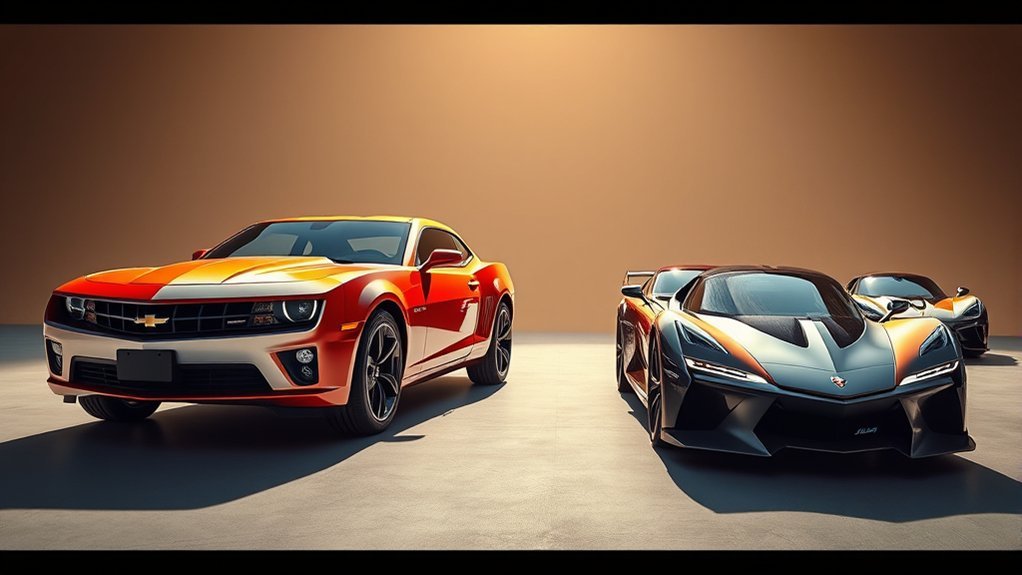
The Camaro changed with advances in engine management, safety, suspension design, materials, and manufacturing.
- 1969 ZL1: Used an aluminum big-block V8 at a time when most high-output American V8 blocks were cast iron.
- 1982: Introduced electronic fuel injection to the Camaro range.
- 1980s and 1990s: Added increasingly advanced fuel injection, computerized engine controls, anti-lock brakes, and improved emissions systems.
- 2010: Returned with independent rear suspension and modern stability-control technology.
- 2012 ZL1: Used a supercharged V8 and Magnetic Ride Control.
- 2016: Adopted the lighter Alpha architecture, direct-injected engines, and an available turbocharged four-cylinder.
- Later sixth-generation cars: Offered performance data recording, launch control, selectable drive modes, advanced cooling, and track-focused electronic calibration.
These changes show why horsepower alone cannot describe the Camaro’s evolution. Braking, tire technology, body stiffness, suspension control, aerodynamics, transmission performance, and electronic systems allowed later Camaros to corner and stop at levels that early models could not match in factory form.
Is the Chevrolet Camaro Discontinued?
Yes. General Motors announced in March 2023 that the sixth-generation Camaro would retire after the 2024 model year. Chevrolet now includes the Camaro on its discontinued-vehicle list.
The retirement applies to the road-going sixth-generation coupe and convertible. It does not erase the Camaro name from Chevrolet history, parts support, restoration activity, enthusiast events, or motorsports. Chevrolet continued using the Camaro ZL1 identity in NASCAR after street-car production ended.
As of July 19, 2026, Chevrolet had not announced a new production Camaro, seventh-generation launch date, body style, or powertrain. Reports about a future coupe, sedan, SUV, hybrid, or electric Camaro remain speculation unless confirmed by General Motors.
Note: Chevrolet’s 2023 retirement announcement stated that the Camaro’s story was not over, but that statement did not confirm a successor. Rumored specifications or release dates should not be treated as official product information.
Frequently Asked Questions
What are the most popular Camaro colors?
There is no complete, authoritative public database ranking every Camaro color across all six generations. Colors strongly associated with the model include Hugger Orange, LeMans Blue, Rally Green, black, red, Rally Yellow, and the later Shock finish. Popularity varies by generation, trim, and production volume.
How does the Camaro compare with other American performance cars?
The comparison depends on the model year and trim. Many modern Camaros are praised for steering, chassis balance, braking, and track packages, while competitors may offer more rear-seat room, cargo access, straight-line power, or daily comfort. An SS, Z/28, or ZL1 should be compared with a similarly priced and equipped rival.
What was the best-selling Camaro model year?
The highest-production Camaro model year was 1979. Chevrolet reports that 282,571 Camaros were produced, exceeding the totals for the first generation and the 2010 revival year.
Are there Camaro clubs and owner communities?
Yes. Camaro owners participate in regional clubs, national gatherings, model-specific forums, restoration groups, drag-racing organizations, road-course events, and social-media communities. Groups often focus on a particular generation or activity, such as concours restoration, autocross, drag racing, or modern performance tuning.
What problems are common on older Camaros?
Common concerns include rust, previous collision repairs, worn suspension bushings, oil leaks, cooling-system problems, aging wiring, damaged interior trim, and poorly installed modifications. Problem areas differ by generation, so buyers should use a model-year-specific inspection guide and arrange a pre-purchase inspection.
Is Chevrolet making a new Camaro?
Chevrolet discontinued the sixth-generation road car after the 2024 model year. As of July 19, 2026, General Motors had not announced a production successor, confirmed seventh-generation model, or official launch date.
Conclusion
The Chevrolet Camaro evolved from a 1960s Mustang rival into one of America’s most recognizable performance cars. Each generation reflected its era: early Trans-Am competition, the emissions and fuel challenges of the 1970s, electronic engine controls in the 1980s, LS V8 performance in the 1990s, and sophisticated chassis technology in the fifth and sixth generations.
The road-going Camaro is no longer in production, but its six-generation legacy remains active through racing, restoration, collecting, and enthusiast communities. Until Chevrolet announces another production model, the 2024 Camaro stands as the final confirmed chapter rather than proof that the nameplate has disappeared permanently.
Sources
- Chevrolet Camaro Legacy — official six-generation timeline, production peak, major models, and final sixth-generation car.
- GM Heritage Archive Vehicle Information Kits — original model-year specifications, brochures, dimensions, engines, and equipment.
- GM to Retire Camaro at the End of the 2024 Model Year — official production-retirement announcement.
- Indianapolis Motor Speedway Pace-Car Records — official list of Camaro Indianapolis 500 pace-car appearances.
- Team Penske Year-by-Year History — Camaro Trans-Am racing and championship records.
- NHRA: The First Pro Stock Event — Bill Jenkins’ inaugural 1970 Pro Stock victory in a 1968 Camaro.







Leave a Reply