
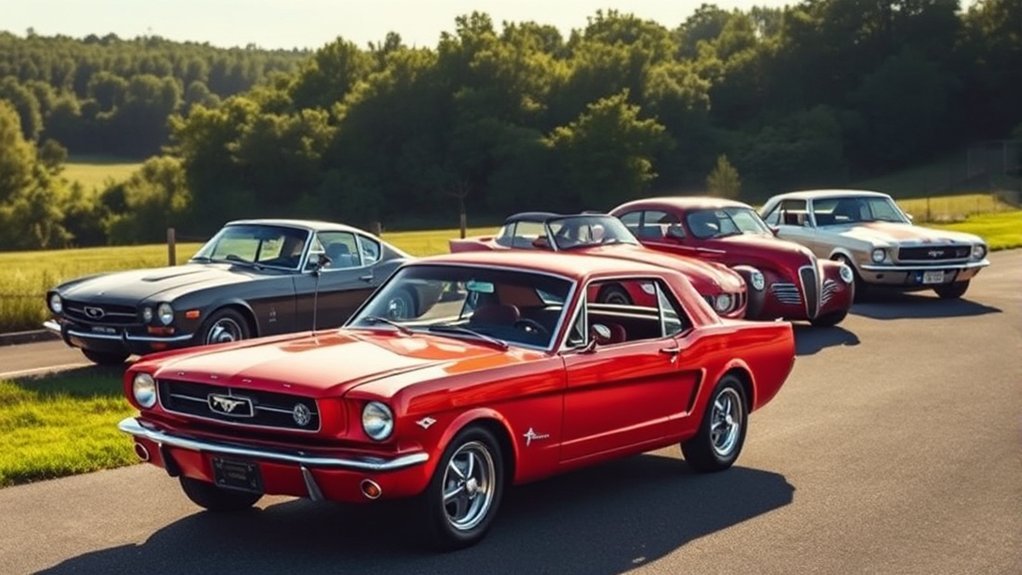
The Ford Mustang began as an affordable sporty car for a new generation of buyers and grew into one of the longest-running performance nameplates in American automotive history. Since its public debut on April 17, 1964, it has passed through seven generations while keeping its familiar long-hood, short-deck character, broad range of engines, and strong connection to racing and popular culture.
Quick Answer
Ford introduced the Mustang to the public at the New York World’s Fair on April 17, 1964. More than 418,000 were sold during its first year. The Mustang created the pony-car category and has evolved through seven generations, from simple six-cylinder coupes to the 2026 Dark Horse SC and track-focused Mustang GTD.
Key Takeaways
- The Mustang’s public launch took place on April 17, 1964, and Ford sold more than 418,000 cars during its first year.
- “1964½ Mustang” is an enthusiast term; early cars were officially identified as 1965 models.
- Seven Mustang generations span the official 1965 model year through the current seventh-generation car.
- Shelby, Boss, Mach 1, SVO, Cobra, Dark Horse, and GTD models helped connect the road car to racing.
- Ford’s published 2026 lineup includes EcoBoost, GT, Dark Horse, and Dark Horse SC powertrains, but no production hybrid or all-wheel-drive Mustang coupe.
How the Mustang Became an American Icon
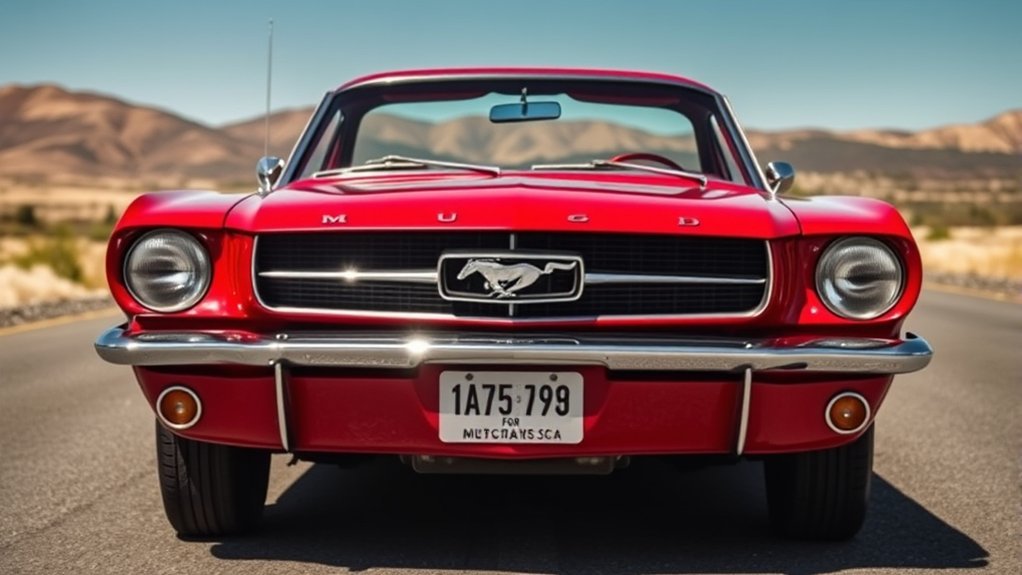
The Mustang reached the public at the right moment. Baby Boomers were entering adulthood, more households were considering a second car, and many buyers wanted something more personal than a conventional family sedan. Ford responded with a four-seat car that looked sporty but could be ordered with economical or high-performance equipment.
The Mustang made its public debut at the Ford Pavilion during the New York World’s Fair on April 17, 1964. Television advertising, newspaper coverage, dealership displays, and exposure at the fair turned the launch into a national event.
Ford sold more than 418,000 Mustangs during the car’s first year and reached the one-million mark in March 1966.
Its appeal came from choice as much as appearance. Buyers could select a coupe, convertible, or later a fastback, then add different engines, transmissions, trim packages, comfort features, and performance equipment. That ability to build a mild commuter, stylish cruiser, or serious performance car became a defining part of the Mustang formula.
The Mustang is most accurately described as the car that established the pony-car category: an affordable, compact or midsize American car with sporty proportions, room for four, and a wide range of performance options. Some high-powered Mustangs also fit broader definitions of a muscle car, but “pony car” is the more precise historical label.
The Birth of the Ford Mustang: Research, Concepts, and Design
A Market Looking for a Car
Ford’s internal research showed that younger, college-educated buyers were becoming increasingly important to the new-car market. The company wanted a car with bucket seats, sporty styling, manual and automatic transmission choices, and a price within reach of buyers who could not afford an imported sports car.
Lee Iacocca became the Mustang’s most visible executive champion, while Ford executive Donald Frey, product planners, engineers, and several design studios helped move the program toward production. Ford’s own history of the Mustang’s development describes an internal design competition in which multiple studios created clay proposals from the same basic package.
Mustang I and Mustang II Concepts
The first Mustang I concept was not a direct preview of the production car. It was a small, mid-engine, two-seat sports car that appeared at Watkins Glen in October 1962. Ford also toured concept vehicles and gathered reactions from potential younger buyers.
The four-seat Mustang II concept followed in 1963. Its long hood, compact cabin, side sculpting, and grille treatment offered a much clearer preview of the production Mustang that would arrive the following spring.
Gale Halderman and the Winning Design
Ford Studio’s proposal became the foundation for the production car. Designer Gale Halderman’s work helped establish the low roof, long hood, short rear deck, side sculpting, and balanced proportions that made the Mustang recognizable even before buyers saw the running-horse badge.
Much of the mechanical package was based on proven Ford components, which helped control development time and cost. The result combined dramatic styling with familiar engines, transmissions, suspension parts, and service requirements.
The April 1964 Launch
Ford revealed the Mustang to journalists before its public introduction and then launched it nationally on April 17, 1964. The base price was advertised at $2,368 before destination charges and options. Dealers reportedly received about 22,000 orders and sales commitments on the first day, and demand continued well beyond Ford’s original expectations.
Note: Ford marketed the first cars as 1965 models. “1964½” is an unofficial collector term commonly used for Mustangs built early in the 1965 production run. A vehicle’s VIN, scheduled build date, production details, and original equipment are more reliable than the nickname alone.
First-Generation Mustang: 1965–1973
The first generation established nearly every theme that later Mustangs would revisit: accessible base models, stylish appearance packages, strong V8 options, racing-derived editions, and frequent styling changes.
Body Styles and Design Evolution
The original lineup began with a hardtop coupe and convertible. A fastback joined during the 1965 model year. Early cars used the classic long-hood and short-deck profile, a corral-style grille emblem, sculpted side panels, and three-section taillamps.
The body became larger and more aggressive for 1967, allowing room for big-block engines. Additional redesigns followed for 1969, 1971, and the final 1973 model year. By the early 1970s, the Mustang was longer, heavier, and visually more muscular than the original car.
First-Generation Engines and Performance
Engine choices varied by year and market. They ranged from economical inline-six engines to small-block and big-block V8s. The table below lists selected examples rather than every available engine.
| Model year or version | Engine | Period rating | Context |
|---|---|---|---|
| 1965 Mustang | 200-cu.-in. inline-six | 120 gross hp | Economical mainstream engine offered after the earliest production period |
| 1965 K-code Mustang | 289-cu.-in. High Performance V8 | 271 gross hp | Optional high-performance engine; not standard in every Mustang GT |
| 1965 Shelby GT350 | Modified 289-cu.-in. V8 | 306 gross hp | Shelby-built road and competition model |
| 1967 Mustang | 390-cu.-in. V8 | 320 gross hp | Early big-block option |
| 1968 Mustang | 428 Cobra Jet V8 | 335 gross hp | Strong street and drag-racing performance |
Most pre-1972 American horsepower figures were advertised using SAE gross methods measured under different conditions from modern SAE net ratings. A period gross-horsepower figure should not be compared directly with a current engine’s rating.
Shelby, Boss, and Mach 1 Models
Carroll Shelby and Shelby American turned the Mustang into a serious road-racing platform with the 1965 GT350. Early GT350s used a modified 289 V8, a functional scoop in a fiberglass hood, suspension changes, and other competition-focused equipment.
The Mach 1 arrived for the 1969 model year as a performance-oriented SportsRoof model with distinctive trim, a competition-style appearance, upgraded suspension equipment, and several available V8 engines.
Ford created the 1969 Boss 302 to support Trans-Am road-racing homologation. The Boss 429, offered for 1969 and 1970, helped homologate Ford’s large 429 engine for NASCAR competition. Ford reports that 1,359 Boss 429 Mustangs were produced.
Seven Generations of Ford Mustang
| Generation | Model years | Major developments |
|---|---|---|
| First | 1965–1973 | Created the pony-car formula; coupe, convertible, and fastback bodies; Shelby, Mach 1, Boss, and Cobra Jet models |
| Second | 1974–1978 | Smaller Mustang II responded to fuel, emissions, insurance, and market pressures; V8 power returned for 1975 |
| Third | 1979–1993 | Fox-platform design, hatchback popularity, turbocharged SVO, revived 5.0-liter performance, and 1993 SVT Cobra |
| Fourth | 1994–2004 | Modernized chassis and styling, modular V8 engines, 1999 New Edge redesign, SVT Cobra, Bullitt, and Mach 1 |
| Fifth | 2005–2014 | Retro-inspired styling, dedicated rear-wheel-drive platform, Shelby GT500 revival, 5.0-liter Coyote V8, and revived Boss 302 |
| Sixth | 2015–2023 | Global sales expansion, independent rear suspension across the regular lineup, EcoBoost engine, GT350, Mach 1, and 760-hp Shelby GT500 |
| Seventh | 2024–present | Digital cockpit, revised EcoBoost and Coyote engines, Dark Horse family, expanded racing program, GTD, RTR, and Dark Horse SC |
Notable Mustang Models and Special Editions
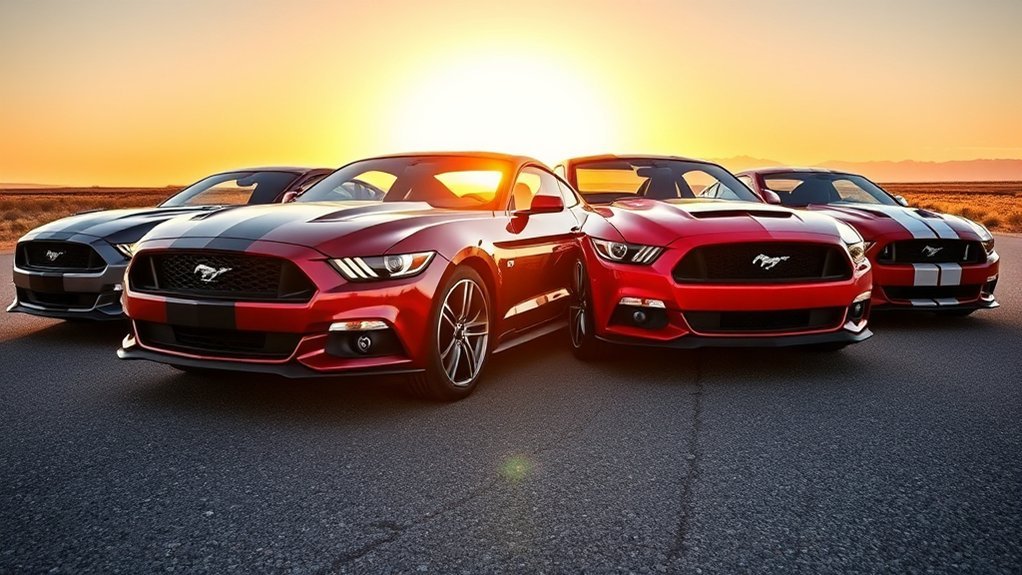
Hundreds of trims, packages, and regional editions have appeared since 1964. The following models had an especially important effect on Mustang engineering, motorsports, or culture.
- 1965 Shelby GT350: Established the Mustang as a capable SCCA road-racing car and created a lasting Shelby-Mustang partnership.
- 1968 428 Cobra Jet: Strengthened the Mustang’s reputation in straight-line performance and organized drag racing.
- 1969 Boss 302: Combined a high-revving small-block V8 with handling changes developed around Trans-Am competition.
- 1969–1970 Boss 429: Rare homologation model built to support Ford’s NASCAR engine program.
- 1969 Mach 1: Introduced a long-running performance name that later returned in several generations.
- 1984–1986 Mustang SVO: Used a turbocharged and intercooled 2.3-liter four-cylinder engine, four-wheel disc brakes, and handling-focused tuning.
- 1993 SVT Cobra: Launched Ford Special Vehicle Team’s Mustang performance line.
- 2001 Bullitt: Connected a modern Mustang to the Highland Green fastback driven in the 1968 film Bullitt.
- 2012–2013 Boss 302: Revived the Boss name with a high-revving Coyote-based V8 and track-focused chassis tuning.
- 2020–2022 Shelby GT500: Used a supercharged 5.2-liter Predator V8 rated at 760 horsepower.
- 2024–present Dark Horse: Introduced a new performance name with a modified naturally aspirated 5.0-liter Coyote V8.
- Mustang GTD: Applied carbon-fiber construction, active aerodynamics, an inboard rear suspension, and an 815-horsepower supercharged V8 to a limited-production road car.
Mustang Racing History
Competition became part of the Mustang story almost immediately. Mustangs entered the 1964 Tour de France automobile rally only months after the production car appeared. Ford then worked with Carroll Shelby to create the GT350 for SCCA B-Production racing.
During the late 1960s and early 1970s, Boss 302 Mustangs competed in Trans-Am road racing while Cobra Jet models became common at drag strips. Later generations appeared in IMSA, SCCA, NHRA, NASCAR, Australian Supercars, drifting, and international GT competition.
The current racing family includes Mustang GT3 and GT4 cars, the Dark Horse R used in one-make competition, NASCAR-bodied Mustangs, and other series-specific machines. The road-going Mustang GTD was developed with knowledge drawn from Ford and Multimatic’s racing programs. Its 815-horsepower powertrain helped it become the first production sports car from an American brand to record an officially certified sub-seven-minute Nürburgring lap in 2024.
Mustang Cultural Impact and Owner Community
The Mustang appeared in film and television soon after its launch. Its best-known screen role came in the 1968 film Bullitt, where Steve McQueen drove a Highland Green Mustang GT fastback through San Francisco. Later appearances, including versions of Eleanor in Gone in 60 Seconds, brought the car to new generations of viewers.
Owners also built a large community around restoration, racing, customization, touring, and judging. The Mustang Club of America was founded in 1976 and now supports a network of chartered regional clubs, national events, judging programs, and technical resources.
That community helps explain the Mustang’s staying power. The car has never appealed to only one type of driver. Six-cylinder commuters, convertibles, drag cars, road racers, restored classics, modern GTs, and limited-production models all exist under the same running-horse emblem.
Mustang Technology Through the Years
The Mustang’s technology has changed from carburetors, drum brakes, and simple analog gauges to electronic engine controls, turbocharging, adaptive suspension, digital displays, track-data tools, and driver-assistance systems.
Important milestones include electronic fuel injection on later Fox-platform cars, four-wheel disc brakes and turbocharging on the SVO, independent rear suspension on the 1999 SVT Cobra, and independent rear suspension across the regular lineup beginning with the 2015 generation.
The seventh-generation cabin can combine a 12.4-inch digital instrument cluster with a 13.2-inch center touchscreen. Available features include configurable displays, Track Apps, drive modes, active-valve exhaust settings, Remote Rev on eligible automatic-transmission models, smartphone integration, and software-connected services.
Ford Co-Pilot360 driver-assistance technology is standard across the published 2026 lineup. Equipment varies by trim and package, and driver-assistance features are not a substitute for an attentive driver.
Published 2026 Mustang Engine Lineup
| Model | Engine | Published output |
|---|---|---|
| Mustang EcoBoost | Turbocharged 2.3-liter four-cylinder | 315 hp and 350 lb-ft |
| Mustang GT | Gen-4 5.0-liter Coyote V8 | Up to 486 hp and 418 lb-ft with the available active-valve performance exhaust |
| Mustang Dark Horse | Modified Gen-4 5.0-liter Coyote V8 | 500 hp and 418 lb-ft |
| Mustang Dark Horse SC | Supercharged 5.2-liter cross-plane-crank V8 | 795 hp and 660 lb-ft |
Outputs and availability can depend on fuel, exhaust equipment, transmission, market, and model configuration. Current specifications should be confirmed on Ford’s official Mustang model page before purchase.
Mustang Coupe and Convertible Versus Mustang Mach-E
The Mustang Mach-E is part of Ford’s broader Mustang-branded family, but it is not a generation of the traditional Mustang coupe or convertible. The Mach-E is a separate battery-electric crossover SUV introduced for the 2021 model year.
Both use Mustang styling themes and performance branding, but their platforms, body structures, powertrains, seating layouts, and ownership requirements are different. A history of the seven traditional Mustang generations therefore runs from the 1965 coupe and convertible to the current seventh-generation fastback and convertible, not through the Mach-E.
Where the Mustang Stands in 2026
As of July 2026, Ford’s published U.S. Mustang coupe and convertible lineup remains centered on rear-wheel drive and gasoline engines. It includes the turbocharged EcoBoost, naturally aspirated GT and Dark Horse V8s, and the supercharged Dark Horse SC.
The confirmed 2026 Mustang Dark Horse SC produces 795 horsepower and 660 lb-ft of torque. Ford developed it through cooperation between its road-car and racing teams, with changes to the engine, cooling, brakes, suspension, aerodynamics, steering, and tires.
The wider 2026 range also adds appearance and handling choices such as the Mustang RTR package, FX Package, new colors, additional interior combinations, and the limited TLD Signature Edition.
Ford has discussed electrification across its overall vehicle business, but its published 2026 U.S. specifications do not announce a hybrid or all-wheel-drive Mustang coupe. Claims about those configurations should remain labeled as speculation unless Ford confirms a production model.
How to Verify a Classic Mustang’s Model Year and Identity
Early Mustang terminology, engine swaps, replacement trim, tribute builds, and decades of restoration can make identification difficult. Before buying or valuing a classic Mustang, compare several sources of information:
- VIN: Confirm the model year, assembly plant, body style, engine code, and production sequence represented by the VIN format for that year.
- Warranty or data plate: Compare the body, color, trim, scheduled build date, axle, and transmission codes.
- Stamped identifiers: Inspect model-specific body and chassis stampings where applicable, especially on high-value cars.
- Original documents: Look for invoices, build records, window stickers, warranty cards, service records, and prior titles.
- Current configuration: Determine whether the engine, transmission, body panels, paint, interior, and performance equipment match the documented original specifications.
- Expert inspection: Use a marque specialist for Shelby, Boss, Cobra Jet, rare-option, or unusually valuable cars.
Pro Tip: Do not treat “1964½,” “GT,” “Mach 1,” “Boss,” or “Shelby” badges as proof. Badges, stripes, wheels, engines, and interior parts can be added. Verify the VIN, build data, documentation, and model-specific construction details together.
Frequently Asked Questions
What are the most common maintenance issues for Ford Mustangs?
Problems depend heavily on the generation, engine, transmission, climate, mileage, and prior modifications. Classic Mustangs commonly need inspection for rust, cooling-system deterioration, oil leaks, old wiring, worn steering parts, brakes, weather seals, and suspension bushings. Newer cars require model-specific fluid service, tire care, battery checks, software updates, and recall verification. Follow the maintenance schedule in the correct Ford owner’s manual.
How do Mustang insurance rates compare with rates for other cars?
Performance trims can cost more to insure than ordinary sedans because of their power, repair costs, claim history, and theft exposure. The driver’s age, record, location, annual mileage, deductible, coverage limits, and exact model matter more than the Mustang name alone. A low-mileage classic may qualify for agreed-value collector coverage if it meets the insurer’s storage and usage rules.
What are the best aftermarket upgrades for a Mustang?
Start with high-quality tires, correct alignment, fresh brake fluid, suitable brake pads, and replacement of worn suspension parts. Those changes often improve real-world control more than adding engine power first. Choose parts developed for the exact model year, engine, transmission, suspension package, wheel size, and intended use.
Warning: Powertrain, brake, steering, suspension, restraint-system, and emissions modifications can change handling, stopping distance, reliability, warranty coverage, insurance eligibility, and legal compliance. Use properly engineered parts and a qualified installer, and confirm local road and emissions rules before modifying the car.
How do Mustangs perform in rain, snow, and cold weather?
Most traditional Mustangs are rear-wheel-drive cars, so tire choice and throttle control are especially important on wet, icy, or snowy roads. Modern traction and stability control can help, but they cannot create grip that the tires do not have. Use suitable all-season or winter tires, reduce speed, increase following distance, and avoid using summer-performance tires outside their intended temperature range.
What is the resale-value trend for used Mustangs?
There is no single Mustang depreciation pattern. Ordinary high-mileage cars generally follow used-car market conditions, while documented low-production models and desirable factory configurations may retain value better. Condition, originality, accident history, rust, service records, modifications, color, transmission, and regional demand all affect price. Rare badges alone do not guarantee collectibility.
Why are some early cars called 1964½ Mustangs?
Collectors use “1964½” to distinguish Mustangs produced early in the first 1965 model-year run from cars built after later production changes. Ford did not issue a separate 1964½ model year. Those vehicles were titled, serialized, and marketed as 1965 Mustangs.
How many Ford Mustang generations are there?
There are seven generations of the traditional Mustang coupe and convertible through the 2026 model year. The seventh generation began with the 2024 Mustang.
Is the Mustang Mach-E part of the seven-generation Mustang timeline?
No. Ford includes the Mach-E in the Mustang-branded family, but the Mach-E is a separate battery-electric crossover SUV. It is not a generation of the rear-wheel-drive Mustang fastback or convertible.
Conclusion
The Mustang’s importance comes from more than a single engine, film appearance, or racing victory. Ford combined memorable styling, attainable base models, extensive options, and regular performance upgrades in a package that buyers could make their own.
Across seven generations, the car adapted to fuel shortages, emissions rules, changing safety standards, global markets, electronic controls, turbocharging, digital technology, and modern motorsports. The current EcoBoost, GT, Dark Horse, Dark Horse SC, and GTD continue that pattern in different ways while retaining the Mustang’s core identity as a front-engine, rear-wheel-drive performance car.
For enthusiasts, the most important lesson is to evaluate each Mustang in its correct historical and model-year context. Specifications, horsepower standards, factory equipment, maintenance needs, and collectibility can differ sharply even between cars that share the same badge.
Sources
- Ford Motor Company: Birth of the Mustang — market research, Mustang concepts, design process, early buyers, and the one-million-car milestone
- Ford Motor Company: Mustang Debut at the World’s Fair — April 1964 launch, original price, and first-year sales
- Ford Mustang Milestones — Shelby, Boss, Mach 1, sales, production, and generation milestones
- Ford: 2026 Mustang Specifications and Features — current engines, output, displays, technology, trims, and packages
- Ford: 2026 Mustang Dark Horse SC — 795-horsepower powertrain and confirmed production details
- Ford: Mustang GTD Nürburgring Record — 815-horsepower specification and certified sub-seven-minute lap







Leave a Reply