
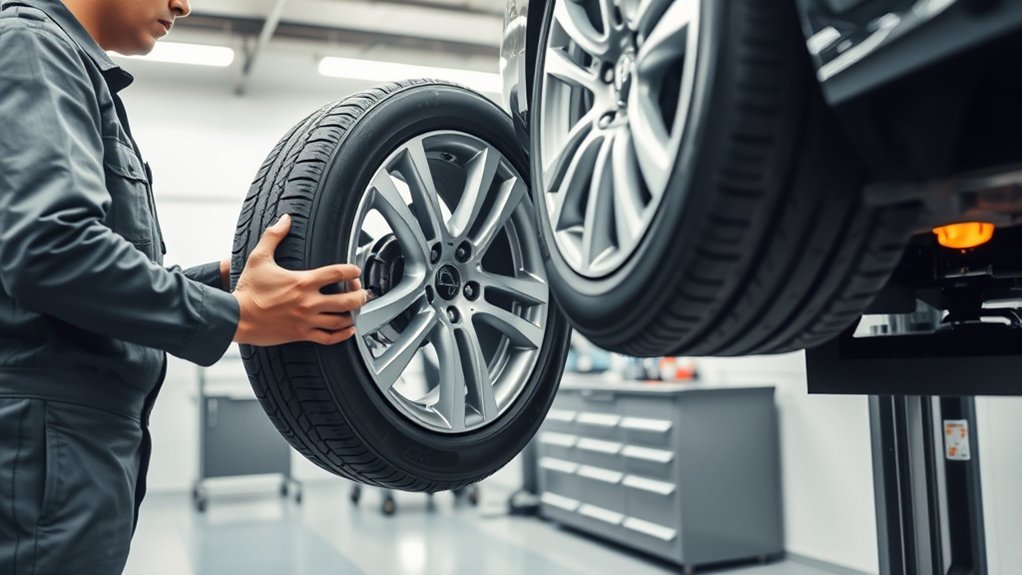
Tire rotation is a vital maintenance practice that helps maintain your vehicle’s performance and safety. By rotating your tires every 5,000 to 7,500 miles, you promote even wear, extend tire life, and enhance fuel efficiency. Each tire rotation should follow specific patterns based on your vehicle type. Watch for signs like uneven tread wear or vibrations to know when to act. Discover how to effectively manage tire rotation and keep your vehicle running smoothly.
What Is Tire Rotation and Why Does It Matter?
Tire rotation is essential for maintaining your vehicle’s performance and safety. It involves moving tires from one position to another to promote even wear and extend tire lifespan. By regularly rotating your tires, you help prevent uneven wear, which can lead to reduced traction, increased stopping distances, and compromised handling.
It’s generally recommended to rotate tires every 5,000 to 7,000 miles or according to your vehicle owner’s manual for ideal results.
Neglecting tire rotation can result in significant tread depth differences within just 10,000 to 15,000 miles, leading to premature tire replacement and reduced fuel efficiency. Different rotation patterns, like front-to-rear or X-pattern, depend on your vehicle’s drive type and tire characteristics.
How Tire Rotation Affects Vehicle Performance
Regular tire rotation greatly enhances your vehicle’s handling stability and improves fuel efficiency.
By ensuring even tread wear, you’ll experience better traction, especially in challenging conditions, while also potentially saving on fuel costs.
Maintaining ideal tire performance not only contributes to a smoother ride but also prolongs the lifespan of your tires and related components.
Enhanced Handling Stability
When you rotate your tires, you’re not just prolonging their lifespan; you’re also enhancing your vehicle’s handling stability.
Regular tire rotations maintain even tread wear, which is essential for peak performance and driving confidence. Uneven wear can cause your vehicle to pull to one side, negatively impacting steering response and control, raising safety concerns.
By promoting uniformity in tire grip, rotations guarantee consistent handling, especially in challenging conditions like rain or snow.
Plus, maintaining proper alignment through rotations helps prevent suspension issues, further enhancing ride comfort.
With balanced tire wear, you’ll experience improved traction control, allowing for confident maneuvering and reducing the risk of skidding during turns.
Prioritize tire rotations to enjoy a safer, more stable driving experience.
Improved Fuel Efficiency
Maintaining even tread wear through tire rotation directly impacts your vehicle’s fuel efficiency. Regularly rotating your tires helps reduce rolling resistance and enhances traction, which can lead to significant savings at the pump. When tires wear unevenly, they can cause your vehicle to drag, increasing fuel consumption. By rotating them every 5,000 to 7,000 miles, you can mitigate this issue effectively.
| Factor | Impact on Fuel Efficiency | Recommended Action |
|---|---|---|
| Tire Inflation | Ideal pressure saves fuel | Check monthly |
| Tread Depth | Deeper tread improves grip | Measure regularly |
| Tire Rotation | Even wear reduces drag | Rotate every 5,000 miles |
| Alignment & Balance | Enhances stability | Align every 10,000 miles |
Adopting these practices not only saves fuel but also extends tire life.
How Often Should You Rotate Your Tires for Optimal Performance?
To guarantee peak performance and extend the lifespan of your tires, it’s vital to rotate them every 5,000 to 7,500 miles.
Regular tire rotations are essential for maintaining vehicle handling and preventing premature tire replacement due to uneven wear. Without rotation, you could face uneven wear within 10,000 to 15,000 miles, diminishing your tires’ lifespan.
To keep your tires in top condition, consider the following:
- Check your vehicle owner’s manual for specific rotation recommendations.
- Monitor for any signs of irregular or uneven tire wear; rotate sooner if necessary.
- Incorporate tire rotations into your maintenance schedule, ideally during oil changes.
Different Tire Rotation Patterns Explained
Understanding the various tire rotation patterns is vital for optimizing tire performance and longevity.
The front-to-rear rotation pattern swaps tires between the front and rear axles, ideal for vehicles with uniform tire sizes. For rear-wheel and four-wheel-drive vehicles, the rearward cross pattern promotes even wear by moving rear tires to the front and crossing them. Conversely, front-wheel-drive vehicles benefit from the forward cross pattern, which guarantees balanced tire wear by crossing front tires to the rear.
The X-pattern rotation involves diagonal swaps for non-directional tires, facilitating consistent tread wear. Finally, side-to-side rotation is essential for vehicles with different-sized tires on the front and rear, maintaining balance and enhancing tire lifespan.
Adhering to the appropriate rotation frequency for your vehicle type will markedly extend your tires’ lifespan and performance, ultimately leading to a safer and more efficient driving experience.
The Importance of Including Spare Tires in Rotation
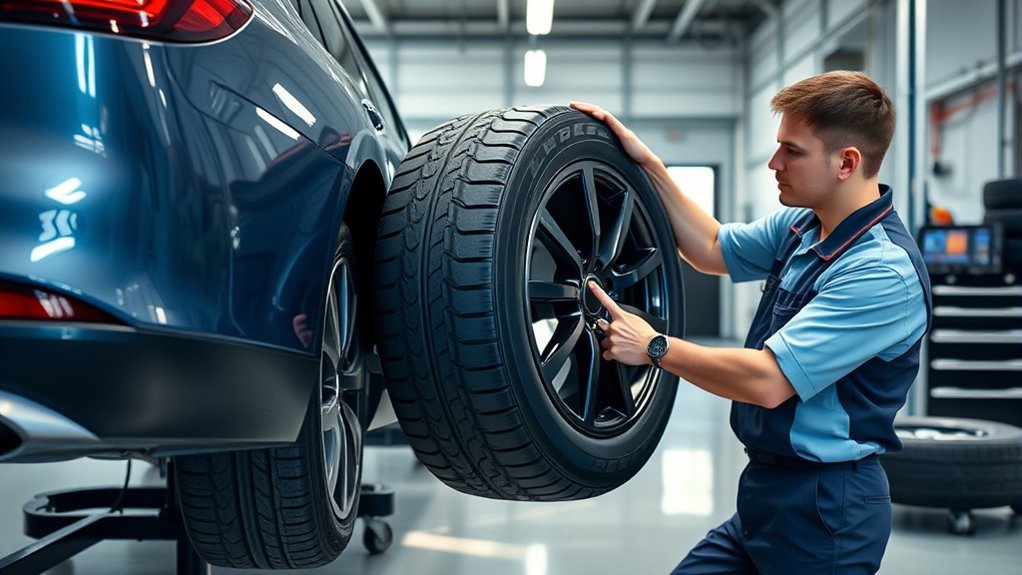
Including a full-sized spare tire in your rotation process is essential for ensuring that all tires wear evenly, which ultimately extends their lifespan. By incorporating your spare tire into the rotation, you’ll benefit from improved spare tire maintenance and better overall tire performance.
- For front-wheel drive vehicles, use a forward cross pattern to balance wear effectively.
- In rear-wheel or four-wheel drive vehicles, employ the rearward cross pattern for ideal results.
- Regular rotation helps prevent driveline damage in all-wheel drive vehicles by promoting uniform wear.
Neglecting to rotate your spare can lead to uneven tread depths, which compromises handling and safety. Temporary spare tires should be excluded, as they aren’t designed for regular use.
How to Tell If Your Tires Need Rotating Soon?
You should monitor your tires for signs of uneven tread wear, which can indicate they’re due for a rotation.
If you notice vibrations while driving or increased noise levels, these could also signal uneven wear, prompting an earlier rotation than usual.
Regularly checking these factors will help maintain peak tire performance and extend their lifespan.
Uneven Tread Wear
When it comes to maintaining your tires, recognizing the signs of uneven tread wear is crucial for ideal vehicle performance. You can identify uneven wear by visually inspecting your tires for differences in tread depth.
Check for bald spots or excessive wear on one edge, which may indicate misalignment or improper tire inflation. If your vehicle pulls to one side, that’s another sign that your tires need attention.
To guarantee your tires are in good condition, keep an eye out for:
- Tread depth below 2/32 inches
- Increased road noise
- Vibration while driving
Regularly measuring tread depth with a gauge can help you spot uneven wear early, allowing you to rotate your tires and maintain safe performance.
Vibration While Driving
Although vibrations while driving can stem from various issues, they often signal that your tires need attention. A noticeable vibration, particularly at specific speeds, usually indicates that your tires are out of balance or require rotation due to uneven wear.
If you feel a pull to one side, this often points to uneven tire wear, which can be corrected with a timely rotation. Regularly inspecting your tires for uneven tread wear patterns is essential; more wear on the inner or outer edges suggests a need for rotation soon.
Additionally, if your vehicle feels unstable or less responsive, this instability could also indicate that a tire rotation is necessary to restore proper tire balance and traction.
Increased Noise Levels
Increased noise levels while driving often indicate that your tires are wearing unevenly, suggesting it may be time for a rotation.
When you hear a noticeable humming, thumping, or vibration sound, it’s a clear signal that your tires need attention. Ignoring these signs can lead to more significant tire wear and compromised safety.
Consider these points to monitor your tires:
- Increased road noise may indicate a “scalloped” pattern from lack of rotation.
- Regular tire maintenance should include checks every 5,000 to 7,500 miles.
- Addressing noise levels promptly can enhance your driving experience and safety.
Stay vigilant about your tires’ performance to maintain a smoother ride and sustain peak handling on the road.
Key Maintenance Practices to Complement Tire Rotation
To maintain peak tire performance and longevity, it’s essential to integrate key maintenance practices alongside regular tire rotation.
Start with regular alignment checks; misaligned wheels can cause uneven tire wear, leading to more frequent rotations. Balancing tires during rotation greatly reduces vibrations and uneven tread wear, enhancing your ride comfort while prolonging tire life.
Equally important is maintaining proper tire pressure. Both under-inflated and over-inflated tires accelerate wear patterns and negatively impact fuel efficiency.
During tire rotation, inspect your suspension components to catch any issues early that could affect tire longevity and handling.
Finally, document your tire rotation schedules and related maintenance activities. This practice helps you track tire health and guarantees timely service interventions when necessary.
Where to Get Professional Tire Rotation Services
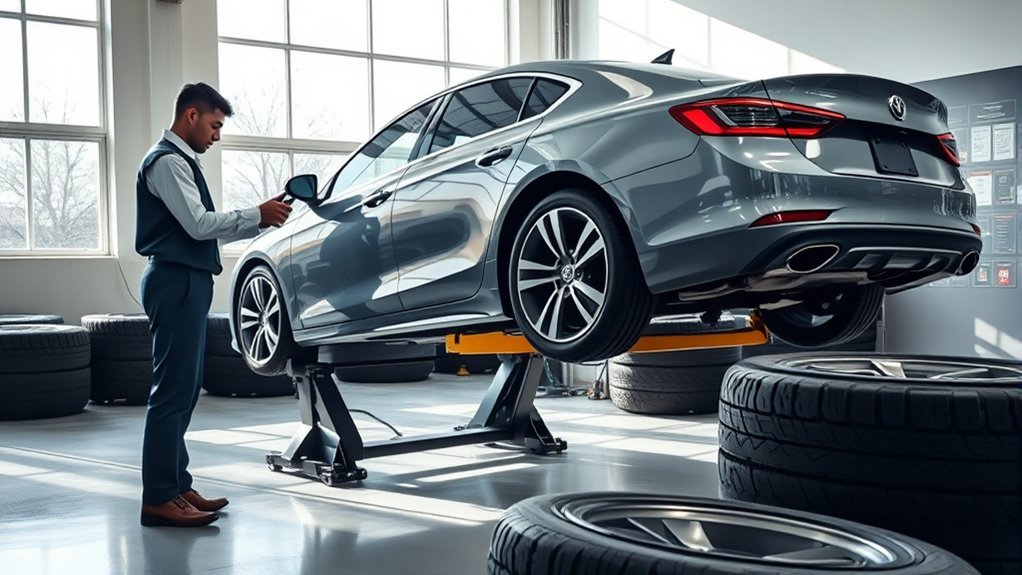
When it comes to getting professional tire rotation services, you have several convenient options available.
Consider the following tire rotation locations:
- Automotive service centers: These often provide thorough services, including tire rotation, oil changes, and more.
- Quick-lube shops: They offer fast tire rotation services, usually while you wait, making it easy to fit into your schedule.
- Tire retailers: Many of these shops provide free tire rotations with new tire purchases, making it a cost-effective choice.
It’s wise to call ahead to confirm service costs and availability at each location.
Regular tire rotations are recommended every 5,000 to 7,500 miles to enhance tire life and vehicle performance.
Frequently Asked Questions
Can I Rotate My Tires Myself?
Yes, you can rotate your tires yourself. Just make certain you follow safety precautions, like using jack stands, and monitor tire wear closely. Proper rotation promotes even wear, enhancing your vehicle’s performance and extending tire life.
What Tools Do I Need for Tire Rotation?
To rotate your tires, you’ll need a jack, jack stands, a lug wrench, and a torque wrench. Aren’t safety precautions essential? Guarantee your vehicle’s stability during tire changing to prevent accidents and enhance your independence on the road.
Does Tire Rotation Affect Alignment?
Tire rotation doesn’t directly affect alignment, but improper rotation can lead to uneven tire wear, potentially causing alignment issues. Regularly rotating your tires helps maintain even wear, keeping your vehicle aligned and responsive on the road.
Can I Skip Tire Rotation if I Have New Tires?
Skipping tire rotation with new tires is like ignoring the sun’s path; it leads to uneven wear patterns. Regular rotation guarantees ideal tire longevity, preventing premature replacements and keeping your ride smooth and liberating.
Are There Specific Patterns for Different Vehicle Types?
Yes, there are specific patterns. For front wheel drive, rotate front to rear. In all wheel drive, cross tires. Rear wheel drive typically follows a diagonal pattern. Performance tires may require unique approaches based on manufacturer recommendations.
Conclusion
In summary, regular tire rotation is vital for maximizing your vehicle’s performance and longevity. Just as a knight wouldn’t venture into battle without his trusty steed, you shouldn’t hit the road without making sure your tires are in top shape. By adhering to recommended rotation schedules and patterns, you can enhance tire wear, improve handling, and guarantee safety. Don’t overlook this essential maintenance task—your vehicle deserves the best care to keep rolling smoothly!







Leave a Reply