

A classic car VIN can help confirm a vehicle’s identity, model year, assembly plant, and title history—but the decoding method depends on the car’s age. Vehicles from the standardized VIN era generally use 17 characters, while many pre-1981 classics use shorter, manufacturer-specific serial numbers. A reliable check combines the number on the car, title records, factory documentation, and a physical inspection.
Quick Answer
To check a classic car VIN, first determine whether the vehicle uses the standardized 17-character format or an older manufacturer-specific number. Match the identifier on the car to the title, decode it with the correct factory guide, check official theft and title databases, and inspect secondary stampings and documents for inconsistencies.
Key Takeaways
- The 17-character VIN structure applies to the standardized era; many pre-1981 classics use shorter formats that vary by manufacturer and model year.
- A VIN identifies the vehicle, but it does not by itself prove that the engine, transmission, paint, trim, or other parts are original.
- Always compare the number on the vehicle with the title, registration, seller’s documents, and any secondary factory stampings.
- Free official tools can help with decoding, theft, salvage, and recall research, but no single report provides a complete history.
- VIN mismatches, altered tags, unexplained replacement identifiers, and missing ownership documents require more investigation before money changes hands.
At a Glance
| Time Required | 20–60 minutes for a basic identity and history check |
| Difficulty | Moderate; older vehicles require make- and year-specific research |
| Tools Needed | Flashlight, phone or camera, clean cloth, title or registration, and the correct factory decoding guide |
| Cost | Free for basic NHTSA and NICB checks; NMVTIS report fees vary by approved provider |
What Is a Classic Car VIN and Why Does It Matter?
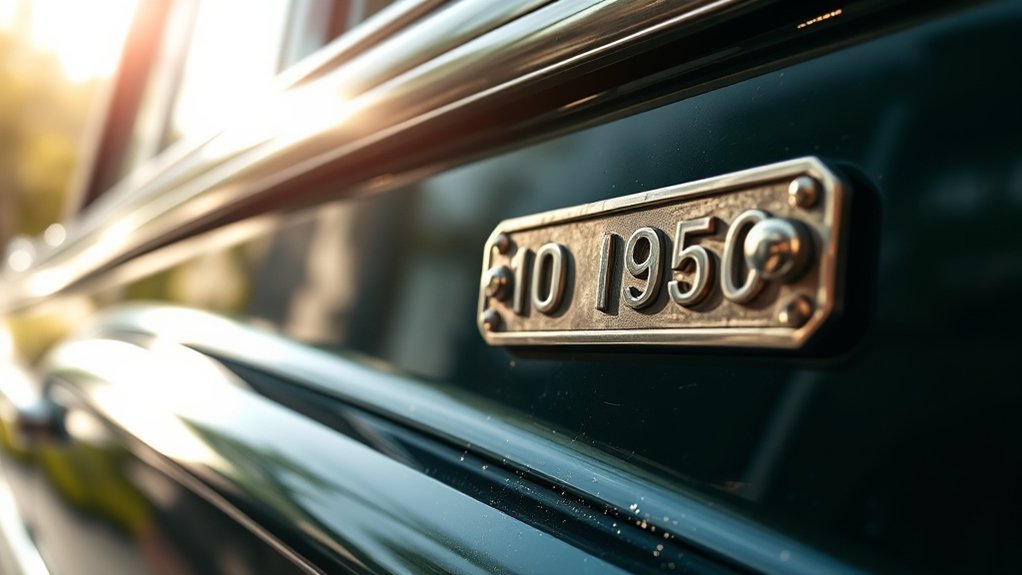
A VIN, chassis number, or manufacturer serial number is the identifier assigned to a vehicle. It helps connect the car to its title, registration, factory records, safety information, and available history data.
For standardized vehicles, federal rules require a 17-character VIN with defined sections. The first three positions identify the manufacturer and vehicle type, positions 4–8 describe vehicle attributes, position 9 is a check digit, position 10 identifies the model year, position 11 identifies the assembly plant, and positions 12–17 include the production sequence. These rules are described in 49 CFR Part 565.
Many classic cars built before the standardized era do not follow that pattern. Their identifiers may contain fewer characters, and each position may mean something different depending on the manufacturer, assembly plant, vehicle line, and model year.
A valid pre-1981 classic-car number may be shorter than 17 characters and may not work in a modern VIN decoder.
The identifier is important, but it is only one part of authenticity research. It can help confirm what the vehicle began as, yet it may not reveal every original option or prove that major components remain with the car.
How to Locate the VIN on Your Classic Car
VIN locations vary widely on older vehicles. Start with the places listed in the owner’s manual, factory service manual, or manufacturer documentation for the exact make and year.
- Dashboard near the windshield: Standardized passenger-car VINs are normally visible through the windshield near the driver’s side.
- Driver-side door or doorjamb: Look for a certification label, metal plate, or data sticker. On some classics, this tag contains body or trim information rather than the legal vehicle identifier.
- Firewall or engine compartment: Older cars may have a serial plate or stamped number on the firewall, cowl, radiator support, or another fixed body panel.
- Frame or chassis: Some manufacturers stamped an identification or partial serial number into the frame, front crossmember, trunk area, or floor structure.
- Factory paperwork: Check the title, registration, build sheet, warranty booklet, original invoice, owner’s manual packet, and service records.
Pro Tip: Photograph each identifier before cleaning it. Record its exact location, spacing, font, fasteners, and surrounding paint. These details can help an appraiser or marque expert judge whether a tag appears original.
Note: A trim tag, body plate, engine casting number, or transmission code is not automatically the legal VIN. Label each number by location before deciding what it represents.
Determine Whether the VIN Is Pre-1981 or Standardized
Before decoding anything, count the characters and confirm the model year from the title and physical evidence.
- 17 characters: The vehicle may use the standardized format. Enter the complete number in the NHTSA VIN Decoder and compare the decoded year, make, model, body type, engine data, and assembly plant with the car.
- Fewer than 17 characters: Do not add zeros, spaces, or guessed characters. Use a manufacturer- and year-specific decoding chart, factory manual, or heritage record.
- More than one number: Determine which is the legal vehicle identifier and which numbers identify the body, engine, transmission, axle, or options.
- State-assigned number: A replacement or state-issued identification plate may be legitimate, but it should be supported by title records and the issuing agency’s paperwork.
NHTSA’s vPIC database states that its decoding capability is intended for model years 1981 and newer. That makes it useful for later collector cars, but not a complete decoder for earlier classics.
Decoding Your Classic Car VIN: Key Components Explained
For a standardized 17-character VIN, read the number in four parts:
| Positions | What They Generally Show |
|---|---|
| 1–3 | Manufacturer and vehicle type identifier |
| 4–8 | Manufacturer-defined vehicle attributes, such as line, body, engine, or restraint information |
| 9 | Check digit used to test transcription accuracy |
| 10 | Model-year code; codes repeat, so the rest of the VIN and vehicle context matter |
| 11 | Assembly plant |
| 12–17 | Manufacturer identifier details for low-volume makers or the production sequence |
The characters I, O, and Q are excluded from standardized VINs to reduce confusion with 1 and 0. Do not apply this rule automatically to an older manufacturer-specific serial number.
How to Decode a Pre-1981 Classic Car VIN
A pre-1981 classic generally requires a make-specific process because there was no single universal position chart.
- Copy the number exactly: Preserve letters, numbers, dashes, and spacing. Photograph the tag or stamping.
- Confirm the make and likely model year: Use the title, body style, casting dates, date codes, and factory documents. Do not rely on the seller’s description alone.
- Find the correct factory guide: Use the manufacturer’s service manual, parts catalog, dealer data book, heritage archive, or a recognized marque-club reference for that exact year.
- Decode each position: Depending on the vehicle, the number may identify a division, model series, body style, engine family, assembly plant, model year, or production sequence.
- Cross-check other tags and stampings: Compare the VIN or serial number with body tags, engine and transmission stampings, frame numbers, and build documentation.
- Resolve conflicts before purchase: A wrong model year, impossible engine code, missing plant code, or mismatched title should be investigated by the state motor vehicle agency and a qualified marque expert.
Warning: Do not remove, restamp, alter, or replace a VIN plate or serial-number stamping. If the identifier looks disturbed, does not match the title, or appears to belong to another vehicle, stop the transaction and contact the appropriate state motor vehicle or law-enforcement agency.
Essential Online Tools for Classic Car VIN Decoding
Online tools can support your research, but choose the tool that matches the vehicle’s age and the question you need to answer.
- NHTSA VIN Decoder: Use the official NHTSA decoder for standardized VINs. Its results are based on information manufacturers report to NHTSA.
- NHTSA vPIC: The Vehicle Product Information Catalog is intended for model years 1981 and newer and can provide manufacturer, vehicle, and plant data.
- NICB VINCheck: The free NICB lookup checks participating insurers’ unrecovered-theft and salvage records. It is not a complete history report.
- NMVTIS: The U.S. Department of Justice’s National Motor Vehicle Title Information System consumer page explains available title, brand, odometer, salvage, total-loss, and limited theft data.
- Manufacturer and marque archives: For pre-1981 vehicles, factory manuals, historical services, build records, and make-specific clubs are often more useful than a general modern decoder.
Free Ways to Check Your Classic Car VIN
Start with free checks, then add paid records or expert help when the car’s value or documentation risk justifies it.
- Decode a standardized VIN with NHTSA.
- Run the identifier through NICB VINCheck for participating-insurer theft and salvage records.
- Ask the seller for a clear title, current registration, prior titles, restoration invoices, and factory documents.
- Contact the current state motor vehicle titling agency about its record-request or VIN-inspection process. Rules and fees vary by state.
- Search manufacturer records, factory manuals, library collections, and marque-club technical archives for the correct pre-1981 format.
NMVTIS reports are obtained through approved providers. The Department of Justice maintains an official list of approved NMVTIS data providers; prices and included features vary.
How to Verify the VIN Against the Car and Documents
A proper verification compares several independent sources instead of trusting one tag or one online report.
- Match every character: Compare the vehicle identifier with the title, registration, bill of sale, insurance documents, and seller’s listing.
- Check the physical tag: Look for unusual rivets, fresh paint, tool marks, uneven alignment, damaged surrounding metal, or a plate style that does not match factory examples.
- Check secondary numbers: Locate any partial VINs, chassis stampings, body tags, engine stamps, transmission stamps, or build-sheet numbers used for that make and year.
- Compare decoded details: The year, body style, assembly plant, engine family, and production sequence should be plausible for the car.
- Review the title trail: Look for title brands, unexplained state changes, odometer conflicts, total-loss history, or long documentation gaps.
- Get an independent inspection: For a valuable or rare car, use a marque specialist who can assess tag originality, date codes, replacement components, and restoration quality.
What Can You Discover From Your VIN Report?
The answer depends on the database and the age of the vehicle. An NMVTIS report may include:
- Current and previous state-of-title data
- Title issue dates
- The latest reported odometer reading
- Title brands such as junk, salvage, rebuilt, or flood
- Reported salvage or total-loss history
- Theft information when available
A commercial history report may add registration events, owner-count estimates, auction records, service entries, or accident information, but coverage varies. A report does not disclose previous owners’ personal identities to ordinary consumers through NMVTIS.
What a VIN Report Cannot Prove
A clean report is useful, but it does not guarantee that the car has never been damaged, stolen, modified, or incorrectly titled. Events may be absent because they were never reported, occurred before database coverage, or were repaired privately.
A VIN report also cannot prove “numbers matching” by itself. That claim usually requires the correct engine, transmission, axle, body, date codes, partial VIN stampings, and factory records for the specific marque. Replacement service parts can be legitimate, but they affect how originality should be described.
How Do VIN History Reports Affect Classic Car Value?

History records affect value by changing a buyer’s confidence and the amount of risk attached to the car. The effect is not a fixed dollar amount; rarity, condition, restoration quality, documentation, originality, and market demand still matter.
| Finding | Likely Effect on Buyer Confidence |
|---|---|
| Consistent title and VIN records | Supports the vehicle’s identity and reduces documentation risk |
| Salvage, rebuilt, flood, or total-loss history | Usually increases inspection needs and may reduce the buyer pool or price |
| Odometer inconsistency | Raises questions about record accuracy and vehicle use |
| Missing or conflicting records | Requires more factory, title, and physical evidence |
| Strong factory and restoration documentation | Can strengthen provenance and support a better-informed valuation |
Value the car from recent comparable sales and its actual condition, then adjust for provenance, originality, title status, and the quality of its documentation. A professional appraisal is sensible for rare, heavily restored, or high-value vehicles.
Classic Car VIN Red Flags
- The number on the vehicle does not exactly match the title.
- The VIN decodes to a different year, body style, engine family, or assembly plant.
- The tag has non-factory rivets, fresh paint, tool marks, uneven stamping, or damaged surrounding metal.
- A supposed pre-1981 VIN has been padded to 17 characters to make an online decoder accept it.
- The seller refuses to provide a title or clear photographs of the identifier.
- The car has a state-assigned VIN, but the supporting inspection and title documents are missing.
- Secondary stampings conflict with the primary identifier without a documented repair or replacement explanation.
- The seller calls the car “numbers matching” but cannot provide casting dates, stampings, build records, or expert verification.
Next Steps: Using Your VIN Data for Buying or Selling a Classic Car
Once you have decoded and verified the identifier, use the results to judge the car’s identity, documentation quality, and market position.
Assess Market Value Trends
- Compare recent sold results for the same year, model, body style, engine, condition, and documentation level.
- Separate asking prices from completed sales.
- Adjust for title brands, non-original components, restoration quality, rare options, provenance, and geographic demand.
- Use more than one price source and consider a professional appraisal for an unusual or expensive vehicle.
Verify Authenticity and Details
Compare the decoded identifier with factory specifications and all available documentation. Confirm whether the vehicle’s body configuration, plant, model year, and engine family are plausible. Then inspect component stampings and date codes before describing the car as original or numbers matching.
Share only the information needed with a qualified appraiser, historian, or marque expert. Keep clear copies of the title, prior registrations, factory records, restoration photographs, invoices, and inspection reports.
Buyer Checklist Before Payment
- See the original title and verify the seller’s authority to sell.
- Match the title number to the vehicle in person.
- Run appropriate NHTSA, NICB, NMVTIS, state, and manufacturer-specific checks.
- Confirm that liens, title brands, and state-assigned identifiers are fully explained.
- Have the car inspected independently.
- Put the VIN, sale price, disclosures, and included parts in the signed bill of sale.
Seller Checklist Before Listing
- Photograph the primary identifier and relevant secondary stampings.
- Gather title, registration, build records, invoices, manuals, and restoration photos.
- Describe replacement engines, transmissions, body panels, or state-issued identifiers accurately.
- Avoid unsupported claims such as “all original” or “numbers matching.”
- Provide buyers with copies of reports while protecting personal information.
Frequently Asked Questions
How do you read a VIN number on a classic car?
First determine whether the car uses a standardized 17-character VIN or an older manufacturer-specific number. For a 17-character VIN, use the federal position rules and NHTSA decoder. For an older number, use the correct factory guide for the make, model, and year, then compare the result with the title and secondary stampings.
How can you look up a classic car VIN for free?
Use NHTSA for standardized VIN decoding and NICB VINCheck for participating-insurer theft and salvage records. You can also review the title, registration, factory records, and state motor vehicle resources. Pre-1981 cars often require a manufacturer-specific manual or marque reference.
How do you decode a 1972 VIN number?
A 1972 identifier does not use one universal 17-character layout. Copy the number exactly, identify the manufacturer and model, and use the factory decoding chart or service literature for that specific 1972 vehicle. Do not assume the ninth character is a modern check digit.
What is the best VIN decoder for a classic car?
For 1981-and-newer collector vehicles, start with NHTSA’s official decoder. For pre-1981 vehicles, the best source is usually the manufacturer’s year-specific service literature, parts catalog, heritage archive, or a recognized marque expert. Use history databases separately for title, theft, and salvage checks.
Can a real classic car VIN have fewer than 17 characters?
Yes. Many pre-1981 vehicles have shorter manufacturer-specific serial or chassis numbers. A short number is not automatically invalid, but it should match the title and the factory format for that make and model year.
What should you do if the VIN does not match the title?
Do not complete the purchase until the mismatch is resolved. Recheck every character, inspect all authorized identifier locations, ask for supporting title records, and contact the state motor vehicle titling agency. Suspected tampering or a number from another vehicle should be referred to law enforcement.
Conclusion
A classic car VIN is a starting point, not a complete certificate of originality. Standardized 17-character VINs can be decoded with federal tools, while pre-1981 cars usually need manufacturer-specific records. Match the identifier to the title, inspect every relevant stamping, review official history data, and obtain expert help when the car is rare, valuable, or inconsistent. Careful verification protects both the buyer and the vehicle’s documented legacy.
Sources
- Electronic Code of Federal Regulations, 49 CFR Part 565 — standardized 17-character VIN requirements and position meanings
- National Highway Traffic Safety Administration VIN Decoder — official VIN decoding and manufacturer-reported vehicle information
- NHTSA Vehicle Product Information Catalog — scope and limitations of NHTSA decoding for model years 1981 and newer
- National Insurance Crime Bureau VINCheck — free participating-insurer theft and salvage lookup and its limitations
- U.S. Department of Justice NMVTIS Consumer Information — title, brand, odometer, salvage, total-loss, and theft-history coverage
- U.S. Department of Justice Approved NMVTIS Data Providers — official provider list for consumer vehicle-history reports







Leave a Reply